Avinash Rohra
Angeline Era does not open with a dramatic cutscene or a flood of lore. It does not rush to teach you its systems or spell out what it expects from you. Instead, it places you quietly into its world, almost cautiously, and waits to see whether you are willing to meet it halfway.
That restraint is deliberate. From the outset, Angeline Era makes it clear that this is a game built around curiosity rather than instruction, and intention rather than immediacy. It is an action RPG that resists modern excess. There are no quest markers, no combat tutorials packed with prompts, and no pressure to understand everything immediately. What it offers instead is space: room to explore, systems to learn through experimentation, and a world that gradually reveals itself as your confidence grows.
Developed and published by Analgesic Productions, Angeline Era launched on PC via Steam in December 2025. While its aesthetic and mechanical influences trace back to classic action RPGs, this is not a nostalgia exercise. The game uses those foundations as a springboard toward something stranger, more deliberate, and far more personal.
A World Built on Implication, Not Exposition
Angeline Era takes place in the land of Era, a world shared by humans, fae, and angels, all living beneath the looming presence of an immense angelic structure known as Throne. Rather than presenting its mythology through exposition dumps, the game relies on implication. Environments, brief conversations, and scattered lore fragments carry most of the narrative weight.
You play as Tets Kinoshta, who partners with an angel named Arkas Gemini in a search for powerful artifacts called Bicones. These artifacts are central to progression, but their true importance, along with the nature of Throne itself, is revealed slowly and selectively. The story unfolds in fragments, encouraging interpretation rather than passive consumption.
This approach gives the world a quiet mystique. It also means the narrative can feel elusive at times. Motivations are occasionally unclear, and answers are withheld longer than expected. Yet this ambiguity feels intentional rather than underdeveloped. Angeline Era is not interested in explaining everything. It asks players to sit with uncertainty and form their own understanding of the world.
Combat That Treats Movement as Language
The most distinctive aspect of Angeline Era is its combat system. Instead of assigning attacks to a button, the game uses a “bumpslash” mechanic. Enemies take damage simply by colliding with them. There is no basic attack input. Movement itself is the attack.
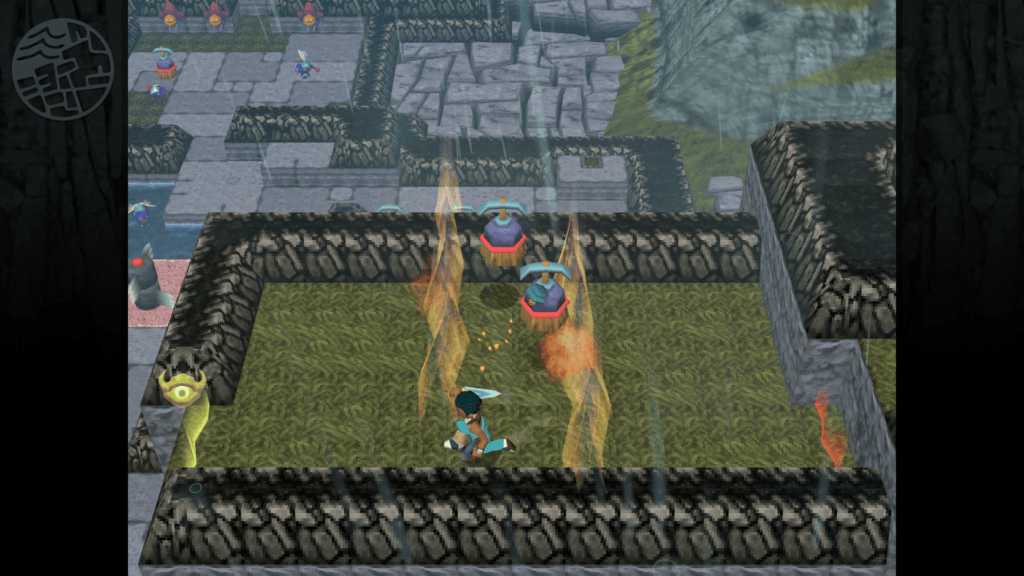
At first, this feels counterintuitive. Years of genre conditioning make it difficult not to search for a missing button. Once the system clicks, however, combat becomes unexpectedly expressive. Positioning, approach angles, and timing matter far more than reflexive inputs. A careless charge can leave you exposed, while a deliberate movement can end a fight cleanly.
Additional tools, including sub-weapons and a gun that fires upward, add variation, but movement remains the core language of combat. The system appears simple on the surface, yet grows more nuanced as enemy behavior becomes more demanding.
This design choice will not resonate with everyone. Players who prefer tight, input-heavy combat may find bumpslash imprecise or limiting. Angeline Era is less concerned with execution mastery and more focused on spatial awareness, rewarding patience and intent over aggression.
Exploration That Demands Trust
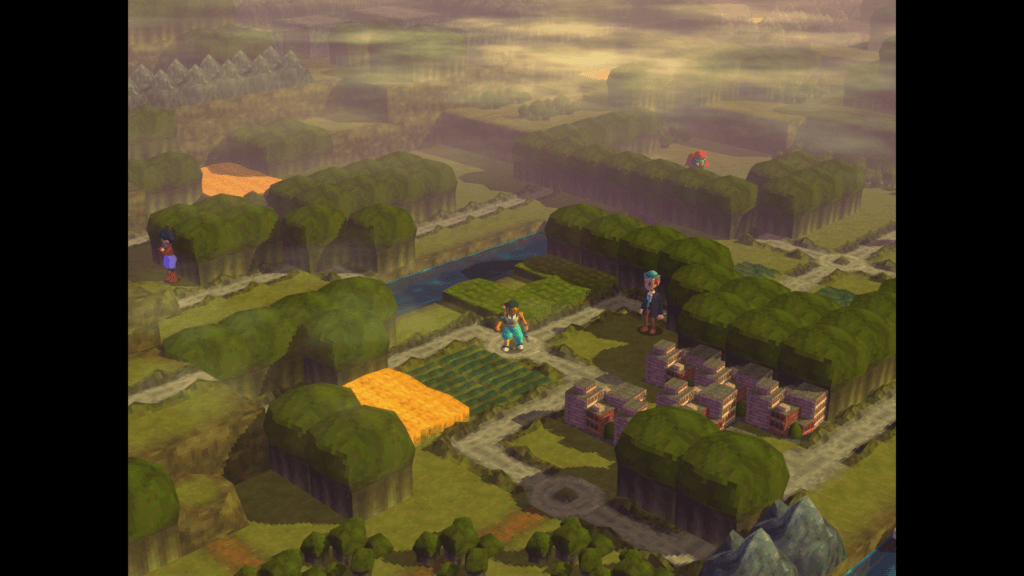
Exploration is not optional in Angeline Era. It is foundational. The overworld is nonlinear, and progression is rarely obvious. New areas are often hidden in plain sight, concealed behind subtle environmental cues or unconventional terrain. There are no objective markers, and the game offers little direction when it comes to deciding where to go next.
This design fosters a genuine sense of discovery. Finding a new location feels like uncovering a secret rather than completing a checklist item. It also introduces moments of uncertainty. Progress can slow as you search for the next path forward, unsure whether you have missed something or simply need to look differently.
Whether this feels immersive or frustrating depends largely on the player. For those who enjoy exploration-driven design, Angeline Era’s hands-off approach feels refreshing. For others, the lack of guidance may test patience. What matters is consistency. The game never breaks its own rules and never undercuts player agency, even when that trust demands more effort.
A Presentation That Serves the Game’s Intent
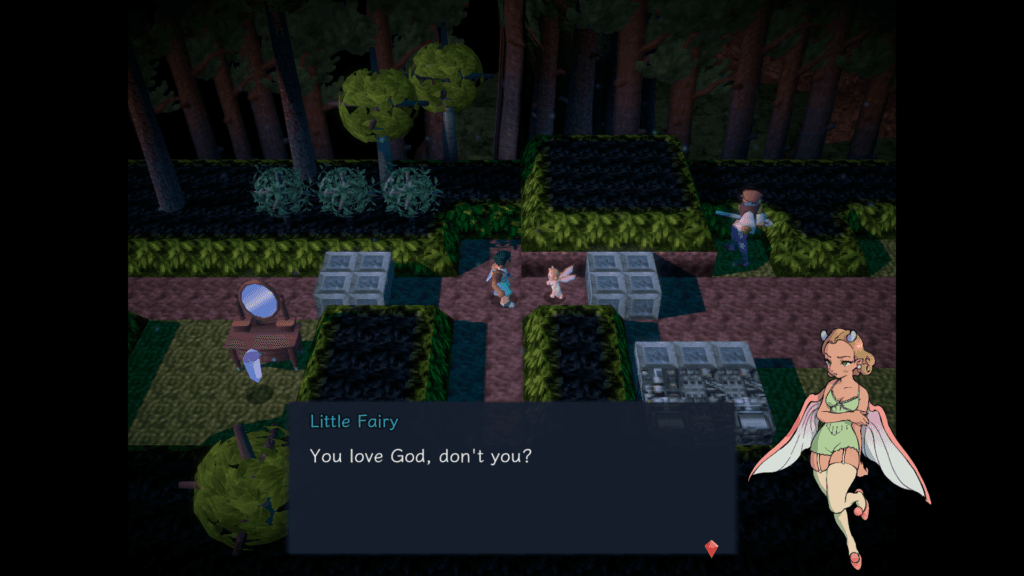
Visually, Angeline Era adopts a stylized 3D look reminiscent of late-1990s action RPGs. Environments are clean and readable, enemy designs are distinct, and the overall presentation feels intentional rather than dated. This clarity is crucial in a game so dependent on spatial awareness during combat.
The soundtrack, composed by Melos Han-Tani, stands out immediately. With dialogue kept intentionally sparse, the music often carries the emotional tone of each area. Tracks range from subdued and contemplative to energetic and driving, giving exploration and combat their own emotional identities.

Sound design follows the same restrained philosophy. Environmental audio and effects support immersion without drawing attention to themselves, reinforcing a game that values subtlety over spectacle.
Challenge, Pacing, and Player Accessibility
Angeline Era includes multiple difficulty options, allowing players to adjust the experience to their comfort level. Encounters can be demanding, especially early on, but the game rarely feels unfair. Success comes from learning systems and adapting movement rather than memorizing patterns or executing complex inputs.
The learning curve can still be steep. With minimal tutorials and unconventional mechanics, the game expects players to learn by doing. For some, that sense of discovery will be part of the appeal. For others, it may feel unwelcoming. Angeline Era makes no attempt to smooth those edges, and that confidence is both its strength and its risk.
Pros and Cons
Pros
- Distinctive bumpslash combat that emphasizes movement and positioning
- Exploration-driven progression that rewards curiosity
- Atmospheric soundtrack that strengthens tone and identity
- Restrained storytelling that avoids overexplanation
Cons
- Unconventional combat will not appeal to all players
- Limited guidance can lead to moments of aimlessness
- Fragmented narrative may feel overly opaque for players seeking clarity
Final Thoughts
Score: 4.5 / 5
Angeline Era is not a game that rushes to impress. It asks players to slow down, observe, and engage with its systems on their own terms. Its confidence lies in restraint, trusting that curiosity alone is enough motivation.
There are rough edges, and its design philosophy will not resonate with everyone. But for players willing to embrace its unconventional combat, nonlinear exploration, and understated storytelling, Angeline Era offers something increasingly rare: a game that feels deeply personal and unapologetically itself.
It does not shout for attention. It waits. And for those willing to listen, the experience it offers is quietly memorable.
This review is based on the Steam version, with a code provided by the game’s publishers.
About the Author