Broken Sword SotT: Reforged Review – A classic adventure sharpened, not reshaped
 Avinash Rohra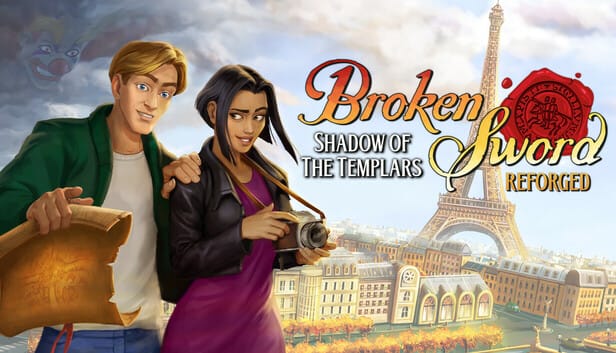
Some adventure games do not merely age; they settle. They become part of the genre’s shared language, referenced not just for their puzzles or plots, but for the tone they established and the confidence with which they told their story. Broken Sword – Shadow of the Templars is one such title, and Reforged approaches that legacy with admirable restraint. This is not a reinvention, nor does it attempt to modernize the game beyond recognition. Instead, it focuses on preservation through clarity, polish, and accessibility, while trusting the original design to carry its own weight.
Played on PC, Reforged feels immediately familiar to anyone with prior experience of the series, and surprisingly welcoming to those without it. It understands that what made Broken Sword endure was never technical bravado, but its pacing, its writing, and its ability to turn a globe-trotting conspiracy into something personal and human.
A conspiracy that unfolds at a human pace
The story remains the backbone of the experience. You step into the role of George Stobbart, an unassuming American tourist whose Parisian holiday is interrupted by a bombing outside a quiet café. From that deceptively simple inciting incident, Shadow of the Templars spins a far-reaching conspiracy involving ancient orders, religious symbolism, and buried history.
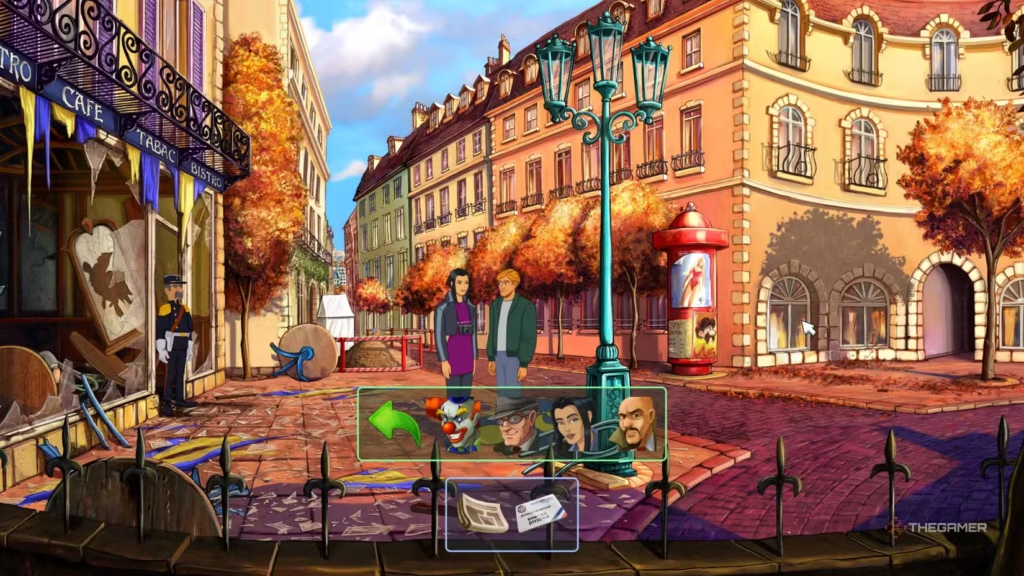
What stands out, even decades on, is how grounded the storytelling feels. The plot may stretch across continents and centuries, but it never loses sight of its characters. George is curious rather than heroic, reactive rather than domineering, and his gradual entanglement in the mystery mirrors the player’s own. The writing is confident without being indulgent, allowing conversations to breathe and humor to surface naturally.
Reforged does not alter the narrative structure, and that decision proves wise. The pacing remains deliberate, giving revelations time to land and allowing quieter moments to build atmosphere. In an era of rapid-fire storytelling, there is something refreshing about a game that trusts patience.
Point-and-click design with intention
Mechanically, Broken Sword – Shadow of the Templars: Reforged remains rooted in traditional point-and-click adventure design. You explore hand-drawn environments, examine objects, converse with characters, and solve inventory-based puzzles that rely on observation and logic rather than reflex.
The puzzles themselves are emblematic of their time, but largely fair. Solutions typically emerge from careful attention to dialogue and environment rather than lateral leaps of logic. When the game does ask you to make connections, it usually provides enough contextual grounding to do so, even if the pace occasionally slows as a result.
Interface refinements in Reforged help smooth friction without simplifying the experience. Interactions feel more readable, visual clarity is improved, and the overall flow benefits from subtle quality-of-life adjustments. Importantly, none of this undermines the core structure. This still feels like a classic adventure game, not a modern reinterpretation wearing old clothes.
Visual updates that respect the original
Visually, Reforged walks a careful line. The original art direction, defined by clean lines, expressive characters, and detailed backgrounds, has been enhanced rather than replaced. Environments are sharper, animations cleaner, and color work more consistent across scenes, but the aesthetic remains unmistakably Broken Sword.
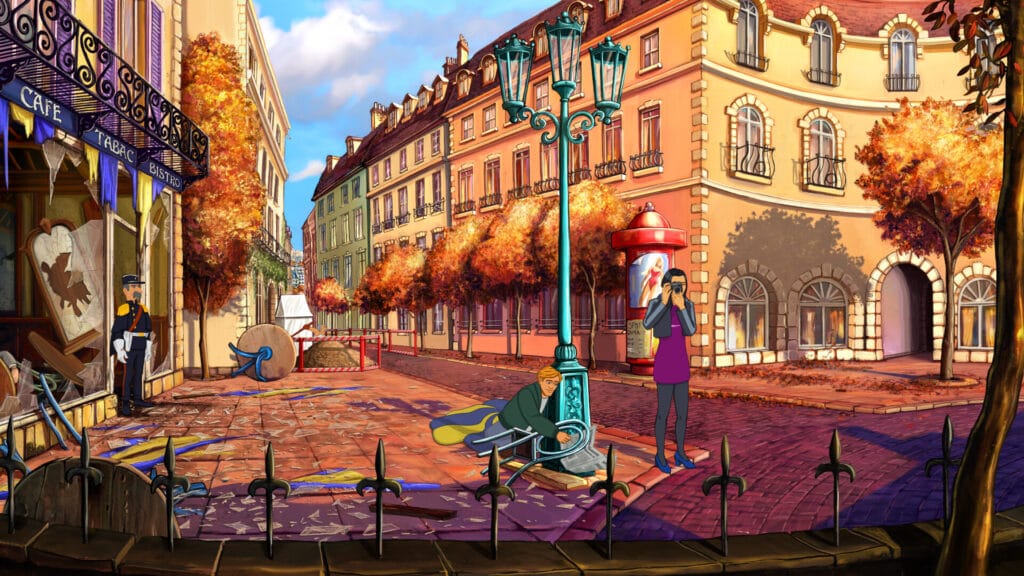
This matters because so much of the game’s identity is tied to its visual tone. Paris feels romantic but lived-in. Ancient ruins carry a sense of quiet menace rather than spectacle. Each location serves the narrative rather than distracting from it. The updated presentation improves readability on modern displays without erasing the charm of the original hand-drawn style.
Character animation, while still restrained, benefits from added smoothness. Expressions land more clearly, and body language helps sell dialogue that was already strong. It is an enhancement that supports storytelling rather than competing with it.
Voice, music, and atmosphere
Audio has always been one of Broken Sword’s strengths, and Reforged preserves that legacy. Voice performances remain a highlight, delivering dialogue with warmth and personality. George’s narration and conversations continue to ground the story, providing a sense of continuity as the plot widens.
The musical score complements this beautifully. Themes recur with purpose, reinforcing mood rather than overwhelming it. Whether underscoring tension or allowing scenes to breathe, the soundtrack remains an integral part of the experience. Sound effects are understated but effective, contributing to immersion without drawing attention to themselves.
Together, these elements reinforce the game’s greatest strength: atmosphere. Shadow of the Templars has always excelled at making the player feel like a participant in a slow-burning mystery, and Reforged maintains that tone with confidence.
A measured approach to modernization
One of Reforged’s most commendable qualities is what it chooses not to do. There is no attempt to retrofit contemporary design trends or streamline puzzles to the point of triviality. Instead, the remaster focuses on accessibility through clarity, including cleaner visuals, improved interface responsiveness, and better compatibility with modern systems.
For new players, this makes the game far easier to approach than older versions without diluting its identity. For returning players, it offers a version that feels comfortable on modern hardware without feeling unfamiliar. This balance is difficult to strike, and Reforged largely succeeds.
That said, some elements remain products of their era. Pacing can feel slow by modern standards, and players accustomed to constant feedback or objective markers may find themselves drifting during longer investigative stretches. These are not flaws so much as reminders of the game’s lineage.
Enduring design, minor friction
On PC, performance was stable throughout the playthrough, with no major technical issues encountered. Load times are minimal, and transitions between scenes feel smooth. Interface adjustments improve usability, though the underlying structure remains deliberately traditional.
The biggest limitation is not technical, but tonal. Broken Sword – Shadow of the Templars: Reforged assumes a willingness to engage on its terms. It asks players to listen carefully, read closely, and take their time. Those expectations may feel demanding to some, but they are central to what makes the experience work.
A classic that still earns your attention
What Reforged ultimately demonstrates is confidence in the original game’s design. Rather than attempting to justify Broken Sword’s relevance through reinvention, it allows the work to stand on its own, supported, clarified, and respectfully presented.
For long-time fans, this is the most comfortable way to revisit a formative adventure. For newcomers, it serves as a reminder of why point-and-click storytelling once defined the genre. The mystery remains compelling, the writing remains sharp, and the journey remains worth taking.
Final Score: 4 / 5
Broken Sword – Shadow of the Templars: Reforged is a careful, intelligent remaster that understands what needed improvement and what did not. It does not chase modernity for its own sake, but instead offers a refined version of a classic that still knows how to draw you in, one conversation, one puzzle, and one revelation at a time.
This review is based on the PC (Steam) version, with the code provided by the game’s publishers.
About the Author