Demonschool Review: Strategy, Supernatural Tension, and the Art of Doing More With Less
 Avinash Rohra
There is a very specific kind of confidence radiating from Demonschool, the sort that does not announce itself loudly but instead quietly assumes you will meet it on its own terms. After playing it extensively on PC, what becomes clear is that this is not a game trying to impress you with scale or spectacle. Instead, it sharpens its focus until every system, every line of dialogue, and every battle grid feels intentional. It is a tactical RPG that understands pacing, tone, and player curiosity far better than most of its contemporaries, and it lingers long after you have stepped away from the screen.
At first glance, Demonschool appears deceptively simple: anime-inspired character art, a school setting, grid-based combat, and a supernatural premise that feels comfortably familiar. But familiarity here is a deliberate misdirection. What Demonschool actually delivers is a tightly constructed experience that blends strategy, character-driven storytelling, and mechanical elegance into something that feels both nostalgic and quietly radical.
A School Where Every Decision Matters
Set on a mysterious island university plagued by demonic incursions, Demonschool casts you as Faye, a transfer student whose arrival coincides with things going very, very wrong. Classes exist, friendships form, rivalries simmer, and somewhere beneath the everyday routines lies a constant sense of unease. The school is not just a hub; it is a living structure where time management, exploration, and conversations carry tangible weight.
The game’s calendar system subtly dictates your priorities. You cannot do everything, and Demonschool is refreshingly unapologetic about that. Choosing to deepen relationships, investigate strange occurrences, or prepare for upcoming threats always means sacrificing something else. This tension creates a rhythm that feels more personal than prescriptive, encouraging you to role-play rather than optimize.
Tactical Combat, Refined to Its Essence
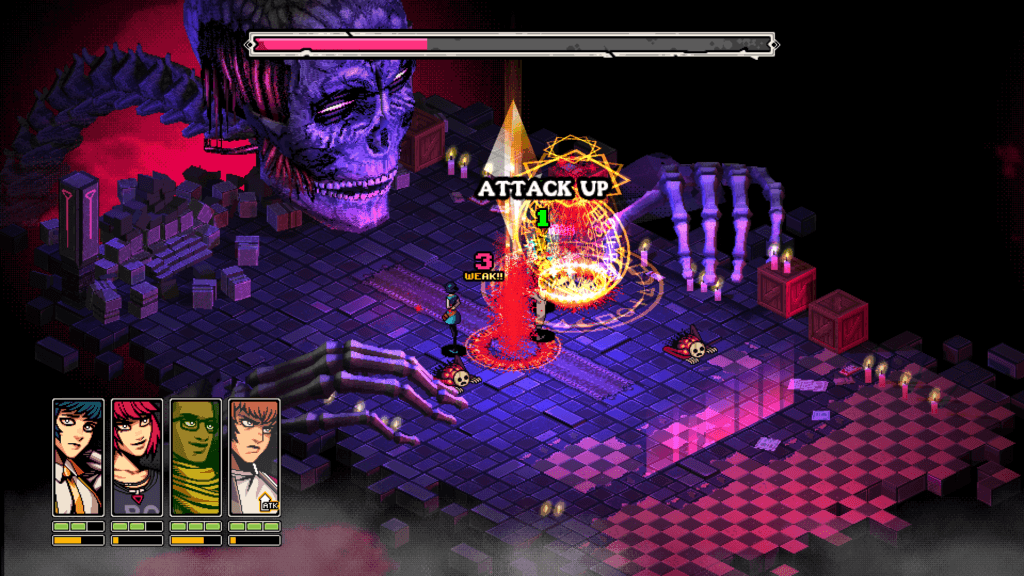
Combat is where Demonschool truly distinguishes itself. Battles unfold on compact grids, but unlike many tactics games, positioning is only half the equation. Every character action is previewed in advance, allowing you to visualize the entire turn before committing. Movement paths, enemy attacks, and knockback effects are all clearly communicated, transforming each encounter into a precise puzzle rather than a chaotic skirmish.
This system removes randomness without draining tension. Success depends on foresight, sequencing, and understanding how characters interact with one another. Abilities often synergize in subtle ways, rewarding careful planning and punishing sloppy execution. When a plan comes together, the satisfaction is immense, not because the numbers go up, but because your understanding deepens.
Crucially, battles rarely overstay their welcome. Encounters are concise, focused, and varied enough to avoid repetition. The result is a combat loop that feels sharp rather than bloated, cerebral rather than grind-heavy.
Characters That Feel Intentionally Written

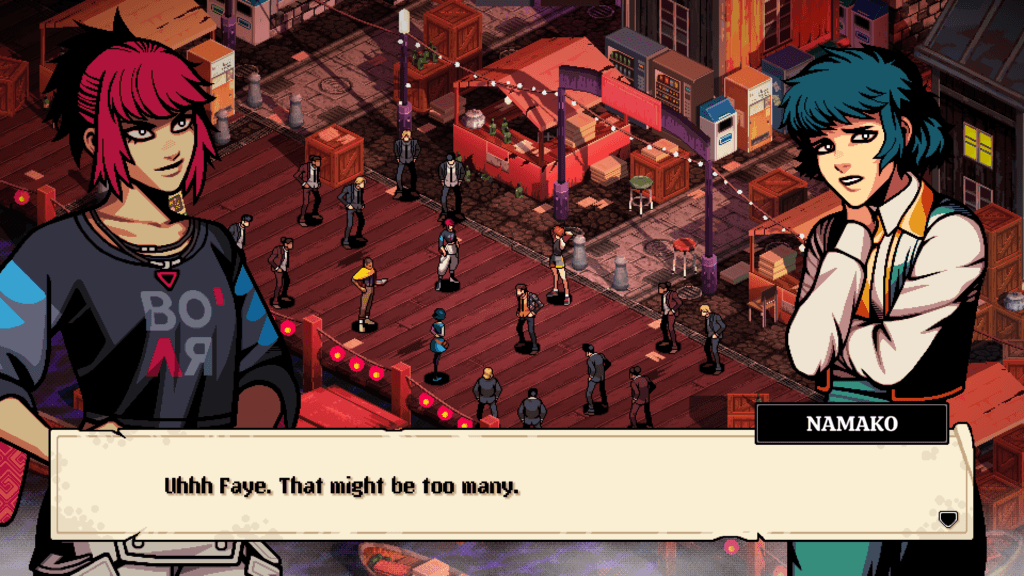
One of Demonschool’s greatest strengths is its cast. Faye and her companions are not archetypes filling predetermined roles; they are individuals with distinct anxieties, motivations, and emotional boundaries. Dialogue is economical but expressive, often revealing more through implication than exposition. Conversations feel natural, occasionally awkward, and refreshingly grounded despite the supernatural backdrop.
Relationship-building is handled with restraint. Rather than overt “social links,” bonds develop organically through shared experiences and choices. Some characters warm to you quickly, others keep their distance, and a few challenge your assumptions outright. This approach lends authenticity to the cast and makes narrative moments feel earned rather than triggered.
Aesthetic Restraint, Artistic Confidence
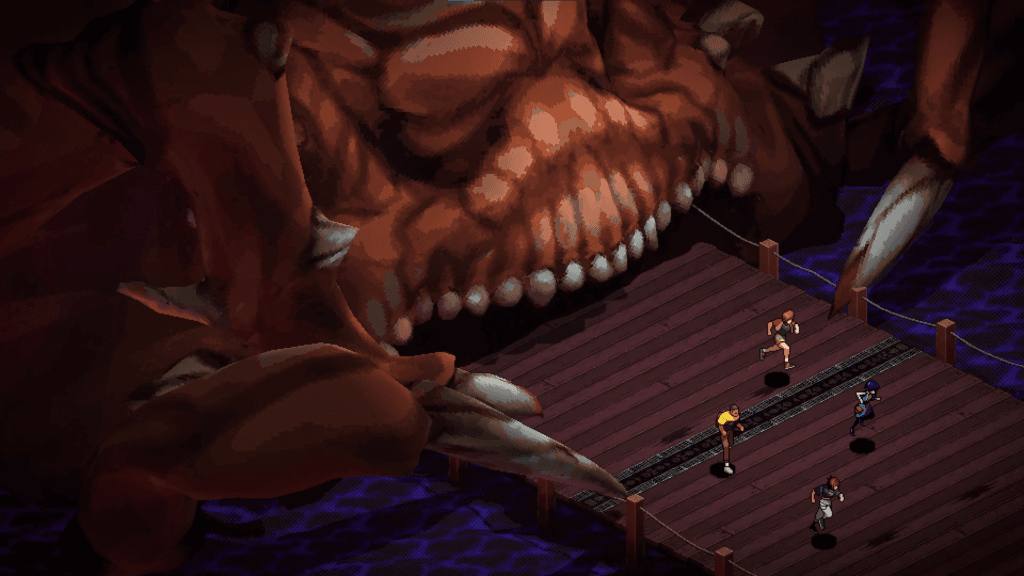
Visually, Demonschool draws clear inspiration from late-90s and early-2000s anime, but it avoids empty pastiche. Character portraits are expressive without excess, environments are clean and readable, and animations are functional yet stylish. There is a deliberate minimalism at play, one that prioritizes clarity over flash.
The soundtrack complements this approach beautifully. Music shifts subtly between calm, eerie, and tense, never overpowering the scene but always reinforcing mood. Silence is used just as effectively as sound, especially during exploration and dialogue-heavy sequences. Together, the art and music create an atmosphere that feels intimate rather than theatrical.
Themes Beneath the Surface
Beneath its tactical framework, Demonschool is a game about control, responsibility, and the anxiety of transition. The school setting is not incidental; it reinforces themes of expectation, inherited burdens, and the fear of not living up to roles imposed by others. Supernatural elements function less as spectacle and more as metaphor, reflecting internal conflicts rather than external threats alone.
The narrative trusts the player to connect dots without constant guidance. It is comfortable with ambiguity, allowing certain questions to linger unresolved. This restraint gives the story texture and invites interpretation, a rarity in a genre often obsessed with over-explanation.
On PC, Demonschool runs smoothly and responsively. Load times are minimal, controls are intuitive, and the interface is cleanly designed. Menus prioritize function over flair, making information easy to parse during both combat and exploration. Technical hiccups are rare, and when they do occur, they are minor enough not to disrupt the experience.
The game’s modest scope works in its favor here. By knowing exactly what it wants to be, Demonschool avoids the pitfalls of overextension and delivers a polished experience that feels complete rather than compromised.
Why Demonschool Stands Out
In a landscape crowded with sprawling RPGs and system-heavy strategy titles, Demonschool succeeds by doing less, and doing it better. It strips tactical combat down to its most engaging components, wraps it in a thoughtful narrative, and supports it with art and sound design that respect the player’s intelligence.
This is not a game chasing trends or mass appeal. It is a carefully authored work from Necrosoft Games, confident enough to prioritize cohesion over scale. The result is a tactical RPG that feels personal, deliberate, and deeply satisfying.
Final Verdict
Final Score: 4.5 / 5
Demonschool is the kind of game that rewards attention. The more you engage with its systems, characters, and themes, the richer it becomes. Its combat is elegant, its writing is sharp, and its atmosphere is quietly compelling. It may not shout for your attention, but once it has it, it refuses to let go.
For players who value thoughtful design, meaningful choices, and tactical clarity over sheer content volume, Demonschool is an easy recommendation, and one of the most confident strategy RPGs you can play today.
This review is based on the Steam version, with the code provided by the game’s publishers.
About the Author