Avinash Rohra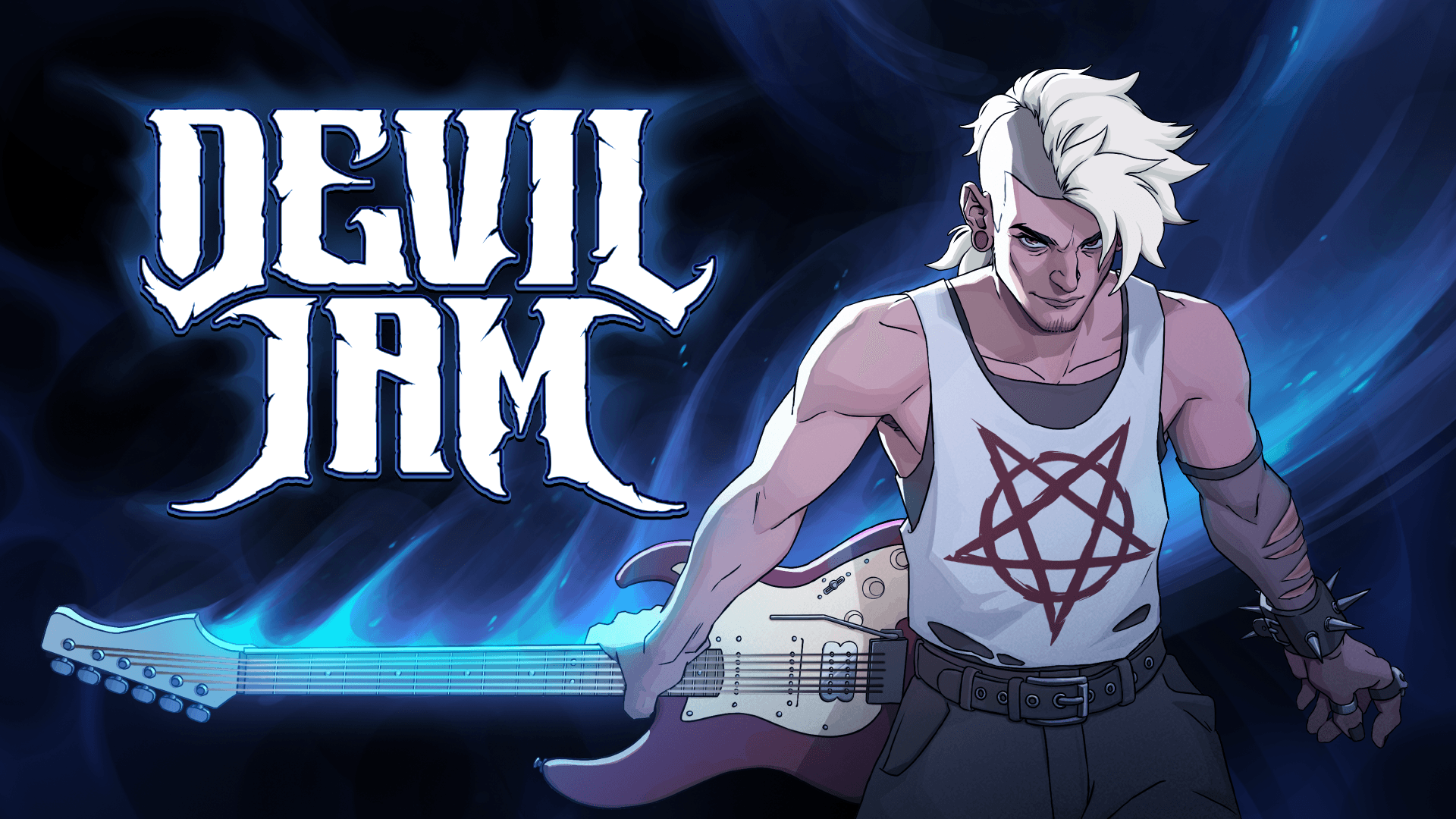
There is no mistaking what Devil Jam wants to be. From the moment it boots up, it is drenched in attitude: aggressive music, infernal imagery, and a presentation that leans hard into excess. This is a game that announces itself at full volume and never really turns the dial down. I played Devil Jam on PC in its current release form, and while its commitment to style is admirable, the experience beneath that surface rarely reaches the same intensity.
Devil Jam is not short on identity. What it struggles with is follow-through. There is a compelling core here, a rhythm-inflected action game that wants combat, music, and spectacle to blur together, but too often its systems feel loosely stitched rather than tightly composed. The result is a game that is intermittently fun, consistently striking, and ultimately uneven.
A Concept Built on Noise and Fury
At its heart, Devil Jam positions itself around the idea of rhythm-driven combat. Encounters are designed to play out in sync with the soundtrack, encouraging players to attack, dodge, and reposition to the beat rather than relying solely on reflex. In theory, this creates a heightened sense of flow, where music is not just atmosphere but a structural element of play.
In practice, the execution is mixed. While the soundtrack is ever-present and assertive, combat does not always feel meaningfully bound to it. Timing attacks to the beat can enhance effectiveness, but the feedback is subtle, and the consequences of missing that rhythm are not always clearly communicated. As a result, the rhythm elements often feel optional rather than essential, which undercuts the game’s central promise.
This does not make Devil Jam unplayable. Moment-to-moment action is functional, but it does leave the experience feeling less distinctive than its premise suggests.
Combat That Looks Better Than It Feels
Devil Jam’s combat system is straightforward. You move through enclosed arenas, dispatching waves of enemies using a limited but flashy set of attacks. The animations are bold and exaggerated, and there is a satisfying visual punch to landing hits, especially during larger encounters.
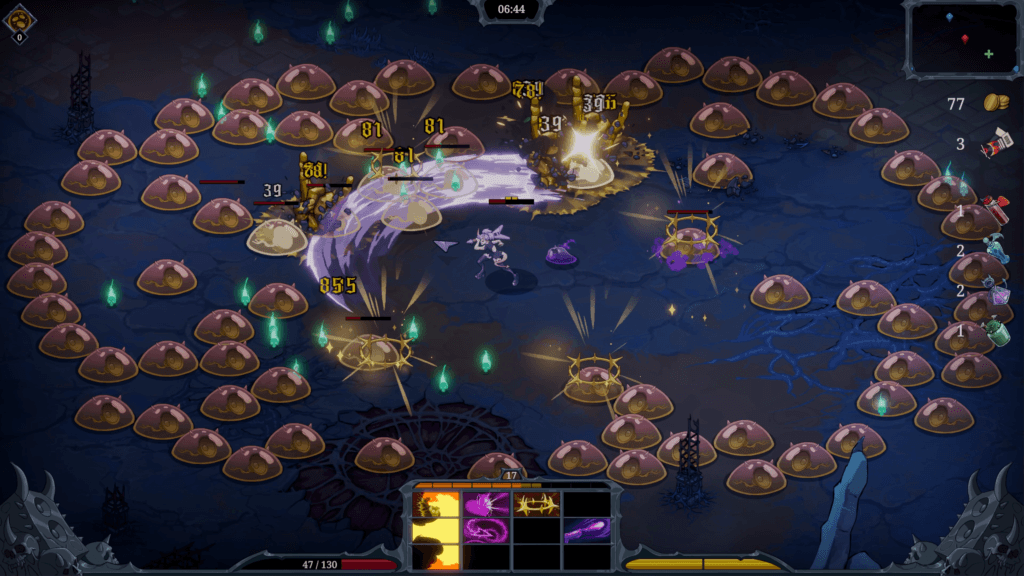
Where the system falters is depth. Enemy variety exists, but behavioral differences are limited, leading encounters to blur together over time. Most situations are resolved using similar strategies, and while difficulty increases, it does so largely through higher enemy density rather than by introducing genuinely new challenges.
Boss encounters fare slightly better. They are visually distinct and more mechanically demanding, requiring greater awareness and positioning. Even so, these highlights rarely evolve beyond established patterns, making them memorable more for presentation than for design.
A World That Commits to Its Look
If there is one area where Devil Jam rarely wavers, it is presentation. The game’s visual direction is unapologetically heavy, leaning into demonic imagery, harsh contrasts, and exaggerated character designs. Environments feel oppressive and theatrical, clearly built to support the game’s aggressive tone rather than realism.
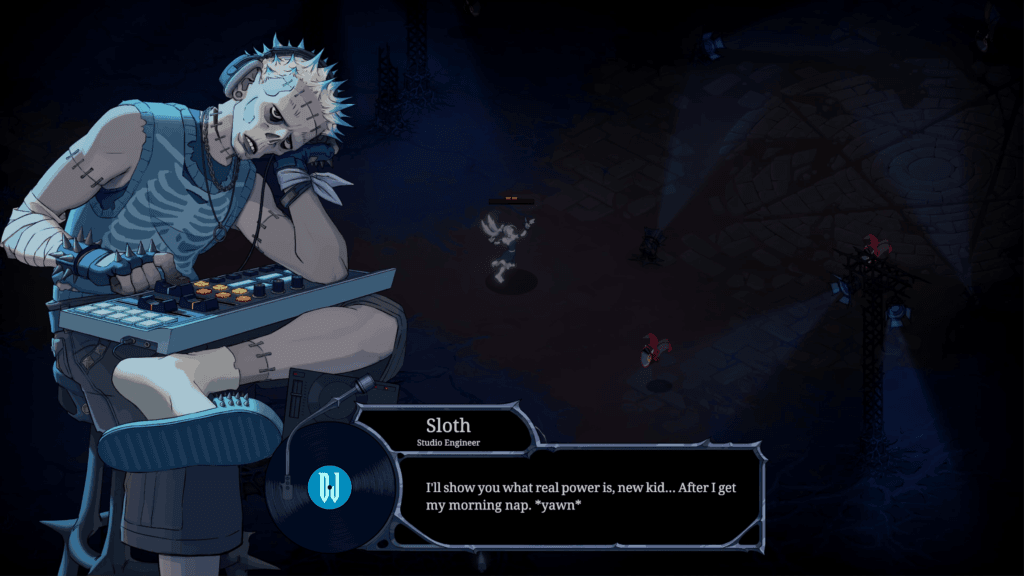
This commitment extends to the audio design. The soundtrack is loud, persistent, and central to the game’s identity. It succeeds in maintaining energy, even during slower stretches, and does much of the heavy lifting when it comes to atmosphere. However, its constant intensity can become fatiguing over longer sessions, particularly when gameplay fails to escalate alongside it.
Structure and Progression
Progression in Devil Jam is linear and predictable. You move from encounter to encounter, unlocking minor upgrades and pushing steadily forward. There is little room for experimentation or divergence, and while this keeps the experience focused, it also limits replayability.
Upgrades provide incremental improvements rather than transformative changes, meaning your approach to combat remains largely consistent throughout the game. For some players, this simplicity will be welcome. For others, it will feel like a missed opportunity to deepen the rhythm-action interplay that the game gestures toward but rarely fully embraces.
From a technical standpoint, Devil Jam runs competently on PC. Performance during my playthrough was stable, with no crashes or progression-blocking issues encountered. Load times were reasonable, and controls were responsive enough to support the game’s demands.
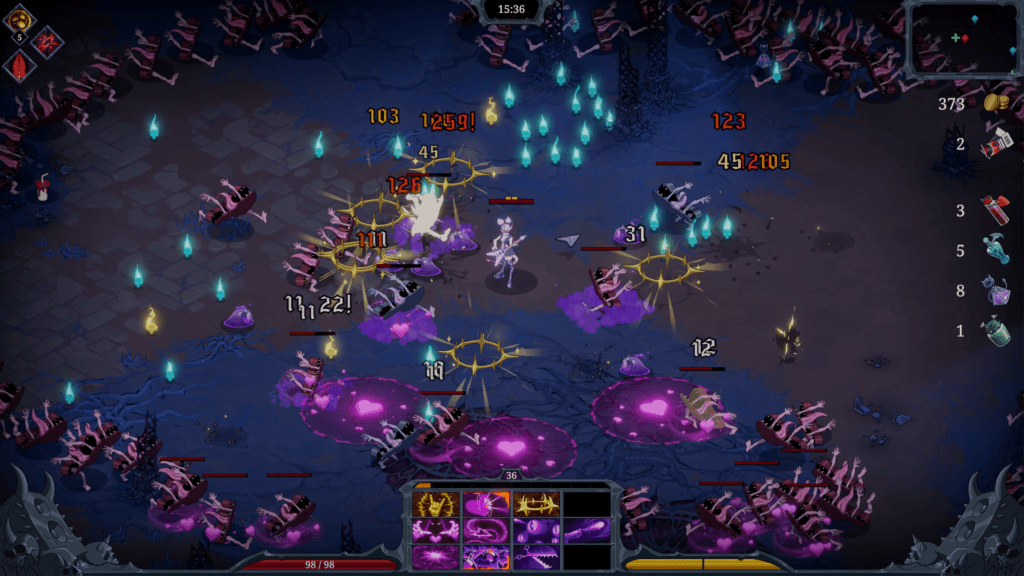
That said, responsiveness alone does not guarantee satisfaction. Input timing is reliable, but without stronger systemic feedback tying actions to rhythm, the combat loop lacks the sharpness needed to remain engaging over time.
Where Devil Jam Loses Momentum
The most persistent issue with Devil Jam is not any single flaw, but a sense of underdevelopment. Systems exist, but they rarely reinforce one another strongly enough to create something greater than the sum of their parts. The rhythm mechanics feel underutilized, combat lacks long-term variety, and progression fails to meaningfully change how the game is played.
This creates a disconnect. The game looks intense and sounds relentless, yet often plays it safe. There is nothing fundamentally broken here, but there is also little that surprises once the opening hours pass.
Final Verdict
Devil Jam is a game that commits fully to its aesthetic but only partially to its ideas. Its presentation is confident, its soundtrack relentless, and its combat serviceable, but the deeper integration between rhythm and action never quite materializes. What remains is a competent, visually striking experience that struggles to sustain its own energy.
Score: 3.5 / 5
For players drawn to bold style and straightforward action, Devil Jam offers enough to justify a look, especially in shorter sessions. Those hoping for a rhythm-action hybrid that meaningfully evolves or challenges its own premise may find that it stops short of its potential. Devil Jam makes a lot of noise, and while that noise is memorable, it does not always translate into lasting impact.
This review is based on the PC (Steam) version, with the code provided by the game’s publishers.
About the Author