Romancing SaGa -Minstrel Song- Remastered Review – A Beautifully Unruly RPG That Still Defies Convention
 Avinash Rohra
There’s something oddly comforting about returning to a game that never once tried to comfort you. Romancing SaGa -Minstrel Song- Remastered is that kind of experience: prickly, stubborn, imaginative, and unmistakably itself. Revisiting it on the PS5, I’m reminded of a truth that feels increasingly rare in modern RPG design – some games aren’t here to guide you, they’re here to let you wander. And Square Enix’s remaster doesn’t revise that philosophy so much as it sharpens it.
Released originally in 2005 as a remake of the first Romancing SaGa, and remastered again in 2022, this International edition extends the updated features and expands language support. On PS5, you get the same suite of refinements: HD visuals, quality-of-life improvements like high-speed mode, enhanced UI clarity, and updated New Game+ options. It’s not a reinvention. It’s a recalibration. And that’s important – because this is a game built around the player’s willingness to engage on the game’s terms.
A World That Opens Sideways, Not Forward
The moment you start Minstrel Song, the game pushes you toward freedom rather than direction. You choose one of several protagonists – each with their own starting point and narrative priorities – and then the structure expands outward, not forward. This is not a linear JRPG with an escalating three-act structure. It’s more like stepping into a living myth cycle, where quests appear based on who you meet, how you explore, and what decisions you make along the way.
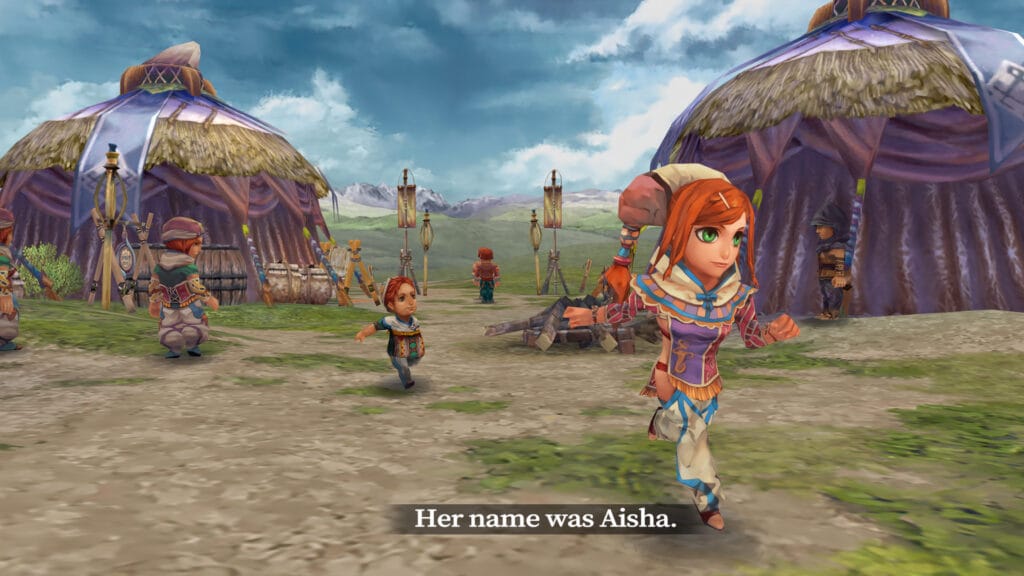
This design remains unchanged in the remaster, and that’s a good thing. The non-linear scenario system is one of the SaGa series’ defining traits, and here it’s still foundational. The International edition doesn’t add new story arcs or cutscenes; instead, it focuses on making the process less opaque. Map markers are cleaner. UI information is easier to read. But the ethos remains untouched: you decide how the adventure unfolds.
For players raised on modern quest logs and breadcrumb trails, the game can feel startlingly unstructured. But for those willing to lean into its rhythm, the openness can be liberating. You’re not following a path – you’re carving one.
Combat That Rewards Curiosity Over Routine
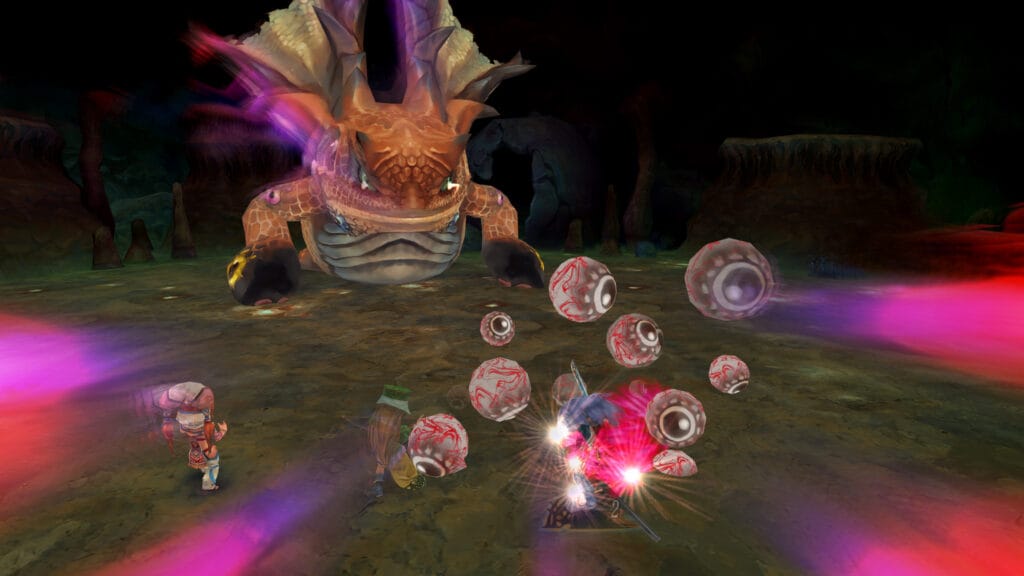
Turn-based combat in Minstrel Song is built on interconnected systems that value experimentation. Characters develop proficiencies based on what you use. Different formations provide strategic advantages. Skills can “glimmer” – unlocking new techniques mid-battle. None of these ideas are new to SaGa veterans, but the remaster’s presentation helps them breathe.
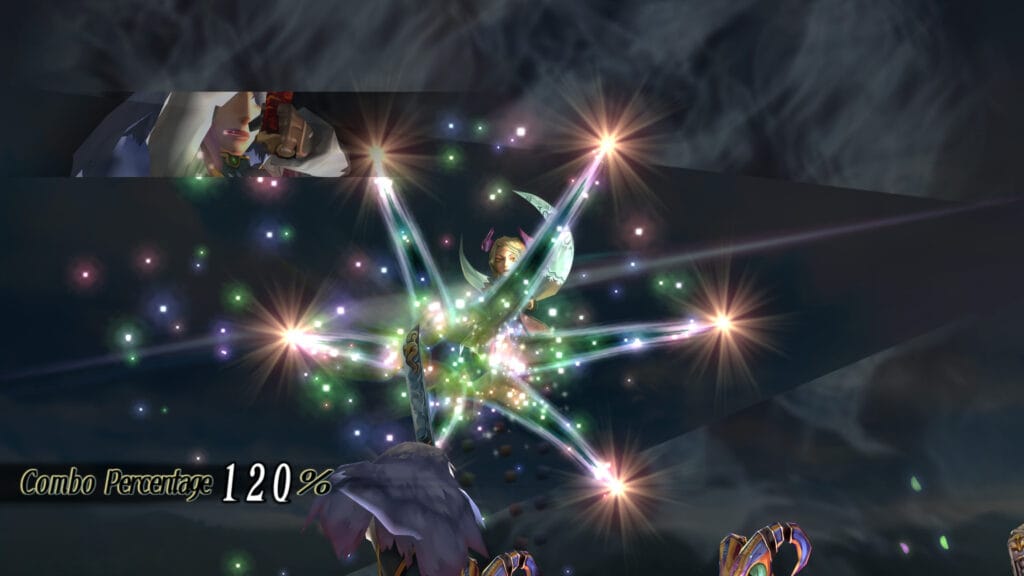
On PS5, battles load quickly and run smoothly. The high-speed mode is a massive help during ability training and general exploration, reducing downtime without compromising the underlying systems. The remaster doesn’t rewrite the mechanics – it simply removes the frictions of old hardware.
The combat can still feel unpredictable, but not arbitrarily so. When a boss crushes you, it’s usually a hint about your roster, your equipment choices, or your formation. It’s not an easy system to master, yet it remains one of the most rewarding aspects of the game precisely because it doesn’t flatten itself for convenience.
There’s still a learning curve. Some tutorials are terse, and the game still expects players to discover certain mechanics organically. But that expectation is intentional, not accidental – the SaGa identity hinges on discovery.
A Remaster Focused on Modern Comforts, Not Modernization
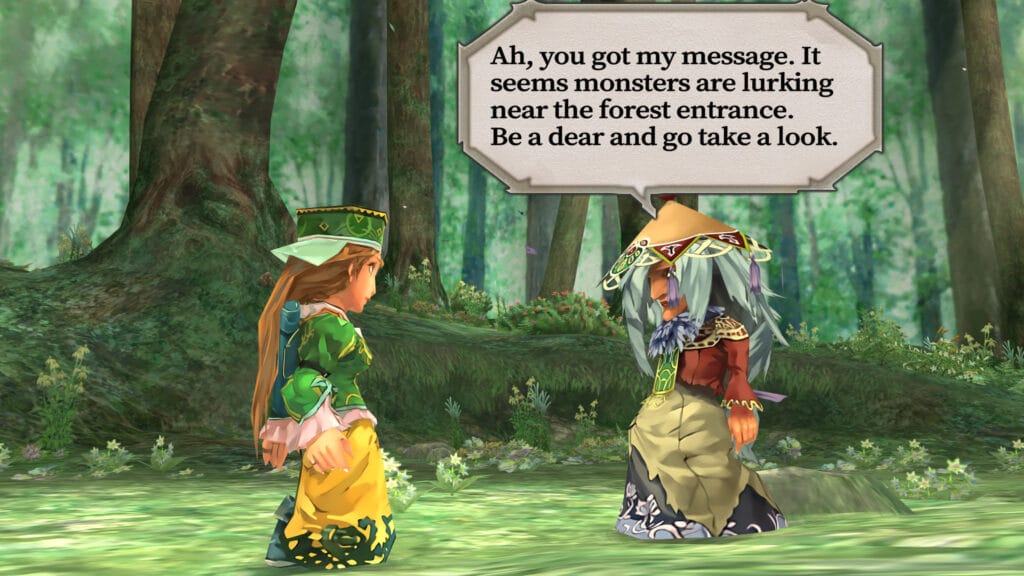
Square Enix’s improvements here are measured and technical. The visuals are upscaled to HD, character models and environments are cleaner, and text readability is better. These aren’t sweeping artistic overhauls – they’re respectful enhancements, preserving the original art direction rather than replacing it.
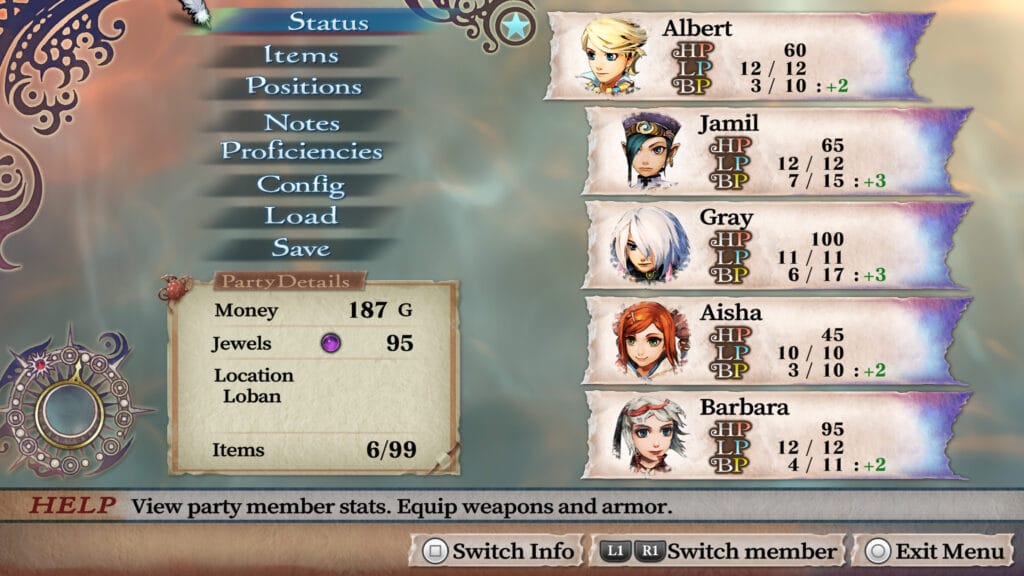
More impactful are the mechanical comforts:
- High-speed mode for exploration and battles
- Improved New Game+ options
- Better UI clarity
- Expanded language availability in the International edition
The soundtrack – composed by Kenji Ito – returns intact, and it remains one of the game’s strongest atmospheric pillars. The melodies shift from airy folk motifs to grand, adventurous crescendos, fitting the game’s mythic tone without overwhelming it. Nothing is rearranged or altered drastically; instead, the remaster lets the compositions shine through cleaner audio presentation.
Characters and Mythmaking Across Multiple Playthroughs
One of the most distinctive aspects of Minstrel Song is how personal each campaign feels. Because each protagonist starts with their own motivations and region, your connection to the world depends heavily on who you choose and how you interpret their journey. The storytelling style doesn’t deliver traditional arcs with clean climaxes; instead, it offers free-form encounters, quest chains that unfold based on your actions, and choices that subtly influence future availability.
This means no two playthroughs feel quite the same. And because the remaster expands New Game+ functionality – allowing players to carry forward more benefits and re-experience quests with alternate outcomes – the game encourages revisiting its world in a way that feels intentional rather than padded.
If you want a JRPG that hands you a single cinematic adventure, this isn’t that. But if you want the sense that you’re weaving your own version of events – this remaster preserves that beautifully.
How It Fits in the RPG Landscape Today
Comparing Minstrel Song to modern RPGs highlights its uniqueness. Where contemporary titles prioritize accessibility and narrative clarity, Minstrel Song still draws from design priorities closer to tabletop role-playing – offering systems and letting you discover how they interlock.
This is not a polished, theme-park RPG. It’s a toolkit wrapped in folklore. And while many modern games borrow modular party systems or choice-driven progression, few deliver it in this free-form, non-linear format. That makes Minstrel Song feel simultaneously old-school and avant-garde, depending on your perspective.
In 2025, its design philosophy may feel unfamiliar to newer players, but it also feels like a refreshing break from formulaic genre expectations.
Technical Performance on PS5
The remaster runs cleanly on PS5. Load times are extremely quick, transitions are snappy, and I encountered no notable performance issues during exploration or battle. The UI improvements and HD scaling are most noticeable on larger screens, though the menus still retain some of their PS2-era layout sensibilities.
Nothing about the PS5 version feels heavily rebuilt for the hardware – but everything feels smoother because of it.
Replayability and Longevity
With multiple protagonists, branching quests, and a large pool of recruitable characters, Minstrel Song is structured to be replayed. This isn’t optional replayability – it’s core to the game’s identity. The expanded New Game+ options make it even easier to see questlines you may have missed, test alternate choices, or attempt more difficult routes.
Even finishing a single protagonist’s story doesn’t reveal the full scope of the game’s content. That’s an intentional part of the design, not padding.
Score: 4.2 / 5
Pros
- Deep, flexible combat system
- Rewarding non-linear exploration
- Strong soundtrack presentation
- Useful quality-of-life improvements
- High replayability
Cons
- Some systems remain opaque
- Visuals feel lightly updated rather than reimagined
- Difficulty and progression can feel unintuitive to newcomers
Verdict – A Timeless Oddity That’s Better Than Ever
Romancing SaGa -Minstrel Song- Remastered remains a niche classic, but it’s now a much more approachable one. The remaster updates the experience without diluting its identity, keeping its exploratory spirit, experimental combat, and multi-protagonist storytelling intact.
It won’t appeal to everyone – and it was never meant to. But for players open to its unusual structure, its insistence on discovery, and its commitment to player agency, it remains one of the most distinct JRPG experiences available on a modern console.
This review is based on the PS5 version, with the code provided by the game’s publishers.
About the Author