Static Dread Review – A Whisper That Grows Into a Weight You Can’t Shake
 Avinash Rohra
Some horror games want to startle you immediately. Static Dread wants to sit in the room with you, breathe softly, and let the unease rise naturally. When I played it on PS5, over a pair of focused sessions that stretched across a long evening and the following morning, I realized early on that this wasn’t the sort of horror experience eager to prove itself. Instead, it establishes its identity by asking you to wait. To watch. To listen.
The game’s opening hour is almost deceptively quiet. You move through ordinary, familiar interiors – rooms that feel like they were borrowed from a life half-lived. Everything is neat but not pristine, mundane but not entirely trustworthy. It’s the kind of setting that feels like a memory rather than a location, a space that belongs to someone but is strangely reluctant to acknowledge their existence.
What stood out almost immediately was the pacing: deliberate, measured, confident. Static Dread does not rush to unsettle you, and that confidence is disarming. The horror comes not from what you see but from what you begin to suspect: that something in the room has changed, that something behind you is slightly different, that something inside the walls has decided to pay attention.
This slow, creeping intimacy becomes the backbone of the entire experience.
Horror in the Negative Space
The atmosphere is defined not by what the game shows, but what it hides. Nearly every room feels engineered to appear ordinary at first glance, but each space carries a quiet hostility. The walls feel too smooth, the furniture too neatly aligned, the lighting too calculated. As I continued through the early areas, I felt a slow tightening around the edges of perception.
The magic of Static Dread is how it transforms repetition into discomfort. Walking through the same kitchen or hallway three, four, even five times – only to notice that a lamp has shifted or a door is slightly ajar – creates a form of environmental gaslighting. You start wondering whether you’re observing carefully or simply imagining threats. The game doesn’t clarify. It lets the burden of interpretive discomfort fall entirely on the player.
By refusing to showcase explicit horrors, Static Dread achieves something rare: it makes stillness feel corrupted. Its strongest moments come not from events, but from spaces. From rooms that behave like characters. From corners that behave like decisions.
A Story Told by What’s Missing
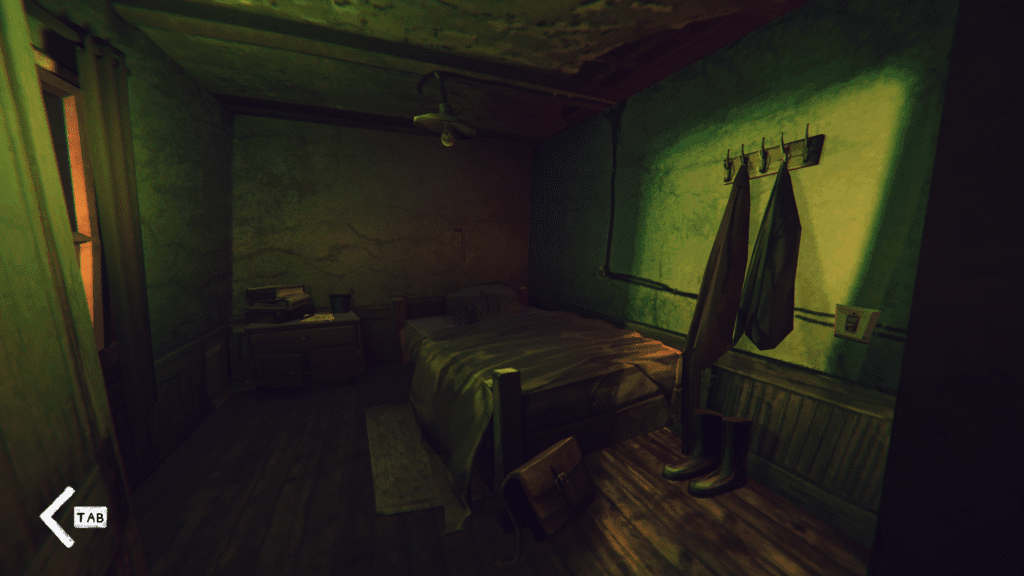
Static Dread does not explain itself. There are no cutscenes, no monologues, no exposition panels neatly arranged to tell you what’s happening. Instead, the game leans into narrative absence. It wants you to infer meaning from changes, to interpret emotional states from lighting, to guess intentions from static and silence.
The “story” is not about what happens, but about what changes. A room looks different the third time you enter it. A picture frame that once held comfort now looks like a symptom. Objects feel selectively manipulated by a presence that never reveals itself directly.
This kind of storytelling is highly subjective, and that’s the point. Static Dread trusts players to bring their own emotional vocabulary. It offers textures rather than facts, impressions rather than lore. The narrative forms through intuition, not explanation.
Some will find this approach fascinating; others will find it evasive. But the key is that the game remains consistent. It never breaks its own rules of omission. And consistency in minimalism is harder than it looks.
The pacing of Static Dread is not evenly balanced. The first hour is taut and sharply constructed. It builds anxiety through familiarity: each revisited room contains a single deviation, enough to make every return feel loaded with possibility.
But somewhere around the midpoint, the game enters a loop that feels less organic. You encounter variations of the same environmental puzzles – pattern recognition, object placement, small spatial adjustments. While none of these mechanics are tedious on their own, their repetition flattens the emotional curve. The tension becomes predictable not because you know what will happen, but because you know how the game will communicate its shifts.
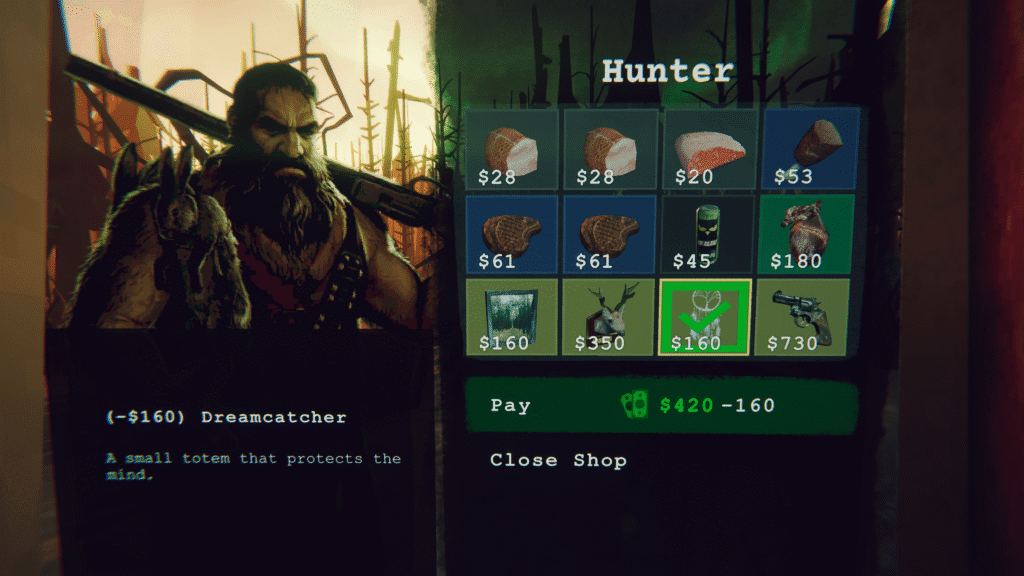
Fortunately, the final act recovers much of that early potency. The environmental changes become more dramatic, the soundscape more assertive, and the rooms more expressive. The ending reframes earlier spaces with a kind of subtle emotional payoff that respects the game’s minimalist ethos without abandoning the unease it spent hours crafting.
Fear Through Frequencies
The soundscape is, unequivocally, Static Dread’s most impressive achievement. This is not a game built around music or scripted audio stingers. It is built around carefully engineered discomfort.
Static isn’t used as noise. It’s used as a medium. It fills rooms with emotional pressure. It recedes just long enough to give you hope before re-emerging like a thought you tried to suppress.
There were stretches when the sound felt almost physiological – low hums that vibrated the air around me and made movement feel consequential. Silence becomes another sound effect, often more powerful than anything else the game deploys.
This is a game where you navigate not by sight, but by intuition triggered through sound.
A Narrow Mechanical Palette Used With Purpose
Mechanically, the game is extremely simple. You walk, examine objects, solve environmental puzzles, and occasionally react under mild pressure. There is no combat system. No resource management. No stealth mechanics.
This minimalism is intentional. It keeps your attention on the spaces rather than the systems. But it also exposes the limits of what the game can do in terms of mechanical escalation. Once you understand the rhythm – walk, observe, adjust, repeat – the gameplay becomes a vessel for atmosphere rather than a varied set of challenges.
Despite that, the simplicity never feels dishonest. Static Dread doesn’t pretend to be anything other than a slow, atmospheric descent into uncanny spaces. Its mechanics serve its mood with quiet precision.
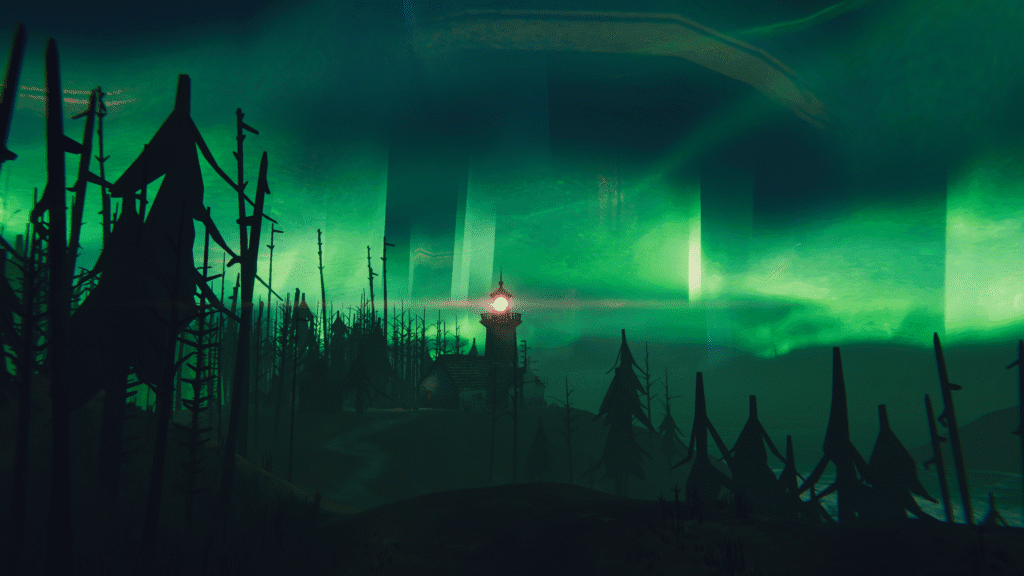
A Single Descent Meant to Stay With You
With its linear structure and absence of branching narrative, Static Dread doesn’t offer much in terms of replayability. But replaying isn’t really the point. The experience is meant to linger, not repeat.
You can revisit it to catch earlier details with new context, but the real replay value lies in reflection rather than repetition.
Pros and Cons
Pros
- Superb, deeply effective sound design
- Excellent DualSense integration on PS5
- Strong atmospheric tension and environmental storytelling
- Restrained visuals that amplify psychological discomfort
Cons
- Repetitive mid-game puzzle structures
- Limited mechanical variety
- Minimal traditional replay value
Score: 3.8/5
Final Verdict – A Confident Whisper in a Loud Genre
Static Dread may not attempt the grandiosity of larger horror titles, but that’s its strength. It embraces quiet terror – terror that emerges from spaces, from shifts, from the suspicion that something is wrong without ever proving it.
Its flaws are clear, but so is its identity. And in a genre overflowing with noise, a whisper delivered with confidence can be more haunting than any scream.
This review is based on the PS5 version, with the code provided by the game’s publishers.
About the Author