Tales of Berseria Remastered Review – Revenge Reforged for a New Generation
 Avinash Rohra
When Tales of Berseria originally released in Japan in 2016 and globally in 2017, it stood apart from most JRPGs for one simple reason. Its protagonist was not a hopeful hero destined to save the world. She was angry, bitter, and driven by revenge.
Nearly a decade later, Tales of Berseria Remastered brings that same story back to modern platforms, including PC, with graphical polish and quality-of-life improvements that make revisiting Velvet Crowe’s journey surprisingly compelling again.
After spending several long evenings replaying the remastered PC version, revisiting major story arcs and re-learning the rhythm of its fast-paced combat, one thing becomes immediately clear. Berseria’s biggest strength has never been its visuals or even its mechanics.
It’s the characters.
And that strength has aged remarkably well.
Velvet Crowe Is Still the Series’ Most Dangerous Protagonist
JRPGs love their heroes. Noble warriors, chosen ones, optimistic teenagers destined to defeat evil. Velvet Crowe is none of those things.
Her story begins with a traumatic event involving the loss of her brother, an incident that reshapes her entire life and pushes her onto a relentless path of revenge. From that moment forward, Berseria refuses to frame Velvet as a traditional savior.
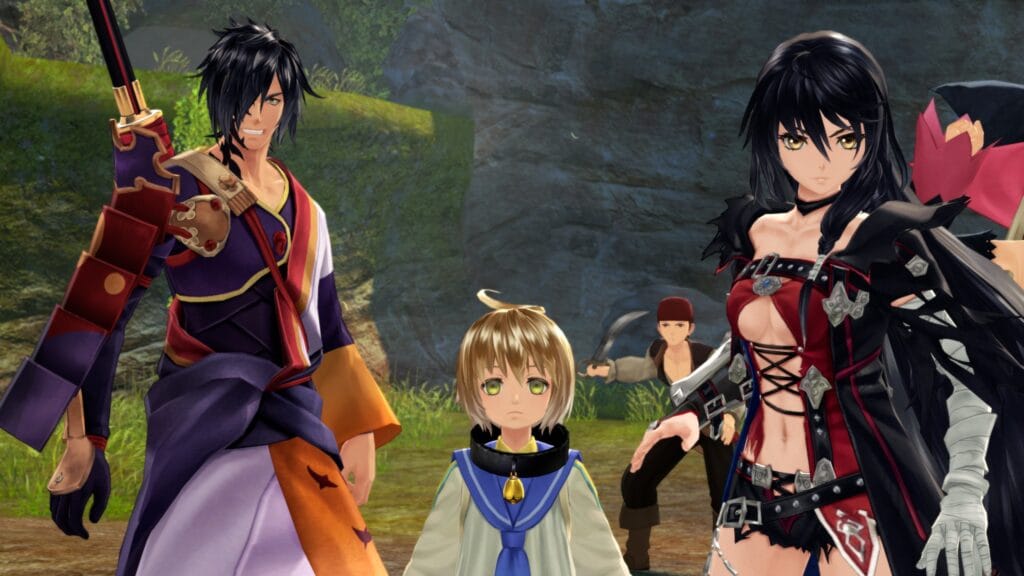
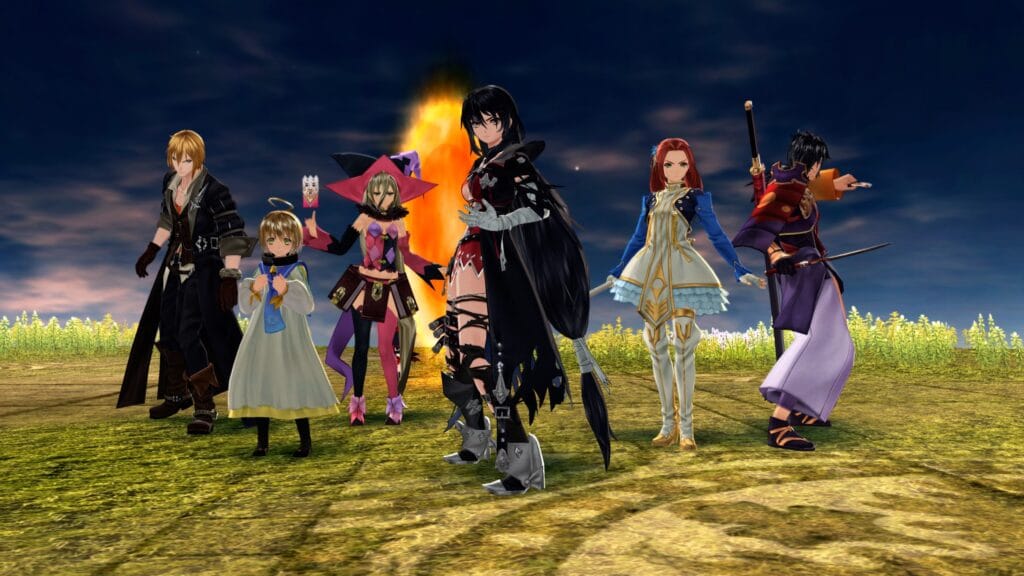
Instead, the party she gathers around her feels more like a rogue crew than a band of heroes.
- There’s Rokurou, a wandering swordsman who treats combat like a hobby.
- Magilou, a mysterious spellcaster whose sarcasm rarely stops flowing.
- Eizen, a pirate philosopher who delivers long reflections about fate and misfortune.
The chemistry between them carries the narrative forward. Conversations range from philosophical debates about morality to completely ridiculous arguments about food, luck, or magical curses.
These interactions often happen through the series’ signature skit system, small optional dialogue scenes that add humor and personality between major story events.
Even years later, Berseria’s party still feels like one of the most memorable casts in the Tales franchise.
Combat That Rewards Aggression and Improvisation
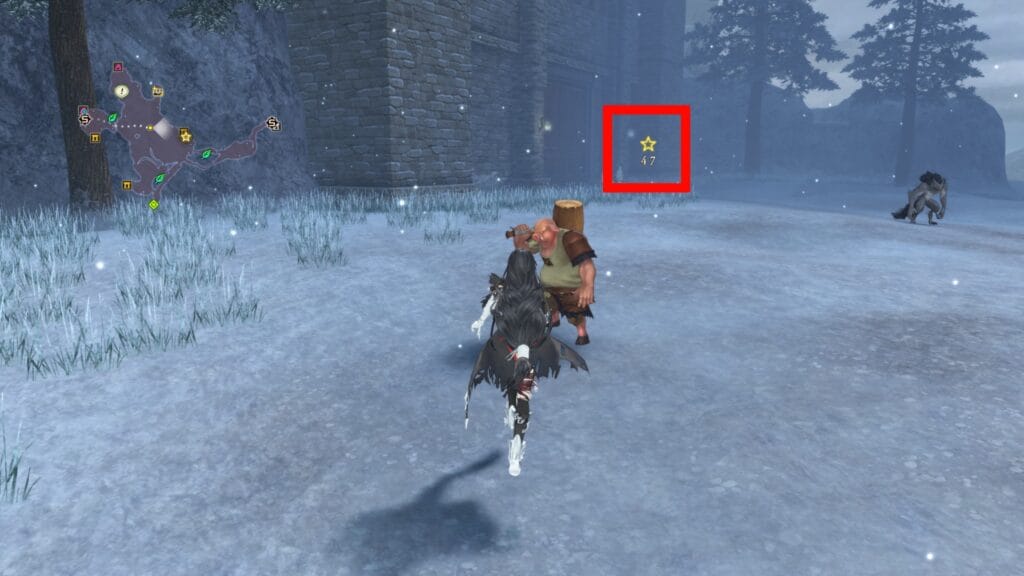
Berseria’s combat system remains one of the most energetic interpretations of the Linear Motion Battle System used throughout the series.
Battles unfold in real time as players string together attacks, artes, and special abilities into flowing combos. Each character has a unique combat style, encouraging players to experiment with different approaches rather than relying on a single strategy.
Velvet’s abilities revolve around her demonic arm, allowing her to unleash powerful attacks by sacrificing health. Characters like Eleanor, on the other hand, rely on more disciplined martial techniques.
At the center of everything sits the Soul Gauge system, which determines how many actions players can chain together in battle. Maintaining momentum becomes a delicate balancing act. Push too aggressively and you risk leaving yourself vulnerable. Play too cautiously and fights lose their tempo.
The remastered PC version aims to improve overall playability, and combat does feel more fluid on modern hardware. Inputs register cleanly and battles maintain a satisfying pace.
However, player reports on Steam suggest performance can vary depending on hardware configurations, with some users noting frame pacing inconsistencies. During my time with the PC version, combat generally felt responsive, though occasional performance fluctuations can occur depending on system setups.
Even with those caveats, Berseria’s combat still shines once the system clicks. It’s fast, flashy, and chaotic in the best possible way.
The Remaster Focuses on Quality-of-Life Improvements
Rather than reinventing the experience, Tales of Berseria Remastered focuses on refining the original game.
The remaster includes several practical improvements:
- graphical polish and sharper textures
- improved gameplay optimization
- destination markers that guide players to their next objective
- the ability to toggle enemy encounters
- early access to the Grade Shop
- previously released DLC items included by default
On PC, the game also benefits from modern resolution support and smoother interface navigation. Menus load faster, transitions feel snappier, and overall usability has improved compared to older versions.
Visually, the improvements are subtle but welcome. Berseria’s anime-inspired art style already aged fairly gracefully, so the remaster’s upgrades mostly enhance clarity rather than dramatically transforming the presentation.
The result is a version of the game that feels cleaner and easier to play without altering its core identity.
Darkness Balanced With Humor
One of Berseria’s most interesting strengths is its tonal balance.
The main narrative explores heavy themes including revenge, ideological conflict, and institutional control through the influence of the Abbey and its governing forces. Velvet’s story constantly questions the traditional idea of what makes someone a hero.
But the game rarely stays serious for long.
Magilou frequently steals scenes with absurd commentary, theatrical performances, and jokes that break tension at exactly the right moment. Optional skits and side conversations often deliver some of the funniest writing in the series.
That balance between darkness and humor gives Berseria a distinctive personality within the Tales franchise.
It’s a revenge story filled with demons and betrayal that somehow still finds time for jokes about cooking, magic tricks, and cursed pirates.
Where the Adventure Still Shows Its Age
Despite the improvements, Berseria still carries some design choices from its original release.
Exploration remains relatively linear compared to more modern JRPGs. Many dungeons follow predictable layouts and the overworld structure can feel somewhat dated.
Combat, while exciting, can also become visually cluttered during longer encounters. With multiple party members unleashing artes simultaneously, it can sometimes be difficult to track everything happening on screen.
These issues don’t break the experience, but they serve as reminders that Berseria was originally designed nearly a decade ago.
A Remaster That Lets the Story Shine Again

What makes Tales of Berseria Remastered worth revisiting in 2026 isn’t just the technical improvements.
It’s the chance to experience one of the Tales series’ strongest narratives without technical friction getting in the way.
Velvet Crowe’s journey remains a rare example of a JRPG willing to center its story around vengeance rather than heroism. The characters surrounding her bring humor, complexity, and humanity to a world built on moral ambiguity.
The remaster doesn’t attempt to reinvent Berseria.
Instead, it does something simpler and arguably more important.
It preserves a story that still deserves to be experienced.
Score: 4.3 / 5
Pros
- Outstanding character writing and party chemistry
- Fast, engaging real-time combat system
- Velvet Crowe remains one of the Tales series’ most compelling protagonists
- Quality-of-life improvements make the adventure smoother to revisit
Cons
- Linear exploration and dated dungeon design
- Combat visuals can become cluttered during intense fights
- PC performance may vary depending on hardware configurations
Tales of Berseria Remastered doesn’t dramatically change the original adventure. What it does is polish one of the most emotionally engaging entries in the Tales series and make it easier for modern players to step into Velvet’s world once again.
This review is based on the Steam version, with a code provided by the game’s publishers.
About the Author