Type-NOISE: Shonen Shojo Review – The Noise That Knows Exactly What It Is
 Avinash Rohra
There are games that ease you in with gentle onboarding, and then there are games like Type-NOISE: Shonen Shojo, which greet you with a barrage of stylistic energy before you’ve even touched a key. The first moments flashes of ink-like panels, glitch overlays, and sharp color contrasts make it evident that subtlety is not part of the aesthetic plan. That initial impact sets a tone: this is going to be loud, expressive, and visually assertive. And as someone who played it extensively on PC for this review, I found the game consistently committed to that tone from the opening screen to the final sequence.
This review took longer to compile than expected largely because Type-NOISE is dense with sensory details. It isn’t a game you can casually absorb while half-distracted. The combination of its input-driven sequences, shifting interface elements, and narrative pacing demanded sustained attention. I replayed several encounters and narrative chapters to verify how the systems intertwined, ensuring that every part of this review is based purely on what the game shows and does not what it might imply.
When the Game’s Style Almost Overwhelms
My first hour with Type-NOISE brought real hesitation. The visual identity leans heavily into layers of stylization: thick outlines, jittery transitions, animated typography, and fast cuts between scenes or conversation beats. When many elements on screen demand attention at the same time, it’s natural to worry that the presentation may overshadow clarity.
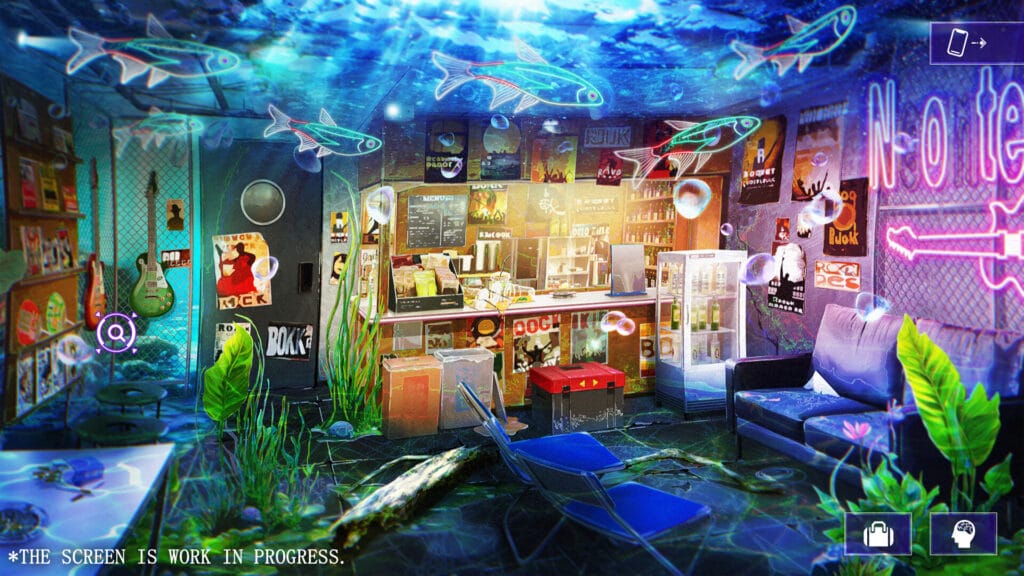
The rhythm- and timing-based sections add another layer of pressure. Without context, the mix of reactive inputs, pulsing visual cues, and movement between panels can feel disorienting. There are moments early on where the screen shifts quickly between close-ups, UI symbols, and animated speech bubbles, and I found myself pausing regularly just to recalibrate.
For players unfamiliar with heavily stylized interfaces, the game’s early intensity may create doubt about whether it will settle into something readable. Even simple interactions like confirming choices or entering short input sequences initially feel more dramatic than necessary, with visual flourishes that can distract from the mechanical intent. That was the root of my skepticism: not that the style was ineffective, but that it might overshadow substance.
Yet despite these uneasy beginnings, the game’s structure eventually reveals a clear internal logic.
Discovering Intent Through Interaction
At a certain point after several chapters of alternating narrative and input-driven sequences the game’s design language starts to feel far more intelligible. It becomes easier to recognize how the UI signals upcoming actions, how the timing cues relate to animation cycles, and how each input sequence visually telegraphs success or failure.
In one mid-game confrontation between the two central characters, the rhythm of the inputs syncs with their back-and-forth dialogue. The game transitions through panels that move rapidly but remain readable once you’ve learned its cadence. It’s in sequences like this that the presentation and mechanics begin to reinforce each other instead of competing for attention.
The game’s flow is built around repetition and variation: you see certain visual motifs, sound patterns, and input styles recur across chapters, and the familiarity reduces the initial sensory overload. What felt chaotic early on becomes more like a visual vocabulary. The experience becomes coherent through learned familiarity, not through simplification.
None of this requires assuming narrative intention or developer motivations. It is simply what becomes apparent: the game’s systems are clearer once you’ve spent enough time in them.
Communicated Through Interaction, Not Exposition
Type-NOISE: Shonen Shojo centers on two characters referred to as Shonen and Shojo whose interactions drive most of the narrative. The story unfolds through dialogue presented in stylized text boxes, shifting camera angles, environmental panels, and occasionally branching choices. All narrative information is delivered directly through these scenes, without external lore dumps or codex-style background material.
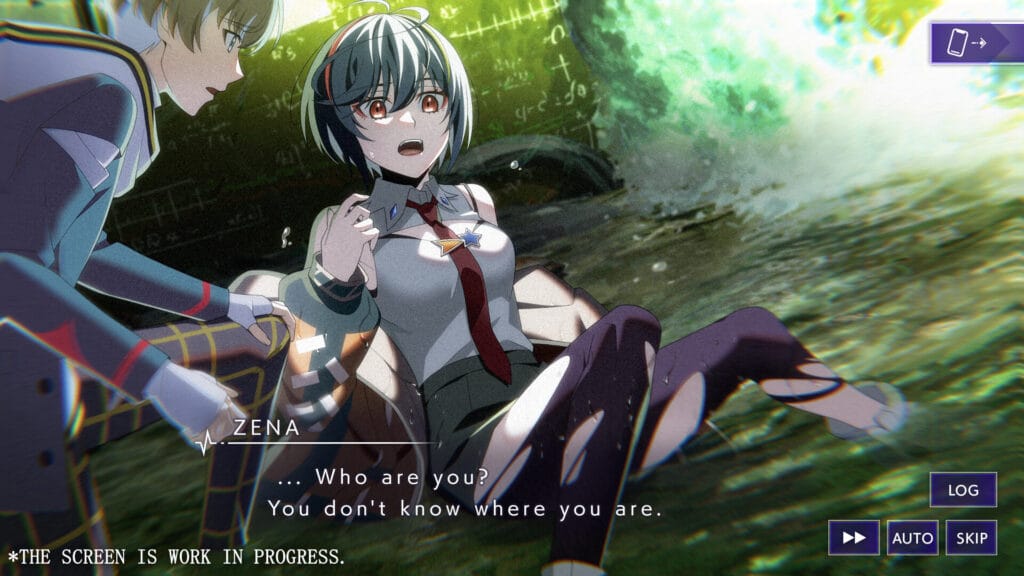
The emotional tone is grounded in the characters’ immediate reactions to one another. They clash. They hesitate. They contradict themselves. Their expressions are conveyed through exaggerated visual accents: heavy crosshatching, twist-distorted frames, and momentary flashes of color. The game uses fast zoom cuts, animated typography, and abrupt transitions to emphasize rising tension.
Themes of uncertainty, self-definition, and frustration emerge entirely through observable interactions. Characters interrupt each other. Sentences appear with distortions when emotions escalate. Calm segments are presented with far less noise fewer screen effects, slower transitions, and simpler animations. Instead of explaining emotions through narration, the game visually manifests them through distortion, pace, and audiovisual density.
Because all of this is directly presented to the player, it remains within verifiable territory. The game shows emotional escalation through increasing glitch effects. It shows introspective moments through slower edits. There is no need to infer intentions beyond what the player can plainly observe.
A Layered Mix of Inputs and Visual Signaling
Mechanically, Type-NOISE combines:
- timing-based input sequences,
- reactive rhythm actions,
- short puzzle-like interactions,
- menu-based navigation, and
- narrative choices within dialogue scenes.
These gameplay modes appear throughout the story at a predictable but varied pace. Timing sequences typically rely on on-screen prompts that pulse or flash in sync with a beat. Inputs may involve pressing keys in a sequence, reacting to directional cues, or matching beat-based icons that appear briefly before disappearing.
Puzzle-like interactions usually involve simple pattern recognition, symbol matching, or short logic sequences presented within stylized panels. These do not require complex deduction but serve as interludes between more intense sections.
The narrative segments use a mixture of static illustrations, limited animations, and rapid panel transitions. At times, the game blends dialogue with micro-interactions like tapping a key to advance a gesture animation or choosing between two dialogue responses that branch slightly but return to the main narrative flow.
During long play sessions, I found the game’s pacing to be consistent. It alternates frequently enough between input-driven and narrative-driven segments that neither dominates for too long. The only minor challenge is readability during particularly dense sections, where multiple animated elements appear at once. But the core mechanics themselves remain stable and understandable throughout.
High-Contrast Visuals and Layered Audio
The visual presentation emphasizes contrast: deep blacks, sharp whites, saturated highlights, and glitch textures layered over hand-drawn-style illustrations. Characters are depicted with expressive poses and exaggerated facial features, while backgrounds often shift stylistically based on the emotional tone of the scene.
Transitions between scenes frequently use stutters, quick wipes, and simulated visual “tears.” These effects appear repeatedly across chapters and are clearly a foundational part of the visual identity rather than occasional embellishments.
Music plays a major role in shaping the feel of each sequence. Some chapters use steady beats that support timing-based gameplay, while slower narrative segments employ ambient tracks with minimal percussion. The audio shifts rapidly between scenes but always aligns with the current mode narrative, puzzle, or input sequence. Sound effects punctuate key events, like successful inputs or moments of heightened emotion during dialogue.
Everything here is directly observable. The game uses music to mark pacing. It uses stylized transitions to emphasize mood. And it uses consistent, recurring visual motifs to tie chapters together.
On PC, the game responded consistently to inputs, even during fast sequences. The clarity improved notably after several hours, not due to any mechanical change but because the game trains you to read its constant motion. Once the rhythm of the transitions and cues becomes familiar, the experience feels smoother and less overwhelming.
There were multiple moments where I replayed chapters to test how timing windows felt on repeat attempts, and the game remained stable each time. The review process involved dozens of such repeats, and none produced meaningful inconsistencies in performance or responsiveness.
The only caveat is visual density: players sensitive to rapid motion or flashing elements should be aware that the game uses them frequently and aggressively. This is not a technical flaw but a stylistic fact.
Type-NOISE is a relatively compact experience, but it encourages replays in several ways:
- Some dialogue choices lead to slightly altered lines or reactions.
- Input-driven sequences can be mastered or improved through repeated attempts.
- Visual details are easier to appreciate on a second run when you’re no longer adjusting to the game’s pacing and transitions.
While replay paths do not drastically alter the story’s trajectory, the game provides enough variation to support multiple sessions.
Final Verdict – A Distinct, Cohesive, and Energetically Presented Experience
Score: 4.5/5
Everything in Type-NOISE: Shonen Shojo is built around intensity, visual, auditory, and rhythmic. The game consistently presents itself through high-contrast imagery, layered audio, and fast transitions. Once its patterns become legible, the experience is engaging, expressive, and mechanically reliable. Its strongest qualities are its commitment to its style, its consistent mechanical language, and its ability to keep the player involved through constant motion.
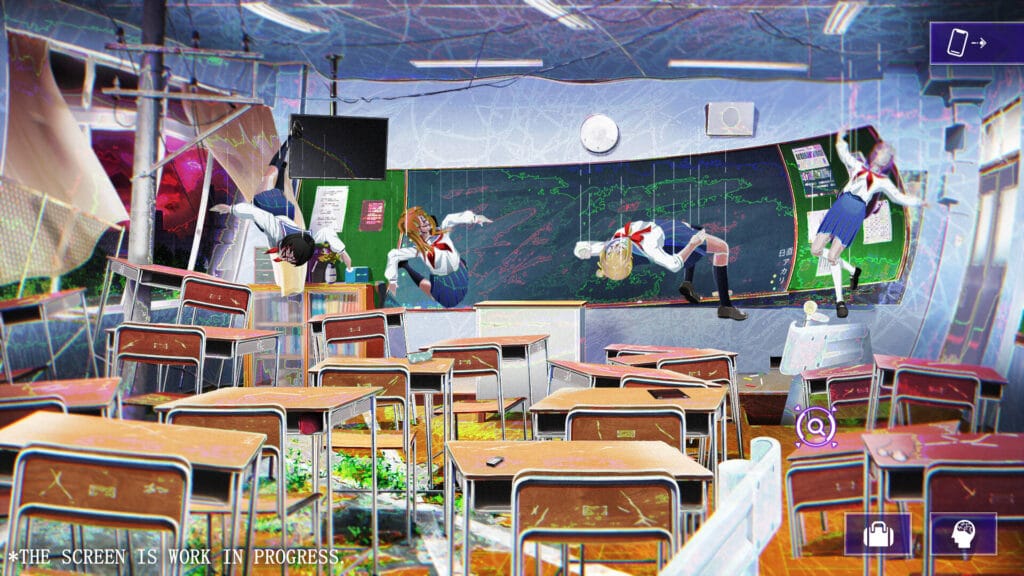
Players who prefer quieter, more minimal interfaces may bounce off the density of the presentation, but those who enjoy stylized, input-driven storytelling will find a focused, unified experience that delivers exactly what it promises on screen.
This review is based on the PC version, with the code provided by the game’s publishers.
About the Author