Avinash Rohra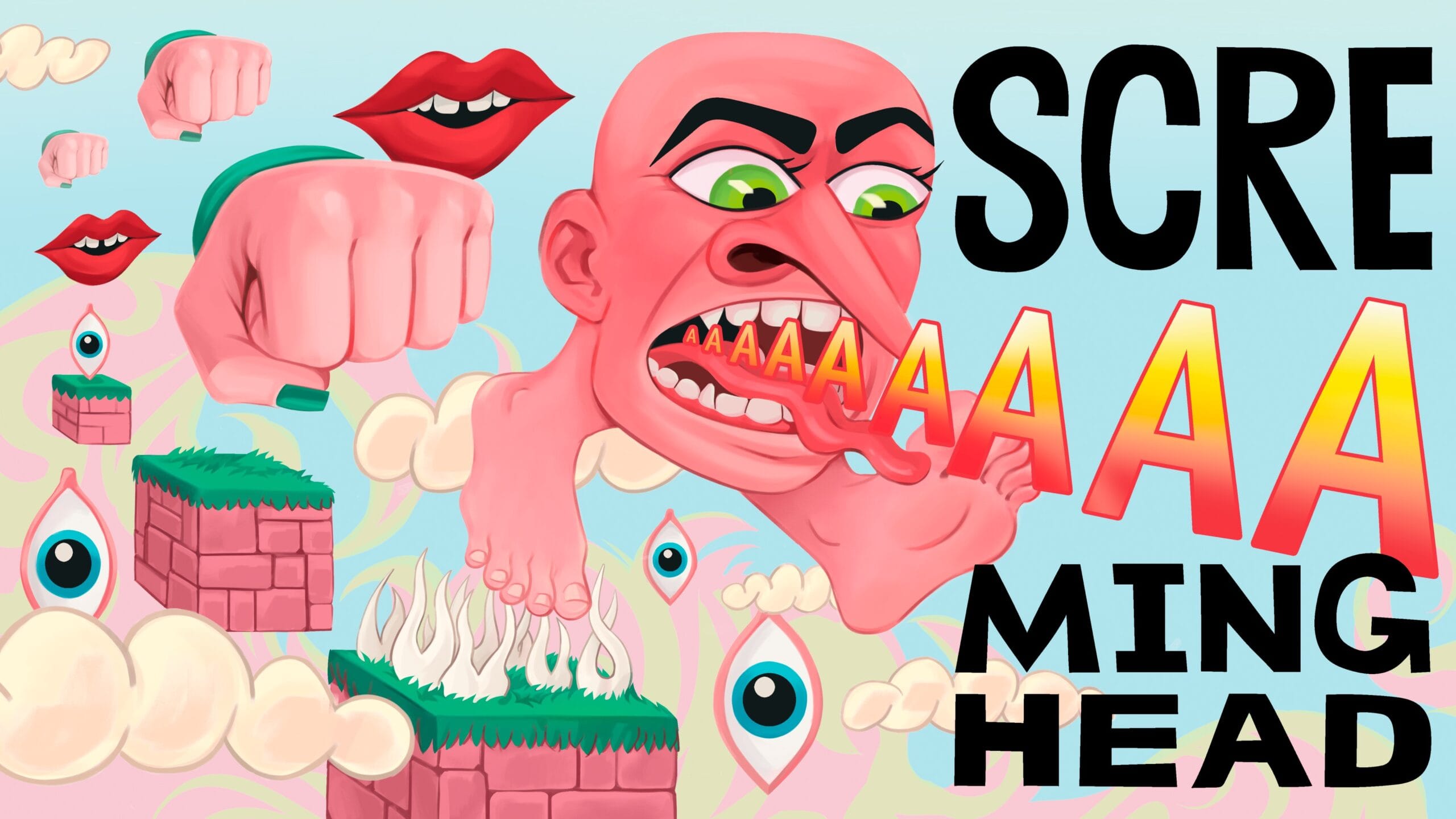
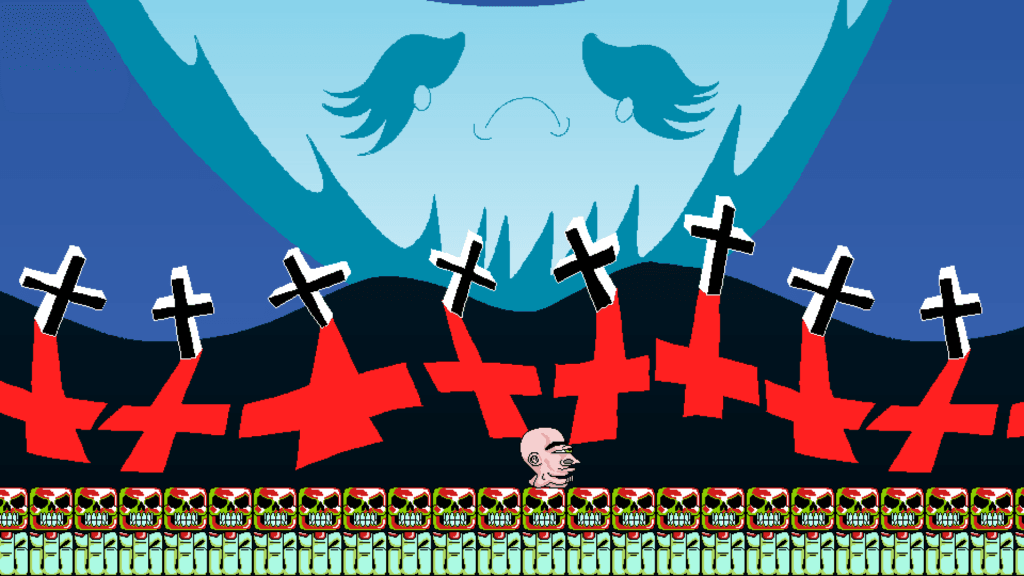
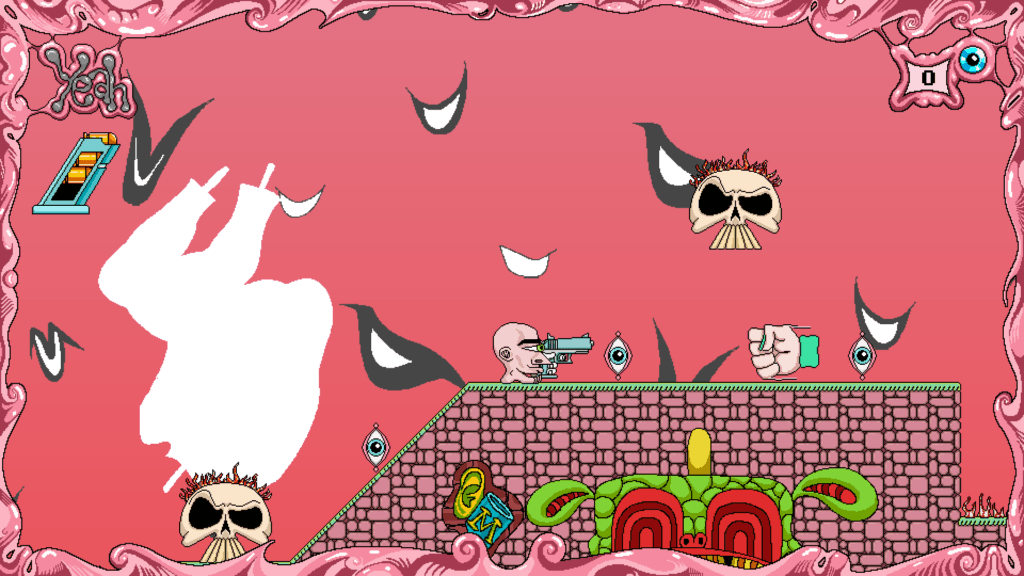
There is no easing into Screaming Head. It launches immediately into a barrage of jagged hand-drawn animation, exaggerated character distortion, and high-contrast color palettes that define its identity from the first frame. This is a 2D action platformer built on a fully hand-drawn visual approach, and that commitment is visible in every character sprite and background layer. It is deliberately abrasive and visually loud, and that confidence gives the opening stretch genuine impact. In a marketplace crowded with cleaner, safer aesthetics, Screaming Head establishes itself through raw visual force.
Hand-Drawn Psychedelia as Core Identity
The game’s defining feature is its hand-drawn art direction. Characters stretch, contort, and snap with elastic exaggeration. Enemy silhouettes are grotesque and surreal rather than realistic. Boss encounters, in particular, lean heavily into this stylization, presenting large-scale figures whose animation sells their presence more than sheer size does. The environments maintain this same commitment, favoring warped shapes and unstable visual compositions over clean geometry. This is not decorative flourish; the art style is the primary reason the game stands out. The animation is consistently fluid, and the presentation remains cohesive rather than inconsistent.
Responsive Combat in Tight Arenas
Mechanically, Screaming Head operates as a 2D action platformer focused on fast movement and close-quarters combat. Players dash, jump, and attack within contained combat arenas, clearing enemy waves and confronting bosses in segmented stages. Controls on PC are responsive, and movement feels immediate, which is critical given the game’s emphasis on reaction and tempo. Combat relies on reading enemy telegraphs and responding quickly rather than on deep systemic layering. Early encounters feel sharp and energetic because the fundamentals are sound.
A Combat Loop That Establishes Itself Early
The core loop, engage, evade, strike, reposition, establishes itself quickly and remains largely consistent throughout the campaign. Enemy types recur with variation, but they do not dramatically alter the tactical approach. Boss encounters introduce multi-phase patterns that require recognition and timing, and these moments are among the strongest mechanically. However, the overall structure does not undergo significant transformation. There is no mid-game mechanical pivot or system expansion that fundamentally changes how encounters are approached. The challenge curve increases, but the underlying structure remains stable.
Linear Progression Over Exploration
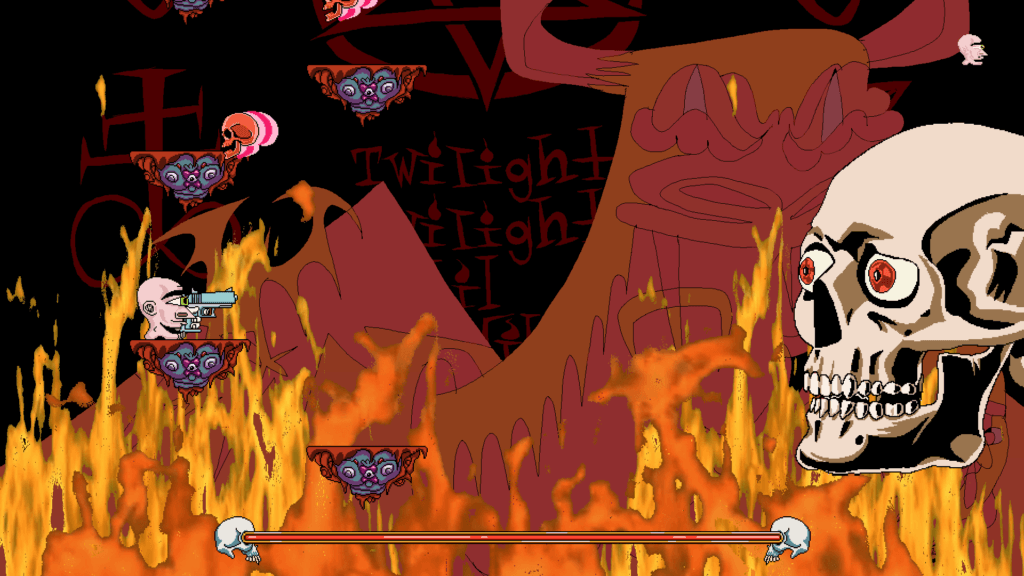
Level design is primarily linear. Stages connect sequentially, and combat arenas are the dominant structural unit. Platforming elements exist, but they function as connective tissue between encounters rather than as deep traversal challenges. Environmental hazards appear, yet they supplement combat rather than redefine it. The game does not emphasize interconnected exploration or systemic environmental puzzles. Instead, it prioritizes forward momentum and contained encounter design.
Sound Design Amplifies the Chaos
Audio design reinforces the visual intensity. Combat hits are loud and pronounced, enemy effects are exaggerated, and ambient audio supports the game’s unstable tone. The soundtrack favors energy and tension over melody, aligning with the confrontational aesthetic. The soundscape is consistent with the visual direction and contributes to the sense of controlled chaos rather than distracting from it.
Abstract Tone Over Explicit Narrative
Narrative delivery is minimal and abstract. The game communicates tone through imagery rather than exposition. Visual distortion and surreal design imply psychological instability or thematic fragmentation, but there is no heavy dialogue or overt plot exposition driving progression. The focus remains on mood and sensation rather than story-driven momentum.
Technical Performance on PC
On PC, performance remains stable during combat and visually dense sequences. Controls are responsive, and animation maintains fluidity even when multiple effects overlap. The intensity of the art direction can occasionally create visual clutter during especially chaotic fights, but this is a byproduct of stylistic choice rather than technical instability. There are no major structural performance concerns that undermine gameplay.
Where It Ultimately Lands
Final Score – 3/5
Screaming Head succeeds in delivering a distinctive hand-drawn aesthetic and responsive action fundamentals. Its visual identity is consistent, its controls are reliable, and its boss encounters provide intermittent spikes of intensity. What limits it is structural consistency rather than execution failure. The core combat loop does not meaningfully evolve, and level progression favors repetition over escalation. It is a bold presentation supported by competent mechanics, but it stops short of systemic expansion. The result is a game that makes a strong first impression and sustains functional momentum, yet does not transform into something mechanically deeper.
This review is based on the Steam version, with a code provided by the game’s publishers.
About The Author