Avinash Rohra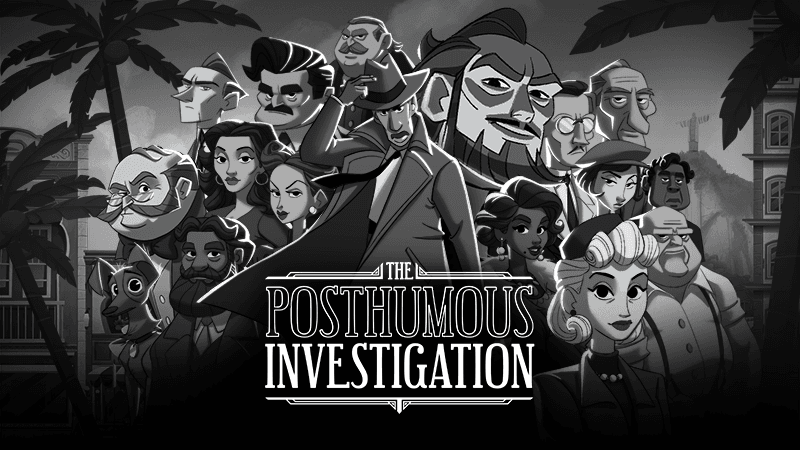
I didn’t sit down with The Posthumous Investigation expecting it to demand this much attention. The premise is immediately striking but easy to misread at a glance. You are a struggling detective in 1937 Rio de Janeiro, hired to solve the murder of Brás Cubas, a man who is already dead when you take the case and who continues to speak to you across a looping day that resets every midnight. It sounds like a clever narrative hook, the kind that carries a game for a few hours before its systems run out of steam. What I found instead, over roughly ten hours on PC, was a structure that slowly reorients how you think about investigation. It is not about finding new information as much as it is about learning how a fixed set of information behaves over time.
The First Loops Feel Like Noise
The first few loops are deliberately disorienting. You move between locations without a clear sense of priority, talk to whoever you happen to encounter, and watch the day slip away before anything meaningful comes together. Characters drift through the city on routines that feel opaque at first. You hear fragments of conversations, miss key interactions by minutes, and arrive too late to understand why something mattered. There is a temptation to treat this as a failure of guidance, as if the game is withholding direction, but the longer you stay with it, the clearer it becomes that this confusion is part of the design. The game is not trying to teach you where to go. It is forcing you to pay attention to when things happen.
When Patterns Replace Guesswork
What begins as noise gradually turns into pattern. You start noticing that certain characters are only available in specific places at specific times, that two suspects briefly intersect during a narrow window, and that a conversation changes depending on whether you approach it early or late in the day. These are not marked events. The game never highlights them as important. They become important because you recognize them across loops. The city does not change, but your understanding of it does, and that shift is what transforms the experience from aimless wandering into something closer to controlled observation. By the time you are several loops in, you are no longer exploring Rio as a space. You are tracking it as a schedule.
Investigation Through Timing, Not Discovery
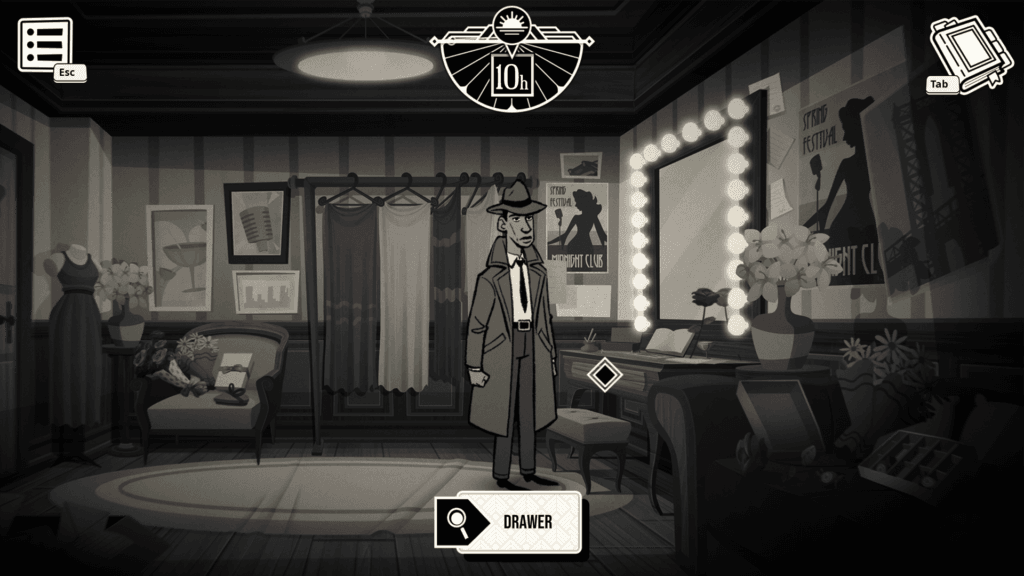
The investigation itself unfolds through conversation rather than discovery. There are no hidden objects to uncover and no environmental puzzles to solve in the traditional sense. Instead, you are listening carefully, comparing statements, and testing them against what you have observed. If someone claims they were alone at a certain time, the only way to challenge that is to be present in that time slot and see whether the claim holds. The “Thinking Board” acts as a way to organize these threads, but it does not push you toward conclusions. It reflects what you already believe to be true, and when your deductions do not align, the responsibility is entirely yours to untangle them. The game is consistent about this. It does not correct you gently or guide you toward the answer. It lets your interpretation stand until you realize it does not.
Writing That Does the Heavy Lifting
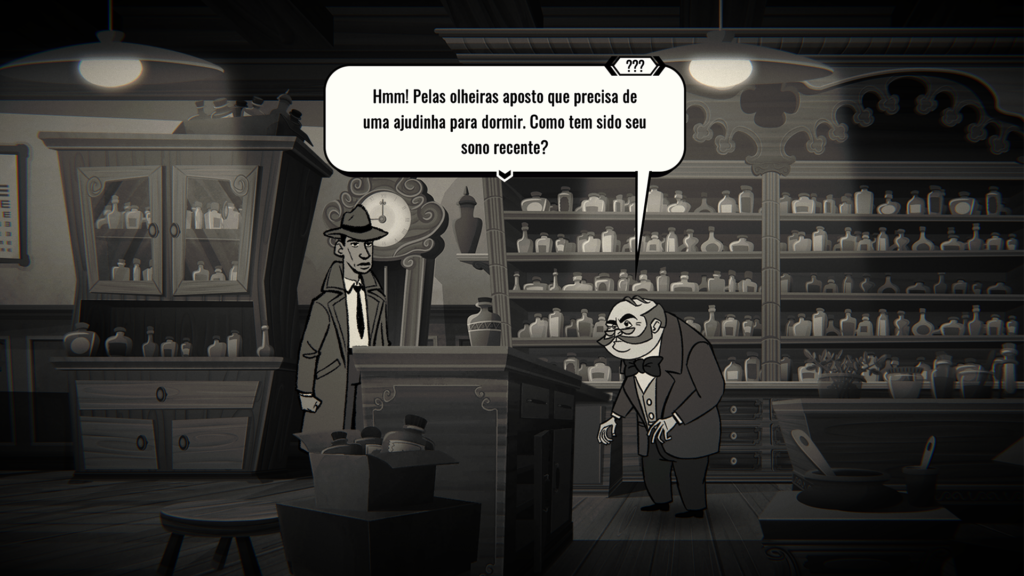
What makes this structure work is the writing. The dialogue carries a sharp, often satirical tone that gives each interaction texture beyond its function in the puzzle. Characters rarely present information cleanly. They deflect, exaggerate, and occasionally contradict themselves in ways that feel intentional rather than mechanical. The setting draws on the social dynamics of its period, and while the game does not lean too heavily into exposition, there is a clear sense of class tension and performative behavior underlying many conversations. Brás Cubas himself is a constant presence, commenting on your progress with a detached, almost amused perspective. He never breaks the logic of the investigation, but his presence adds a layer of personality that keeps the experience from becoming purely procedural.
A City That Exists on a Loop
Visually, the game commits to a black-and-white, comic-inspired aesthetic that prioritizes clarity over detail. It does not attempt realism, and that works in its favor. Characters are expressive, environments are readable, and the limited palette reinforces the sense that you are revisiting the same spaces under slightly different circumstances. The city feels less like a place to explore and more like a stage where events repeat with minor variations. This repetition is central to the experience, and the art direction supports it without drawing unnecessary attention to itself.
Where the Loop Shows Its Limits
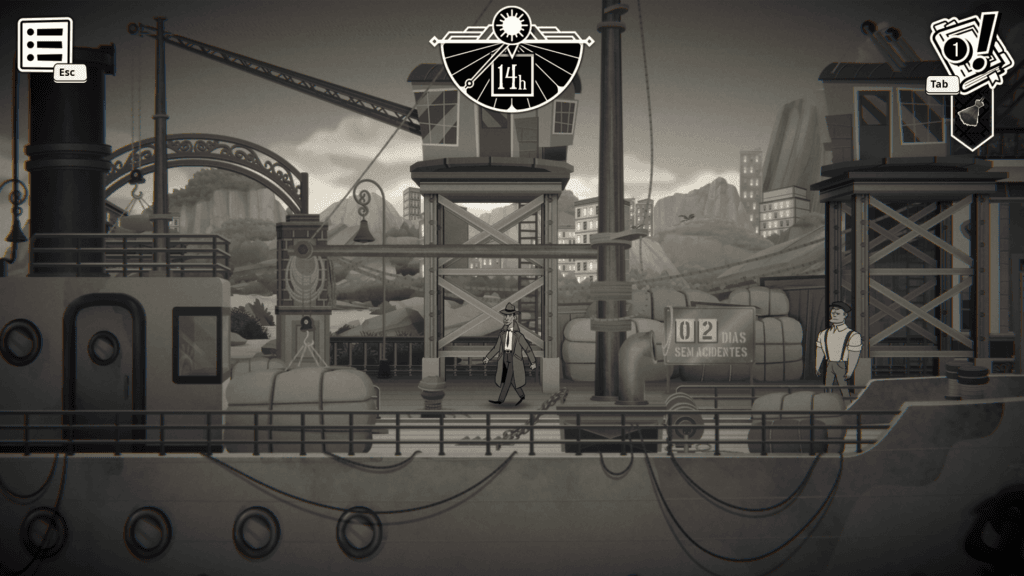
There are points where the design shows strain. The opening hours require a level of patience that not every player will have, and the lack of early structure can feel more frustrating than intriguing until the patterns begin to emerge. Even after the system clicks, repetition remains an inherent part of the loop. You revisit the same locations, follow the same routes, and wait for the same moments to unfold. The difference is that you are doing so with intention, but the underlying repetition does not disappear. There is also a limit to how much the game evolves mechanically. The complexity increases through the arrangement of information rather than through new systems, which keeps the experience focused but can also make it feel static in its later stages.
What Stays After the Case Is Closed
What lingers after finishing is not the resolution of the case but the process of arriving there. The satisfaction comes from recognizing a pattern you previously overlooked, from aligning timelines that once felt disconnected, and from understanding how the city moves as a system rather than a backdrop. The game does not rely on a single dramatic reveal. It builds toward a quieter form of clarity, one that depends entirely on how well you have been paying attention.
Score: 4.2/5
Final Verdict
The Posthumous Investigation is a focused, deliberate detective game that replaces traditional clue-hunting with observation and timing. It asks for patience and rewards it with a deeper understanding of how its world functions. It does not always ease you into its structure, and it does not evolve dramatically as it progresses, but it remains consistently engaging once it clicks.
This review of The Posthumous Investigation is based on the PC version, with a code provided by the game’s publishers.
About The Author