Avinash Rohra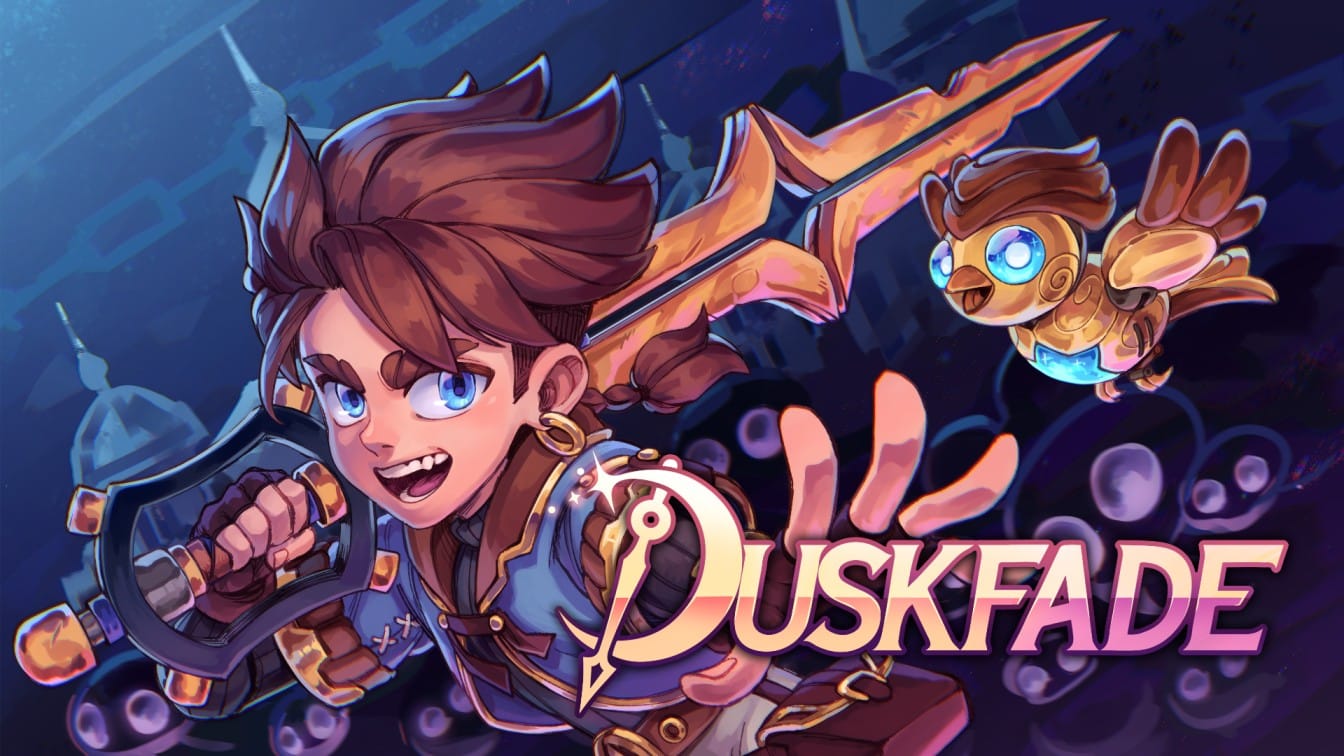
There is something immediately familiar about Duskfade. Not familiar in the sense that it simply copies an older game, but in the way it understands what made a certain generation of 3D platformers so difficult to put down. A ledge sitting slightly beyond the obvious route is an invitation. A rail disappearing around a corner is reason enough to follow it. A collectible placed somewhere inconvenient becomes less about completion and more about proving you can reach it.
Weird Beluga has built Duskfade around that instinct.
It is a 3D action-platformer that puts movement and exploration ahead of almost everything else. Combat is part of the equation, progression gradually expands what Zirian can do, and its story gives the adventure an emotional backbone, but none of those elements define the game quite like the pleasure of navigating its spaces.
That focus is also where Duskfade exposes its weaknesses. Combat never develops the same depth as traversal, some of its better abilities take too long to arrive, and exploring without a map becomes increasingly inconvenient when backtracking enters the picture. Yet those frustrations rarely erase the simple pleasure of seeing somewhere interesting and figuring out how to get there.
For a platformer, that is a strong foundation to build on.
When the Clock Stops
Duskfade follows Zirian, a young hero travelling through a world thrown into eternal night after a mysterious Clock Tower disrupts the flow of time. Accompanied by his sister’s mechanical Cuckoo, Zirian sets out to find her while attempting to restore the damaged fabric of time and uncovering the history surrounding the Master Clockmakers.
The premise gives Weird Beluga room to build a coming-of-age story around loss and uncertainty without turning Duskfade into an exposition-heavy adventure. Its major confrontations are connected to emotional hurdles within that journey, giving the boss encounters a purpose beyond simply marking the end of another area.
The story takes time to gather momentum, however. That measured pacing fits an adventure interested in letting players explore, but it can leave the opening feeling slower than the platforming ideas suggest it should. Some of the writing can also skew younger than the rest of the presentation.
Still, the premise provides enough context to make Zirian’s journey feel like more than a sequence of disconnected platforming worlds. Duskfade knows that movement is its main attraction, and the narrative largely gives it room to remain that way.
Duskfade Is Best When You Are Moving
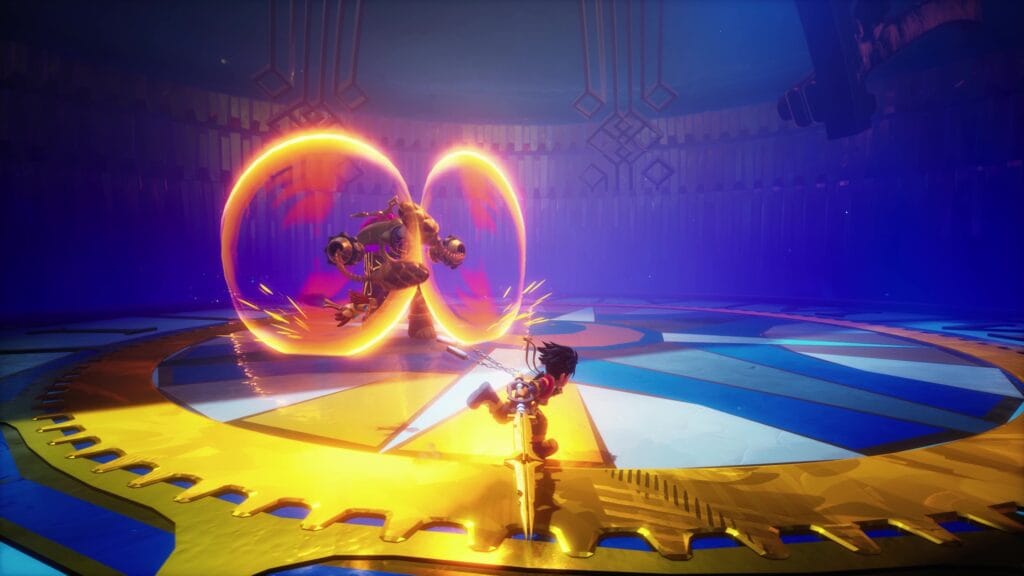
Zirian’s traversal abilities form the game’s strongest system. Jumping and dashing are joined by grappling, gliding and rail-grinding, with additional abilities expanding the possibilities as the journey progresses.
Individually, none of these ideas is especially unusual for a modern platformer. Their value comes from how Duskfade uses them to shape exploration.
Its environments are not simply corridors separating combat arenas. Forests, underwater regions, sunlit desert spaces and areas high among the clouds contain optional routes and collectibles that encourage players to move away from the obvious path.
That gives traversal a purpose beyond reaching the next objective. A grapple point can lead toward something hidden. Rails can pull Zirian away from the route you originally intended to follow. An unreachable section can become relevant later when another ability changes how you approach the environment.
There is a clear pleasure in that structure. Progression alters not only Zirian’s capabilities but your understanding of spaces you have already visited.
Duskfade’s lack of a traditional map complicates that relationship. Learning the geography of an area can make exploration more involved, but returning to older locations for collectibles is less elegant. Without a map, backtracking occasionally becomes an exercise in remembering which path led where rather than solving a platforming problem.
It is one of several places where the game’s affection for older design conventions cuts both ways.
Combat Lives in Platforming’s Shadow
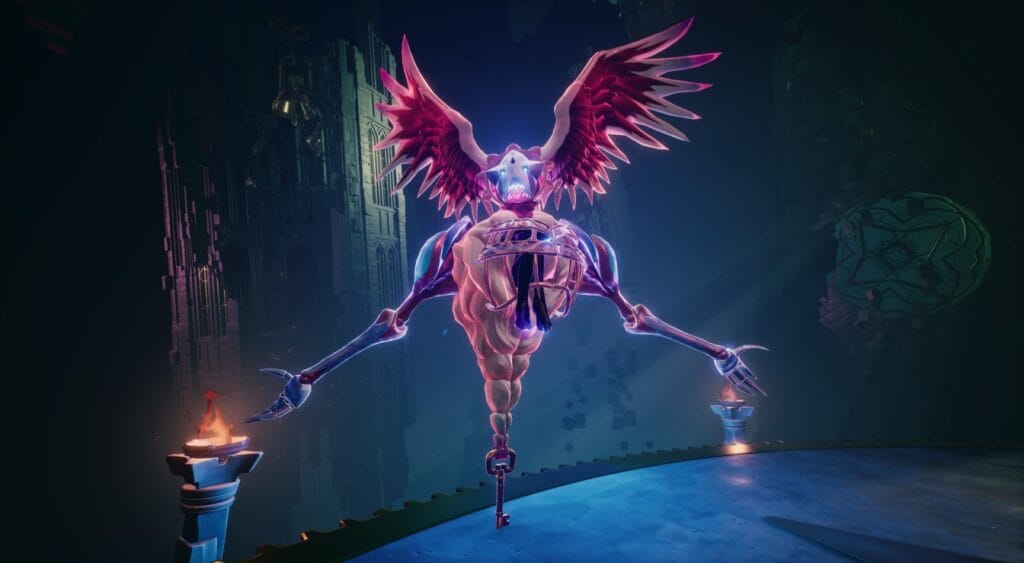
Zirian’s primary weapon is a sword inspired by the hands of a clock. It can transform into different forms, including a heavier pendulum-style attack, while magic, combos and unlockable abilities gradually increase the number of options available in battle.
Dodging plays an important defensive role, particularly through a perfect-dodge system that briefly slows time when correctly executed. It is an appropriate mechanic for a game built around disrupted clocks, and it gives individual encounters an additional timing element beyond basic attacking.
The problem is that the broader combat system does not develop as convincingly as traversal.
Standard attacks and dodges remain effective across much of the adventure, limiting the need to experiment extensively with everything Duskfade eventually gives you. Encounters involving larger groups can also highlight awkwardness in the lock-on and camera, making battles feel less precise than navigating the environments around them.
Boss encounters are more successful. With individual attack patterns to read and fewer enemies competing for the camera’s attention, dodging and movement become more meaningful. These fights make better use of Duskfade’s mechanics precisely because they bring combat closer to the timing and spatial awareness that already make its platforming work.
Combat is therefore not a failure. It simply never becomes the reason to play.
Movement does.
Progression Takes the Scenic Route
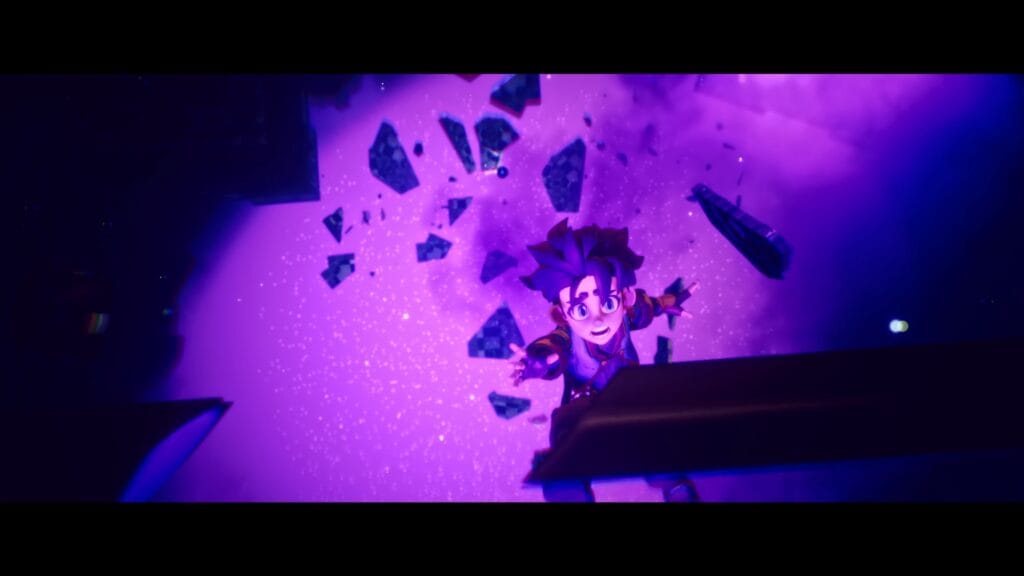
Exploration feeds directly into progression. Coins contribute toward unlocking combat abilities, dyes provide cosmetic rewards, and new traversal tools gradually expand what Zirian can reach.
The underlying loop is strong because improvement changes exploration rather than functioning purely as a statistical increase. Finding something inaccessible can create a small mental bookmark. Hours later, gaining another ability can suddenly make that earlier obstacle relevant again.
Duskfade sometimes takes too long to reach those moments.
Its progression has a deliberate pace, particularly when introducing abilities that give movement greater flexibility. The opening consequently offers a more restricted version of the game than the one it eventually becomes. Combat progression faces a similar issue for a different reason. Additional options exist, but because the basic fundamentals remain reliable, acquiring another attack does not necessarily transform play in the way a new traversal ability can.
This imbalance runs through much of Duskfade. The game continually gives you reasons to care about where Zirian can go next, but fewer reasons to become equally invested in how he fights when he gets there.
Four Worlds Worth Getting Lost In
The final game is structured across four worlds, with each containing two or three unique biomes alongside shared areas.
That gives Duskfade enough scale to support exploration without turning the experience into an endless checklist. Reported completion times vary depending on how deeply players engage with its optional content. A more direct playthrough can fall toward the lower teens, while other runs have reached roughly seventeen hours. Weird Beluga estimates around sixteen hours for players pursuing collectibles and achievements.
That variation makes sense for a game where so much of the runtime depends on curiosity.
Players interested primarily in progressing through the story can keep moving. Players who see a suspicious platform and immediately abandon their objective will naturally spend longer searching.
The collectible design supports the latter approach. Currencies, dyes and other hidden rewards provide reasons to inspect the environments, although completion runs also make Duskfade’s backtracking and missing map harder to ignore.
Its worlds work best during that first period of discovery, when there is still uncertainty about where a rail might lead or what exists beyond an optional path. Returning later can lack that same sense of surprise.
Even so, the relatively contained structure helps prevent the adventure from overstaying its welcome.
Pros and Cons
Pros
- Traversal remains rewarding throughout the adventure
- Grappling, gliding, dashing and rail-grinding encourage exploration
- Large environments reward players for leaving the critical path
- New traversal abilities make older locations worth reconsidering
- Boss battles make stronger use of movement and timing
- Four-world structure gives the adventure a manageable scope
- Coming-of-age premise gives the platforming an emotional context
Cons
- Combat never matches the depth of traversal
- Lock-on and camera behaviour can become awkward in larger encounters
- Some important abilities arrive slowly
- Backtracking becomes less enjoyable during collectible cleanup
- Lack of a map makes returning through larger environments cumbersome
Final Verdict
Score: 4.5/5
Duskfade succeeds because it understands that movement can be a reward in itself.
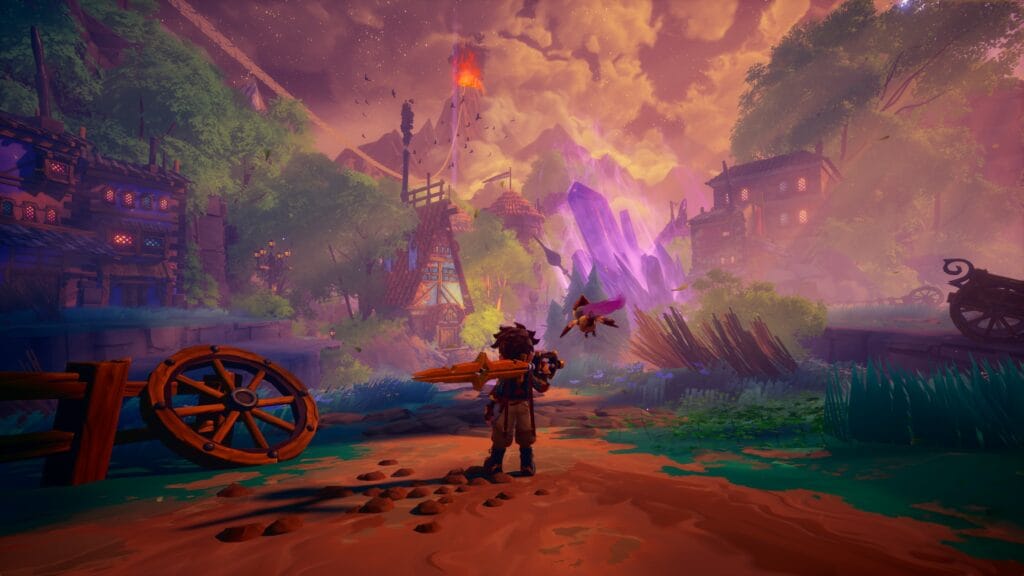
The best moments are not necessarily tied to a dramatic battle or another upgrade appearing on a menu. They come from seeing somewhere interesting, working out how Zirian’s abilities can get you there and discovering what Weird Beluga decided to hide at the end of the route.
That simple relationship between player, movement and environment gives Duskfade much of its personality.
Its weaknesses become clearer whenever the game moves away from that strength. Combat is functional but comparatively shallow. Progression can be slow to reveal the abilities that make traversal more expressive. Returning through familiar territory also exposes how inconvenient the absence of a map can become.
Yet none of those problems changes what Duskfade consistently does well.
It takes the exploratory instincts of classic 3D platformers and builds an adventure where curiosity still matters. Grappling, gliding and rail-grinding are not merely ways of getting from one objective to another. They are tools for asking what might be hiding somewhere the game never explicitly tells you to visit.
It is not a flawless revival of the genre.
It is something more useful: proof that the genre never really needed reviving in the first place.
This review of Duskfade is based on the PC Version, with the code provided by the Publisher/PR Agency.
About The Author