The Blood of Dawnwalker Review – You Cannot Do Everything, and That Is the Point
 Avinash Rohra
 Open-world RPGs have spent years teaching us a terrible habit: take everything. Accept every quest, follow every marker, open every chest, exhaust every conversation tree and clear every icon until the map looks less like a world and more like something that has been thoroughly processed. Even games supposedly built around urgency tend to indulge us. The emperor may be dying, demons might be pouring from the sky and somebody’s kidnapped family could be waiting at the end of the main quest, but nobody really minds if we disappear for twelve hours to solve a villager’s inheritance dispute or investigate why three sheep have wandered into a forest. We know how the contract works. The story pretends there is urgency, while the game quietly assures us there is all the time in the world.
The Blood of Dawnwalker breaks that contract, and that might be the smartest thing Rebel Wolves has done with it. Coen of Laslea has 30 days to rescue his family from the vampires occupying Vale Sangora, but the game does not reduce that premise to a countdown clock ticking away while you desperately sprint between objectives. Time advances when Coen commits himself to meaningful actions, quests and decisions. You are free to wander, investigate and absorb the world without watching minutes disappear simply because you stopped to look at something. The pressure begins when you choose to get involved.
That distinction sounds small until you start living with it. Eventually, I stopped looking at the quest log as a collection of promises and began looking at it as a list of competing claims on Coen’s time. Everyone wanted something from him, but the more interesting question became whether they deserved him. That shift changed the way I approached the entire game, because Dawnwalker is at its best when it refuses to let role-playing become another form of completionism.
Your Quest Log Is Not a Shopping List
Years of playing open-world RPGs have conditioned me to accept almost everything. If somebody has an exclamation mark over their head, I talk to them. If a farmer’s daughter has disappeared, I am already halfway towards the forest. If a complete stranger wants me involved in a property dispute involving six cousins, a dead grandfather and supposedly haunted farmland, apparently that is my responsibility now. Most games reward that instinct because there is rarely any meaningful cost to saying yes.
Dawnwalker eventually made me hesitate, not because its side stories are uninteresting but because helping someone means spending something I cannot grind back. Following one lead means knowing another will have to wait. Pursuing a strange rumour simply because I am curious means deciding that curiosity itself is worth part of Coen’s increasingly limited future. The game gradually turned ordinary quest acceptance into a kind of arithmetic I was not used to performing. Would this bring Coen closer to his family? Was this person important enough to justify the time? What might I be giving up elsewhere by following their problem instead?
The uncomfortable part was noticing how quickly I began assigning value to other people’s suffering. A frightened stranger could be standing in front of me with what was clearly a genuine problem, and somewhere in the back of my mind I was already asking whether helping them would actually benefit Coen. Dawnwalker never needed a morality meter to create that tension. It simply made compassion compete with urgency, and that makes kindness feel considerably more meaningful than selecting the obviously benevolent dialogue option.
That is where the 30-day system becomes more than a gimmick. Modern RPGs constantly tell us our choices matter while being terrified of withholding anything substantial. They want consequences, but they also want players to see the quest somebody spent months designing. They want mutually exclusive decisions, but not so exclusive that anyone might complain about losing access to content. Dawnwalker is more willing to accept that choice should involve loss.
If you approach RPGs as enormous checklists, I suspect the game will occasionally irritate you. I understand that instinct because I share it. An unresolved quest marker can feel less like an interesting narrative possibility and more like an administrative mistake, something I ought to clean up before moving on. Here, incompletion has purpose. The stories I did not follow became part of my version of Vale Sangora because they represented things Coen chose not to spend his time on.
That is a far more interesting definition of consequence than simply changing which cutscene plays after a decision.
A Vampire Curse Should Actually Be Inconvenient
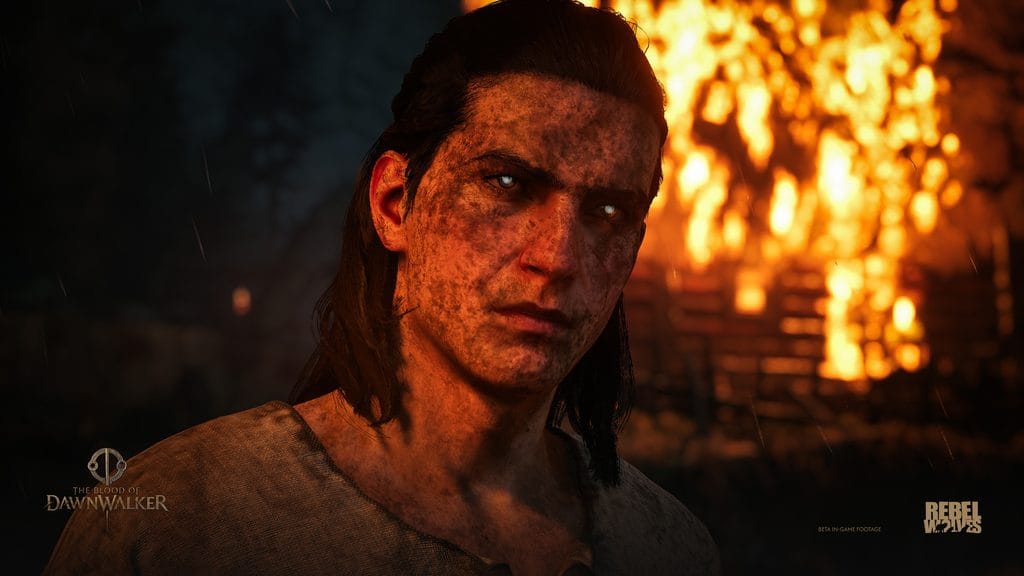
The same philosophy runs through Coen himself. During the day he remains human, relying on his sword and Witchcraft. At night his vampiric nature comes forward, changing his movement, opening different abilities and making feeding much more central to survival. Dawnwalker could easily have treated this as a neat dual-class system and stopped there, but its better ideas come from trying to make Coen’s condition intrude on the person you want him to be.
Swordmastery, Witchcraft and Vampirism share the broader progression economy, yet the routes to new abilities differ. Sword techniques can depend on manuals, Witchcraft on knowledge, while vampiric development is more closely tied to feeding and corruption. That distinction matters because progression says something about Coen beyond simply making numbers increase. Becoming more powerful as a vampire also means becoming more comfortable with what that power requires.
Blood is where this becomes particularly interesting. RPGs usually train us to treat meters as obedient systems: health tells us whether we are dying, mana tells us when to stop casting and stamina tells us that apparently swinging a weapon a handful of times constitutes extreme cardiovascular exercise. Blood is harder to compartmentalise because hunger can intrude into circumstances that have nothing to do with combat. If Coen is hungry enough, dialogue itself can become dangerous, meaning the person standing opposite him is no longer simply an NPC attached to conversation options. Coen’s physical condition is suddenly in the room with them.
I like that because it challenges one of the genre’s quietest assumptions: that the player remains completely in command of who the protagonist is at any given moment. Most dialogue systems let me decide whether my character is kind, threatening, sarcastic or cruel by simply clicking the corresponding sentence. Dawnwalker allows Coen’s body to participate in that choice. I can intend restraint and still be controlling someone whose hunger is becoming increasingly difficult to ignore.
There are countless RPGs built around cursed protagonists where the curse amounts to little more than narrative decoration wrapped around a useful skill tree. The character complains about losing themselves while the player enjoys a steady stream of increasingly impressive powers with very little actual inconvenience. Dawnwalker understands that the inconvenience is where the interesting part lies.
I only wish it pushed that idea further. The distinction between human and vampire Coen is more radical conceptually than it always feels mechanically. Darkness opens up new possibilities and significantly changes how you think about movement, feeding and certain encounters, but the sword remains central enough that the two forms never become completely different combat languages. Given how willing Dawnwalker is to make time uncomfortable, I occasionally wanted vampirism to damage my daytime habits more aggressively rather than mostly expanding the possibilities around them.
That frustration exists because the underlying idea is so good.
Stop Watching the UI and Start Watching the Fight
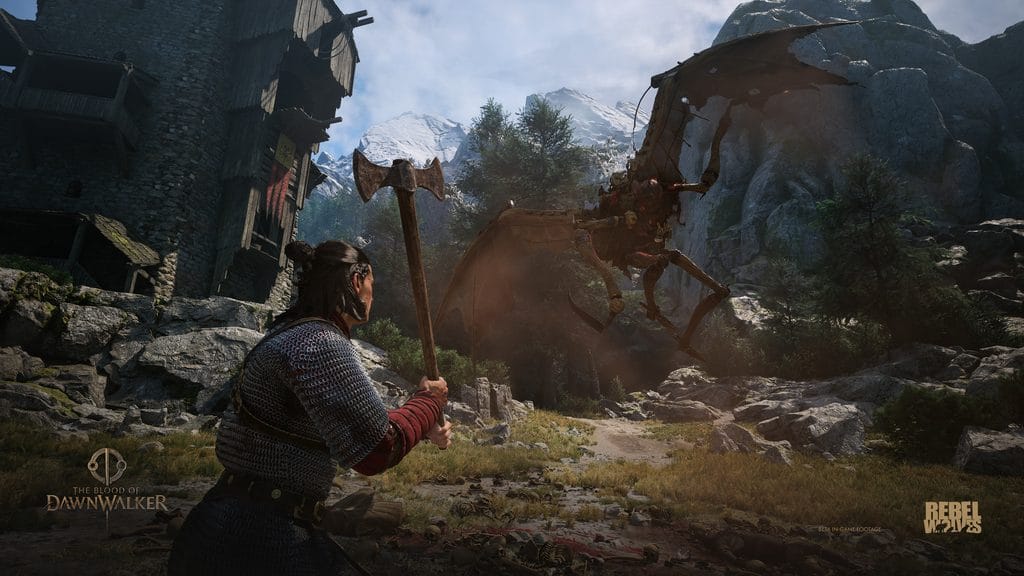
The swordplay itself took time to convince me. Combat works around directional attacks and defence, with enemies striking from different angles and the player responding appropriately rather than simply holding a universal block button and trusting the animation to do the rest. Stamina matters, perfect blocks can create valuable openings and unblockable attacks stop encounters from collapsing into a single reliable defensive pattern.
Early on, though, I was playing the interface more than I was fighting the enemy. I was waiting for indicators to tell me what was happening instead of actually reading the body in front of me. The more familiar I became with enemy animations, the less I needed the HUD to translate everything. Shoulders, weapon positioning and the beginning of a swing started communicating information directly, and somewhere during that transition combat stopped feeling like a sequence of directional inputs and began to feel like observing another fighter.
Later progression helps because the opening swordplay can seem comparatively simple, particularly before you have accumulated enough abilities and perks to manipulate encounters more deliberately. I can understand someone playing the first few hours and assuming they have already seen most of what the system has to offer. It takes a little patience before the combat develops enough texture to reveal why its directional foundation works.
Night then loosens things considerably. Vampiric abilities give Coen a speed and unnaturalness his daytime form cannot match, making distance less reassuring for enemies and feeding much more relevant during fights. The sword never disappears, which is why I would not describe day and night as two entirely separate combat systems, but your relationship with space changes once Coen begins moving like something that no longer belongs entirely among humans.
What makes all of this work is not that any one mechanic is revolutionary. Dawnwalker’s better trick is allowing its systems to interfere with one another. A difficult encounter affects health. Feeding can solve one problem while complicating Coen’s relationship with his vampirism. The hour changes what abilities are practical. A quest may be easier or more useful at a particular time, and pursuing it can ultimately consume something more precious than money or experience: another portion of those 30 days.
Nothing remains politely isolated inside its own menu, and that interdependence is a large part of why the game feels more coherent than a simple list of features suggests.
Saving a Family Means More When You Actually Know Them
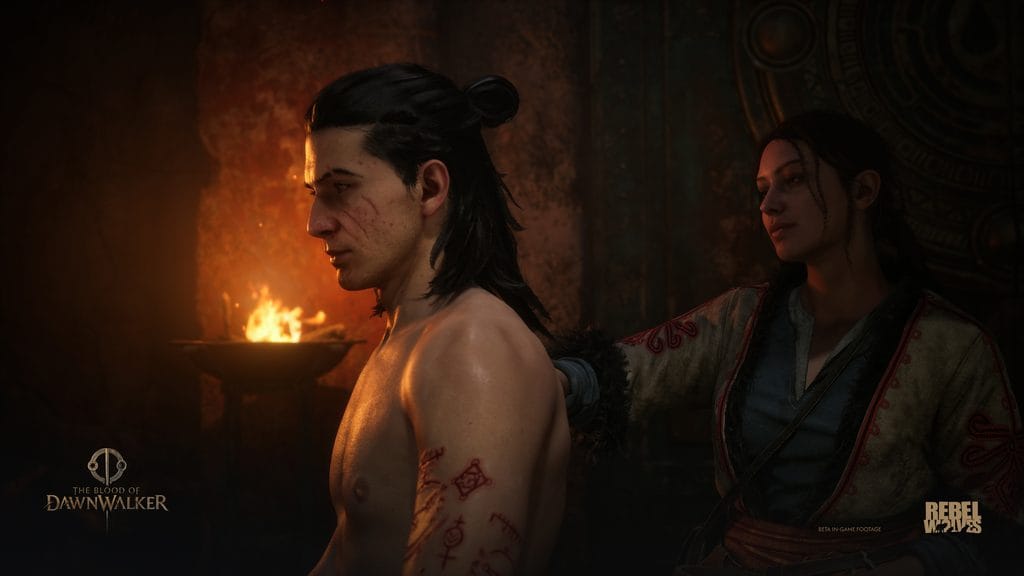
Coen is not trying to save civilisation. He is trying to save his family, and I appreciate the modesty of that motivation because videogames have spent decades using kidnapped relatives as emotional shortcuts. A spouse disappears, a daughter is taken, a sibling is killed, and the player is expected to care because the relationship label apparently does all the necessary dramatic work. Increasingly, my response to those stories is to wonder whether the game is ever going to tell me who these people actually are.
Dawnwalker understands that a label is not a relationship. Some of its best optional writing is less concerned with expanding the mythology of Vale Sangora than with changing Coen’s understanding of the people he wants to rescue. Volk, an acquaintance of Coen’s father, can reveal things about him that never belonged to Coen’s own understanding of the man. It sounds like a small piece of writing, but it strengthens the entire rescue premise because it transforms “father” from a narrative role into a person Coen may not have known nearly as completely as he thought.
There is something recognisably human in that. We spend years believing we understand our parents because we know who they are to us. Then someone who knew them decades earlier tells us a story and suddenly there is another person standing behind the role, someone who existed long before our own relationship with them began. Dawnwalker’s stronger side quests understand how useful that idea can be in a story supposedly built around saving a family.
Home Sweet Home is the example I am most reluctant to unpack because explaining its particulars would remove much of what makes it effective. What matters is the way it circles Coen’s unresolved guilt involving his younger brother Alin and makes a supposedly optional story feel inseparable from the larger rescue. I did not walk away thinking I had simply completed an especially good side quest. I came away thinking differently about Coen’s family.
That difference matters. Open-world games frequently contain excellent standalone stories, but far fewer understand how to make those stories alter the emotional meaning of the main one. Dawnwalker is at its best when its optional material does not feel detachable from Coen’s reason for being there in the first place.
Brencis Does Not Need Forty Hours of Foreshadowing
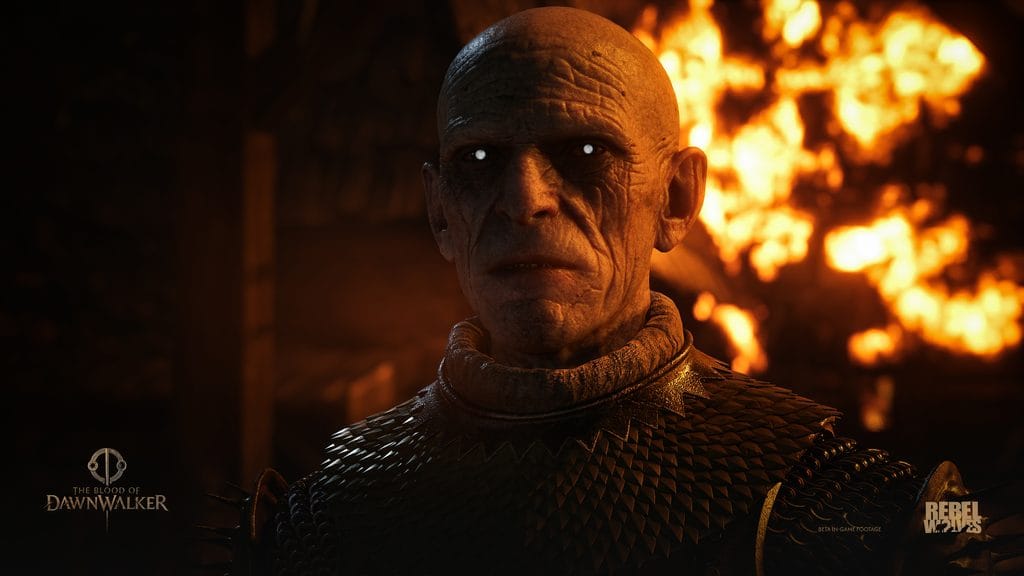
Dawnwalker also avoids hiding its antagonist behind layers of disposable intermediaries. Brencis is established early enough that the threat has a face before Vale Sangora has fully opened up, and that matters because Coen’s situation depends on the imbalance between them feeling immediate rather than theoretical.
I have grown tired of RPG villains who exist for most of the game as names whispered nervously by villagers while the protagonist spends 30 hours killing their lieutenants and reading increasingly ominous letters. Dawnwalker does not need to protect Brencis in that way. His presence makes Coen’s deadline feel more tangible because the occupation is not an abstract evil waiting conveniently at the end of the main story.
The broader premise supports this. Vale Sangora is already being damaged by war and disease before vampires decide humanity has become weak enough to dominate openly. They do not create every vulnerability themselves; they recognise an existing collapse and take advantage of it. That gives the occupation a cynical intelligence that I found much more interesting than simply portraying an otherwise healthy kingdom suddenly overwhelmed by supernatural evil.
Predators do not always need to manufacture weakness when they are perfectly capable of recognising it.
That is one of the few places where a deliberately isolated sentence earns its space, because it captures what makes Vale Sangora’s situation so unpleasant. The vampires have not arrived in a vacuum. They have entered a society already hurting and understood exactly how much more pressure it could bear.
The Same Road Means Something Different at Midnight
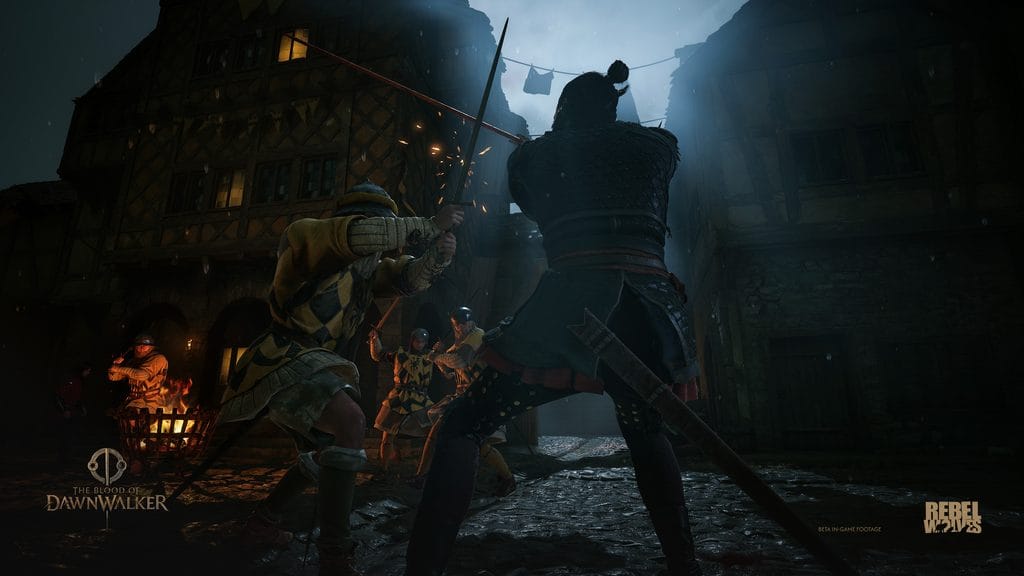
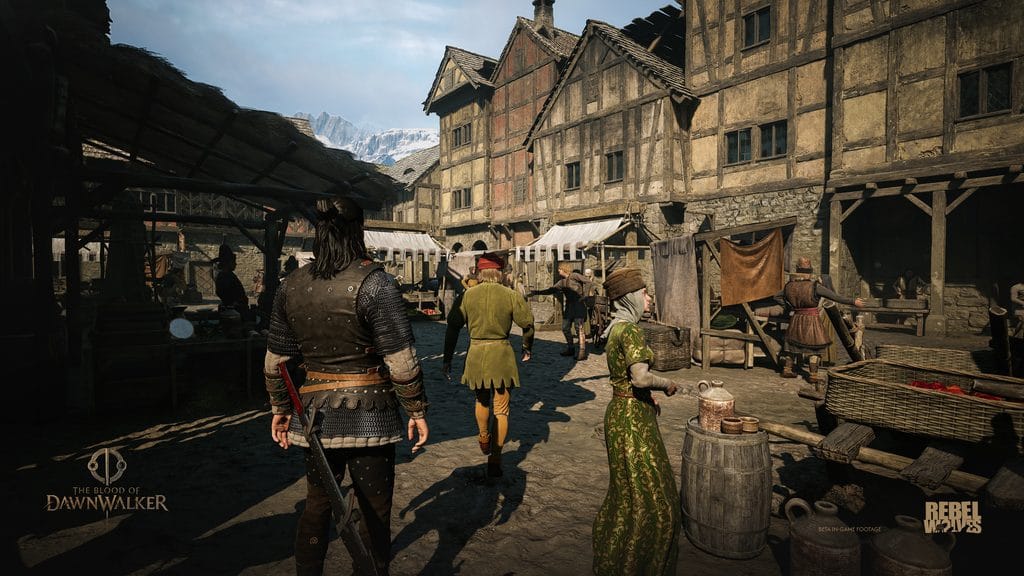
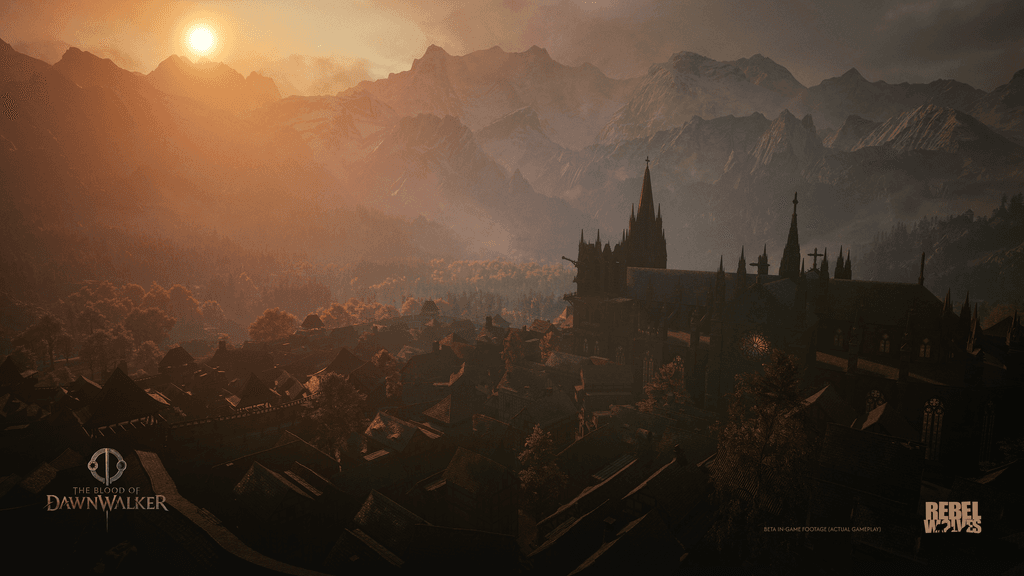
Vale Sangora is visually impressive in the way you would expect from a modern dark fantasy built in Unreal Engine 5. Forests, settlements, swamps, plains, mountains and ruins give the landscape enough variety, but simply listing biomes tells you almost nothing about whether an open world actually works. Attractive scenery has become one of the easiest compliments to give a contemporary RPG.
What matters more is whether a place develops memory. Dawnwalker’s world gradually does because the same geography can acquire different meaning depending on Coen’s condition, the time of day and the choices you have already made. A road I understood in daylight can offer different possibilities after dark because Coen is different even though the road itself has not changed. Movement options shift, feeding becomes relevant, abilities change and the people or dangers surrounding a location can take on a different significance.
Eventually, I stopped remembering places simply because of how they looked. I remembered what had happened there, which routes were tied to particular decisions, which people I had ignored and which activities had cost time I later wished I still possessed. That is what open worlds should aspire to far more often than raw geographical size or density. A world becomes convincing when I remember it through experience rather than through map icons.
The calendar reinforces that because Dawnwalker refuses to punish simple curiosity. I could wander through Vale Sangora without watching a constantly draining clock and resenting every minute spent looking around. The anxiety appeared when I chose to interfere in somebody else’s life, which is precisely where it belongs.
Unfortunately, PC performance occasionally interrupts that relationship for much duller reasons. Traversal stutter is difficult to ignore, and although the game supports modern upscaling and frame-generation technologies and can recover substantial performance through adjusted settings, Unreal Engine 5 hitching remains noticeable enough to puncture the atmosphere. It is especially irritating in a game that benefits from moving slowly through its environments and becoming familiar with them. Technical interruption hurts more when you actually want to inhabit the space rather than sprint through it.
Final Verdict – The Best Thing Dawnwalker Gave Me Was Something I Missed
Score: 4.8/5
The Blood of Dawnwalker is not great because it has a 30-day system. It is great because it understands what those 30 days represent: possibility. Every time Coen spends part of that future, another version of his story becomes more difficult, perhaps impossible, to reach.
That should not feel revolutionary in a genre supposedly built around choice, yet so much modern RPG design is structured around protecting players from the most meaningful part of choosing anything: losing whatever was not chosen. We are accustomed to games where consequence means receiving a different conversation, a changed ending slide or a slightly altered reward before being returned to broadly the same enormous buffet of content. Dawnwalker is more willing to accept that sometimes choosing one thing should genuinely mean leaving another behind.
Its flaws do not disappear because of that. Human and vampire combat share more of their foundation than I expected. Some quests exploit the relationship between time and Coen’s changing condition better than others. The opening combat takes patience before its strengths become obvious, and the PC version’s traversal stutter can pull you out of a world that otherwise does an impressive job of keeping its systems connected.
Yet none of those criticisms changed the thing I kept thinking about after I stopped playing: the quests I had not finished.
Normally, an unresolved journal entry sits in my memory as administrative debris, something I neglected or should have cleaned up before the credits. Here, I could remember why I left certain things undone because I had chosen something else instead. Those missing stories were not simply failures of completion. They became evidence of the version of Coen I had actually played.
That is the lesson I hope other open-world RPGs take from Dawnwalker. The genre does not desperately need larger worlds, more map markers or another hundred hours of content nearly as much as it needs the confidence to tell players that they cannot possess everything. A meaningful choice requires another possibility to disappear, or at least to become harder to reach. A believable world should be capable of containing lives and stories that continue without our fingerprints on every corner.
Most open-world RPGs end as monuments to consumption. Completed quest logs. Cleared regions. Legendary gear gathering dust in an inventory. Maps scrubbed clean of icons until nothing remains except proof of how comprehensively we devoured the place.
The Blood of Dawnwalker left holes in mine.
People I never properly knew. Conversations that never happened. Problems somebody else presumably had to live with. Stories whose endings exist somewhere beyond the version of Vale Sangora I created.
For once, I do not want to reload a save and correct that.
Those gaps are the story.
And RPGs would be better off if more of them had the courage to leave a few behind.
This review of The Blood of Dawnwalker is based on the PC version, with code provided by the publisher.
About The Author