Boreal Tenebrae Act 0: Sundowning Review – Small Town Horror Lost in the Static
 Avinash Rohra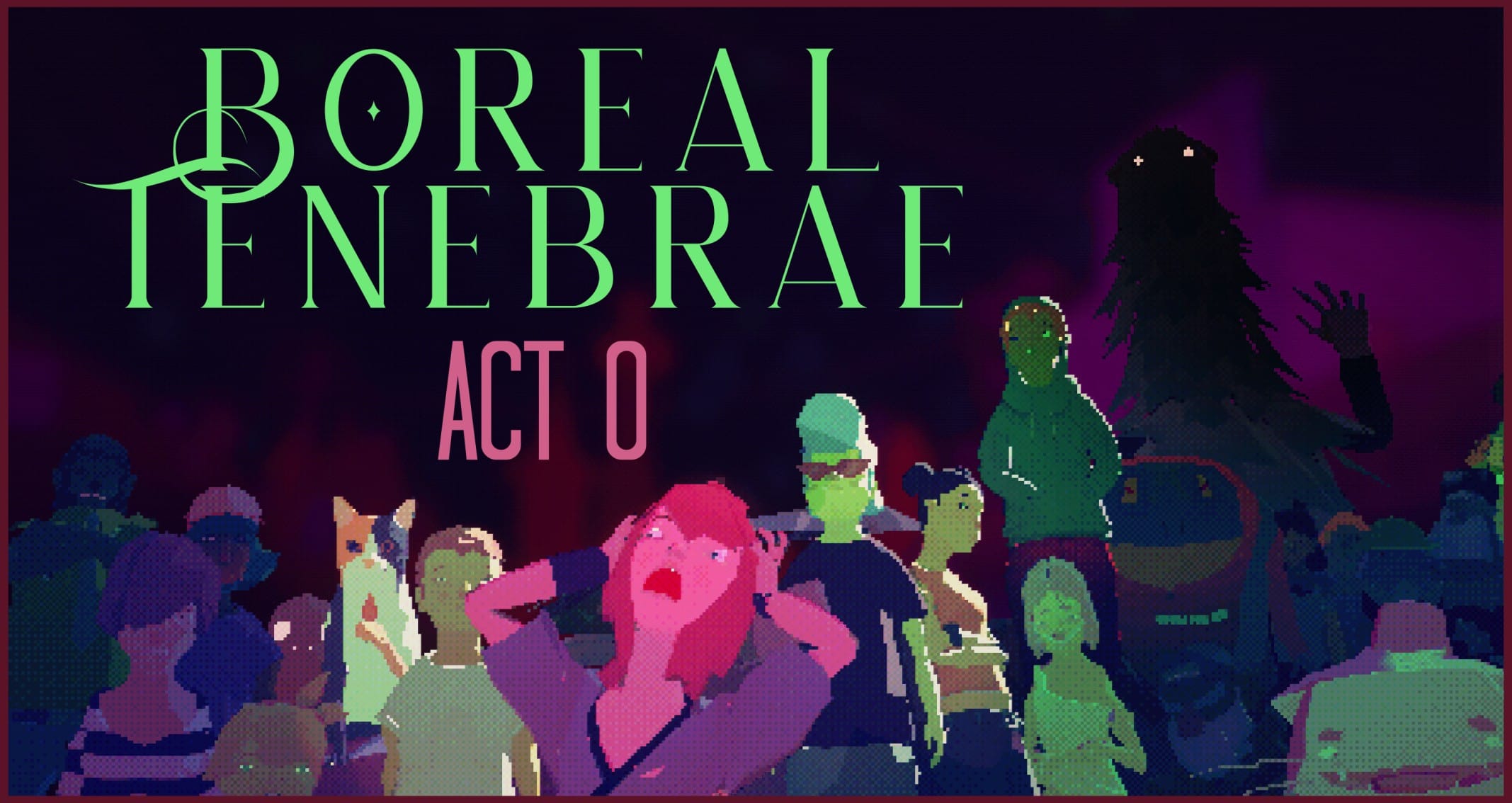
Boreal Tenebrae Act 0: Sundowning is at its best when almost nothing is happening.
A quiet street. An awkward conversation. A room framed from an angle that makes it feel slightly less familiar than it should. Static bleeding across the image. Someone in Tamarack Narrows behaving as though life is carrying on normally even when there is an increasingly obvious sense that it is not.
That restraint gives Sundowning much of its personality. This standalone prequel to Boreal Tenebrae Act I takes place around the centennial celebrations of Tamarack Narrows, a remote community already dealing with industrial decline, labour conflict and growing resentment before anything supernatural enters the picture. An unknown visitor arrives offering something resembling salvation, and what should have been an attempt to rally a struggling town begins collapsing into fire, strange interference and a crimson aurora hanging overhead.
Sundowning never needs to sprint toward horror because Tamarack Narrows already feels uncomfortable before the impossible arrives. That confidence, coupled with an aggressively lo-fi presentation and a story spread across several residents, makes it an intriguing piece of narrative horror. Its interactive elements do not always carry the same weight, but the atmosphere frequently does.
Welcome Back to Tamarack Narrows
Act 0 is designed as a standalone prequel, meaning newcomers are not required to know the events of Boreal Tenebrae Act I before entering Tamarack Narrows.
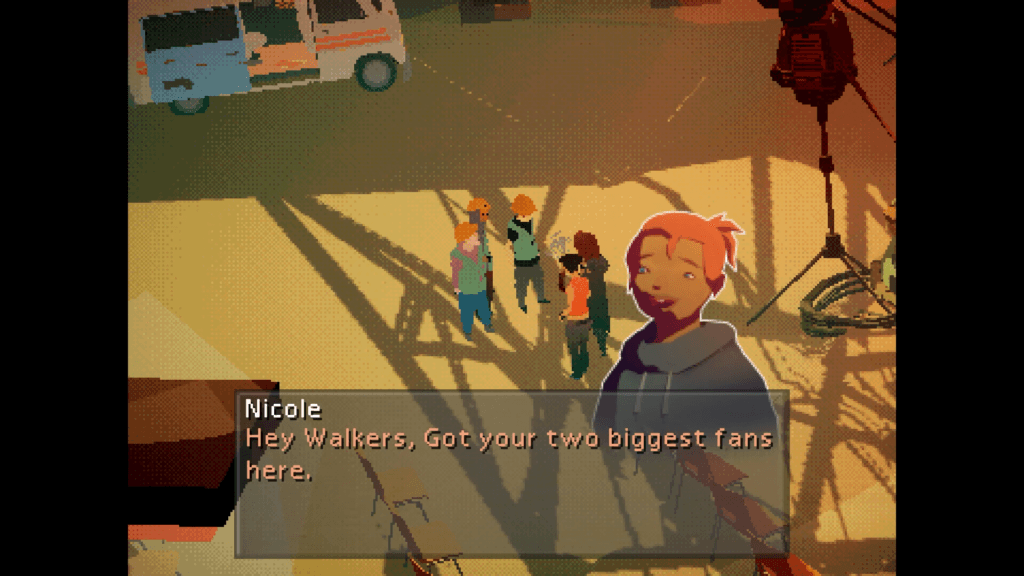
The story unfolds through multiple perspectives, including Sarah Walker, Bree, Nicole and Sam. That structure matters because Sundowning is less interested in constructing a traditional hero’s journey than it is in showing what happens to a community when something inexplicable begins pressing against everyday life.
Tamarack Narrows is already in trouble.
The town’s economic decline and labour tensions give the story a grounded source of anxiety before its stranger elements begin appearing. The centennial celebration is supposed to represent optimism, or at least an attempt to manufacture some. Instead, it becomes the backdrop for events that push the community toward something far more surreal.
That contrast is where the premise becomes most effective.
There is an inherent sadness to watching people try to maintain normal routines in a place that already feels as though it is slipping away from them. Sundowning does not need to rely exclusively on grotesque imagery to create discomfort because there is already instability embedded in the town itself.
When the supernatural elements begin intruding, they feel like an extension of that unease rather than an unrelated horror spectacle.
Horror Seen From Different Angles
The shifting perspectives are also Sundowning’s most useful structural idea.
Rather than experiencing Tamarack Narrows through one uninterrupted viewpoint, the game moves between different characters and situations. Each perspective provides another fragment of what is happening, gradually allowing the player to assemble a broader picture of the town and the people living there.
This also prevents the story from feeling too isolated.
A lot of horror relies on removing characters from society. Sundowning is more interested in showing a society experiencing something collectively, even when its residents do not fully understand what is happening.
The game mixes conversations, exploration, environmental interaction and occasional puzzles with those character changes. Individual characters can have their own inventories and abilities, adding a little mechanical distinction to the different viewpoints.
It is not an especially systems-heavy adventure, though.
Much of the experience remains focused on moving through spaces, speaking to people and allowing the narrative to unfold. The puzzles that have been documented are relatively straightforward, functioning more as extensions of exploration than major obstacles demanding lengthy deduction.
For a game this dependent on atmosphere, that approach makes sense. It keeps the emphasis on Tamarack Narrows rather than constantly interrupting the story with elaborate mechanical challenges.
The trade-off is that the interactive side can feel modest compared with the ambition of the presentation.
When the Static Starts Talking
Sundowning’s strongest feature is considerably easier to identify: it looks strange in exactly the right way.
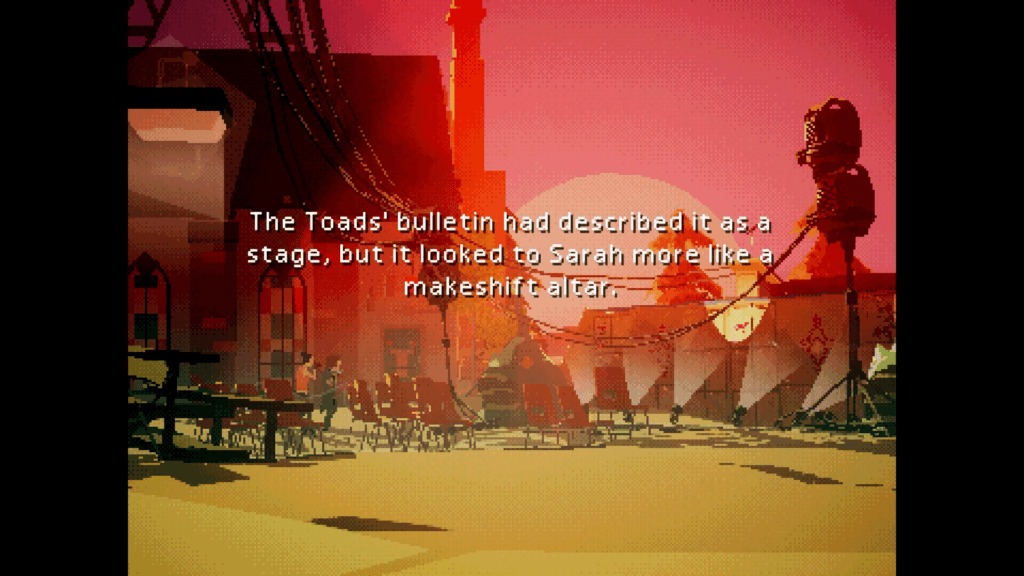
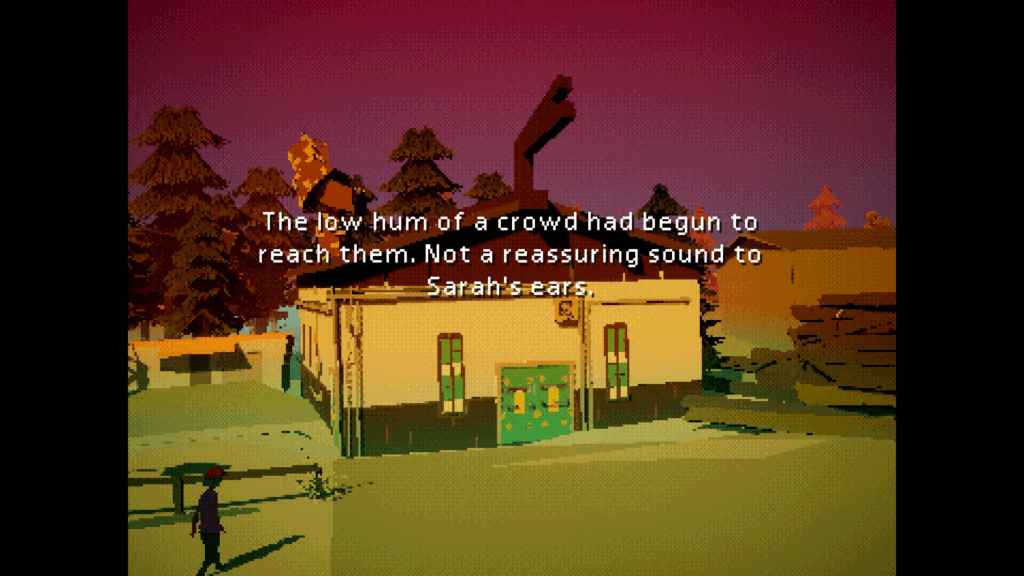
Its visual identity combines low-poly, PS1-inspired 3D graphics with VHS noise, CRT distortion, infrared-style imagery and other forms of analog degradation. Fixed-camera scenes further push the presentation toward the visual grammar of older horror and adventure games.
The result is not simply an exercise in retro nostalgia.
The low-resolution imagery gives Tamarack Narrows an unstable quality. Characters, rooms and streets feel recognisable while still carrying enough visual distortion to stop them from becoming comfortable.
The default 4:3 presentation reinforces that sense of watching something recovered rather than something conventionally presented, although a 16:9 option is available.
It is an effective aesthetic because Sundowning understands that old technology can be unsettling without constantly announcing that it is trying to be scary. Static, image noise and awkward camera framing fit naturally into a game concerned with reality becoming increasingly unreliable.
There is also a danger to this approach.
When a game intentionally reduces visual clarity, atmosphere and readability can begin competing with one another. Fixed camera positions and low-resolution environments can occasionally make spaces or important objects more difficult to parse than they need to be.
That is the uncomfortable compromise at the centre of Sundowning’s style. The same techniques responsible for many of its most distinctive moments can also introduce unnecessary friction.
A Strong Mood Carrying Light Mechanics
That imbalance extends beyond navigation.
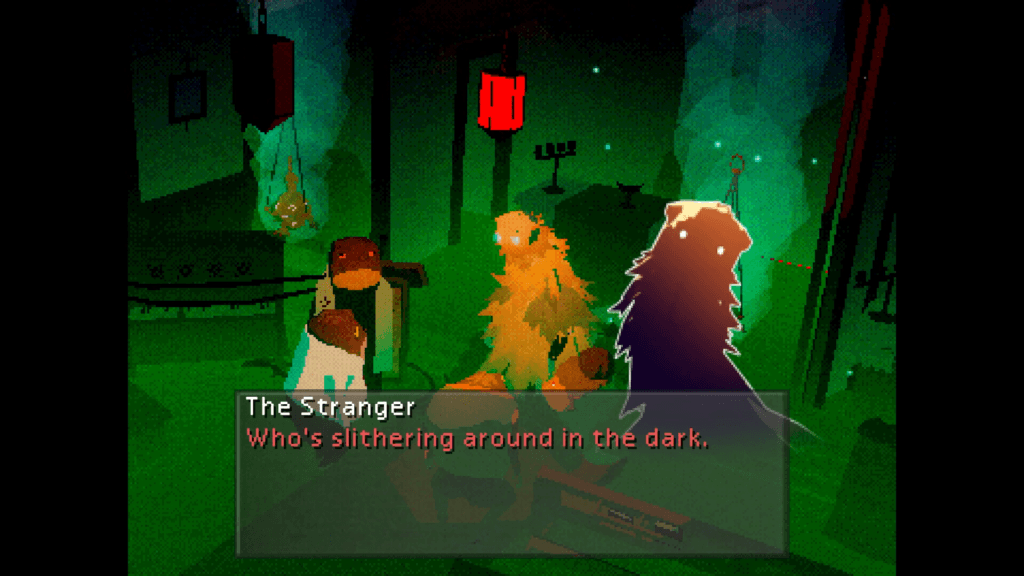
Sundowning’s narrative and audiovisual identity often feel considerably more developed than its individual interactions. Its light puzzle solving and environmental actions provide enough involvement to stop the experience from becoming completely passive, but they are rarely the reason Tamarack Narrows remains interesting.
The town itself is.
The tension between its struggling community and the increasingly surreal events surrounding the centennial gives the game a foundation stronger than a straightforward sequence of supernatural incidents would have provided.
There is a specificity to the setting that helps. Liquor stores, streets, church basements and industrial spaces are ordinary locations, and using those spaces as the foundation for the game’s horror gives its stranger imagery something recognisable to contaminate.
Sundowning does not need an enormous mechanical vocabulary when simply walking into another piece of Tamarack Narrows can reveal something new about its residents or its increasingly unstable reality.
At the same time, players expecting substantial adventure-game puzzles or deeper systems may find the game relatively slight. Its priorities clearly sit elsewhere.
Pros and Cons
Pros
- Distinctive PS1, VHS and CRT-inspired presentation
- Strong small-town horror setting
- Multiple perspectives help Tamarack Narrows feel like a community rather than a backdrop
- Economic decline and labour tension give the supernatural story a grounded foundation
- Fixed-camera presentation complements its unsettling atmosphere
- Works as a standalone prequel without requiring knowledge of Act I
Cons
- Light puzzle design offers limited mechanical challenge
- Low-resolution presentation can occasionally hurt readability
- Interactive systems are less compelling than the narrative and atmosphere
- Fixed-camera framing can sometimes make navigation less clear
Final Verdict
3.8/5
Boreal Tenebrae Act 0: Sundowning is more interesting as a place than it is as a collection of mechanics.
That is not necessarily a criticism.
Tamarack Narrows carries the experience. Its economic uncertainty, strained community and doomed attempt at celebration give the supernatural events something tangible to push against. The stranger the night becomes, the more effective the contrast between ordinary small-town spaces and cosmic intrusion becomes.
The multiple perspectives help enormously. Instead of reducing the disaster to one person’s experience, Sundowning lets different residents provide pieces of a larger mystery, making the town itself feel increasingly important.
Its weaknesses appear whenever the atmosphere has to hand responsibility back to interaction. The puzzles are modest, navigation can occasionally suffer under the deliberately degraded visual presentation, and the mechanical side rarely proves as memorable as the imagery surrounding it.
But Sundowning has something many horror games struggle to establish: a recognisable identity.
It does not need elaborate combat encounters or constant shocks to create unease. Sometimes a badly lit room, a distorted image and the suspicion that everyone around you is experiencing a slightly different version of the same disaster are enough.
Tamarack Narrows may be disappearing into static, but Sundowning gives you plenty of reasons to keep watching.
This review of Boreal Tenebrae Act 0: Sundowning is based on the PC Version, with the code provided by the Publisher/PR Agency.
About The Author