Folk Hero Review – Slavic Folklore Gives This Roguelite a Much-Needed Identity
 Avinash Rohra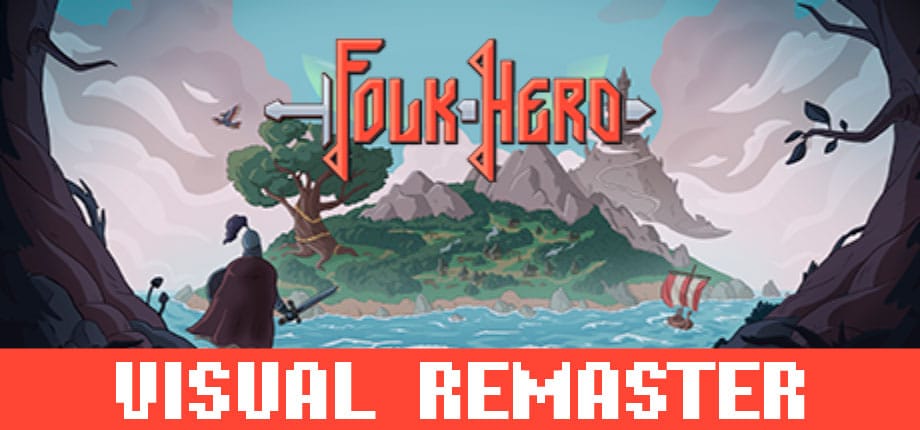
Folk Hero has one rule that becomes increasingly difficult to ignore: whatever power you think you have accumulated, the island of Buyan is still perfectly capable of taking it away.
That sounds obvious for a roguelite built around permanent death, but Chudo-Yudo Games understands something important about the genre. Losing a run only remains interesting when the act of surviving is enjoyable in the first place. Folk Hero does not have Hades-sized narrative ambitions or the almost ridiculous systemic density of The Binding of Isaac. Instead, it puts most of its faith in direct combat, weapon experimentation and a Slavic-fantasy setting that immediately separates it from the mountains of gloomy dungeons and vaguely medieval ruins that have become roguelite wallpaper.
I played Folk Hero on Nintendo Switch 2, where it feels particularly well suited to shorter runs. The Switch version arrived on January 23, 2025, following the original PC release in October 2023, and the game supports handheld, tabletop and TV play along with local multiplayer for up to three players on a single system.
The result is an action roguelite that I enjoyed considerably more than its modest appearance first suggested. Folk Hero has some genuinely smart ideas buried inside its compact structure. It also has a repetition problem that becomes harder to ignore the longer you remain on Buyan.
Slavic Folklore Gives Folk Hero Its Own Face
The setup wastes little time. Stories of creatures such as Leshy, Domovoy and Rusalka are no longer stories. Animals are disappearing, villagers are reporting strange sightings and a mysterious island has appeared on the horizon. You take control of a hero and head to Buyan to investigate what is happening.
There is enough story here to give the runs context, but Folk Hero is not a narrative roguelite in the Hades mould. It is much more concerned with what happens between entering an area and either reaching the next one or dying on the way there. There are multiple endings and different story possibilities tied to experimentation across runs, yet narrative is primarily a reason to continue exploring rather than the centre of the experience.
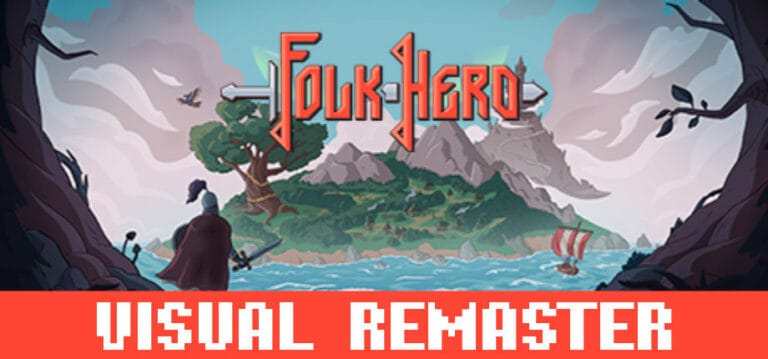
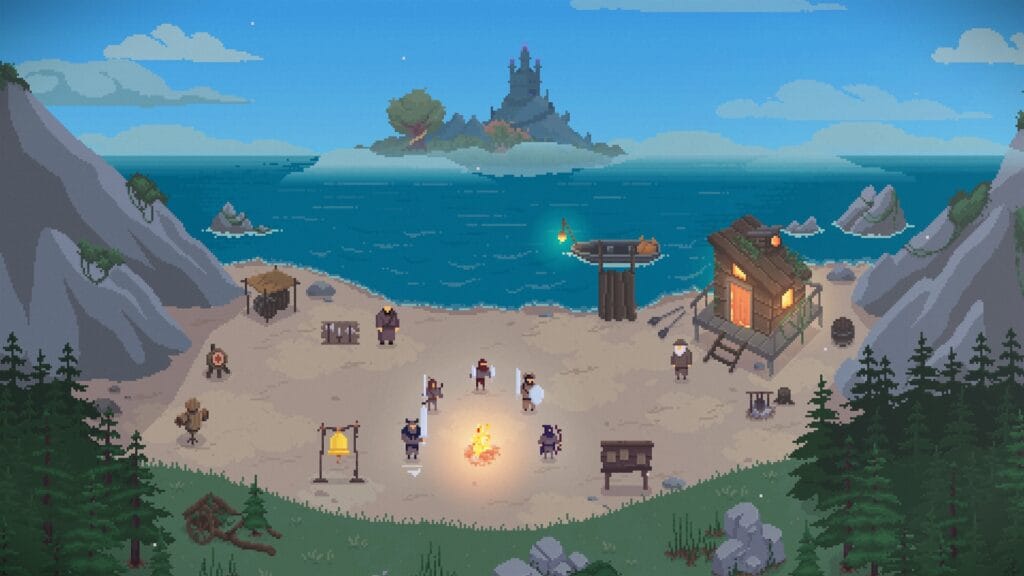
What matters more is how confidently the folklore informs the presentation. Folk Hero’s pixel art does not try to overwhelm you with detail. Its environments are readable, its creatures are distinctive enough to recognise quickly during fights, and the animations carry a slight exaggeration that prevents the mythology from turning excessively grim.
The game moves through several procedural regions, including the Mysterious Forest, Swamp, Wasteland and Castle of Koschei. Their layout changes between attempts, and each gives the expedition a slightly different backdrop.
It is a strong foundation, although the procedural generation eventually exposes one of Folk Hero’s biggest weaknesses. The geography changes more reliably than the experience does.
Combat Rewards Restraint More Than Button Mashing
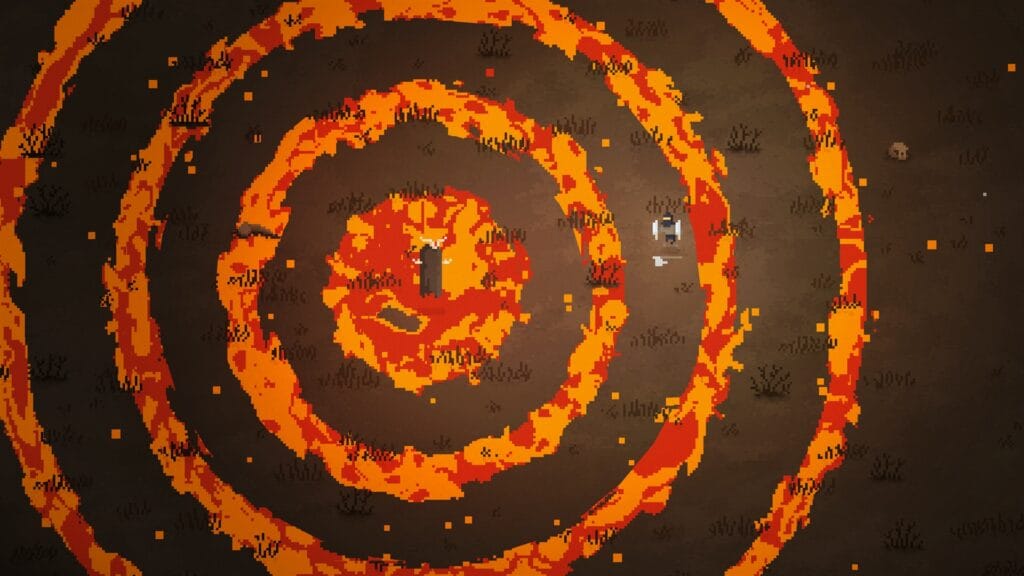
Folk Hero describes its combat as Souls-like, although that comparison needs some perspective. This is not Dark Souls squeezed into pixel art. The similarity comes from its emphasis on reading attacks and using defensive tools properly rather than constantly attacking.
You have fast and powerful strikes alongside special moves, a dash, blocking and parrying. Enemies have their own behaviours to recognise, while bosses place greater pressure on timing and positioning.
The important thing is how those pieces interact. Folk Hero feels best when you stop treating every enemy as something that must be rushed down immediately. Spacing gives you time to read what is coming. Blocking can rescue a poor position. A parry rewards confidence only when that confidence is backed by timing.
There is also a mechanic I wish more action games played with: enemies can damage each other.
That friendly-fire system sounds like a novelty until several opponents start occupying the same space. Instead of immediately committing to an attack, you can reposition and allow one enemy’s aggression to become somebody else’s problem. It gives otherwise straightforward encounters a tactical wrinkle and makes movement useful for something beyond dodging damage.
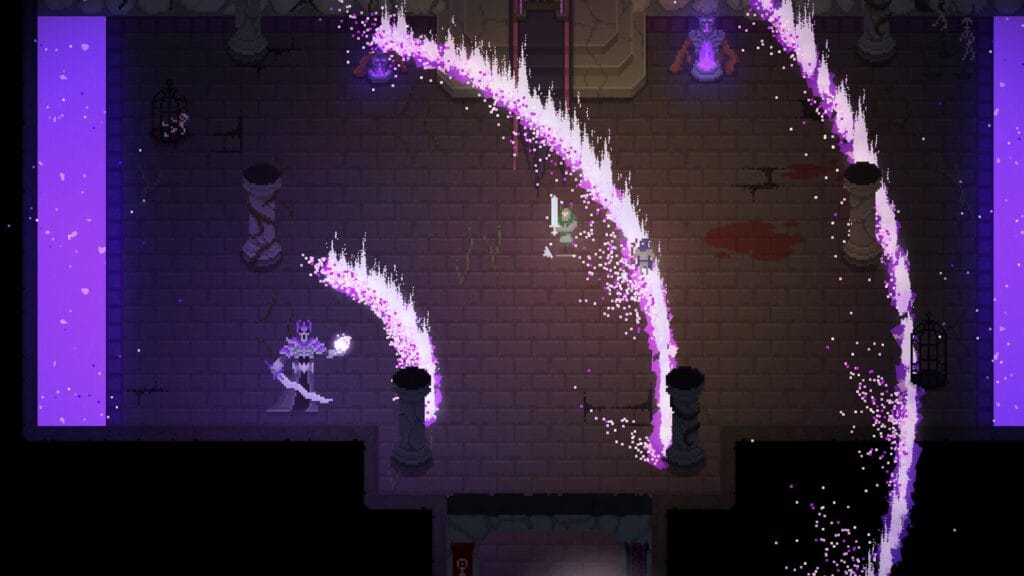
It also suits Folk Hero’s scale. This is not a game buried beneath enormous skill trees or complicated command lists. The combat is readable quickly, then becomes more interesting as you learn how much you can manipulate the space around you.
That clarity was one of the main reasons I kept playing.
The Real Fun Starts When the Build Comes Together
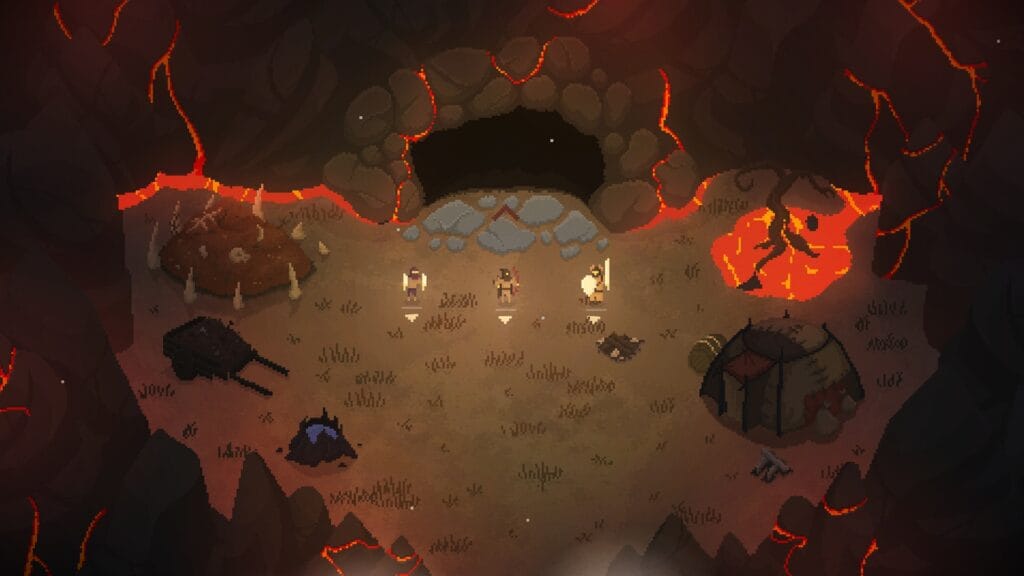
Where Folk Hero finds more depth is in its builds.
Character classes, weapons, artifacts and elemental runes can all affect how a run develops. Runes are especially important because they can be combined with one another to alter weapons further, meaning an item that appears ordinary in isolation may become far more useful depending on what you pair with it later.
That creates one of the better sensations a roguelite can produce: a run slowly becoming something you did not originally plan.
You are not simply waiting for larger numbers. The more interesting decisions come from asking whether a new piece of equipment works with what you already have and whether changing direction halfway through a run is worth the risk. An awkward opening can gradually turn into a coherent build as artifacts and runes begin reinforcing each other.
Folk Hero is strongest during that process because the game asks for adaptation. You cannot guarantee that the island will hand you precisely what you want, so part of improving is learning which combinations are worth pursuing and which should be abandoned before you waste resources trying to force them into usefulness.
Persistent progression exists outside individual runs as well. Points earned on Buyan remain after death and can be spent on new heroes and abilities, even though the fallen hero is gone. That gives failed attempts some lasting value without removing the consequence of failure altogether.
The balance is not perfect, however. Unlocking additional options can feel slow, particularly once you have repeated the earlier stretches enough times that the novelty of discovery has worn away. Slow or relatively modest meta-progression is also one of the more consistent criticisms in longer-term player feedback.
For me, this is where Folk Hero begins losing momentum.
Procedural Does Not Always Mean Unpredictable
There is a point in almost every roguelite where you realise you are no longer learning the game. You are repeating it more efficiently.
Folk Hero reaches that point sooner than the strongest games in the genre.
Procedural generation rearranges the island between attempts, but the underlying pool of encounters and events eventually becomes familiar. The environments still move pieces around, yet I increasingly knew the kind of activity I was likely to find behind those changes. Exploration consequently shifts from curiosity toward routine.
That weakness is amplified by the amount of time Folk Hero asks you to spend replaying familiar ground while working toward additional unlocks. The combat does enough to keep those repetitions enjoyable for quite a while, but it cannot disguise them completely. Player feedback has similarly pointed toward repeated events, slow class unlocks and runs beginning to feel too similar after extended play.
Difficulty can also feel uneven. Standard encounters can become manageable once enemy behaviour is understood, then bosses demand considerably sharper execution. That contrast is not inherently bad, and I would rather have bosses that test what I have learned than oversized enemies that simply absorb more damage. Still, the climb between those moments can make some runs feel flatter than others.
Folk Hero needed either a broader pool of encounters or faster access to more of its mechanical variety. As it stands, the game occasionally asks its excellent combat foundation to compensate for a structure that has already shown most of its cards.
Nintendo Switch Is a Natural Home for It
I hesitate to make technical claims about a Switch port unless I have something concrete to say, and Folk Hero does not need invented performance commentary to justify discussing the platform.
What matters here is format.
Runs are self-contained. The pixel-art presentation remains readable on a smaller display, and the game does not demand the kind of uninterrupted multi-hour session that can make some roguelites exhausting. Folk Hero’s structure works naturally for playing a run, putting the Switch down and returning later.
There is also proper local multiplayer for up to three people on one console, which gives the Switch release an additional use case beyond portability. Nintendo lists touchscreen support as well as handheld, tabletop and TV modes.
Final Verdict – Folklore Worth Revisiting
Score: 3.75/5
The easiest mistake would be to judge Folk Hero entirely by the games it resembles.
Its developers openly cite Hades, Curse of the Dead Gods, The Binding of Isaac, Dead Cells and Risk of Rain among their inspirations, and you can understand why while playing it. Those comparisons also expose the limits of a smaller project. Folk Hero does not possess the breadth of Isaac, the movement possibilities of Dead Cells or the narrative machinery that turns repeated Hades runs into conversations with its world.
What it does have is a combat system that asks you to participate rather than merely overpower it, coupled with a build system that can make an unpromising run progressively more interesting. The Slavic folklore is more than decoration because it gives Buyan creatures and places that remain recognisable after the procedural structure itself becomes predictable.
I wish the game had more material to shuffle. I wish permanent progression moved a little faster, because discovering another class or possibility is far more exciting than repeating familiar events while waiting to reach it. Those limitations keep Folk Hero from becoming the kind of roguelite that devours weeks of my time.
They do not erase what works.
Folk Hero is at its best when I am watching an enemy attack pattern, considering whether to risk a parry, checking what another rune will do to the weapon I have already built around, then realising that the supposedly disposable run has somehow become one worth protecting. That is the loop Chudo-Yudo Games gets right.
Folk Hero sits comfortably in that space between a pleasant surprise and an essential roguelite. There is enough here to recommend, especially on Switch, but Buyan needed a few more stories to tell before asking me to hear the same ones again.
This review of Folk Hero is based on the Nintendo Switch 2 Version, with the code provided by the Publisher/PR Agency.
About The Author