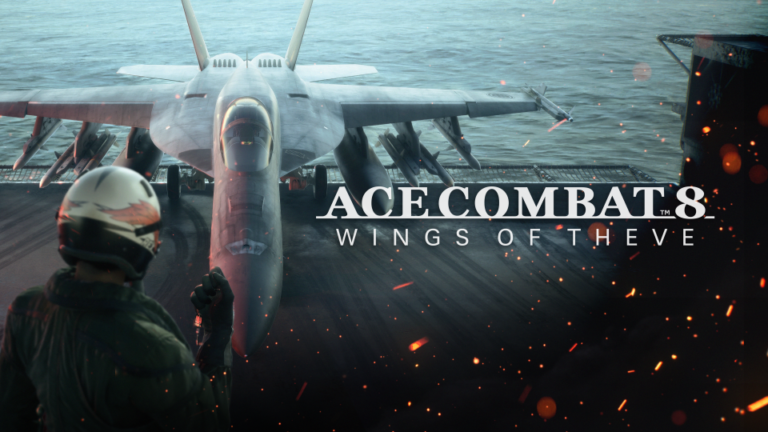
Ace Combat 8: Wings of Theve Review – When the Legend Becomes the Pilot
 Avinash Rohra
I have always found it slightly funny that Ace Combat asks us to take its stories seriously. These are games where fighter jets can carry enough missiles to make the Geneva Convention nervous, where superweapons appear with the regularity of weather systems, and where a radio transmission about the fate of humanity can be followed immediately by somebody asking you to shoot down twelve more aircrafts. Yet that contradiction is precisely why the series works. Ace Combat has never wanted to be a realistic war game. It wants to make you feel like the final pilot standing between civilization and complete catastrophe. Ace Combat 8: Wings of Theve understands that fantasy better than most entries in the series, but it also makes the most consequential attempt yet to ask what happens when the fantasy becomes a story people actually believe. I went into Wings of Theve expecting better planes, bigger battles and another campaign built around the familiar Ace Combat rhythm. After spending roughly the length of a full weekend with its campaign on PC, what stayed with me wasn’t a particular jet or even one of its enormous set pieces. It was the uncomfortable idea at the centre of the game: that the greatest pilot in the war is, in part, a fiction, and that someone eventually has to become the person that fiction promised. That is a surprisingly good foundation for an Ace Combat game.
There is a particular moment in every Ace Combat game when the radio chatter, orchestral music and missile warnings somehow line up perfectly. You are upside down, something enormous is exploding behind you, three enemy aircraft are trying to put a missile through your cockpit and someone on the radio is shouting your name like the fate of the entire world depends on whether you can make one more turn.
Then you pull the aircraft around. The missile misses.
The music swells.
And for a few seconds, Ace Combat 8: Wings of Theve feels like the most ridiculous and wonderful thing in the world.
I have played enough Ace Combat over the years to know exactly how dangerous that feeling can be. The series has always been brilliant at manufacturing spectacle, but spectacle alone does not make a campaign memorable. Ace Combat 7: Skies Unknown had some extraordinary missions, but its storytelling could struggle to give its characters the same weight as its aircraft. With Wings of Theve, Project Aces has clearly decided that the aircraft, the pilots and the story should finally be fighting for the same piece of sky.
I Wasn’t Expecting the Story to Matter This Much
The easiest thing to underestimate about Ace Combat 8 is how much time it spends making you care about what happens outside the cockpit.
Ace Combat has never exactly been shy about melodrama. This is a franchise where military operations, political intrigue, impossible superweapons and emotionally devastated pilots coexist without anyone blinking. That is part of its identity. You do not play Ace Combat expecting restrained military realism. What surprised me was how effectively Wings of Theve uses that melodrama.
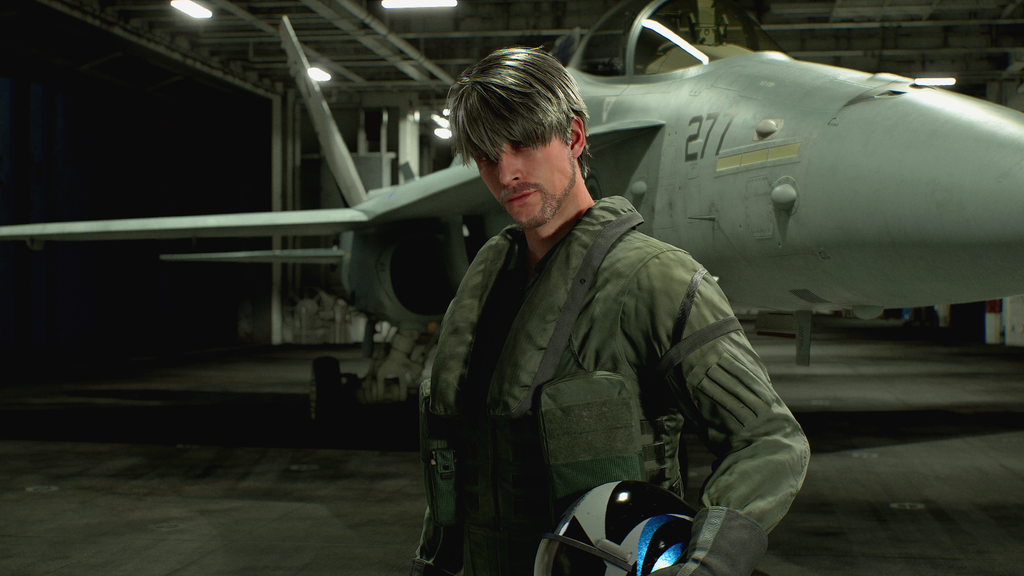
The campaign puts considerably more emphasis on the pilots around you. Your squadron does not simply exist to fill the radio with targets and tactical information. There is a genuine attempt to make these people feel like a unit, with relationships that develop between missions and conversations that continue while you are flying.That matters because it changes how the missions feel.
When a voice comes through the radio during a chaotic engagement, it is no longer just another instruction telling you where to point your nose. You know who is speaking. You understand something about them. The campaign has given those voices context.
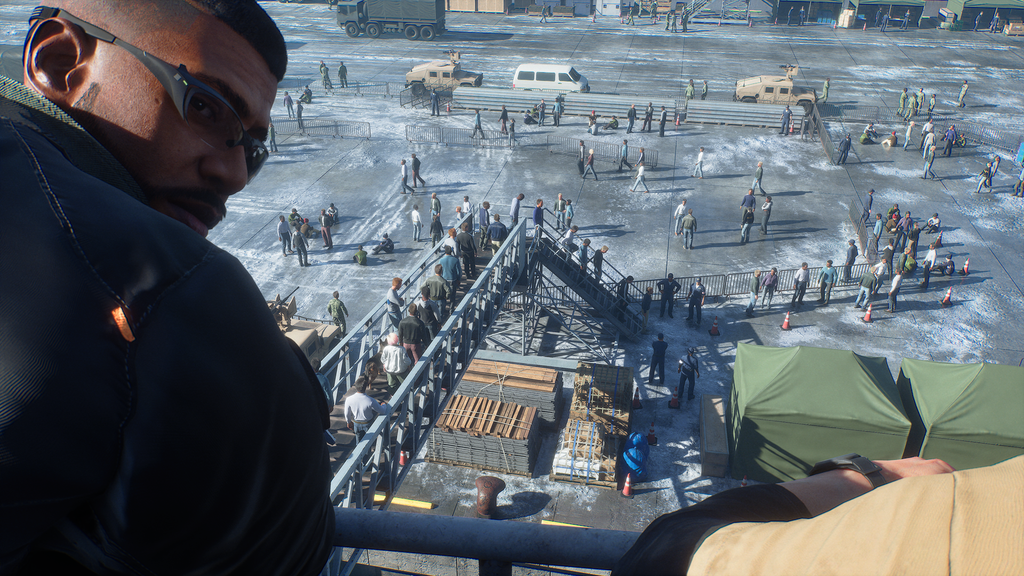
The game’s first-person storytelling also helps enormously. Rather than keeping the player permanently outside the drama, Wings of Theve frequently puts you directly into these scenes. You sit with characters, look around environments and occasionally interact during conversations. It is not a revolutionary narrative system, but it is a smart extension of the series’ cinematic ambitions.
There are moments when the writing still slips into the wonderfully excessive territory that Ace Combat has traditionally occupied. Some dialogue is blunt. Some exposition arrives with all the subtlety of an aircraft carrier landing on your front lawn.
But somehow, it works.
The Missions Are the Real Stars
For all the attention that can be given to the story, Ace Combat 8 ultimately lives or dies in the sky.
Thankfully, this is where Project Aces is at its most comfortable.
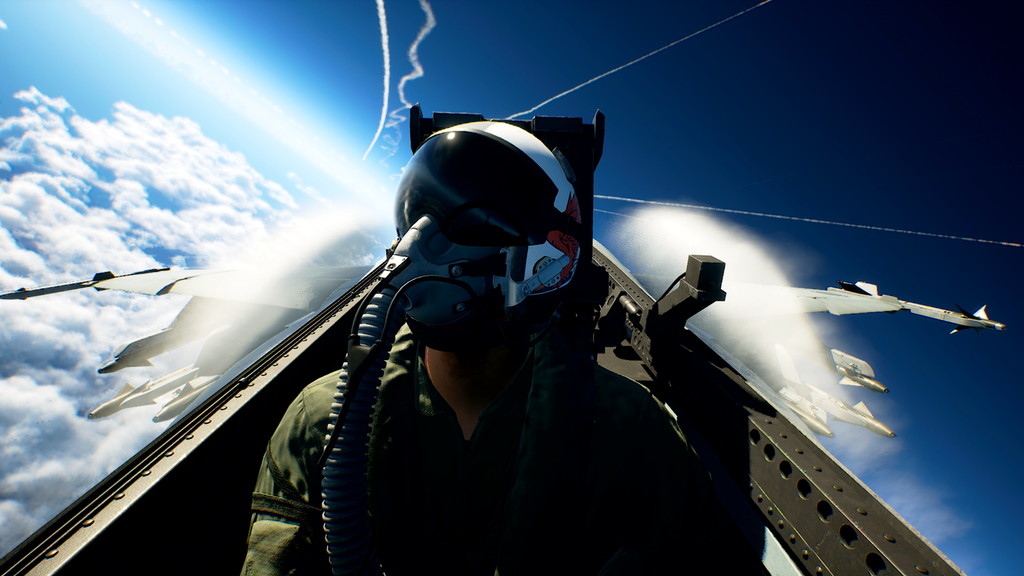
The campaign contains 30 missions, giving it substantially more room to experiment than Ace Combat 7. That variety is important because the best missions do not simply ask you to destroy another formation of fighters and then fly home. The game understands that aerial combat becomes far more memorable when the circumstances surrounding it change.
Some missions become exercises in survival. Others throw you into enormous battles where the sky appears to be filled with aircraft, missiles, explosions and conflicting objectives. There are moments when you are concentrating so hard on keeping your aircraft alive that the cinematic spectacle almost becomes background noise.
Almost.
That is the magic trick.
Ace Combat 8 consistently understands when to let you play and when to make you feel like you are inside a war movie. The dynamic weather system is particularly effective. Clouds are not merely attractive scenery sitting underneath the HUD. They can become places of refuge, obstacles and sources of disorientation, changing how you approach engagements. Diving into cloud cover while enemy aircraft pursue you creates a different kind of tension from simply turning harder and firing another missile.
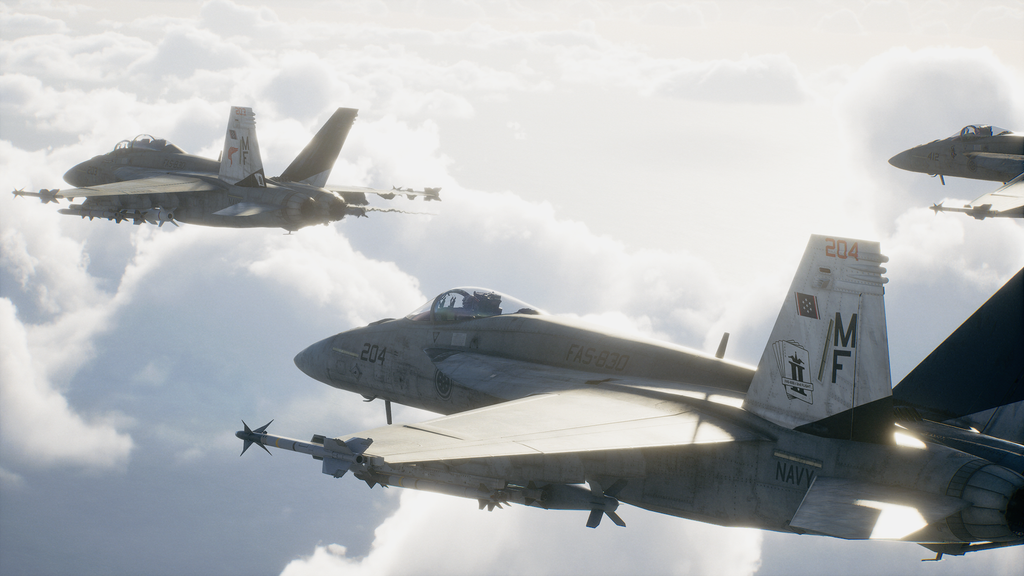
There is also a pleasing physicality to the aircraft this time around. The planes can feel heavier than in previous entries, particularly during turns and high-speed manoeuvres. At first, I wondered whether I preferred the lighter, more immediately responsive feel of older games & then I adapted.
Eventually, that additional sense of weight became part of the appeal. It makes every aggressive manoeuvre feel more deliberate, particularly when you are threading between terrain, buildings or incoming fire. The game is at its best when all of these systems collide. Weather, terrain, enemy formations, radio chatter and objectives combine to create situations where you are not simply completing a checklist. You are improvising.
That is where Ace Combat 8 earns its wings.
It Knows Exactly When to Become Ridiculous
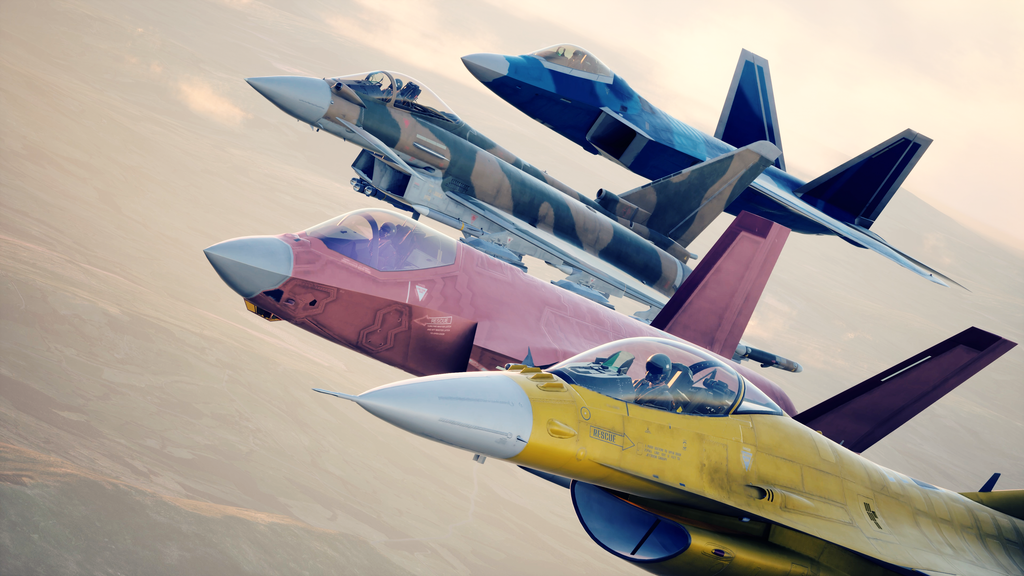
There is a reason Ace Combat has survived when more conventional flight combat games have come and gone. It understands fantasy. This is not a simulation pretending to be a videogame. It is a videogame that understands why people want to fly fighter jets in the first place.
You want the impossible turn. You want the giant explosion.You want the rival squadron appearing at exactly the worst possible moment.You want the soundtrack to become increasingly absurd while somebody screams about the state of the battlefield.
Ace Combat 8 gives you all of it.
But it also gives those moments more room to breathe. Missions are not simply disconnected action sequences. The campaign increasingly makes the player feel as though individual operations are contributing to something larger. That sense of escalation is one of the game’s greatest strengths.
A mission can begin relatively conventionally before becoming something entirely different ten minutes later. Objectives change. Enemy behaviour changes. The battlefield changes. Suddenly the thing you thought you were doing is no longer the thing you are doing.
That ability to surprise the player is incredibly valuable in a genre where repetition can become a problem very quickly.
The Cutscenes Finally Earn Their Screen Time
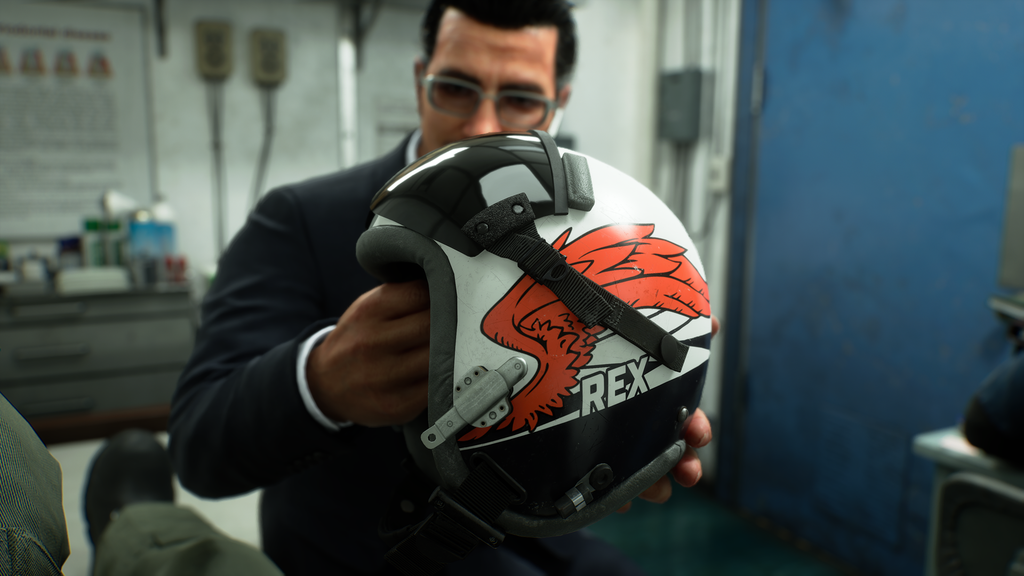
I expected to tolerate the cutscenes, instead – I found myself looking forward to them. That is probably the biggest compliment I can give Wings of Theve’s storytelling.
The first-person presentation gives the quieter sections of the campaign a much stronger sense of presence. You are not simply watching characters from a distant camera angle. You are occupying the same space as them. It is especially effective because Ace Combat 8 understands contrast.
After spending ten minutes screaming through the sky at hundreds of miles per hour, sitting down with your squadron suddenly feels meaningful. The characters have room to breathe. Their relationships can develop. The game can remind you that these are people being sent into situations where coming home is never guaranteed. The result is a campaign that I became considerably more invested in than I expected.
That is not to say every scene works. The game’s dialogue can occasionally be awkward, and the first-person interactions sometimes feel more like cinematic punctuation than meaningful choices. The button prompts and small interactions do not fundamentally transform the narrative. But they help sell the idea that this is your squadron and, to some degree, your story.
The cinematography deserves particular credit. Several scenes are framed with a confidence that goes well beyond what I expected from a flight-combat game. Even critics who found the writing uneven have highlighted the game’s visual direction and more emotionally expressive storytelling.
For me, the important thing is simple: I cared. That is not something I take for granted in an Ace Combat campaign.
The Aircraft Still Feel Like Toys for Adults
Naturally, the aircraft remain the reason most people will buy this game. The fundamentals are excellent. Flying feels immediately accessible without becoming shallow. You can pick up a controller and start performing ridiculous manoeuvres almost immediately, but mastering positioning, speed, weapon selection and enemy behaviour gives experienced players plenty to think about.
Aircraft and weapons also provide meaningful progression without turning the game into an RPG wearing an aviation costume. Briefings help establish what you are about to face, while loadout decisions give you a reason to think before launching rather than simply selecting your favourite aircraft every time. The differences between aircraft are noticeable, and upgrades give progression a satisfying rhythm.
The squadron command system also adds another layer to the battlefield. You can issue orders to your wingmen, and while they are not suddenly going to transform into autonomous super-aces capable of winning the war for you, their presence makes the squadron feel more like a functioning unit.
Most importantly, Ace Combat 8 never loses sight of why its combat works. It is fun.
Not “respectable.” Not “technically impressive.” Fun.
There is an almost childish joy to locking onto an enemy aircraft, hearing the missile warning scream, pulling into a climb and watching the missile miss by inches. Games should be allowed to make us feel that way.
The Soundtrack Knows What It Is Supposed to Do
Ace Combat without its music would be like Top Gun without planes. The soundtrack is not simply accompanying the action. It is helping dictate its emotional temperature.
There are moments when the music makes a mission feel significantly more important than the objective itself would suggest. Other sequences use recurring musical ideas and radio dialogue to create continuity between characters and events. The game’s soundtrack has received considerable praise from players as well, with Steam users repeatedly singling it out among the campaign’s strongest elements.
The sound design is equally important. Engines, missiles, explosions and radio communications combine into a wall of controlled chaos. When everything is happening simultaneously, the soundscape makes the battlefield feel considerably larger than what is actually visible on screen. This is one of those games where playing with headphones is not optional advice. It is a recommendation.
Then There Is the PC Version
This is where I have to take some of the enthusiasm back. Ace Combat 8 looks fantastic on PC, but its technical demands are significant.
The official requirements call for Windows 11, 16GB of RAM at minimum, a hardware ray-tracing-capable GPU and 150GB of storage. Even the recommended specification targets only 1080p/60fps at Medium settings, with the developer warning that performance can fall in demanding scenes. That is an unusually high entry point for a game whose fundamental design does not require the sort of technical complexity you would normally associate with such requirements and the performance can show it.
My PC experience was not disastrous, but there were moments of unevenness, particularly around transitions and demanding sequences. Reports from other PC players have also highlighted stuttering and crashes during cutscenes, while other systems have run the game considerably better. In other words, mileage genuinely varies. That inconsistency is frustrating because the actual missions can run beautifully when everything is behaving. It makes the rough edges more noticeable, not less.
The game also lacks some of the flexibility I would like from a modern PC release. When you are asking players to meet hardware requirements this high, the expectation is that the PC version should give them substantial control over how that hardware is being used. Ace Combat 8 does not always meet that expectation. Thankfully, none of this changes the quality of the underlying game.
It just means that the PC version arrives with an asterisk that should not be ignored.
Ace Combat 8 Understands Why We Still Play This Series
The easiest comparison is obviously Ace Combat 7. That game brought the series back into the mainstream conversation and proved there was still an audience for arcade flight combat. Wings of Theve builds on that foundation rather than attempting to reinvent the series and I think that is exactly the right decision. The difference is confidence.
Ace Combat 8 feels more willing to let missions become enormous. It is more interested in its characters. Its first-person storytelling gives the campaign a stronger emotional centre, while its weather and battlefield spectacle make the actual flying feel more dynamic. It is still unmistakably Ace Combat. That is important.
There is no desperate attempt to turn it into a military simulator, a generic open-world action game or a progression-heavy service title. Project Aces understands the fantasy and doubles down on it. The result is familiar in the best possible way.
Final Verdict
Score: 4.5/5
Ace Combat 8: Wings of Theve is not a perfect game.
The PC performance needs work. Some of the technical requirements feel excessive, and the presentation can occasionally wobble under its own ambitions. The storytelling still embraces the series’ particular brand of anime-inflected military melodrama, which will absolutely not work for everyone.I loved it anyway.
More importantly, I loved it for reasons that surprised me. I expected the aircraft to be the reason I would recommend Ace Combat 8. They are excellent, and the missions are often spectacular enough to make you forget you are sitting in front of a monitor rather than inside a fighter jet.
But it was the characters that stayed with me. It was the missions that I wanted to replay. It was the cutscenes I unexpectedly found myself watching instead of skipping and it was those ridiculous moments when the music rises, the sky fills with missiles and the game suddenly remembers exactly why Ace Combat has such a devoted following.
Project Aces has made one of the strongest campaigns in the series, and it has done so without losing the wonderfully excessive identity that made Ace Combat special in the first place.
Ace Combat 8: Wings of Theve is spectacular, occasionally frustrating, unapologetically melodramatic and ridiculously fun. The PC performance needs polishing, but the campaign is too good to ignore.
This review of Ace Combat 8 : Wings of Theve is based on the PC version with the review code provided by the publisher.
About The Author