Dumb Ways to Build Review: Construction Has Never Been This Much of a Workplace Hazard
 Avinash Rohra
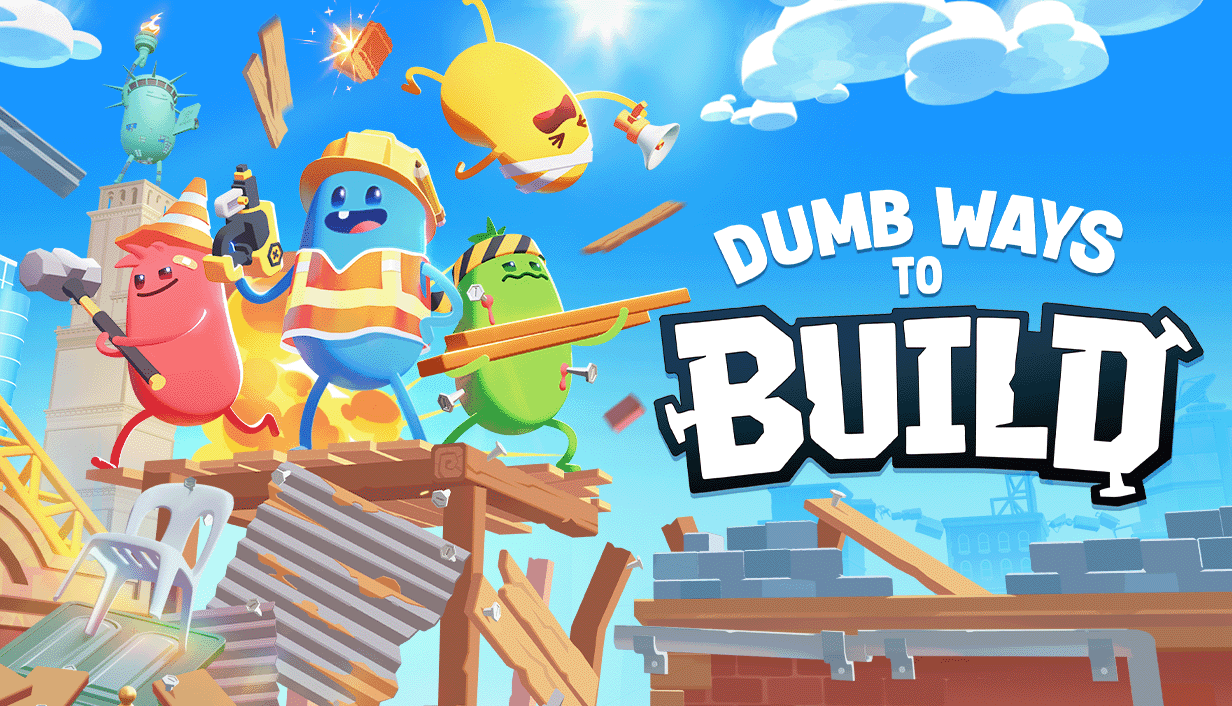
There is something deeply satisfying about making a plan, watching it fall apart, and discovering that the disaster has somehow produced a better solution. It is also, unfortunately, a fairly accurate description of working with other people. Dumb Ways to Build understands this particular kind of chaos and turns it into the foundation of a physics-based construction game where getting from A to B is rarely as simple as walking in a straight line.
The premise is straightforward: take a crew of Beans, give them construction equipment and a collection of objects that may or may not be useful, then send them into increasingly hazardous workplaces. The task is to build a route through each environment, overcome its obstacles and survive long enough to finish the job. What makes the idea work is the freedom it gives players to approach those objectives. There is rarely just one obvious way to put a structure together, and the physics can turn an otherwise sensible construction plan into an impromptu demolition project.
That freedom is the game’s strongest quality, but it is also where some of its frustrations begin.
Building a solution, one questionable decision at a time
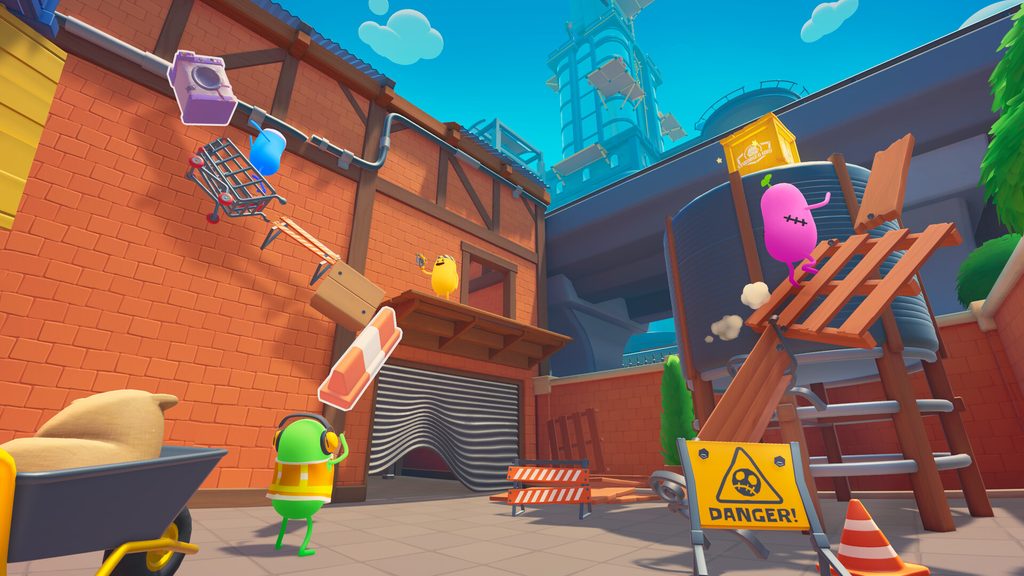
At its core, Dumb Ways to Build is less concerned with conventional platforming than with making players think spatially. You collect available building materials, position them, and use tools such as the nail gun to attach objects and create makeshift platforms, bridges and routes. The objective is not simply to reach a higher ledge. It is to work out what can be attached to what, how a structure might hold together, and whether the resulting contraption will remain useful once someone starts climbing on it.
The physics-based construction is an appealing alternative to the usual obstacle-course formula. A table, plank or other piece of equipment can become part of a solution, and the game encourages experimentation rather than prescribing a single sequence of actions. The pleasure comes from seeing a questionable arrangement become a functioning route, even if the construction process is considerably less elegant than the final result.
The catch is that building something in a physics-driven environment requires a degree of precision that can occasionally work against the game’s playful intentions. Object placement can be fiddly, particularly when several pieces need to line up or remain stable while players work around them. This is a meaningful friction point in a game whose central activity is manipulating objects. When construction works, it creates some of the most satisfying moments in the experience; when it does not, the gap between the idea in your head and the structure on screen can become irritating.
Four jobs, plenty of ways to make things worse
The Crisis Jobs provide the structure for the experience. The current selection includes Hotel Hapless, Drain Strain, Crane Climb and Beach Breach. These are not simply four interchangeable locations: each introduces its own hazards and construction problems. Beach Breach, added in the October 2026 update, takes the crew towards a leaking oil rig, with players building across the beach, coral reef and open water before reaching the rig itself. Sharks and changing water conditions make the route more complicated, while the Master Builder variant adds further dangers.
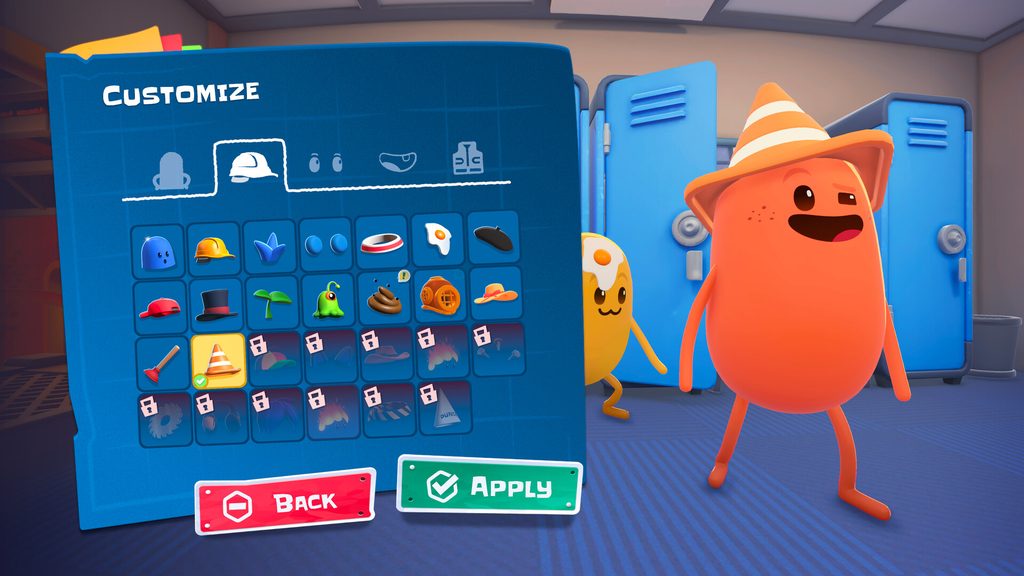
The other jobs offer different workplace disasters, and their Master Builder variants provide tougher versions of the challenges. Completing jobs also feeds into certifications, giving players additional objectives and unlockable cosmetics to work towards. This is a useful layer of replay motivation: finishing a level is one thing, but meeting its extra requirements asks players to approach familiar spaces with a little more care.
The tools and consumables add another dimension to the construction process. They are not merely decorative additions to an inventory; they give players more ways to interact with the environment and each other. The result is a game that is at its best when players are experimenting, adapting and occasionally making a bad situation considerably worse.
There is, however, a distinction between having several ways to solve a problem and having an experience that remains consistently engaging. The freedom is welcome, but the construction itself needs to remain enjoyable for that freedom to matter. The occasional awkwardness of object placement makes some of the game’s more involved tasks feel like a test of patience rather than ingenuity.
Better with company, but not built around strangers
Co-operative play is clearly central to the design. The game supports online play, and its expanded lobby system now allows up to eight players following Update 4.0. That feature is still in beta, however, and the developers specifically warn that lobbies with five or more players may experience instability. The original four-player limit shown in some launch-era descriptions is therefore out of date. There is an important qualification for anyone considering the game as a casual online party experience: it does not offer local couch co-op or random matchmaking. Players invite friends using a Room Code. Solo play is supported, with a temporary object-freeze ability intended to make it easier to position and nail materials without another player helping.
That makes the distinction between playing with friends and playing alone worth considering before buying. The construction systems remain the same, but the social element is a substantial part of the game’s appeal. Coordinating a build, improvising when it goes wrong and dealing with the consequences together are all natural extensions of its central idea. If you are looking for a game that will automatically pair you with strangers, though, this is not designed to provide that experience.
A worksite with room to grow
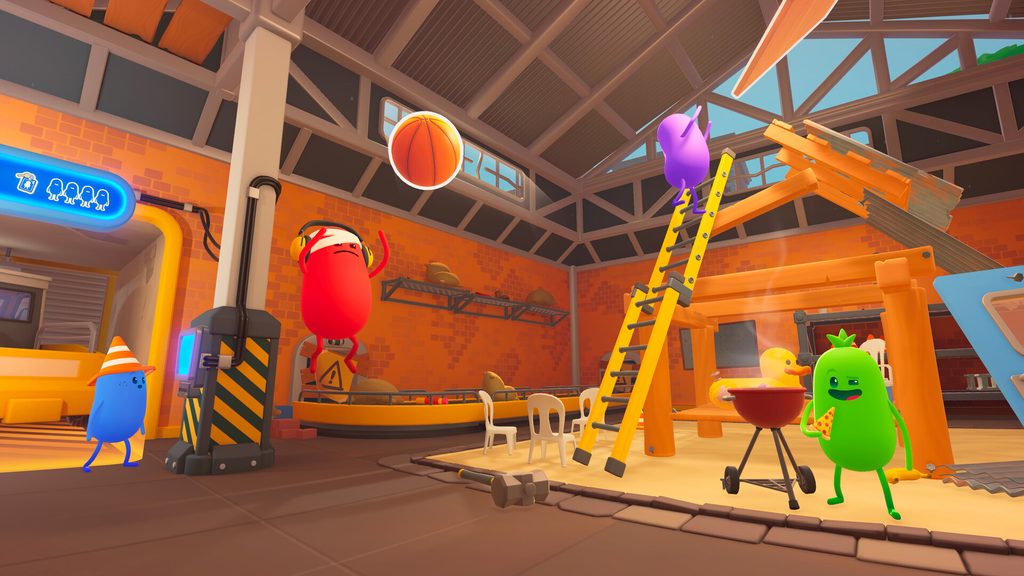
The developers have continued to expand the game since launch. Update 2.0 introduced additional tools and consumables, Update 3.0 brought Beach Breach and new building materials, and Update 4.0 added the larger lobbies and full-body costumes. These are substantive additions rather than a reason to assume every early limitation has disappeared. The eight-player feature remains in beta, and the growing selection of content does not change the underlying strengths and weaknesses of the construction system.
What remains is a game with a genuinely appealing central idea. Its physics-based construction gives players room to improvise, its jobs offer distinct hazards, and its additional certifications give dedicated groups reasons to revisit familiar challenges. But the handling of objects can be awkward, and the experience is much easier to recommend to people who already have friends to play with than to someone expecting a conventional matchmaking-driven multiplayer game.
Pros
- Creative physics-based construction with room for different solutions
- Four distinct Crisis Jobs, including the later-added Beach Breach
- Master Builder variants and certifications add further challenges
- Online co-op now supports up to eight players, subject to beta stability limitations
Cons
- Object placement can become fiddly
- No local couch co-op or random matchmaking
- The experience is less compelling as a solo proposition than its co-op focus suggests
- Eight-player lobbies are still in beta
Final Verdict
Score: 3.75/5
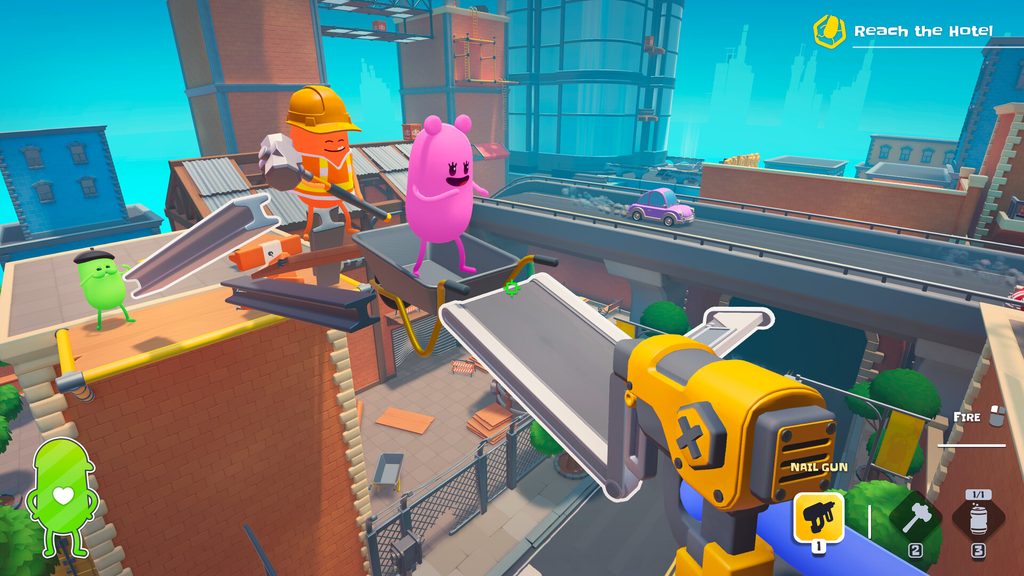
Dumb Ways to Build has a strong idea at its centre, and it understands that the best construction stories are rarely about following a blueprint. Its most enjoyable moments come from experimenting with the tools, finding an unexpected way through an obstacle and watching an improvised structure hold together just long enough to get the job done. The additional Crisis Job and post-launch updates have also given the game more to offer than it had at launch.
It is not quite as consistently enjoyable as that premise suggests. The physics can make precise construction unnecessarily awkward, and the online-first approach limits its appeal for players who want local multiplayer or automatic matchmaking. Those shortcomings do not undo the creativity at the heart of the experience, but they do stop it from being an unqualified recommendation.
There is a good co-operative construction game here, particularly for a group willing to embrace the occasional disaster. It just needs a little more refinement to make every part of the building process as enjoyable as the idea behind it.
This review of Dumb Ways to Build is based on the PS5 version with the review code provided by the publisher.
About The Author