Wax Heads Review – A Love Letter to Record Stores and the People Who Keep Them Alive
 Avinash Rohra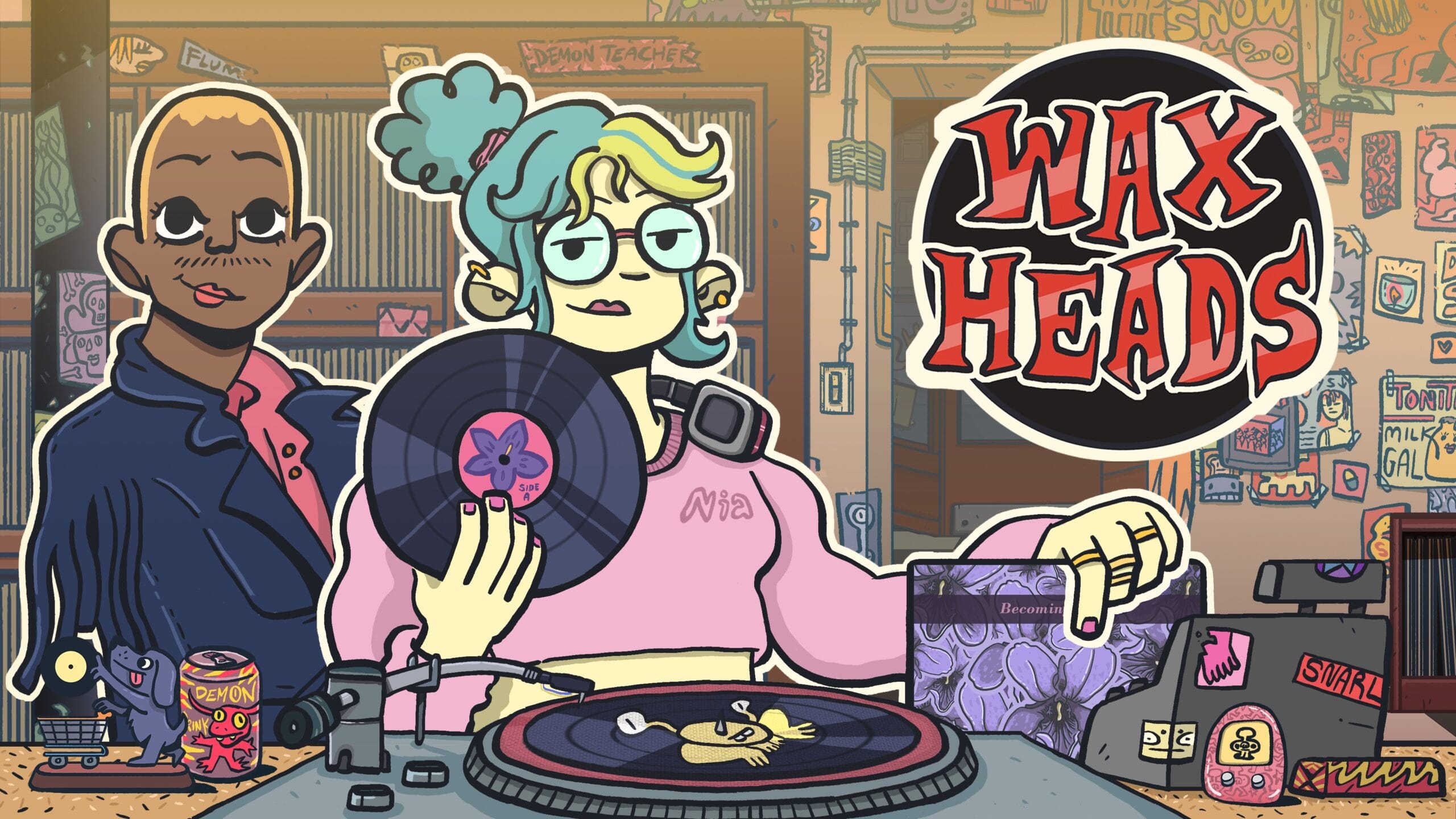
Now Playing: Social Anxiety on Vinyl
There’s a very specific kind of person that Wax Heads understands intimately. The kind who walks into a record store asking for “that one post-punk album with the blurry face,” debates whether a band “sold out” after signing to a bigger label, and somehow turns a casual recommendation into a 40-minute conversation about identity, heartbreak, and obscure B-sides.
Developed by Patattie Games, Wax Heads is less interested in simulating the economics of running a vinyl shop and more fascinated by the people orbiting around one. It’s a cozy-punk narrative puzzle game wrapped in zine-style artwork, stacked with fictional bands, lovingly crafted album lore, and customers who feel painfully real.
At first glance, it looks like another wholesome indie management game. Spend a few hours with it, though, and you realize Wax Heads is actually about music culture itself: the gatekeeping, the nostalgia, the loneliness, the obsession, and the way songs become emotional bookmarks in people’s lives.
And somehow, despite its repetitive structure and relatively simple mechanics, it absolutely works.
Welcome to Repeater Records
Wax Heads takes place inside Repeater Records, a struggling independent record store trying to survive in a world that has long since moved on from physical media. You play as one of the shop employees, spending your days helping customers find records, chatting with coworkers, organizing music-related chaos, and slowly uncovering the interpersonal drama surrounding the store and its regulars.
The core hook is deceptively clever. Customers rarely know exactly what they want. Instead, they describe albums poorly, reference vague memories, or communicate through fragmented emotional clues. One customer might ask for “something that sounds like driving at 2 AM after ruining your life,” while another remembers only “a yellow album cover and maybe a wolf?”
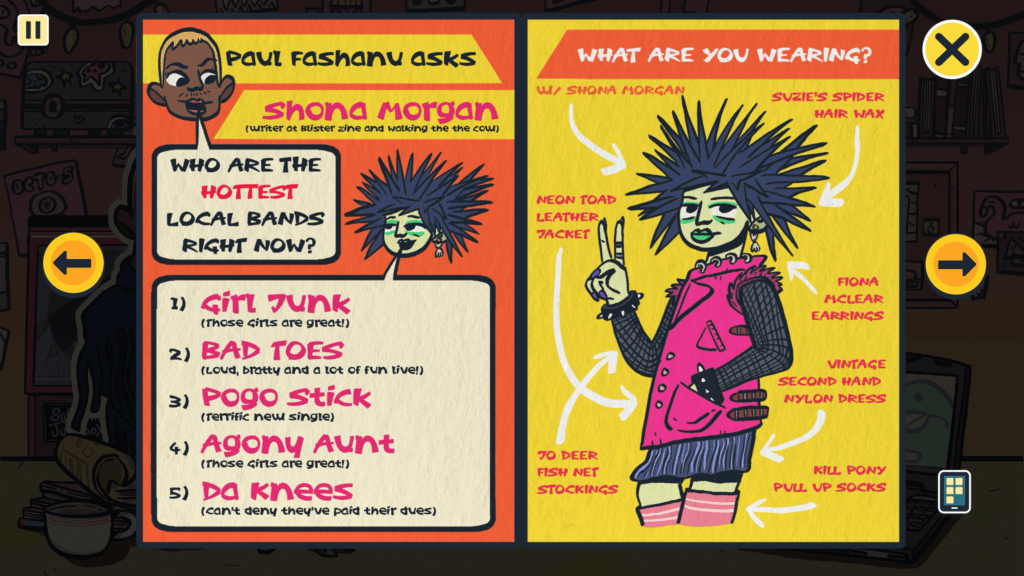
Your job is to piece together these clues by examining their clothes, dialogue, personalities, and musical tastes before digging through Repeater Records’ massive collection to find the perfect recommendation.
It feels like detective work designed by music nerds, and honestly, that’s a compliment.
Almost Famous, But Everyone’s Broke
What elevates Wax Heads beyond a neat indie gimmick is its writing. The game constantly introduces side stories, fractured bands, washed-up musicians, awkward friendships, and deeply personal relationships with music that make Repeater Records feel alive. Over time, the shop stops feeling like a level hub and starts feeling like an actual place populated by regulars, coworkers, local artists, and people quietly trying to hold parts of themselves together through music.
There’s an entire mythology surrounding the fictional bands and artists scattered across the shelves. Album descriptions, posters, reviews, gossip, and band histories gradually build a larger world around the store without ever pulling attention away from its grounded character writing. Some stories revolve around creative fallout and broken musical partnerships, while others focus on smaller interpersonal tensions between siblings, friends, or coworkers trying to understand each other through the music they love.
Wax Heads doesn’t rely on dramatic twists or high-stakes storytelling. Its narrative is smaller, quieter, and far more personal because of it. Conversations about genres and records slowly evolve into conversations about identity, loneliness, ambition, nostalgia, and belonging. Characters obsess over scenes, argue about taste, cling to old eras of music, and use bands as emotional anchors or forms of self-expression.
What makes the writing work is that none of this feels exaggerated purely for comedy. Wax Heads understands how people build pieces of themselves around music. Genres become identity markers. Local scenes become communities. Favorite albums become emotional history. Even when those spaces become messy, pretentious, or exclusionary, the game still approaches its characters with empathy instead of cynicism.
That warmth carries the entire experience. By the end, Repeater Records feels less like a fictional setting and more like a place you’ve spent years inside.
Papers, Please for Indie Music Snobs
Wax Heads places players behind the counter of Repeater Records, a fictional vinyl shop populated by musicians, obsessives, awkward regulars, and emotionally exhausted music nerds. Your role is simple on paper: help customers find records they’ll love.
The twist is that customers rarely explain themselves clearly.
Instead of directly naming albums, they speak through fragments, feelings, vague memories, and personal associations. Some barely remember cover art. Others describe a sound, a mood, or a type of energy they’re chasing. The game then asks you to observe not just what customers say, but who they are.
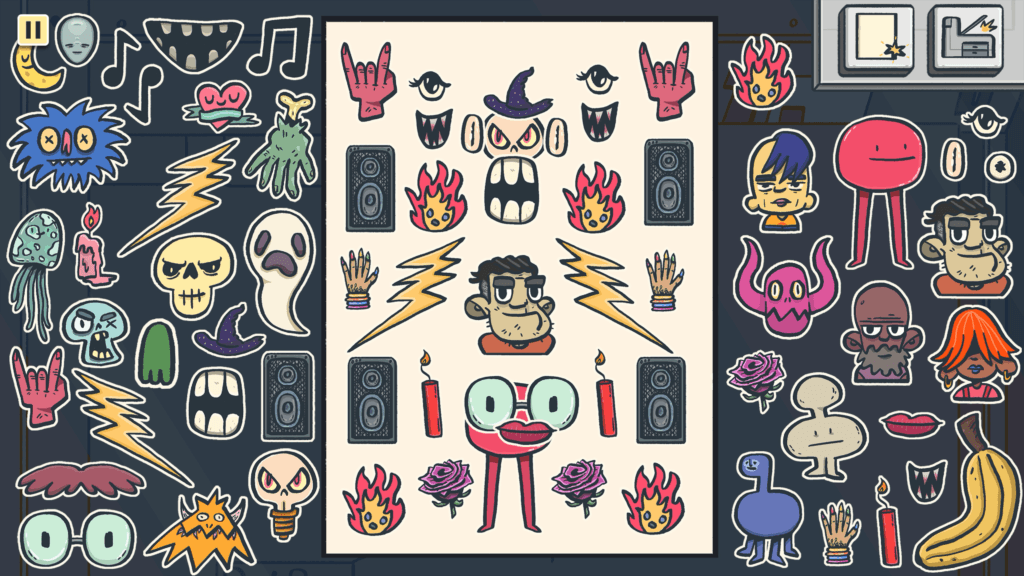
You examine their clothing, dialogue, badges, behavior, and interests before searching through Repeater’s inventory for the best recommendation. It’s less about trivia and more about reading people.
That structure gives Wax Heads a unique identity. It isn’t trying to recreate the logistics of running a shop. It’s trying to recreate the feeling of existing inside music culture itself.
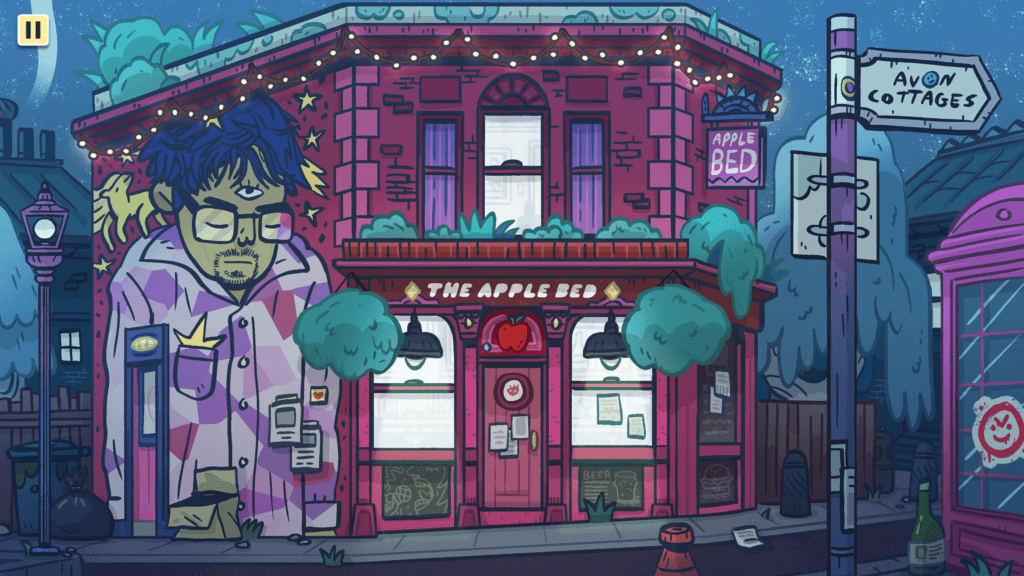
The presentation carries a huge amount of the experience. Wax Heads uses a hand-drawn zine-inspired art style filled with rough textures, chaotic posters, doodles, and wonderfully expressive character portraits. The store feels cluttered in the best possible way, like a place held together with tape, caffeine, and unpaid passion projects.
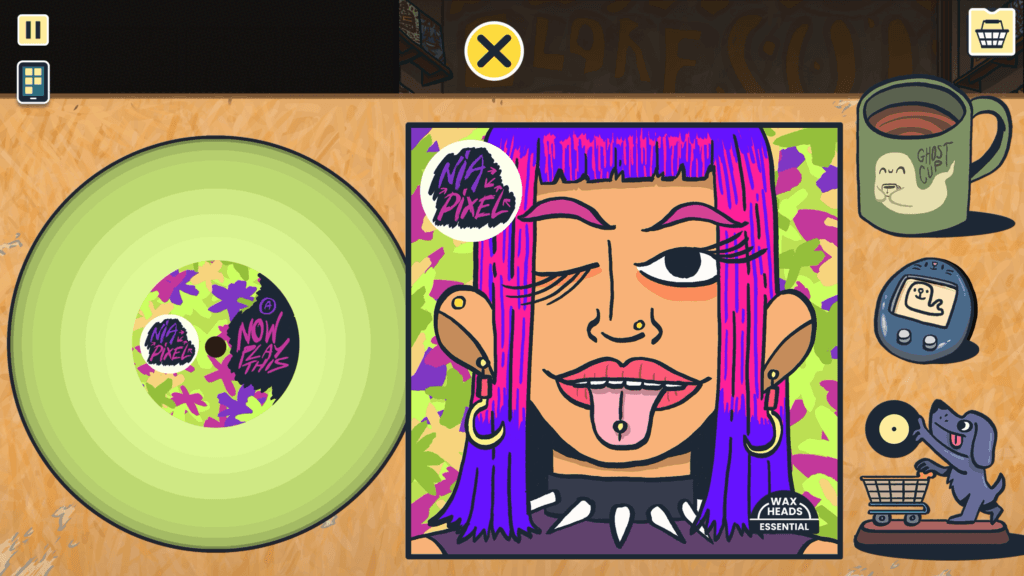
The soundtrack also deserves praise. The game features dozens of fictional songs and artists spanning multiple genres, and remarkably, most of them sound believable enough to sell the illusion that these bands actually exist.
That said, Wax Heads does have limitations. The gameplay loop doesn’t evolve dramatically over time. Even with occasional side activities and narrative detours, you eventually recognize the structure underneath it all. Some players may find the repetition creeping in around the midway point.
But the writing and atmosphere consistently pull it back from becoming monotonous.
The Good, The Bad, and The Vinyl Crackle
Pros
- Brilliantly written characters that feel authentic and memorable
- Fantastic cozy-punk visual identity
- Clever deduction mechanics built around music culture
- Excellent world-building through fictional bands and album lore
- Strong emotional themes about identity, community, and artistic passion
- Surprisingly immersive soundtrack
Cons
- Gameplay loop can become repetitive over longer sessions
- Puzzle complexity plateaus earlier than expected
- Players uninterested in music culture may not connect with its charm
Final Verdict – For People Who’ve Ever Fallen in Love With an Album
Wax Heads succeeds because it understands that music isn’t just entertainment for many people. It’s memory, personality, rebellion, comfort, and community all tangled together.
This could have easily been a shallow “record store aesthetic” game. Instead, it becomes a surprisingly heartfelt narrative experience about the strange little ecosystems built around art and the people desperately trying to preserve them.
Yes, the gameplay occasionally repeats itself. Yes, some mechanics could have gone deeper. But few games this year have felt this personal, this observant, or this effortlessly cool.
Wax Heads doesn’t just simulate working at a record store. It captures why places like that matter in the first place.
Score – 4.5/5
A heartfelt, stylish, and deeply human cozy-punk adventure that spins nostalgia, music culture, and emotional storytelling into one of the year’s most charming indie experiences.
This review of Wax Heads is based on the PC version, with code provided by the game’s publishers/developers/ PR Agency.
About The Author