Avinash Rohra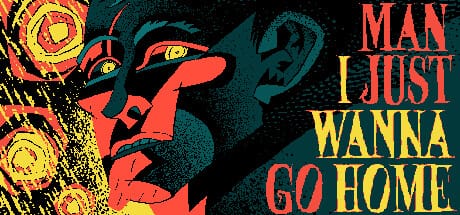
There’s a certain kind of tension that only choice-driven games can create. Not the loud, cinematic kind. The quiet one. The kind where you hesitate before clicking because something feels off, even if you cannot explain why. Man I Just Wanna Go Home lives entirely in that hesitation.
At first glance, it looks almost disposable. Rough MS Paint visuals. A blunt, almost jokey title. A setup that feels like it belongs to a late-night Reddit thread. But spend even twenty minutes with it, and the tone shifts. This is not a throwaway project. It is a carefully structured narrative built around discomfort, uncertainty, and the consequences of trusting your instincts.
After several playthroughs chasing its thirteen endings, what stands out is not just the branching paths, but how often the game makes you feel like you chose wrong even when you did not.
A Simple Goal That Keeps Slipping Away
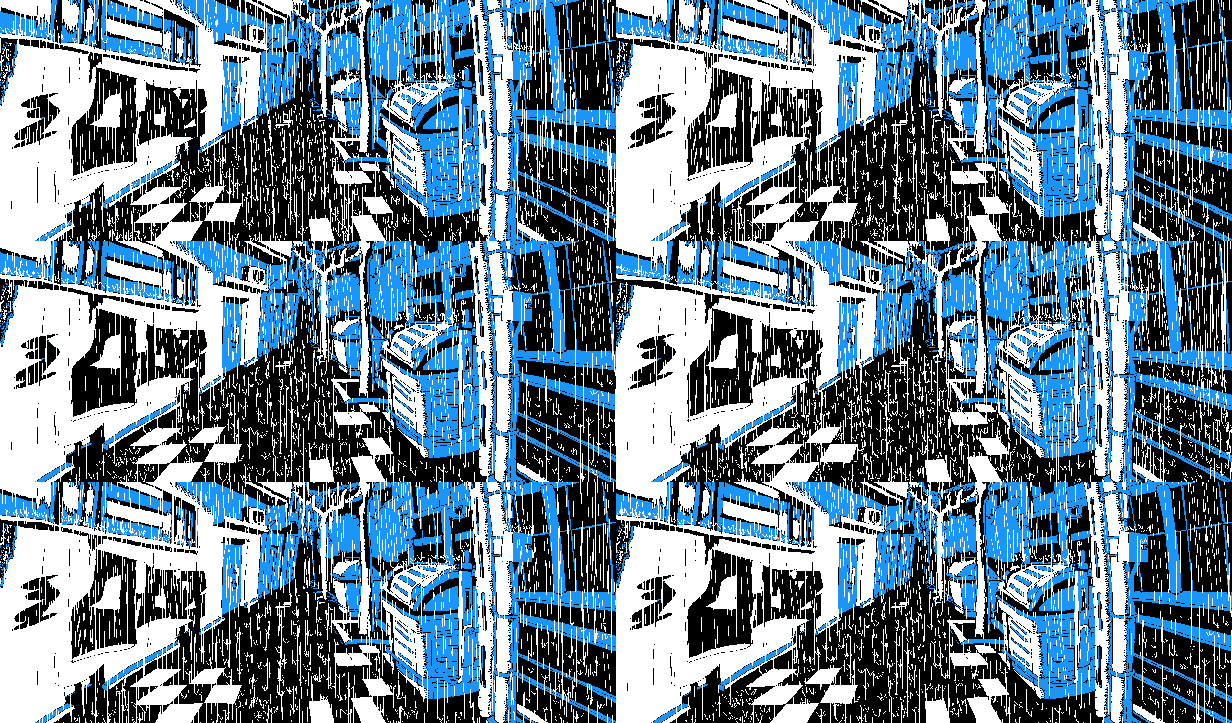
You are a delivery worker stuck in the wrong part of the city. It is raining hard enough to blur everything around you. Your phone is dead. You have a few coins and no clear plan.
Somewhere out there, there is talk of a murderer.
The objective is as basic as it gets. Get home.
From there, the game unfolds as a choice-driven visual novel where every decision nudges the story in a different direction. You meet strangers. You weigh risks. You make calls without enough information. Some choices feel logical. Others feel like gambles. Most sit somewhere in between.
It sounds simple, but the game knows exactly how to complicate that simplicity.
Fragments That Only Make Sense Together
This is not a game you understand in one sitting.
Each run gives you a slice of the bigger picture. Some routes feel grounded and believable. Others spiral into something darker or stranger. A few end so abruptly that they almost feel like a punchline. But taken together, they start to form a pattern.
The writing leans into dry humor and quiet tension. It does not overexplain. It lets situations breathe, then cuts them short at just the right moment. That unpredictability becomes the hook.
The thirteen endings are not just there for completionists. They are the structure of the story itself. You are expected to fail, restart, and approach the same situations differently. What changes is not just the outcome, but your understanding of what the game is doing.
Reading the Room, Not the Rules
Mechanically, this is as minimal as it gets. You read, you choose, and you deal with the consequences.
What makes it work is how those choices are framed. You are rarely given enough context to feel confident. Options are vague, sometimes misleading, and occasionally feel like traps. The game plays with your expectations in subtle ways. The choice that seems safe can turn out worse than the reckless one.
There is a light sense of resource management tied to your limited coins, but it never becomes a system you can master. It is just another variable in an already uncertain situation.
Compared to other narrative-heavy games, this feels closer to interactive fiction than a traditional visual novel. It is less about exploring dialogue trees and more about surviving bad calls.
The short length of each run helps a lot. When things go wrong, and they will, it does not feel like wasted time. It feels like part of the process.
Rough for a Reason
The MS Paint visuals will divide people. That is unavoidable.
They are crude, sometimes awkward, and very far from what most players expect. But they also give the game a strange kind of identity. Characters look slightly off. Environments feel flat in a way that makes them unsettling. It works more often than it does not.
The soundtrack does a lot of the heavy lifting. The synth-driven score adds rhythm and tension to otherwise static scenes. It gives the game a pulse. Without it, the experience would feel thinner.
Together, the visuals and audio create something that feels intentionally rough rather than unfinished.
Pros
- Thirteen endings that actually feel distinct
- Choices carry real weight and consequence
- Strong sense of tension built through uncertainty
- High replay value without feeling repetitive
- Memorable audio design
Cons
- Visual style will not click with everyone
- Some endings feel abrupt by design
- Limited depth outside of decision-making
A Game for Curious Players
This is for players who enjoy experimenting with outcomes. The kind of player who does not mind replaying the same scenario just to see how things change.
If you like branching narratives, interactive fiction, or games that trust you to figure things out on your own, this is an easy recommendation.
If you are looking for mechanical depth, action, or a traditional gameplay loop, this will feel too thin.
Final Verdict
Score: 4.7 / 5
Man I Just Wanna Go Home does not try to be bigger than it is. It focuses on one idea and executes it well.
It understands how players think. It knows how to plant doubt. It knows how to make a simple decision feel risky. Most importantly, it treats failure as part of the experience instead of something to avoid.
It is short, strange, and occasionally frustrating in the way it withholds clarity. But it sticks with you. Not because of what it shows, but because of how it makes you second-guess yourself.
Sometimes getting home is not about finding the right path. It is about realizing how many ways there are to get it wrong.
This review of Man I Just Wanna Go Home is based on the PC version, with a code provided by the game’s publishers.
About The Author