The Day I Became A Bird Review – The Strange, Beautiful Logic of First Love
 Avinash Rohra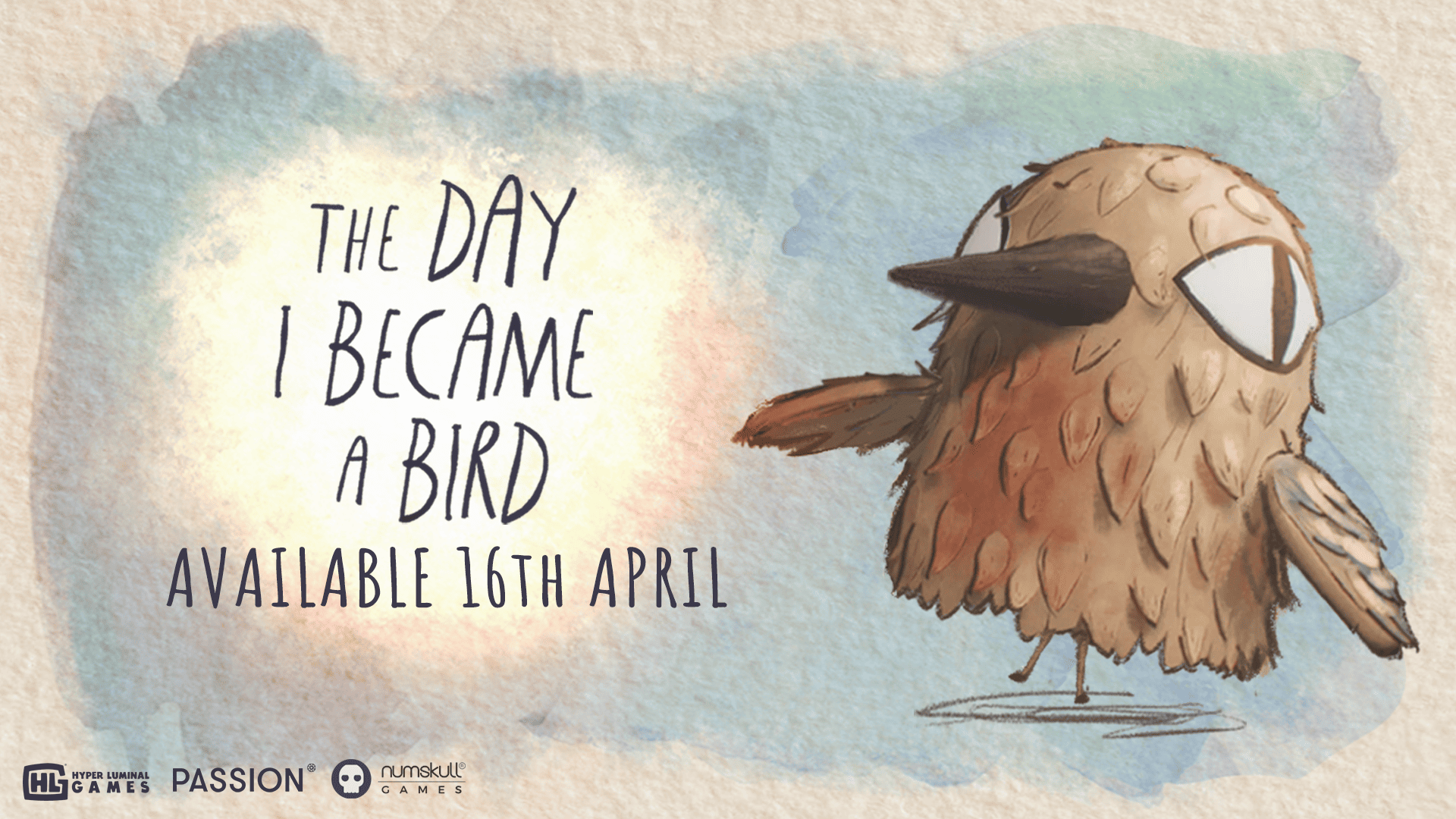
I went into The Day I Became A Bird expecting a pleasant distraction. A soft, storybook indie to fill an hour between heavier assignments. Something charming, disposable, maybe even forgettable.
Instead, I finished it and just… sat there.
There’s a particular silence that follows certain games, not the empty kind, but the reflective kind, where your brain starts pulling threads you didn’t realize were there. That’s what Hyper Luminal Games has created here. Not a game that overwhelms you with systems or spectacle, but one that quietly disarms you with sincerity.
On paper, it’s almost too slight to matter. A short narrative adventure. Minimal mechanics. A premise that sounds borderline absurd: a boy decides to become a bird to impress a girl.
And yet, somewhere between its gentle pacing and its unflinching understanding of childhood vulnerability, The Day I Became A Bird becomes something more than its sum. It’s not trying to impress you. It’s trying to remind you of who you were.
And against all odds, it works.
A Playable Bedtime Story
At its core, it’s a “playable bedtime story”, a deliberately low-intensity experience built around exploration, light interaction, and emotional storytelling.
You play as Frank, a shy, awkward kid navigating his first crush on Sylvia, a girl who is, quite literally, obsessed with birds. So Frank does what only a child could rationalize with complete sincerity: he decides to become one.
The structure is built around small, grounded environments, schoolyards, parks, quiet neighborhoods where you explore, collect items, and solve simple puzzles. The emphasis isn’t on challenge but on rhythm. On observation. On feeling.
It’s closer to a children’s book than a traditional game, and that’s not a criticism it’s the entire design philosophy.
Childhood Logic, Emotional Truth
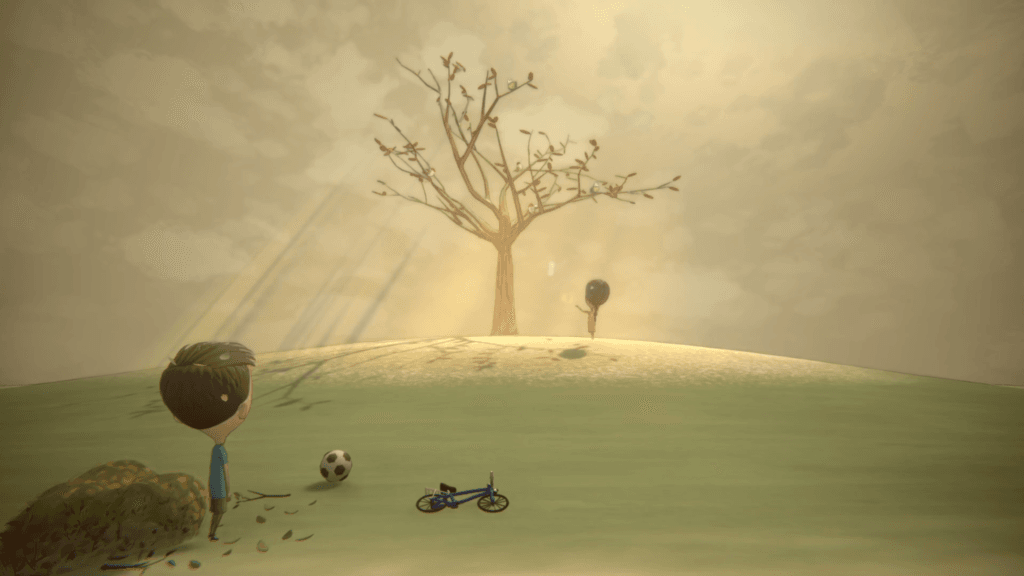
What makes The Day I Became A Bird quietly remarkable is how seriously it treats something so inherently silly.
Frank’s plan to build a bird costume to win Sylvia’s attention should feel ridiculous. But the game never frames it that way. Instead, it commits fully to his perspective, where emotions are immediate, overwhelming, and often irrational.
And that’s where the writing lands its punches.
This is a story about first love, yes but more specifically, it’s about transformation as a form of longing. About reshaping yourself into something you think will be worthy of being noticed. That instinct, stripped of adult cynicism, feels raw here.
The game draws heavily from its storybook origins, maintaining a tone that is warm, restrained, and observational. It avoids melodrama entirely, choosing instead to let moments breathe small gestures, fleeting interactions, quiet realizations.
There are no dramatic twists or narrative shocks. What you get instead is something rarer: emotional honesty without exaggeration.
And by the end, it’s not the premise you remember, it’s the feeling.
Light Interaction, Occasional Friction
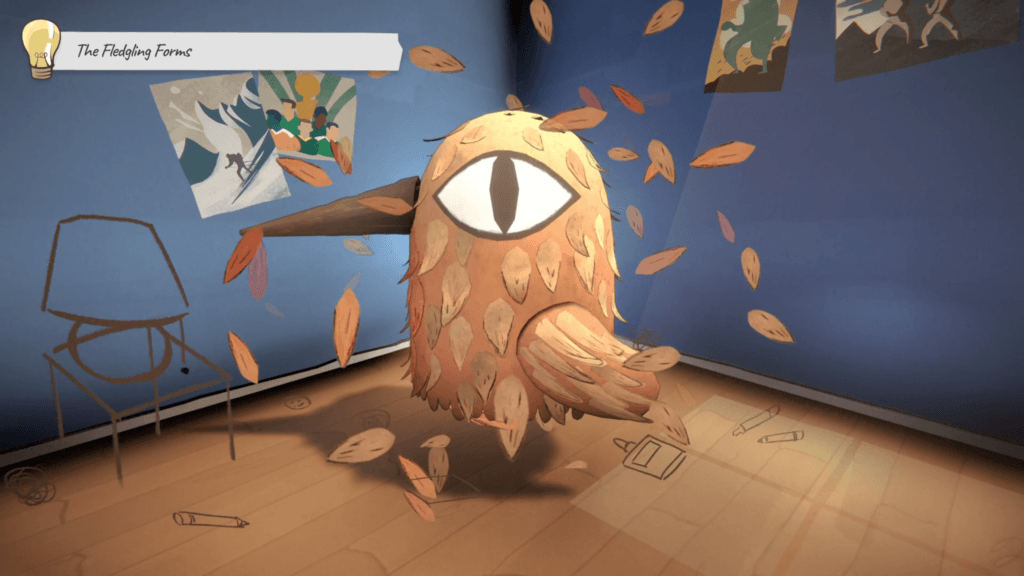
Mechanically, The Day I Became A Bird is deliberately simple.
You explore compact environments, pick up objects, and solve straightforward puzzles designed to move the story forward. There’s no combat, no fail states in the traditional sense, and very little resistance between you and the next narrative beat.
This design choice is intentional. The developers clearly prioritize pacing and immersion over challenge, ensuring that nothing interrupts the emotional flow.
For the most part, this works.
On Nintendo Switch, the game feels perfectly suited to short sessions. Its brevity typically under 90 minutes means it never overstays its welcome, and its intuitive structure makes it accessible to virtually anyone.
But there are limitations:
- Some tasks lean into repetition, particularly item-fetching sequences
- Interaction prompts can occasionally feel unclear
- Certain mechanics (like crafting or specific actions) lack refinement
None of these issues derail the experience, but they do create moments where the illusion briefly cracks. In a game this short and focused, even minor friction stands out.
Still, it’s important to understand: this isn’t a systems-driven game. It’s a narrative vessel. And judged on those terms, it largely succeeds.
A Familiar Feather? – Where It Sits Among Indie Story Games
It’s tempting to draw comparisons here, and while none are officially cited, the closest parallels come from games that treat gameplay as emotional scaffolding rather than the main attraction.
Think of experiences like Florence or Gris titles that use interaction as punctuation rather than substance. The Day I Became A Bird exists in that same space, though it leans even further toward simplicity.
If anything, it shares DNA with short-form narrative experiments like A Bird Story games that prioritize memory, mood, and fleeting emotional impact over traditional engagement loops.
What distinguishes it is its unwavering commitment to innocence. There’s no abstraction, no metaphorical layering that distances you from the experience. It’s direct. Almost disarmingly so.
Pros
- Emotionally authentic portrayal of first love
- Distinct storybook presentation and tone
- Accessible, low-barrier gameplay
- Memorable despite its short runtime
Cons
- Very limited mechanical depth
- Repetitive interactions in places
- Occasional lack of clarity in controls
- Short length may not justify price for everyone
Final Verdict – A Brief Flight That Still Soars
Score: 4/5
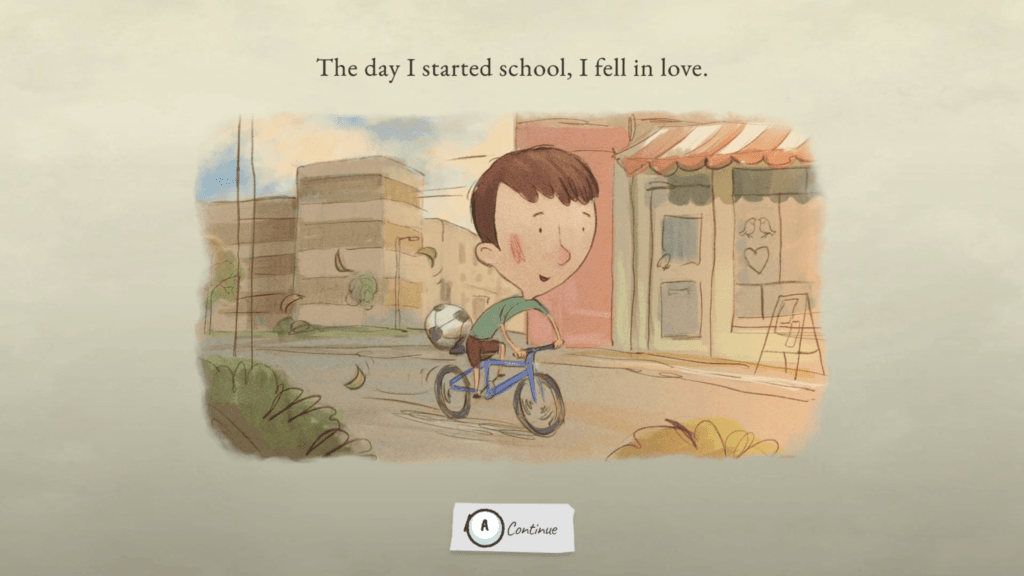
The Day I Became A Bird is not a game you measure in hours or systems or content density.
It’s a game you measure in recognition.
In the quiet, uncomfortable realization that you understand Frank a little too well. That at some point in your life, you also tried to become something else just to be seen.
Yes, it’s short. Yes, it’s mechanically thin. But those criticisms feel almost beside the point when the experience lands as cleanly as it does.
This is a game that knows exactly what it wants to be and more importantly, what it doesn’t.
Play it on a quiet evening. Let it unfold without expectation. And when it ends, don’t rush to the next thing. Sit with it.
Because like the best childhood memories, it’s over quickly but it lingers longer than you expect.
This review of The Day I Became a Bird is based on the Nintendo Switch version, with an code provided by the game’s publishers.
About The Author