LumenTale: Memories of Trey Review – The Moment This Pokémon-Looking RPG Finally Clicked
 Avinash Rohra
I’ll be honest – the first time I saw LumenTale: Memories of Trey, I rolled my eyes a little.
Not because it looked bad. Quite the opposite, actually. The pixel art was gorgeous, the creature designs had charm, and the world had that warm, cozy fantasy glow indie RPGs love chasing these days. But we’ve been here before. Every year, another monster-catching RPG shows up promising to be “more emotional than Pokémon” or “a deeper take on creature collecting,” and most of them disappear from memory before you’ve even memorized the starter creatures’ names.
So when I booted up LumenTale on PC, I expected competence. Maybe even something pretty good.
What I didn’t expect was to get weirdly attached to it.
There’s a sincerity running through this game that slowly sneaks up on you. Somewhere between the turn-based battles, quiet nighttime village walks, and Trey trying to piece together fragments of who he used to be, LumenTale stopped feeling like another indie genre experiment and started feeling like a world I genuinely wanted to stay in.
And honestly, that’s harder to pull off than flashy mechanics or nostalgia bait.
Not Quite Pokémon, Not Quite Persona
Developed by Beehive Studios and published by Team17, LumenTale: Memories of Trey drops players into Talea, a fractured world still recovering from a brutal civil conflict between the regions of Logos and Mythos. You play as Trey, a young man suffering from fragmented memories, navigating a land where mystical creatures called Animon are deeply tied to human emotion and spiritual energy known as “Anivis.”
Yes, the Pokémon comparisons are unavoidable. Even the developers have openly acknowledged them. But after a few hours, the game starts feeling less like a direct clone and more like a creature-collecting JRPG that cares far more about atmosphere and emotional storytelling than competitive obsession.
The closest comparison I kept coming back to wasn’t actually Pokémon. Weirdly enough, it reminded me more of the quieter moments in Ni no Kuni or even Cassette Beasts — games where the world itself matters just as much as the combat systems holding everything together.
There’s a softness to LumenTale. Not softness in the sense that it lacks challenge, but softness in tone. It wants you to slow down. Explore. Sit with its world a little.
That approach won’t work for everyone, especially players expecting immediate momentum. The opening few hours are undeniably slow, and the game spends a lot of time explaining its lore, factions, and terminology before fully opening up. Recent reviews have pointed this out too, and it’s hard to disagree.
But once the rhythm settles in, it becomes surprisingly easy to lose entire evenings wandering through Talea.
Gotta Catch Feelings
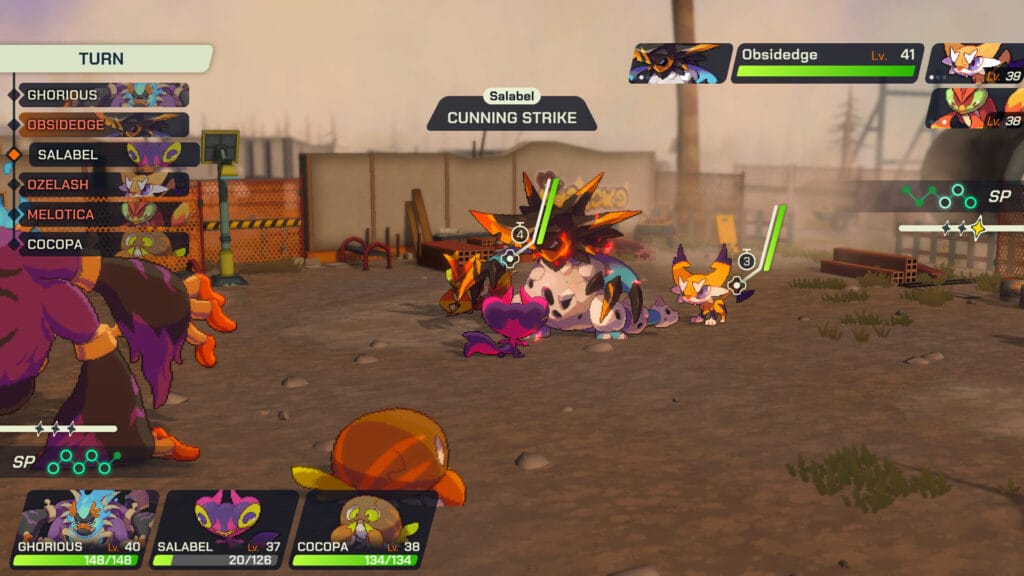
Combat is where LumenTale starts proving it has ambitions beyond nostalgia.
Battles evolve into larger 4v4 encounters that emphasize team synergy and elemental combinations over simply over-leveling one favorite creature. There’s a satisfying tactical rhythm to building teams, especially once the game introduces more complex ability interactions and status effects.
And thankfully, the Animon themselves mostly carry enough personality to make experimentation worthwhile. Some designs are instantly memorable, others admittedly drift closer to familiar genre archetypes, but the animation work does a lot of heavy lifting. Creatures bounce, twitch, and react with enough charm that they rarely feel like static battle assets.
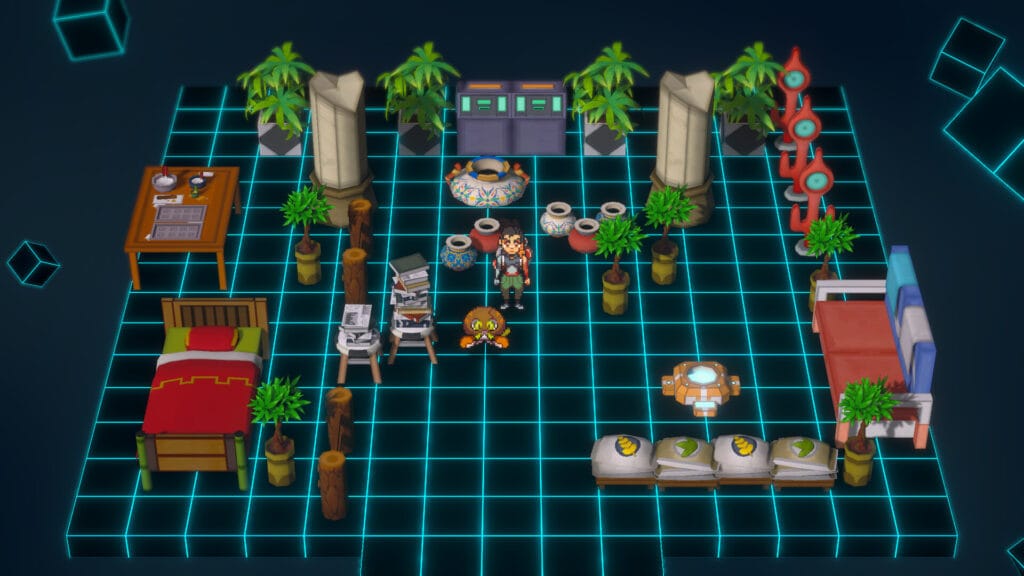
Outside combat, LumenTale leans heavily into cozy-RPG territory. Cooking, crafting, trading, and the customizable “Anispace” system all create a slower, more personal cadence between major story moments.
Normally, side systems like these feel like mandatory bullet points on the back of a Steam page. Here, they actually reinforce the game’s themes. Spending time with your Animon in the Anispace gives the creatures emotional presence beyond their battle stats, which quietly strengthens the story’s central focus on companionship and memory.
It’s the kind of detail that sounds small on paper but changes how the whole game feels.
Pixel Art With a Pulse
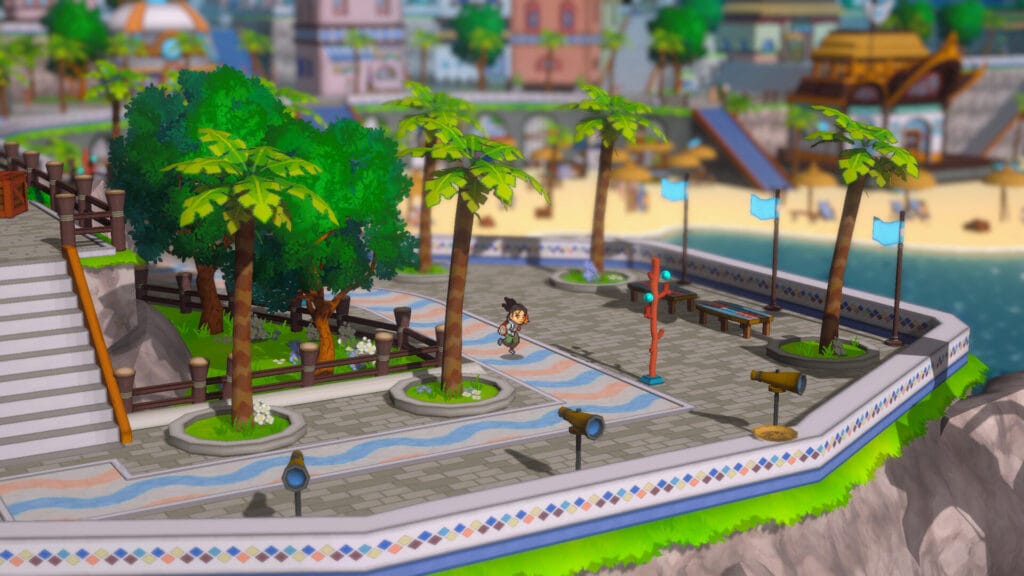
Visually, LumenTale punches far above what I expected from an indie creature collector.
The HD-2D-inspired presentation gives Talea this layered storybook quality, especially during nighttime exploration. Villages glow softly under lantern light, forests feel oddly melancholic, and ancient ruins carry this lingering sense of forgotten history that perfectly matches Trey’s fractured-memory storyline.
And the soundtrack? It understands restraint.
Instead of constantly trying to overwhelm players with giant orchestral crescendos every ten minutes, the music often stays atmospheric and reflective. It gives the quieter moments room to breathe, which ends up becoming one of the game’s greatest strengths. Several recent reviews have praised the atmosphere specifically, and after playing it myself, I completely understand why.
There were moments where I’d finish a battle, walk through a quiet town for a few minutes, and realize I wasn’t rushing toward the next objective anymore. I was just… existing in the world for a while.
Very few RPGs manage that feeling.
Pros & Cons
Pros
- Strong emotional worldbuilding and atmosphere
- Tactical 4v4 combat adds meaningful depth
- Gorgeous HD-2D-inspired pixel art
- Cozy side activities actually feel worthwhile
- Memorable soundtrack and environmental design
- Distinct emotional identity compared to many monster collectors
Cons
- Slow opening hours may test some players’ patience
- Heavy exposition early on
- Some Animon designs feel a little too familiar
- Genre structure occasionally plays things too safely
Final Verdict – A Monster Collector That Actually Has a Soul
Score: 4.25/5
What makes LumenTale: Memories of Trey stand out isn’t that it radically reinvents the creature-collecting RPG formula. It’s that it approaches the genre with sincerity instead of desperation. And for the most part, it succeeds.
The easiest way to dismiss LumenTale: Memories of Trey is to look at the screenshots and assume you already know exactly what it is.
I thought I did too.
But beneath the familiar creature-collecting framework is a game carrying far more emotional sincerity than I expected. It’s not trying to replace Pokémon, reinvent the genre, or scream for attention through edgy subversions. Instead, it quietly focuses on building a world worth caring about.
And by the end, that’s what stuck with me most.
Not the battles. Not the progression systems. Not even the creature collecting itself.
It was the feeling of returning to Talea after a long day and wanting to stay there just a little longer.
This review of LumenTale : MoT is based on the PC version, with code provided by the game’s publishers/developers/ PR Agency.
About The Author