Avinash Rohra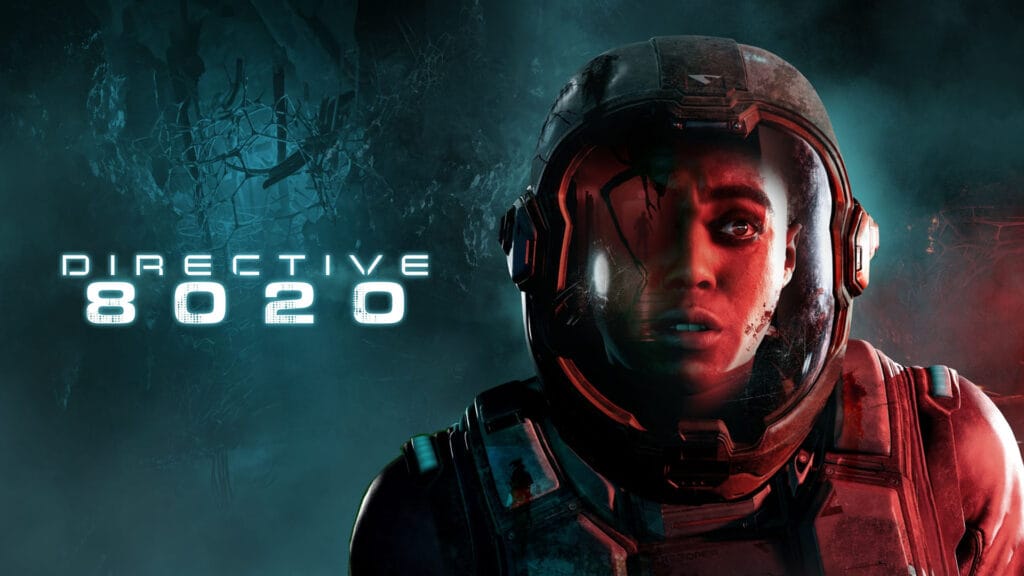
For a studio that built its reputation on interactive horror, Supermassive Games has spent the last few years searching for a way to evolve beyond the formula that made Until Dawn such a success. The Dark Pictures Anthology delivered flashes of brilliance, but it also revealed the limitations of a structure that often felt caught between cinematic storytelling and meaningful player interaction. Directive 8020 is the first time in a long while that Supermassive genuinely feels willing to challenge itself.
Set aboard the survey vessel Cassiopeia, Directive 8020 shifts the anthology’s focus from haunted towns and supernatural mysteries to science-fiction horror. The crew has been dispatched to investigate Tau Ceti f, a planet intended to support humanity’s future beyond Earth, but the mission quickly unravels after an encounter with a shape-shifting alien organism capable of imitating human beings. The premise is immediately familiar to anyone who has seen The Thing, but familiarity is not necessarily a weakness. What matters is how effectively a story uses those influences, and for much of its campaign, Directive 8020 understands exactly why paranoia remains one of horror’s most powerful tools.
This is arguably the most ambitious game Supermassive has produced since Until Dawn. It introduces new stealth mechanics, expanded exploration, survival-horror elements, a revised camera system, and a major new rewind feature called Turning Points. Some of those additions successfully modernise the studio’s formula. Others expose the growing pains of a developer attempting to become something more than an interactive movie specialist.
What Is Directive 8020 About?

Humanity’s future depends on Tau Ceti f, a planet located twelve light-years from Earth. The Cassiopeia is tasked with surveying the world ahead of a larger colonisation effort, but disaster strikes when the ship crashes and its surviving crew discovers an alien lifeform capable of mimicking human beings. Suddenly, survival is no longer simply a matter of escaping an external threat. The greater danger lies in uncertainty itself.
That central idea drives almost every aspect of the experience. Conversations become investigations. Relationships become liabilities. Every interaction carries an undercurrent of suspicion because the game constantly encourages players to ask the same question: how do you make life-or-death decisions when you can no longer trust the people around you?
Supermassive’s Strongest Narrative in Years
The story is where Directive 8020 consistently finds its footing.
Supermassive has always excelled at placing characters under pressure, but previous entries occasionally relied too heavily on twists or spectacle to maintain momentum. Here, the premise itself generates tension. The possibility that any crew member could be compromised creates a level of uncertainty that keeps even routine conversations engaging. I found myself paying closer attention to dialogue than I normally would in a horror game, not because the writing is unusually complex, but because the context transforms every interaction into a potential clue.
What impressed me most was the game’s willingness to let paranoia do the heavy lifting. Some of the most memorable sequences involve little more than a group of frightened people trying to determine whether they can trust one another. In those moments, Directive 8020 understands that horror is often more effective when it grows from doubt rather than immediate danger.
The cast itself is generally strong, although not every character receives equal development. Certain crew members emerge as clear standouts while others primarily serve the needs of the broader plot. Even so, the ensemble succeeds because the story consistently places them in situations where difficult choices reveal their strengths and weaknesses. The result is a narrative that remains compelling even when it leans on familiar science-fiction influences.
Evolution With Some Rough Edges
If the story represents Directive 8020 at its best, the gameplay represents both its greatest ambition and its biggest challenge.

The traditional Dark Pictures foundation remains intact. Players explore environments, uncover clues, engage in dialogue choices, complete quick-time events, and make decisions that can dramatically alter character outcomes. However, Supermassive has expanded the formula significantly through stealth encounters, greater freedom of movement, survival-horror mechanics, and a collection of tools attached to each character’s utility strap. These include scanners, communications functions, and other exploration aids designed to help navigate the Cassiopeia’s increasingly hostile environment.
The most significant addition is stealth.
Early in the game, these sequences are effective. Moving cautiously through the corridors of the Cassiopeia while attempting to avoid detection creates genuine tension, particularly because players have limited options when confronted by danger. Unlike many horror games, the emphasis is placed on evasion rather than confrontation. Supermassive refers to this approach as “threatening exploration,” and the concept fits the narrative well.
Unfortunately, the execution does not always match the ambition. In my experience, enemy behaviour eventually became predictable, and some stealth encounters lost their impact as the game progressed. Several later sections rely on similar objectives and encounter structures, reducing the sense of unpredictability that makes the opening hours so effective. What begins as nerve-racking survival horror gradually becomes more routine than terrifying.
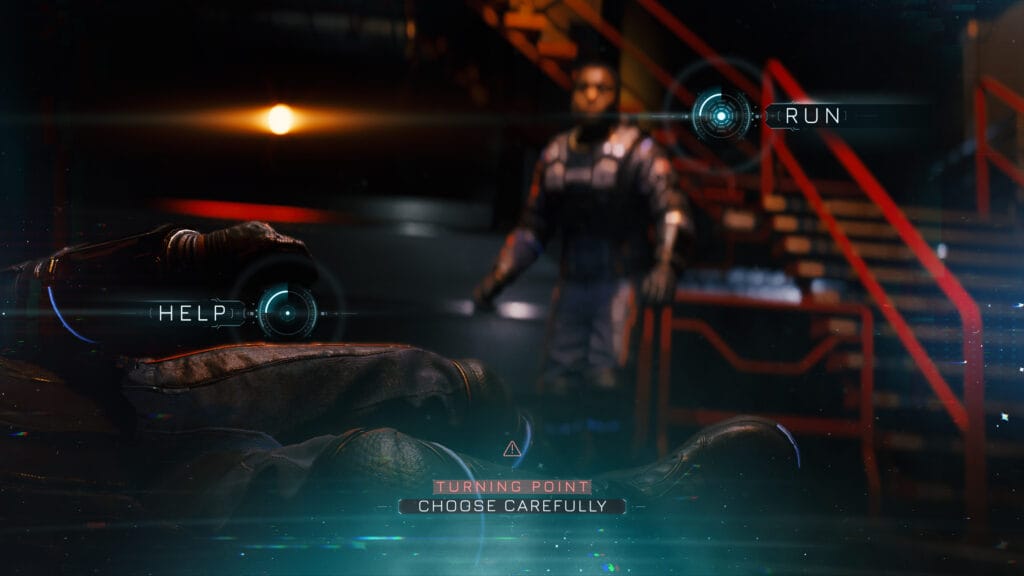
The new Turning Points system is more successful. This feature allows players to revisit major decisions and explore alternate outcomes without restarting the entire game. While some players may prefer the permanence of earlier Dark Pictures entries, the system makes experimentation considerably more accessible and reflects the increasing complexity of the game’s branching narrative structure.
The Cassiopeia Steals the Show
Visually, Directive 8020 is among the most impressive games Supermassive has produced.
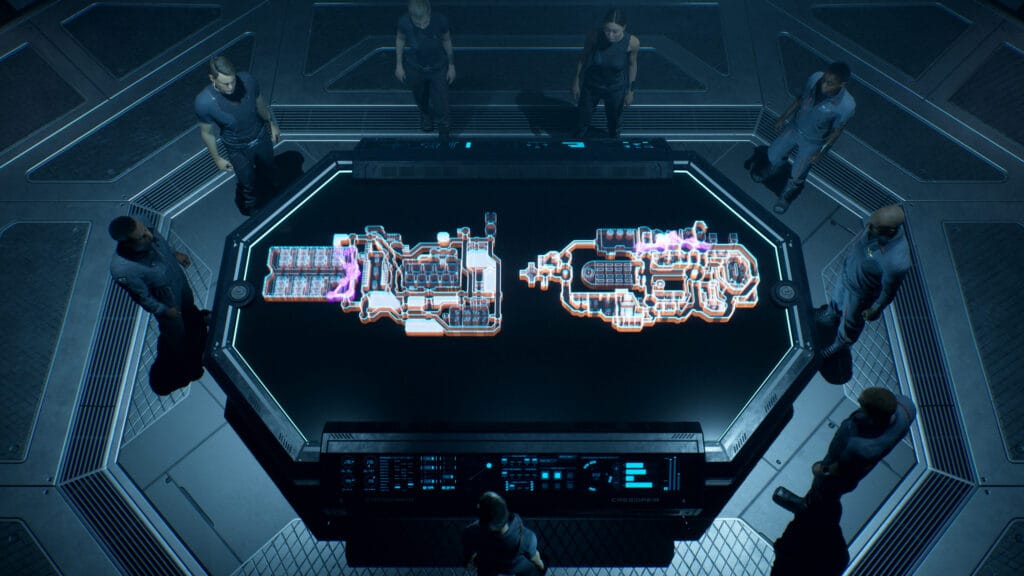
Built in Unreal Engine 5, the game benefits from detailed environments, impressive lighting, and character models that represent a noticeable step forward for the studio. The Cassiopeia itself often feels like a character in its own right, with sterile corridors, industrial interiors, and damaged sections of the ship helping establish a persistent sense of unease. The setting successfully captures the isolation that defines so much great science-fiction horror.
The body horror elements are equally effective. Rather than relying solely on traditional monster encounters, the game embraces unsettling creature designs and transformations that reinforce the themes of identity and imitation running throughout the narrative. Combined with Jason Graves’ score and consistently strong sound design, the atmosphere remains compelling even during weaker gameplay segments.
Pros and Cons
Pros
- Excellent paranoia-driven science-fiction horror premise
- Strong narrative that makes effective use of uncertainty and mistrust
- Meaningful player choice remains central to the experience
- Turning Points is a welcome quality-of-life addition
- Outstanding visual presentation and atmosphere
- One of Supermassive’s most ambitious projects to date
Cons
- Stealth mechanics become repetitive over time
- Some characters receive more development than others
- Familiar genre influences occasionally feel too obvious
- Later sections struggle to maintain the tension established early on
- New gameplay systems are not always fully realised
Directive 8020 is an easy recommendation for fans of Supermassive’s previous work. Players who enjoyed Until Dawn, The Quarry, or the stronger entries in The Dark Pictures Anthology will find a familiar foundation enhanced by a more ambitious setting and broader gameplay systems.
Science-fiction horror enthusiasts should also take notice. The game’s focus on paranoia, identity, and mistrust aligns closely with many of the genre’s most enduring themes, and the Cassiopeia provides an effective backdrop for that exploration. Players expecting the systemic depth of dedicated survival-horror games may find the stealth mechanics relatively lightweight, but those approaching the game primarily for its narrative strengths are likely to come away satisfied.
Final Verdict
Score: 3.75/5
Directive 8020 feels like a studio attempting to redefine itself.
Not every experiment succeeds. The stealth systems often lack the depth necessary to sustain the tension they initially create, and some of the game’s strongest ideas remain only partially realised. Yet those shortcomings are easier to forgive because they emerge from genuine ambition rather than creative complacency.
At its best, Directive 8020 delivers exactly what its premise promises: a tense science-fiction horror story built around paranoia, mistrust, and the fear of uncertainty. The narrative remains engaging throughout, the presentation is consistently impressive, and the new systems demonstrate a willingness to push the Dark Pictures formula in new directions.
It may not reach the heights of Until Dawn, nor does it fully solve every problem that has followed the anthology since its inception. What it does achieve, however, is far more valuable. It proves that Supermassive is still willing to take risks, and in an era where long-running franchises often settle into comfortable repetition, that alone deserves recognition.
This review of Directive 8020 is based on the PS5 version, with the code provided by the game’s publishers.
About The Author