Avinash Rohra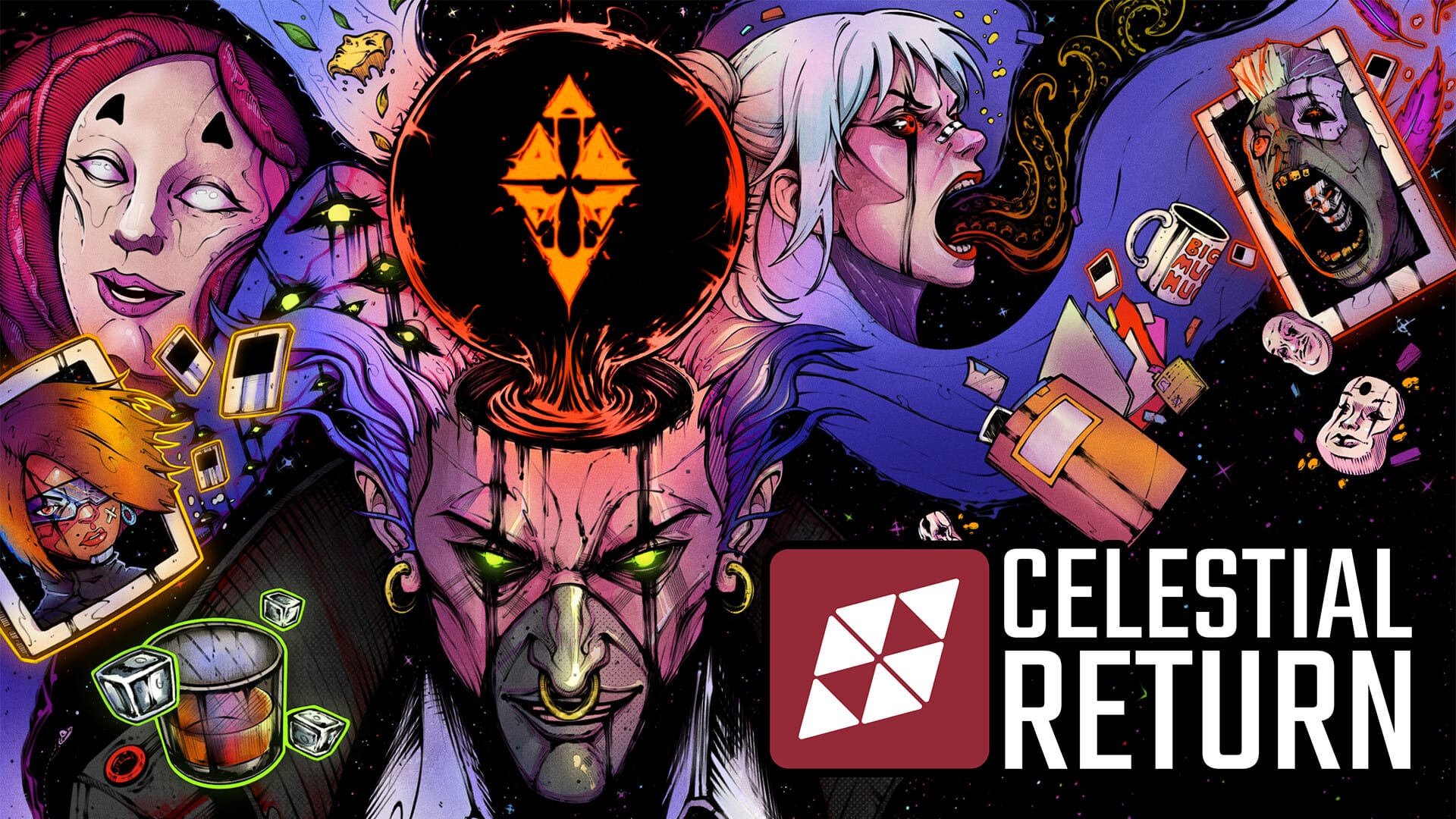
There’s a specific kind of dread that sets in when you check your dice pool mid-conversation and realize you don’t have enough left to see how this ends well. Celestial Return builds its entire identity around that feeling. Players who finished the campaign have described hitting genuine dead ends, spending their last dice too early and simply losing access to solutions the game clearly wanted them to find. That’s not a bug being politely worked around. That’s the point.
A City Held Together By Static
Celestial Return, developed by Metaphor Games and published by Shoreline Games, released on July 14, 2026 for $14.99 after a successful Kickstarter campaign. You play Detective Howard, a former agent of the Paranormal Investigation Division working the decaying streets of Netherveil City, a corporate-run dystopia where reality-warping entities called Abstracts have started bleeding into everyday life. Howard’s only steady companion is Rose, a sentient flower that talks constantly and doesn’t always say what he wants to hear. The story opens with a string of suicides that look staged rather than desperate, and unravels into something involving megacorporations and forces that don’t play by human rules.
None of that premise is especially novel on paper. What makes it work is restraint. Metaphor Games doesn’t rush to explain its cosmology, and Howard’s own damage, hinted at rather than dumped in exposition, gives the investigation a personal undertow the setting alone couldn’t provide.
Dice Are Not Randomness, They’re Rent
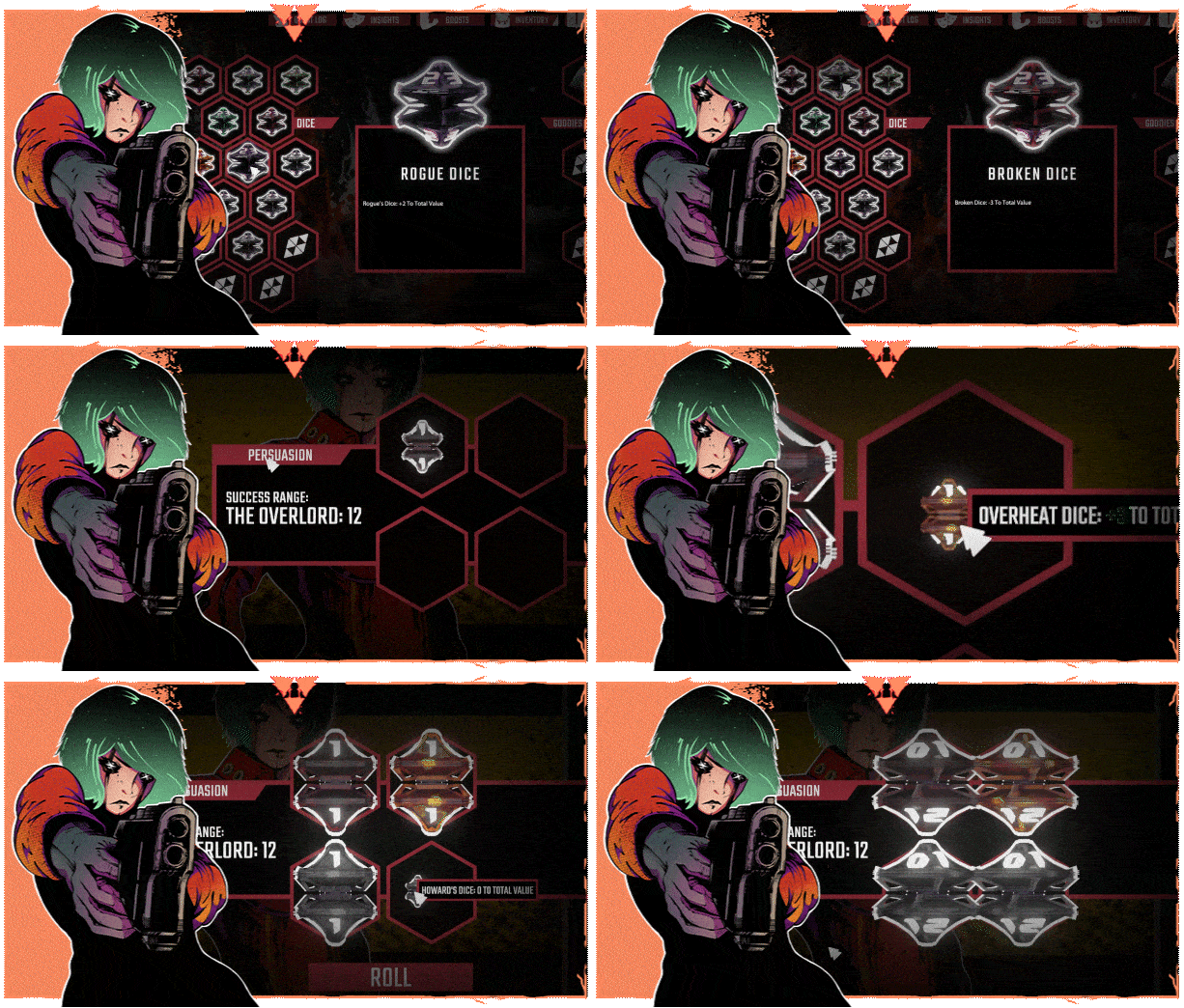
The mechanical hook is where Celestial Return earns its keep. Nearly everything Howard attempts, from picking a lock to talking someone down from a ledge, resolves through a dice roll drawn from a shared, finite pool. You can commit up to four dice to a single check, and whatever you spend is gone permanently. There’s no pool that regenerates on a rest, no clean save-scum loop that lets you grind out a better outcome. Dice come from specific sources scattered through the city, some helpful for certain checks and actively harmful for others, and the same dice double as informal currency for trading and bribes. That means every roll is really two decisions: do I have the dice for this, and do I have better uses for them ten minutes from now, when I don’t yet know what’s coming.
It’s a smart reframing of a genre mechanic that usually exists just to add tension. Here the tension is real because the resource genuinely runs dry. On failed checks, you’ll sometimes just lose access to a single dialogue option, but at more critical junctures the game can force you to try again, and players who ran their pool down report the story simply moving on without them, closing off paths rather than pausing to let them catch up. It’s a defensible design philosophy, treating failure as a real consequence rather than an inconvenience to reload the past, but it can also produce dead ends that read less like narrative weight and more like a locked door with no other key in the building.
An Overworked Inner Chorus
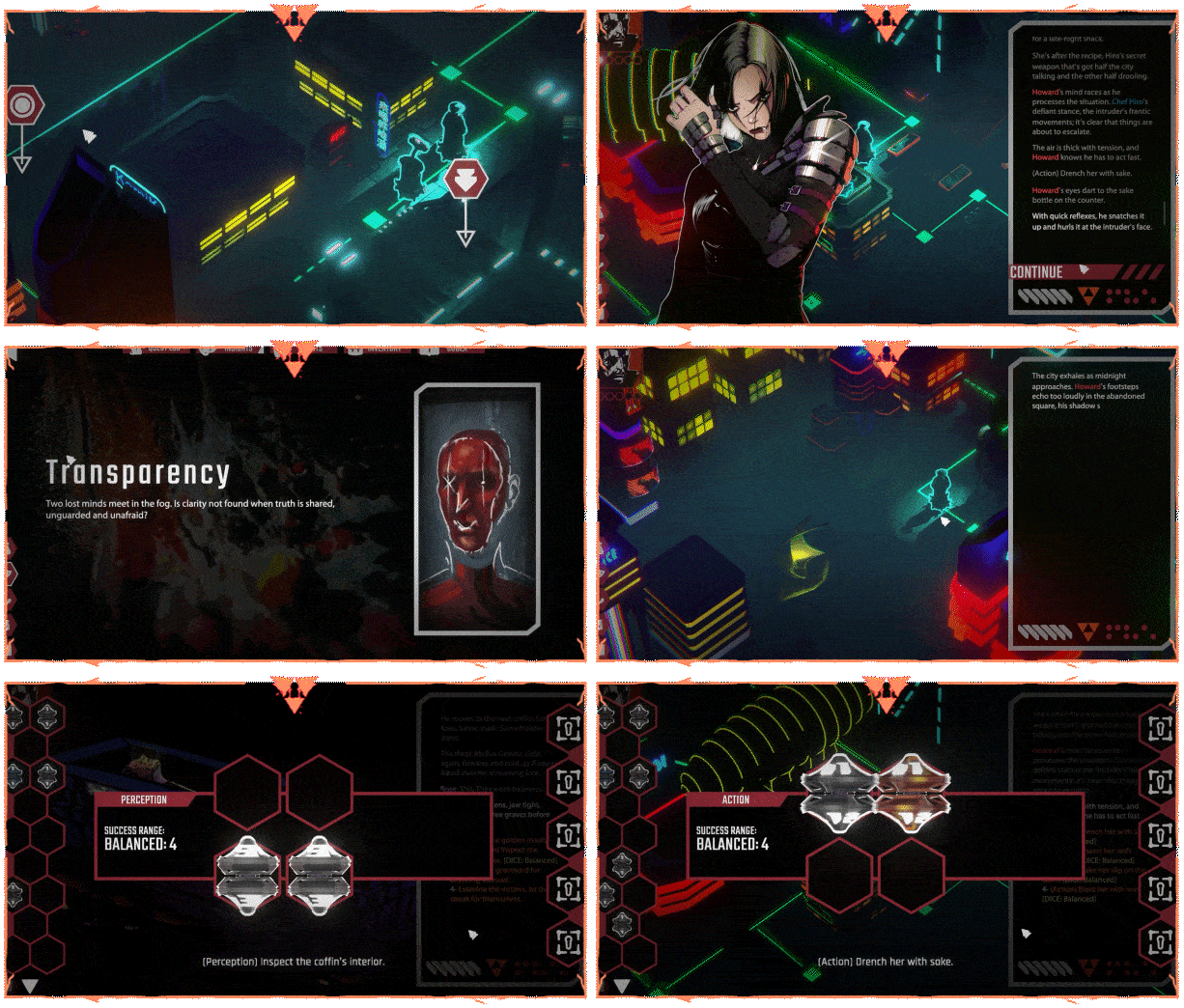
Howard’s inner life splits into personified drives, versions of intelligence, virtue, and foolishness among them, that chime in during conversations and occasionally hijack his mouth. It’s the game’s most obvious debt to Disco Elysium, and it doesn’t hide that lineage, but the writing carries enough of its own voice to avoid feeling like cosplay. The prose is genuinely sharp in short bursts, landing jokes and gut-punches in the same paragraph, though it has a habit of over-explaining feelings the scene has already made clear. Trimmed, some of these exchanges would hit twice as hard.
Art That Outworks the Budget

Visually, Celestial Return is the strongest argument for itself. The hand-drawn, comic-influenced art style, indebted to manga touchstones like Blame! and Biomega alongside the raw nerve of American comics, gives Netherveil a jagged, inked-in menace that a fully rendered 3D city couldn’t match on this budget. Character portraits during dialogue do a lot of heavy lifting, and they earn it. The soundtrack, a genuinely odd fusion of noir jazz, cyberpunk techno, and death metal, shouldn’t cohere and mostly does, giving quieter investigative scenes a pulse without drowning them. Voice acting is inconsistent, unsurprising given that the developers filled in several roles themselves to keep costs down, but it’s used sparingly enough that it rarely undercuts a key scene.
Where the Seams Show
The equipment screen is largely decorative, tracking cybernetic augments Howard picks up automatically rather than offering meaningful choices, and it feels like a leftover from an earlier design pass. Combat and physical confrontations resolve the same way conversations do, through a roll and a short animation, which keeps the pace consistent but means there’s no separate skill to master if dialogue isn’t your thing. The bigger recurring complaint, echoed across multiple playthroughs by other players, is that the dice economy can leave you stranded through bad early decisions rather than bad play, which is a harder pill to swallow than a difficulty spike ever is.
Final Verdict
Score: 4/5
Celestial Return is a rougher, less polished cousin to the games it’s clearly in conversation with, and it knows it. What it has that many of its influences don’t is a resource system with actual teeth, one that makes every roll feel like it costs something because it genuinely does. That same honesty is also its biggest liability, since scarcity without a safety net can strand players through no fault but bad luck.
If you want a detective RPG that treats failure as scenery to be reloaded past, look elsewhere.
If you want one that makes you sit with the consequences of a bad roll and keep moving anyway, Celestial Return is worth the fourteen dollars and the discomfort.
This review of Celestial Return is based on the PC Version, with the code provided by the Publisher/PR Agency.
About The Author