Avinash Rohra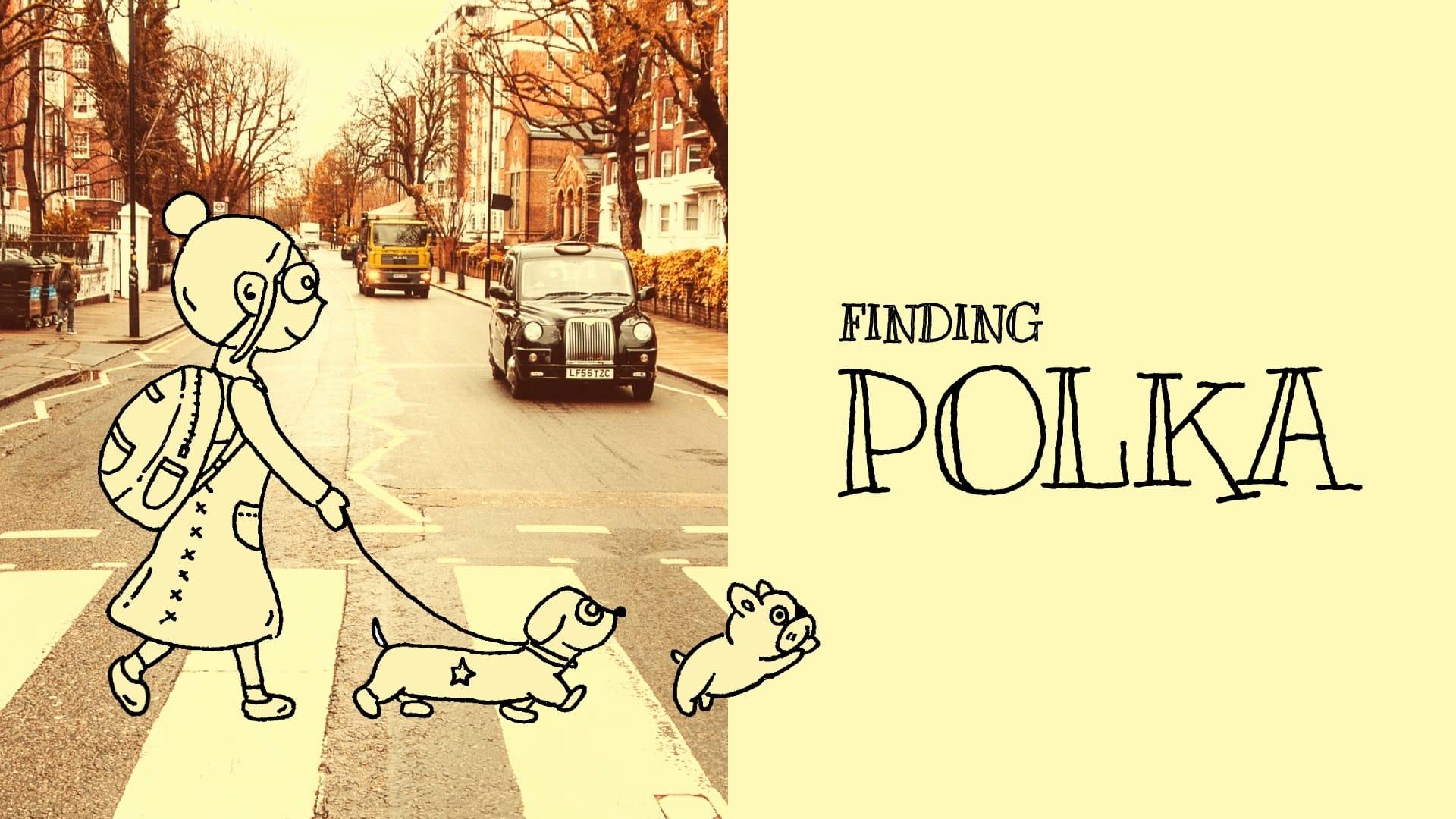
Finding Polka gives you a very simple instruction: follow the dog. Within half an hour, I had become spectacularly bad at doing that.
Polka would disappear somewhere ahead, Frendy and Jazz would set off after her, and then somebody strange would catch my eye. Maybe there was an object tucked into a corner that looked worth investigating. Maybe a path seemed to lead somewhere it probably did not need to. Sometimes I simply stopped because the ballpoint-pen scenery had become so dense that I wanted to work out what I was actually looking at. The nominal objective remained somewhere in front of me, but the game kept finding reasons to make being distracted feel more interesting than making progress.
That became the central pleasure of Finding Polka. It is an exploration game built around curiosity rather than challenge, and its best idea is understanding that curiosity cannot be forced. The world has to earn it.
Developed by lidlocks and published by PARCO GAMES, Finding Polka follows Frendy and her dog Jazz after they spot another dog resembling Polka, Frendy’s childhood companion. The pair give chase, and that pursuit carries them through a succession of increasingly peculiar places filled with people who communicate largely through movement, facial expressions and sounds rather than conventional written dialogue.
It sounds almost too slight when reduced to a sentence. In play, it has considerably more personality.
Following Polka Is Only Half the Point
Finding Polka is structured around small acts of observation. You enter an area, work out where Polka has gone, encounter people along the way and usually end up helping someone before the route ahead becomes clear. There is no combat to complicate things and no progression system trying to convince you that every interaction needs to increase a number somewhere.
Instead, the game repeatedly asks you to look.
Sometimes that means identifying what a character wants from the way they behave. Elsewhere it means noticing an item or figuring out how to reach part of the environment. The solutions are rarely difficult, and anyone arriving here for elaborate puzzle logic will probably find the demands fairly light. What kept the process interesting for me was that the game rarely made these tasks feel detached from the world around them. Frendy is helping people because those people are physically there, visibly stuck, waiting for something. You read the scene before you solve it.
The lack of conventional dialogue helps enormously. Finding Polka never needs a character to explain, at length, why they want help. Their animations do the job. A gesture establishes the problem, you respond, and the interaction moves on.
Then somebody gives you a high-five.
I started chasing those with almost as much enthusiasm as I was chasing Polka. The later addition of the BingoBook, which tracks activities such as discoveries, photographs and high-fives, formalises some of that optional wandering, but even without a checklist the satisfaction comes from seeing how many small interactions have been tucked into each location.
There is an appealing looseness to the whole thing. You are moving forward, yet Finding Polka constantly gives you permission to waste time.
Hundreds of Drawings, and It Shows
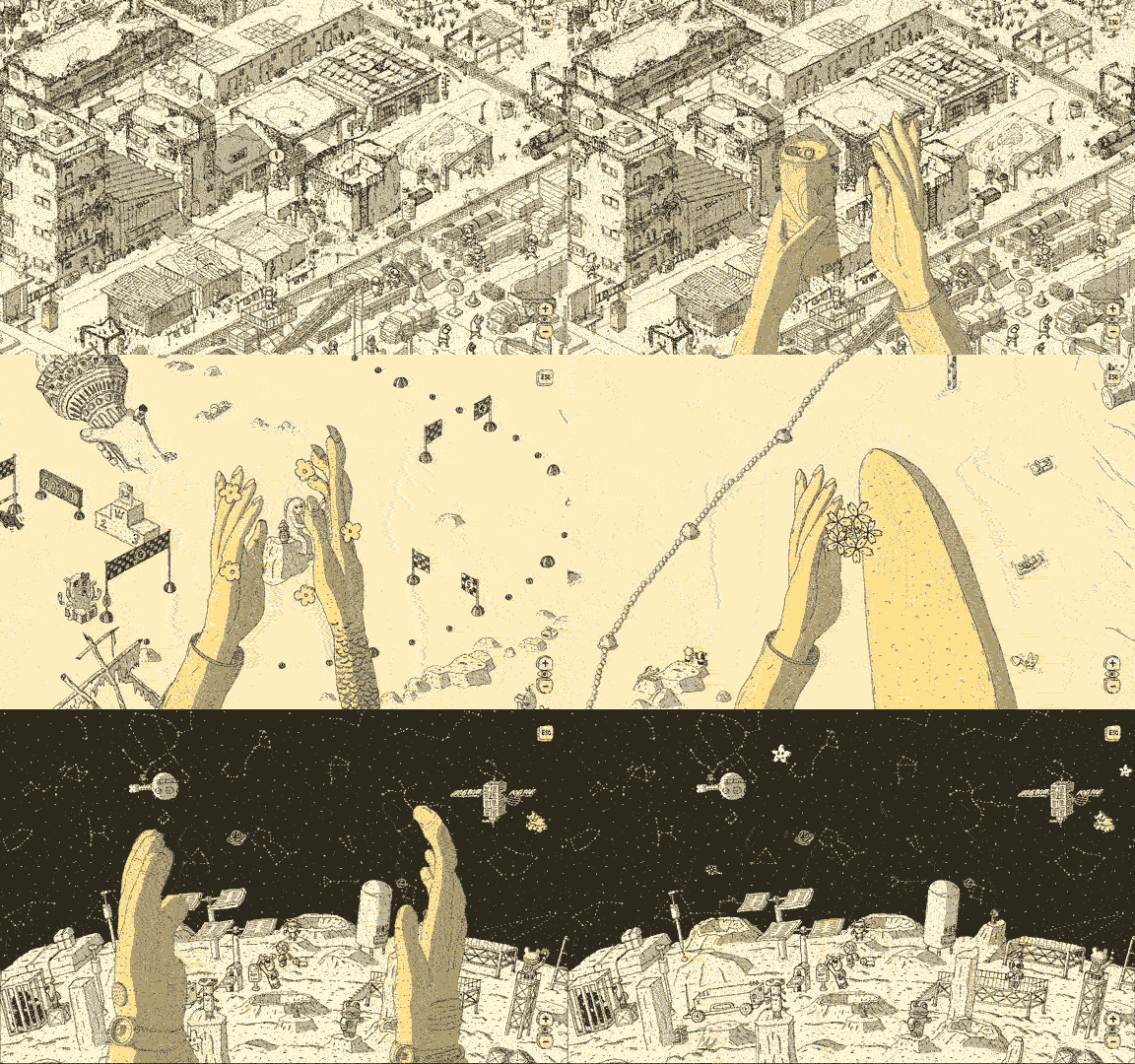
The art is the reason that permission works.
Finding Polka’s world was assembled from hundreds of physical ballpoint-pen drawings that were scanned and brought together digitally. Developer Shinnosuke Kumazawa has discussed creating roughly 300 A4 drawings and another 100 B4 pieces over about two years, going through 13 pens in the process.
That labour is visible in practically every scene.
The backgrounds are packed with marks, shapes and odd little details. Buildings look less constructed than sketched into existence. Characters fit into the scenery without losing the slightly unruly quality of something drawn by hand. Even when a location is simple from a mechanical standpoint, it rarely looks empty.
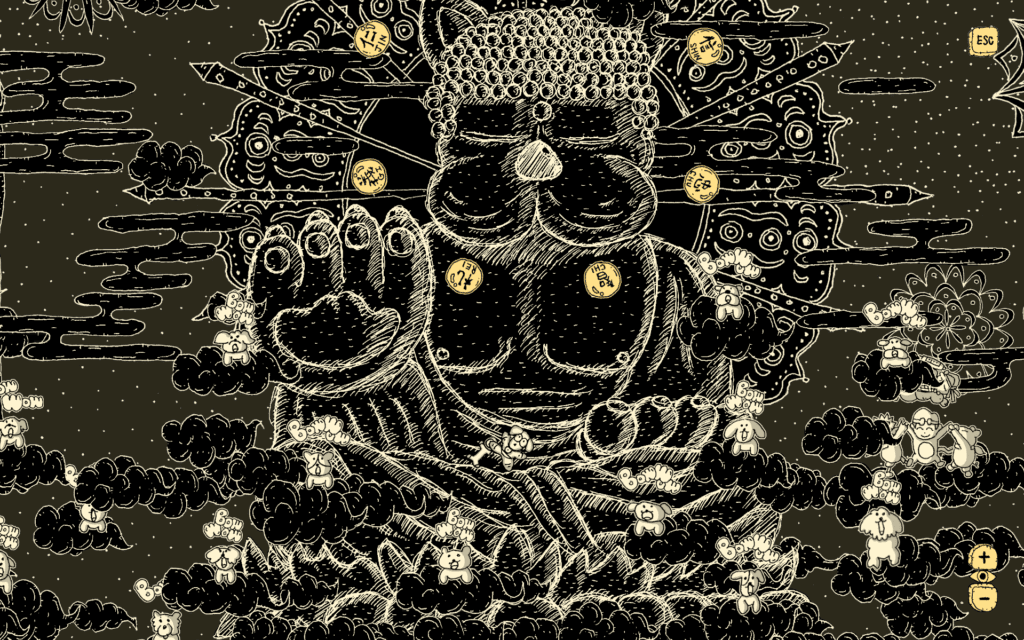
There is a danger in turning handmade art into a marketing bullet point, particularly with indie games, because “hand-drawn” tells you nothing about whether the result actually has character. Finding Polka avoids that problem. The physical process has left a clear fingerprint on the finished game. Lines overlap. Shapes are not clinically perfect. Busy spaces occasionally make it hard to separate foreground decoration from a usable route, but I would take that problem over a cleaner world that had been sanded smooth.
The visual density occasionally works against navigation. Frendy can become obscured behind larger foreground objects, and I had moments where I understood where I wanted to go before I understood how the game expected me to get there. Some route adjustments arrived after launch, so this was clearly an area the developer continued refining.
It never became a serious obstacle during my playthrough, though there were stretches where I circled a little longer than intended.
The strange thing is that I rarely minded the extra lap. I was still looking at something interesting.
Simple Puzzles Without Busywork
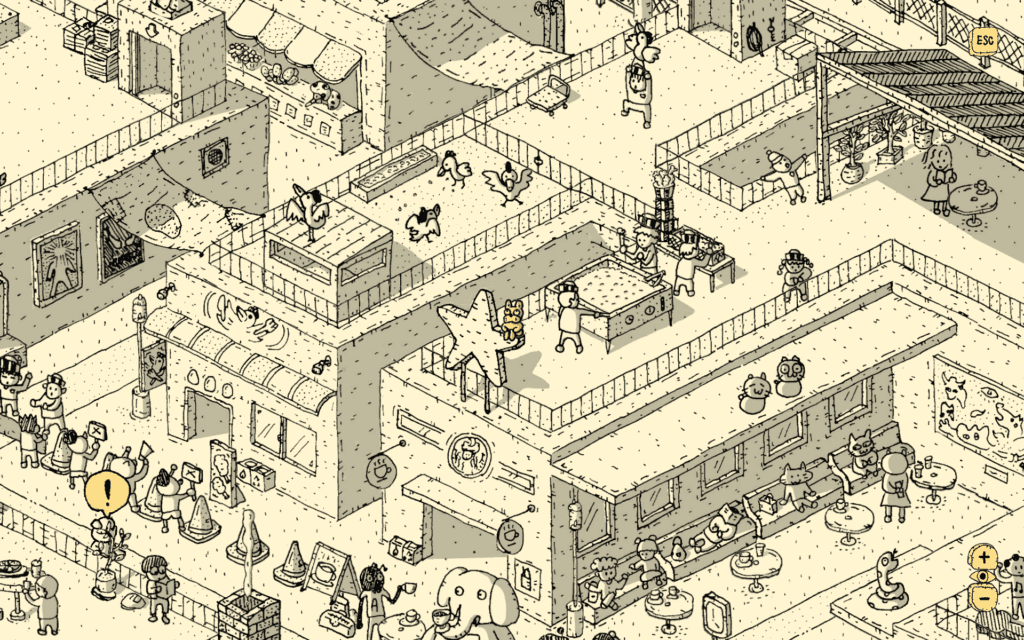
There is a fine line between an easy game and an empty one, and Finding Polka spends much of its runtime surprisingly close to it.
Its puzzles do not demand much from experienced players. Most are based around straightforward observation, locating something useful or understanding what an NPC is trying to communicate. There were no long stretches where I needed to put the controller down and reconstruct a solution in my head, and very few moments where progress depended on mastering a system.
Ordinarily, that simplicity would start wearing thin.
Finding Polka gets away with it because the tasks are short and the surroundings keep changing around them. It also breaks up exploration with optional mini-games including putt-putt golf, whac-a-mole, a soccer shootout, boat racing, watermelon splitting and volleyball. They are deliberately modest diversions. None of them turns Finding Polka into a serious arcade collection, and that is probably for the best.
They change the tempo.
After spending several minutes scanning an environment for a route or object, being asked to knock a ball around gives your hands something else to do. A few minutes later you are back outside, poking around another part of the map.
The absence of combat helps maintain that rhythm. There is no pressure for every new area to contain an enemy encounter simply because the previous one did. The game can let a scene exist because somebody drew something funny there. That freedom suits it.
Where the design is weakest is when visual confusion replaces actual puzzle solving. There were moments when I was not thinking about what the game wanted me to understand. I was simply trying to determine which piece of the artwork functioned as a path. Finding Polka is strongest when I am observing because I am curious, not because I am squinting at the route forward.
Post-launch updates have addressed some of that friction. They also added save-backup protection, fixed occasional Steam achievement problems and introduced an option to skip the shooting section. Those changes matter, but the broad philosophy of the game remains untouched. This is meant to be approachable.
It absolutely is.
Saying More by Saying Less
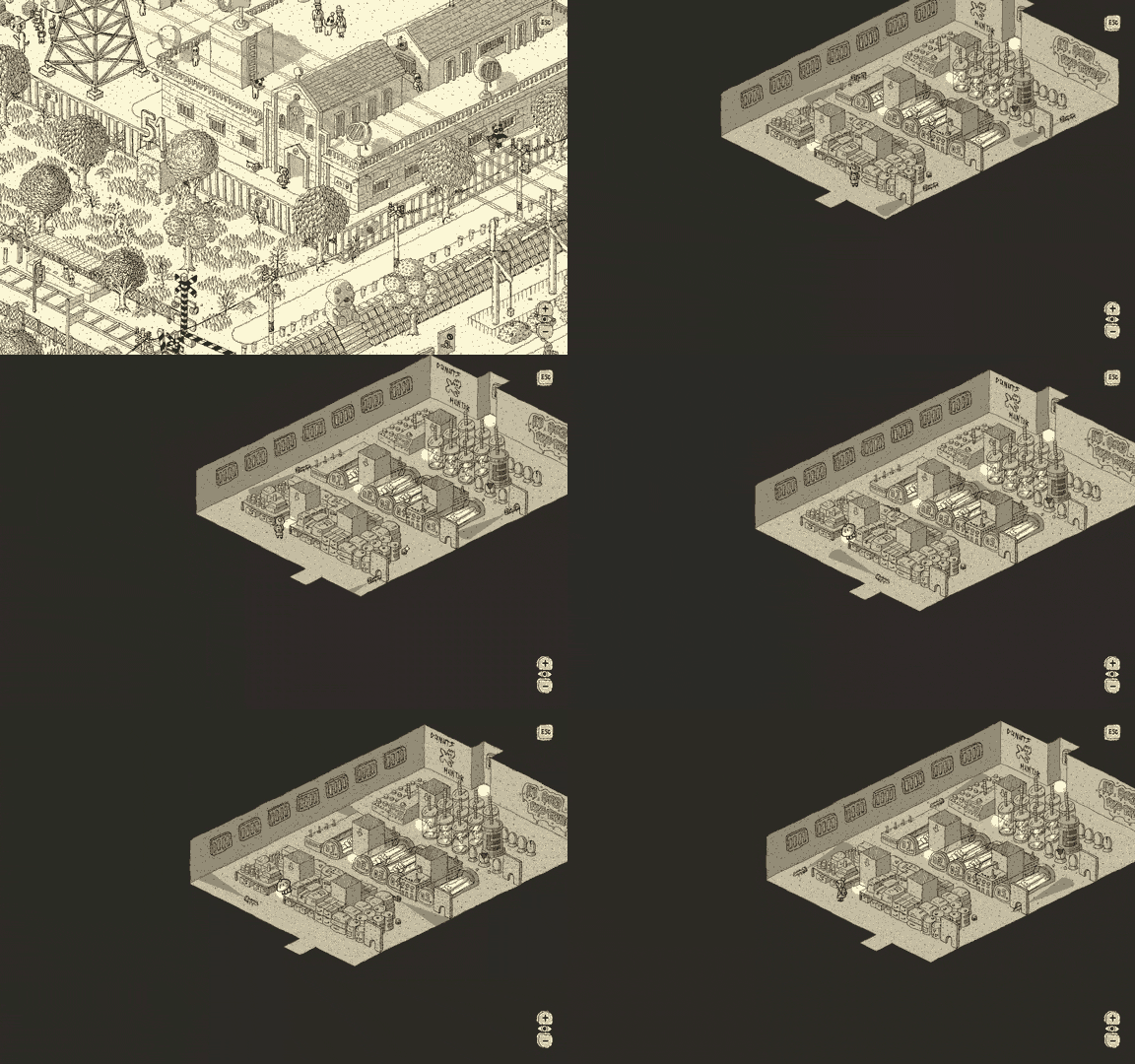
The most interesting thing Finding Polka does with its premise is refuse to over-explain it.
Frendy sees a dog who reminds her of Polka, a dog from her childhood, and follows. That is enough motivation for the game to begin. From there, memory sits quietly underneath everything that happens rather than becoming a constant topic of conversation.
The decision to avoid traditional dialogue gives that idea room.
Characters communicate through expressions and movement, so the player spends more time watching what they do than reading what they say. That changes the tone of even tiny errands. You understand that somebody needs help, respond to the problem and move on without the game inserting several text boxes between observation and action. It also makes the humour cleaner.
A strange character behaving strangely is allowed to be funny without explaining the joke afterward. Jazz remains alongside Frendy without becoming a talking exposition device. Polka stays ahead, pulling you toward the next location, but the game never needs to make that pursuit artificially urgent. That restraint ended up being one of the things I appreciated most.
Finding Polka understands that a childhood memory does not have to arrive with a paragraph explaining its significance. Sometimes a familiar face, place or animal simply stops you for a second.
Then you follow it.
A Short Game That Knows Its Limits
Finding Polka does not try to turn its central idea into a twenty-hour commitment, and stretching it that far would have damaged it.
The main experience sits comfortably in the territory of a short game, with additional time available for players who want to revisit areas, complete optional activities, fill out the BingoBook or clean up achievements. That scale fits the mechanics. The observation-based puzzles remain pleasant because the game leaves before their simplicity becomes exhausting. I still wanted a little more resistance from a few of them.
Not difficulty for its own sake. There is simply room within this style of interaction for a couple of puzzles to push observation further, forcing the player to connect details across an environment instead of spotting an immediate solution nearby. Finding Polka has already trained you to inspect everything. It occasionally feels reluctant to test whether you were paying attention. That is the main reason my enthusiasm stops short of something approaching a perfect score.
The other issue is navigation. Its handmade look is inseparable from what makes the game memorable, but the busiest screens occasionally hide useful information inside their own decoration. I never reached a point where I wanted the artwork simplified. I wanted the interactive spaces to communicate themselves a little more clearly.
Those complaints stayed small because Finding Polka rarely wastes the player’s time. It moves quickly between ideas, does not bury its best material under repetition and never behaves as if every charming interaction needs to become a permanent system. A lot of larger games could learn from that restraint.
Final Verdict
Score: 4.6/5
What stuck with me after finishing Finding Polka was not a particular puzzle.
It was the habit the game had taught me. I would enter a new place and immediately stop thinking like someone trying to complete an objective. I started scanning the edges instead. What had been drawn over there? Was that path usable? Why was that person standing in that position? Was there another high-five somewhere I had missed?
Polka was always somewhere ahead. For much of the game, I was perfectly happy to leave her there for another minute.
That is why this little chase works so well. The premise gives Finding Polka direction, but the world gives it a reason to slow down. Its puzzles are straightforward and its navigation occasionally gets tangled in the same dense artwork that gives the game its identity. Neither problem erased the pleasure of wandering through something that so clearly bears the marks of the person who made it.
By the final stretch, I was no longer following Polka because the objective marker, story or structure told me to. I followed because I wanted to see what lidlocks had drawn next.
This review of Finding Polka is based on the PC Version, with the code provided by the Publisher/PR Agency.
About The Author