Avinash Rohra
I spent the first hour of Verde waiting for it to become more complicated.
That is what city builders have trained me to do. Give them enough time and the pleasant little settlement you started with usually mutates into an argument about logistics, efficiency and whatever resource you neglected twenty minutes ago. Verde kept refusing to make that turn. I built houses, watched Seedlets arrive, covered their needs and started arranging the town around what looked right rather than what squeezed the highest output from every square of land. Eventually I stopped waiting for the other shoe to drop.
That restraint is both the reason Verde works and the reason I cannot quite love it without reservation.
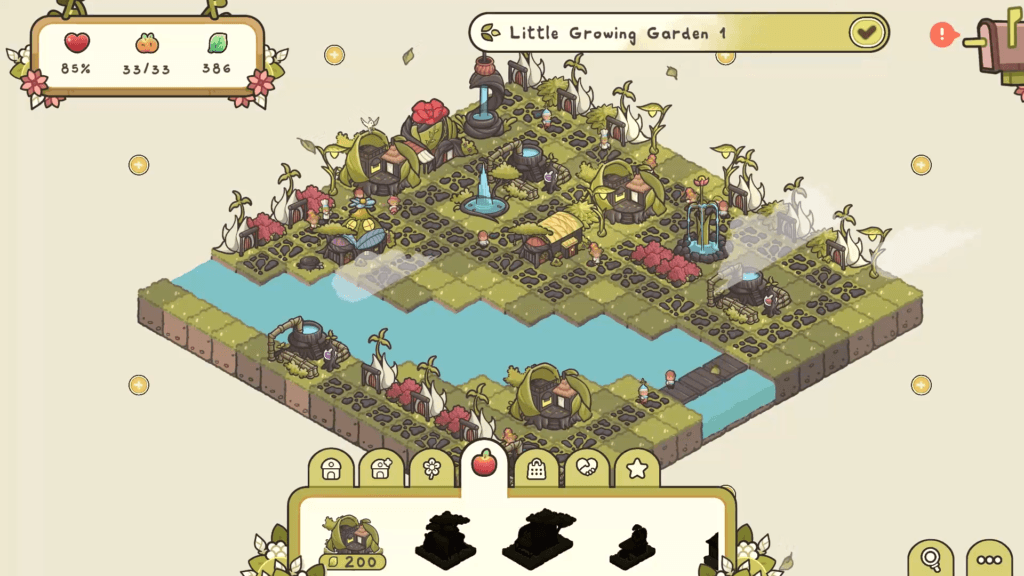
Antimeta Studio’s cozy city builder is unusually clear about what it wants to be. Dewdrop Valley is populated by Seedlets, small plant-like residents who need homes and amenities before your settlement can continue growing. Buildings generate coverage for different requirements, Leaves act as the main currency, and increasing the population gives you more room to expand. None of this asks for the sort of municipal obsession associated with heavier management games. Verde wants you looking at the town instead of constantly looking through it at a spreadsheet.
The City Builder That Refuses to Shout
There is an interesting confidence in designing a management game around the absence of panic.
Verde still has rules. Seedlets have needs tied to things such as water, goods, social activity, nutrients and decoration. Placement matters because buildings affect the area around them, so expanding blindly can still leave sections of the settlement underserved. The overlays make those problems easy to identify, and most solutions are immediately readable. Put the right building in the right place, make sure its coverage catches the nearby homes, then move on.
What matters is that the game rarely turns those shortcomings into punishment. I was usually fixing a neighbourhood because I wanted it to function better, not because some cascading crisis had begun devouring the settlement from within. Poor planning slows progress more than it threatens collapse.
That changes how I played it.
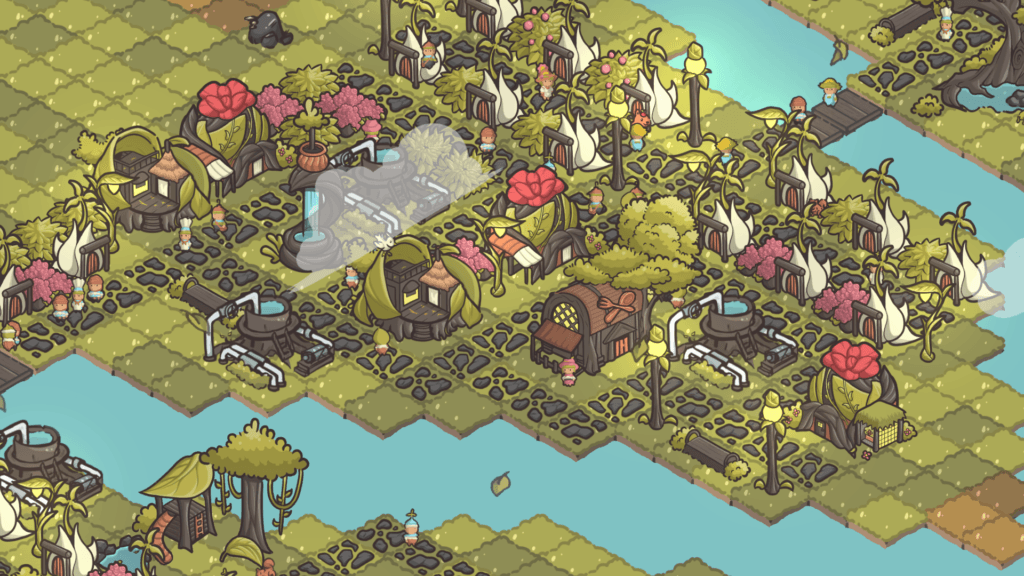
In something more demanding, a decorative corner is space I should probably have converted into infrastructure. In Verde I kept making those corners anyway. Buildings offer visual customisation, and decorations such as trees, flowers, benches and statues let you break up practical rows of structures with spaces that exist largely because they look good. Saved presets also make it easier to repeat a particular building style without rebuilding it from scratch every time.
I began worrying about whether two neighbouring sections looked repetitive. Then I moved things around simply because the street felt too rigid. Neither decision did much for the economy, but Verde had made me care about both.
That is where its simplicity starts looking less like absence and more like intent. The game is built around letting you spend your attention on the settlement itself. You are still managing a town, but Verde keeps the management light enough that aesthetic decisions never feel like irresponsible indulgences.
Where Relaxation Turns Into Routine
Intent does not erase consequence, though.
Once I understood how Verde’s needs and coverage worked, I stopped discovering much about its management layer. Expansion becomes familiar fairly quickly. Check what an area lacks, provide it, collect more Leaves, open up more room and repeat the process somewhere else.
That loop remains pleasant because placing and arranging buildings is satisfying, but the decision-making eventually starts to flatten. Verde rarely asks you to rethink an established strategy. Instead, it tends to give you new spaces in which to apply what you already understand.
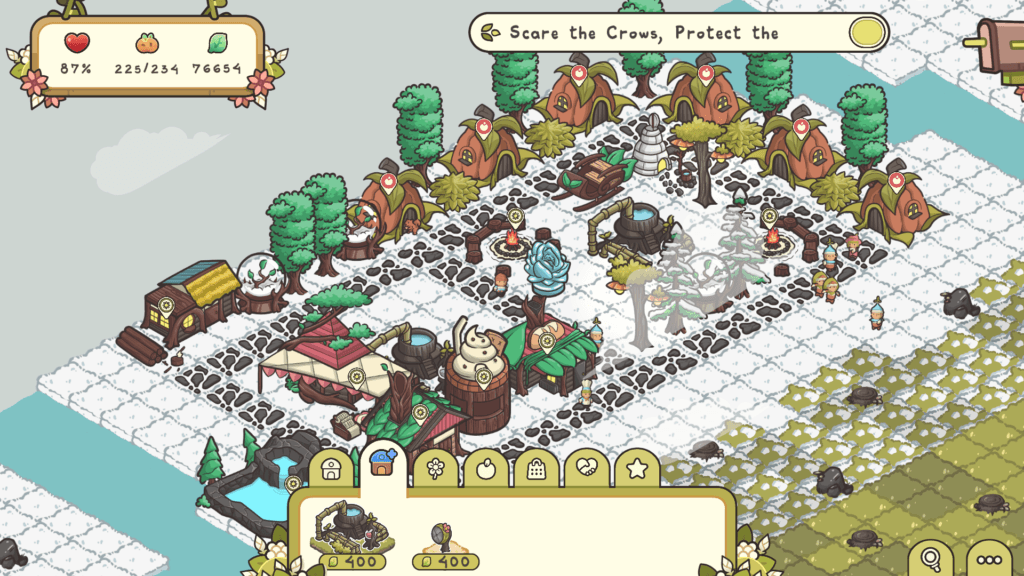
The different biomes do introduce some variation. Beach areas bring heat into the equation and require fans to keep Seedlets comfortable, while colder regions add heaters and generators. These requirements are welcome because they change what a functioning settlement needs, even if they never radically transform how you approach expansion.
This is where my main criticism sits. I do not want Verde to suddenly become hostile or bury itself under simulation systems. That would damage the relaxed rhythm that gives the game its personality. What I wanted was more interplay inside the existing framework. More situations where one building changes the value of another. More reasons for two settlements to develop differently. More moments where I had to stop and think before placing the obvious solution.
The simplicity is the appeal, but there is a point where simplicity starts turning into repetition.
Enough Structure to Keep You Moving
The different modes help Verde avoid feeling completely directionless.

Story mode provides objectives involving development, population and happiness, giving the early hours some structure while introducing the systems at a steady pace. It works well as a guided way into the game because Verde never throws a wall of information at you. The objectives teach through doing, then gradually leave more of the settlement in your hands.
Sandbox and Creative modes lean harder into the building side of the experience. They make sense for a game where the pleasure often comes from arranging a place long after you already understand how to make it function.
Post-launch additions have also helped broaden that side of the game. The 1.1 update expanded the selection to three maps and added dirt and wood paths, small changes on paper but useful ones for a game where variety in layout and appearance matters so much. They give players more room to make settlements feel distinct without altering the easygoing foundation.
Seedlets Give the Numbers a Face
The Seedlets themselves do more for Verde than I initially expected.
A city builder becomes difficult to care about when its population exists only as counters in a menu. Verde avoids that problem by making its residents visible enough that the spaces between buildings start to matter. Watching them move through the settlement gives those decorative choices a reason to exist beyond making a screenshot look nicer.
I found myself lingering over areas after finishing them instead of immediately dragging the camera toward the next objective. A fountain surrounded by activity suddenly felt more important than another perfectly efficient block of housing. That sounds minor, but Verde is built from pleasures at roughly that scale.
Its art direction supports that mood. The hand-drawn, nature-heavy look is clean and easy to read, and the Seedlets fit the world without disappearing into it. Even as settlements spread out, Verde remains visually approachable. There is rarely any confusion about what you are looking at or where a problem is coming from.
The presentation also avoids overloading the screen with the kind of information that can make management games feel more like operating software than inhabiting a place. That clarity becomes another part of the game’s character.
Final Verdict
Score: 4/5

Verde is not secretly a deep city builder hiding beneath cozy artwork, and I think approaching it in search of one misses what Antimeta has made. This is a compact management game about removing enough friction that building stays relaxing without removing every decision that gives construction meaning.
I wanted more complexity by the time I was finished. More meaningful interactions between buildings and regions would give settlements stronger identities, and a broader progression curve would keep that early sense of discovery alive for longer. There are moments when the game’s gentleness becomes routine, particularly once the logic behind its needs and coverage stops surprising you.
Yet every time Verde began to feel slight, I would notice myself rearranging another district after its practical problems were already solved. I would adjust paths, move decorations and fiddle with a neighbourhood that was functioning perfectly well before I touched it.
Verde leaves some depth on the table, but it also understands something a lot of city builders forget: sometimes managing less gives you more room to enjoy what you built.
This review of Verde is based on the PC Version, with the code provided by the Publisher/PR Agency.
About The Author