Gecko Gods Review – Sometimes the Best Way Forward Is Straight Up the Wall
 Avinash Rohra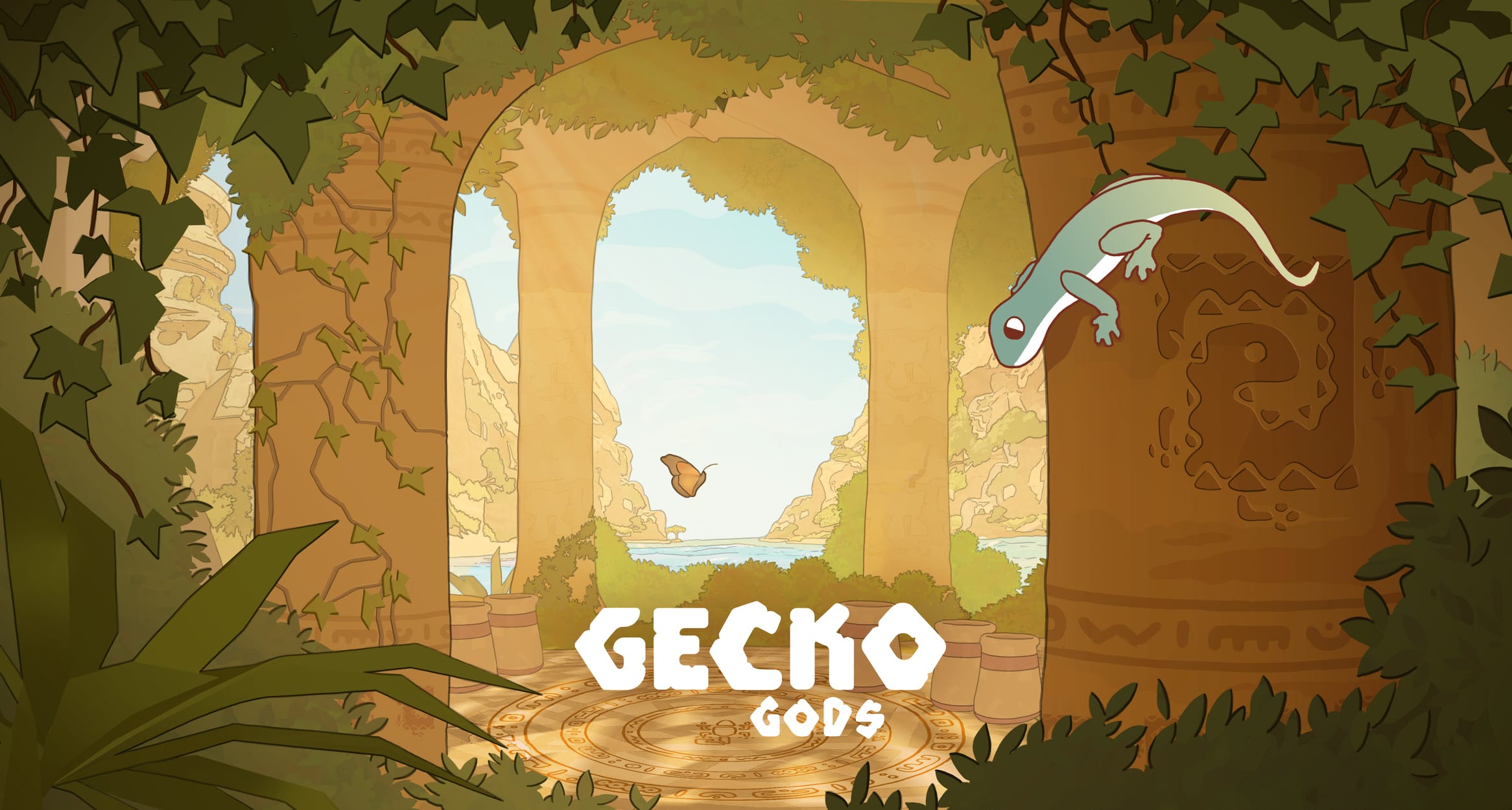
Most games spend their opening hour quietly teaching you where you are allowed to go. A steep wall means find another route, a ruined tower usually means search for stairs, and a doorway somewhere above you probably requires a switch or a carefully arranged sequence of platforms. Gecko Gods took only a short while to make me realise how stubbornly I had internalised those rules, because every time I caught myself searching for the sensible path, the answer was usually much simpler: I was a gecko, so I could just crawl up the wall.
That sounds almost comically basic, yet Inresin manages to build an unusually satisfying puzzle-adventure around it. Gecko Gods borrows plenty from Zelda, particularly in its ancient ruins, puzzle spaces and island-hopping structure, but playing as a tiny reptile fundamentally changes how those familiar ingredients are approached. After spending my time with the Nintendo Switch 2 version, the climbing system ended up being less of a novelty and more of the reason I wanted to inspect practically everything the game put in front of me.
Learning to Think Like a Gecko
The story is deliberately slight. You control an unnamed gecko exploring an archipelago filled with the remains of an ancient civilisation, eventually becoming involved in a prophecy connected to reawakening the titular Gecko Gods and renewing the lands. Talking birds provide guidance at certain points, while stone tablets and the quest interface help give some structure to an otherwise open-ended experience.
The narrative never becomes the attraction, and I think Gecko Gods is better for knowing that. Most of its personality comes from seeing the world at ground level and gradually understanding what your little protagonist is capable of doing within it.
The gecko can run, jump, dash and cling to walls and ceilings, including surfaces that would normally exist purely as scenery in another 3D platformer. Once I became comfortable with that freedom, I stopped looking exclusively for paths and started looking at entire structures as possible routes. Temple walls became shortcuts, pillars could be circled vertically, and entrances sometimes made more sense when approached from above rather than through whatever looked like the intended doorway.
That freedom is where Gecko Gods is at its strongest. It changes spatial reasoning without burying the idea beneath a complicated moveset.
Puzzles Without the Pressure
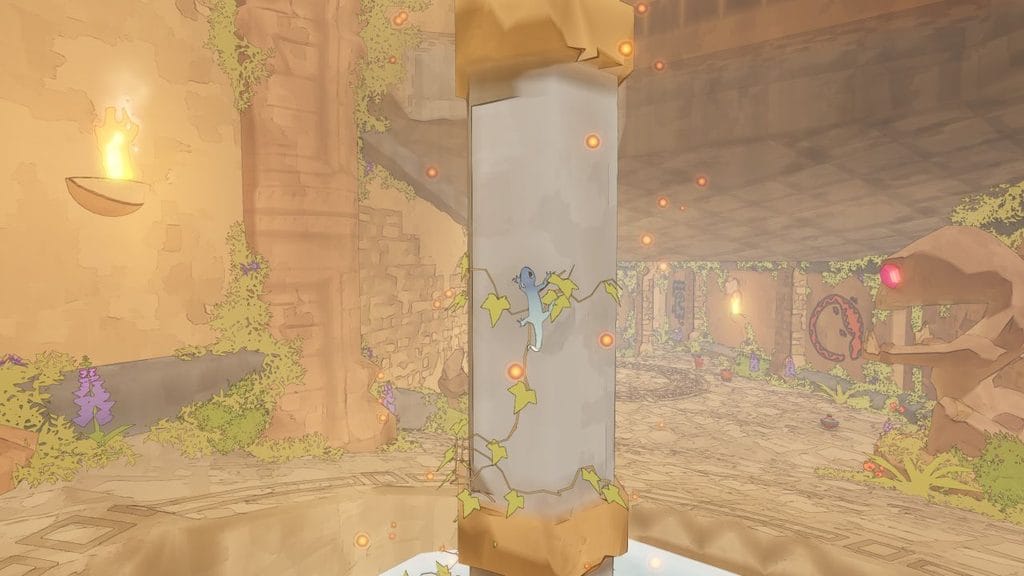
Much of the campaign is built around environmental puzzles found across temples, caves and ruins. The mechanisms range from levers and movable spheres to light-and-mirror arrangements, rotating components, cable-style connections and sliding puzzles. They are generally approachable rather than demanding, with the later stretches introducing more involved combinations without turning the game into a marathon of abstract riddles.
Some playeers have criticised the repetition, and I can understand why. Individual ideas do recur, especially switches, spheres and environmental mechanisms, while anyone arriving from the denser dungeons of a traditional Zelda game will probably burn through many of these puzzles without much resistance.
For me, their relative simplicity fitted the broader rhythm of the game. I rarely wanted Gecko Gods to lock me inside a room for half an hour because the satisfying part was often reaching that room in the first place. A puzzle becomes more interesting when its entrance sits somewhere that requires looking at the architecture differently, and the game repeatedly finds ways of making its climbing ability part of how you understand an environment.
There are also enemies and environmental hazards, although describing this as an action game would give completely the wrong impression. The dash can damage small threats and smash pots, but combat is peripheral and enemies are easily avoided. It exists mainly as another minor interaction within the world rather than a system you build strategies around.
An Archipelago Worth Getting Distracted In
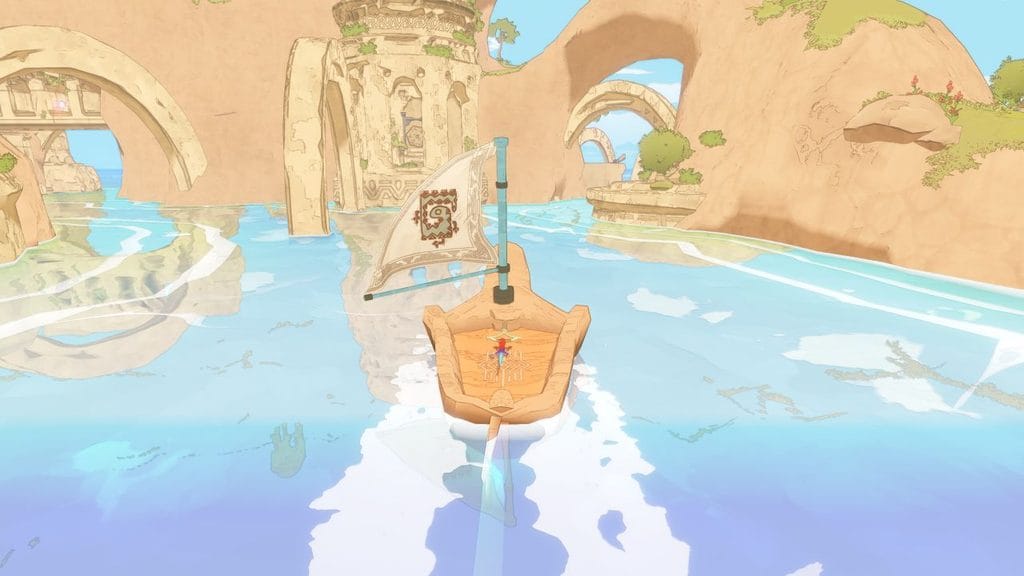
Once the boat becomes available, the structure opens into island-hopping exploration. Larger locations contain substantial puzzle areas, while smaller islands offer collectibles and side diversions. Horns positioned around major islands can recall the boat if you have abandoned it somewhere, which happened to me more than once because some suspicious cave or distant structure inevitably pulled me away from wherever I originally intended to go.
Sailing is mechanically simple, but it gives the game useful breathing room. Crossing open water after spending time crawling around enclosed ruins creates a pleasant contrast, and the obvious Wind Waker influence feels affectionate without making Gecko Gods seem like it is trying to reproduce Nintendo’s much larger adventure wholesale.
Exploration is supported by two main collectible strands. Insects can be found around the archipelago and eaten, while relics sit behind optional exploration and puzzle solving. Breaking pots and defeating certain enemies also provides rune-like currency that can be spent at special mirrors to unlock different colours and patterns for the gecko.
None of this becomes compulsory busywork, which made me much more willing to engage with it. The collectibles mostly exist because finding them is enjoyable, while customisation gives all those smashed pots a modest purpose beyond satisfying an instinct Zelda trained into many of us years ago.
The free Forgotten Cove update expands that side of the game further, adding Forgotten Cove itself alongside the smaller Aquaduct and Waterfall Cavern islands, additional relics and insects, and four extra gecko skins. Since that content accompanied the Switch 2 release, this version feels like a particularly complete point at which to experience the game.
Small Gecko, Occasionally Big Camera Problems
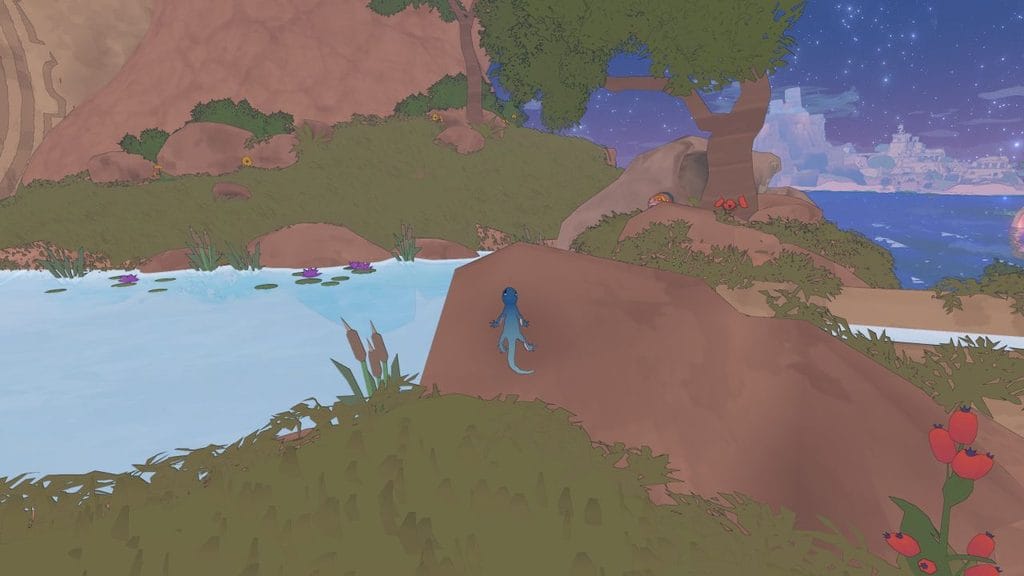
The climbing system does create one persistent problem. A camera designed for ordinary third-person movement suddenly has a difficult job when its protagonist can transition from the ground to a wall, crawl around a corner and continue onto the ceiling without stopping.
Most of the time the game handles this impressively well, but cramped spaces and abrupt surface transitions can cause the perspective to become awkward. I occasionally had to reposition myself simply to understand which direction the camera had decided was upright. The June update increased camera distance and improved several other technical elements, so the experience has clearly benefited from continued work, but the occasional tussle between movement and viewpoint has not disappeared entirely.
My Switch 2 experience otherwise suited the game extremely well. This is the kind of exploratory title that feels natural in handheld play because individual puzzles, islands and collectible hunts can fit neatly into shorter sessions, although I repeatedly found those sessions stretching longer once another unexplored structure appeared in the distance.
Pros
- Climbing across walls and ceilings genuinely changes how 3D spaces are understood
- Exploration constantly rewards curiosity
- Relaxed puzzle design complements the open structure
- Sailing gives the archipelago a pleasant sense of scale
- Insects, relics and cosmetic unlocks provide useful reasons to wander
- Attractive stylised environments make the gecko’s tiny perspective convincing
- Forgotten Cove adds meaningful extra areas and collectibles
Cons
- Camera behaviour can become awkward around complex surfaces
- Several puzzle concepts repeat across the game
- Players seeking difficult platforming or intricate Zelda-style dungeons may find it too gentle
- Enemy encounters are too shallow to add much mechanically
Final Verdict
4.75/5
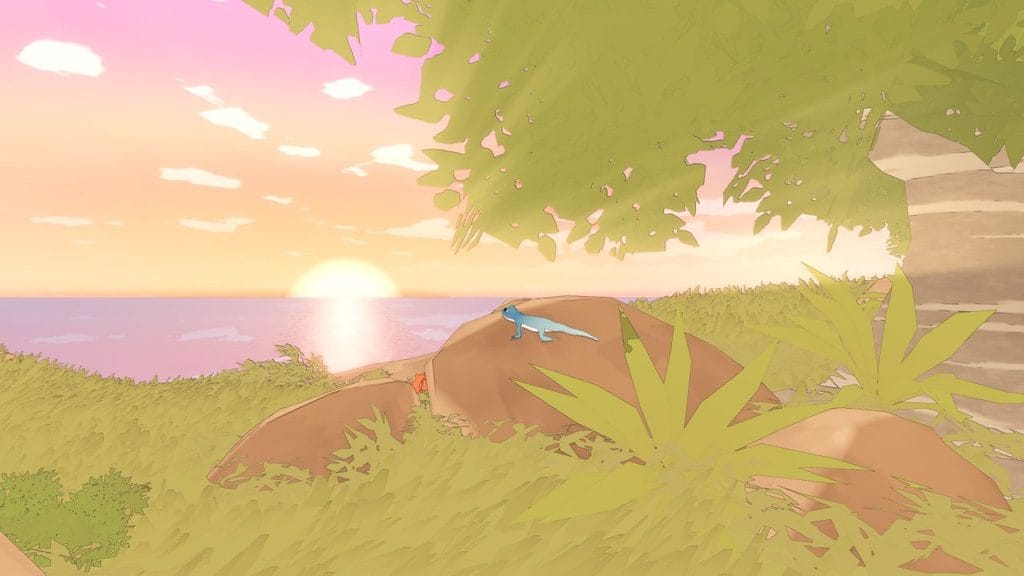
What stayed with me about Gecko Gods was how quickly its central gimmick stopped feeling like one. At the beginning, crawling onto a ceiling felt amusing because I was controlling a gecko. A few hours later, I was doing it without thinking, treating walls and ceilings as naturally as I would treat a staircase in another game.
Its puzzles are not especially punishing, the combat barely matters and the camera occasionally struggles with the freedom the climbing system provides. Yet the game kept giving me reasons to wander away from whatever I was meant to be doing, whether that meant chasing an insect, checking the underside of a ruin or sailing towards an island simply because I had not been there yet.
Then I loaded another 3D platformer and approached a tall wall.
For a moment, taking the stairs felt strangely restrictive.
This review of Gecko Gods is based on the Nintendo Switch 2 Version, with the code provided by the Publisher/PR Agency.
About The Author