Avinash Rohra
There is a peculiar kind of confidence required to snoop through a stranger’s hotel room while you are being paid to clean it.
Sophie Roy has plenty.
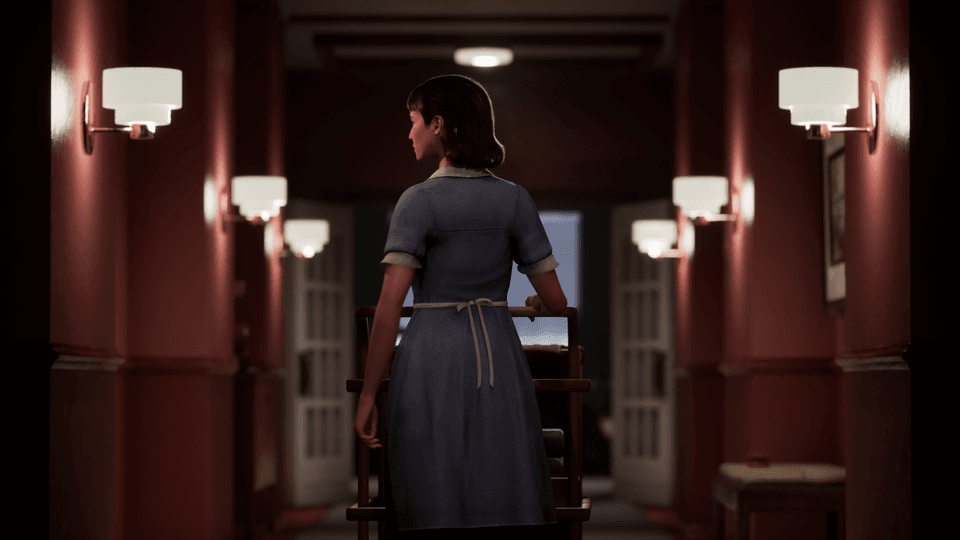
This Bed We Made understands that before it becomes a murder mystery, it is really a game about curiosity and the trouble that follows when curiosity crosses into intrusion. Sophie is a chambermaid at Montreal’s Clarington Hotel in February 1958, assigned largely to the fifth floor, where making beds and emptying bins gives her convenient access to other people’s private lives. She reads what she should not read, notices things she was never meant to notice, and leaves fingerprints on relevant objects while doing it.
The real trouble begins with Room 505.
After finding a roll of film belonging to the room’s occupant, Mr. Spade, Sophie enters intending to return it. Inside, she discovers that the bathroom has been turned into a makeshift darkroom. More unsettlingly, some of the photographs being developed show Sophie herself snooping through another guest’s belongings.
That discovery turns her bad habit into something far more dangerous.
The Clarington Is Watching Back
The brilliance of This Bed We Made is that Sophie never suddenly transforms into a detective.
She remains a hotel employee who happens to be spectacularly incapable of minding her own business. The basic housekeeping tasks are deliberately mundane. Beds need straightening. Bins need emptying. Bathrooms need cleaning. Those interactions are simple because their purpose is not to challenge you. They explain why Sophie has access to spaces she otherwise would not.
Once she is inside, everything changes.
Letters reveal relationships. Photographs complicate stories you thought you understood. Suitcases, safes and locked containers present small obstacles, while ciphers and combinations usually ask you to remember information discovered elsewhere. Objects can be inspected closely, and Sophie’s journal records important clues, names and developing connections.
The puzzles are rarely difficult. Sophie’s own observations sometimes push too eagerly towards the answer, and an optional hint system can remove even more of the friction. I often found the investigative setup more satisfying than the actual solution because the best part is working out why an object matters, rather than wrestling with the mechanics required to access it.
That sounds like faint praise. It is not. The puzzle is often the person.
Everybody Has Something to Hide
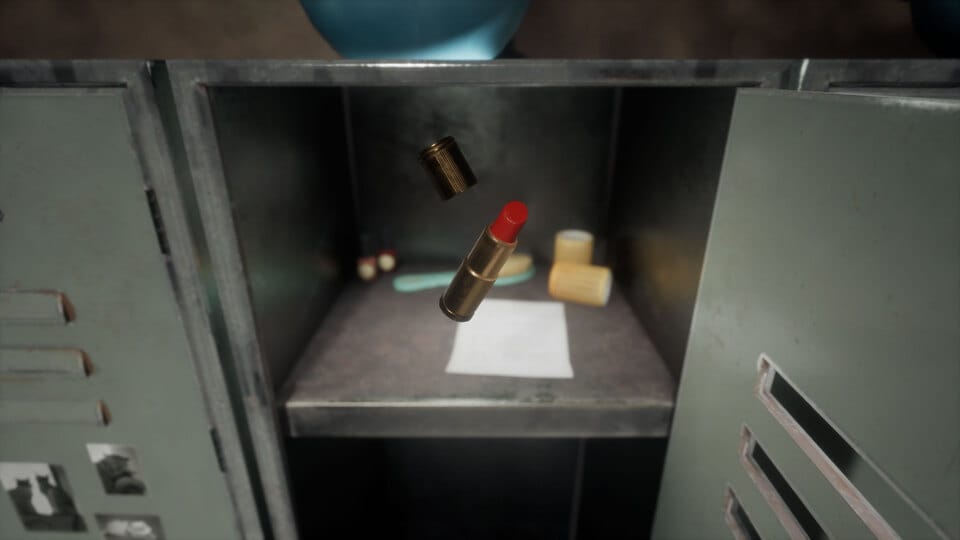
The Clarington is at its best when a hotel room starts functioning as a character study.
Who keeps a particular photograph? Why has someone hidden a letter instead of throwing it away? Why does one guest’s story contradict something left inside another room?
Lowbirth Games trusts small objects to carry an enormous amount of narrative weight.
The 1958 setting strengthens that approach because the secrets Sophie uncovers are inseparable from the social conditions surrounding them. Relationships, sexuality, reputation and marriage carry risks that go beyond embarrassment. Something discovered privately can become genuinely destructive once it enters somebody else’s hands.
That makes evidence handling far more interesting than merely ticking clues off a checklist.
Sophie can throw away evidence, leave incriminating objects where they are, or change the state in which a room is eventually discovered. Even touching certain objects can matter because fingerprints remain behind. The mundane act of tidying a hotel room becomes part of the larger decision-making system.
It is one of those mechanics that makes you suddenly reconsider something you did ten minutes ago.
I had several moments where an innocent bit of poking around stopped feeling harmless once I realised the game had remembered it.
Pick Your Accomplice
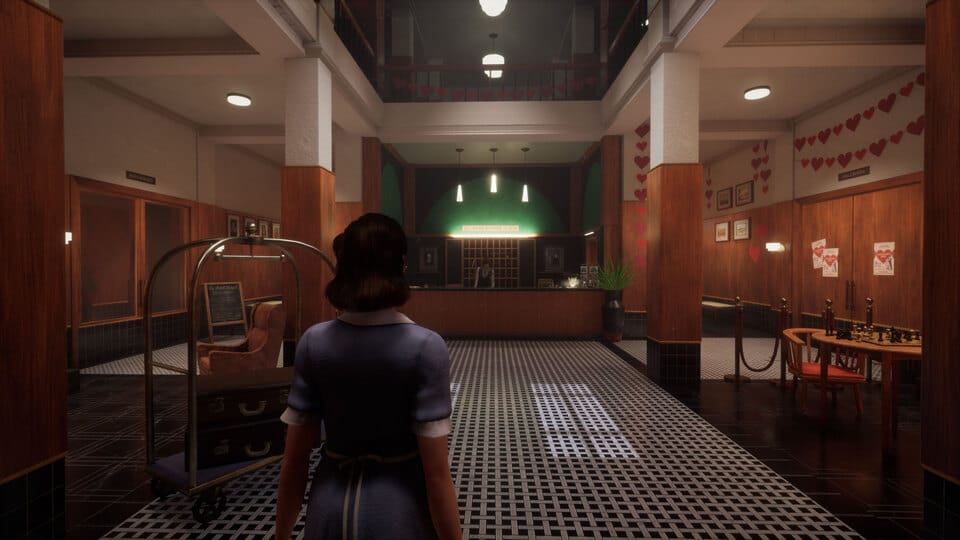
Sophie does not navigate the entire mess alone.
Once events around Room 505 escalate, she chooses either receptionist Beth Lambert or bellboy Andrew Rossi as her acolyte. Both accompany Sophie through parts of the investigation, offer different conversations and can develop into romantic relationships depending on your choices.
The system is simple, but it gives the mystery a useful personal anchor.
Choosing Beth or Andrew changes how certain situations play out and gives Sophie somebody to react against while she gets increasingly tangled in events she was never supposed to be involved in. The romantic possibilities are handled as part of those relationships rather than feeling detached from the main investigation.
More importantly, choices throughout the game actually accumulate.
Who Sophie trusts, what evidence she leaves behind, what she tells the police, how she treats the people around her and what she chooses to conceal can affect jobs, relationships, accusations and even Sophie’s own fate.
That consequence system is where This Bed We Made has a clear advantage over Lost & Found. The follow-up is more polished in places, but its variations are deliberately subtler. Here, I finished the story already thinking about the version of events I had accidentally created.
A Hotel With Locked Doors
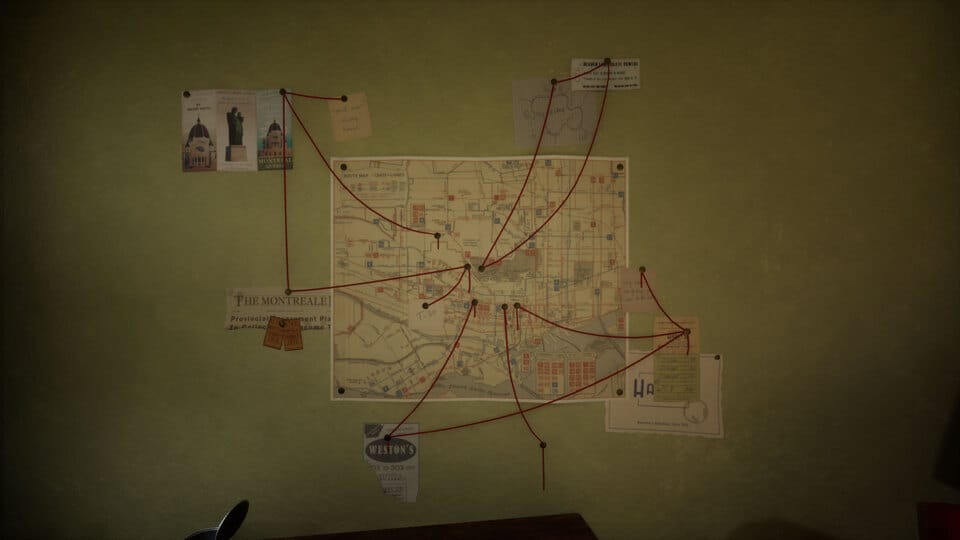
The Clarington looks like the kind of location that should invite unrestricted wandering.
It does not.
Sophie is assigned to the fifth floor, while the investigation also takes her through the ground-floor lobby and offices, along with the basement’s staff lockers, break room and laundry area. You cannot simply choose any floor and start opening doors. Access expands according to the story, and many rooms remain unavailable entirely.
That restriction occasionally frustrated me because the hotel is interesting enough to make you want more freedom than the game provides. Still, the tighter structure helps the pacing.
At roughly three to six hours, This Bed We Made moves quickly. There is little filler, and almost every room Sophie enters contains something that contributes either to the central mystery or to the wider web of people surrounding it.
The tradeoff is that a few characters and ideas feel as though they could have supported considerably more time.
Rough Faces, Strong Voices
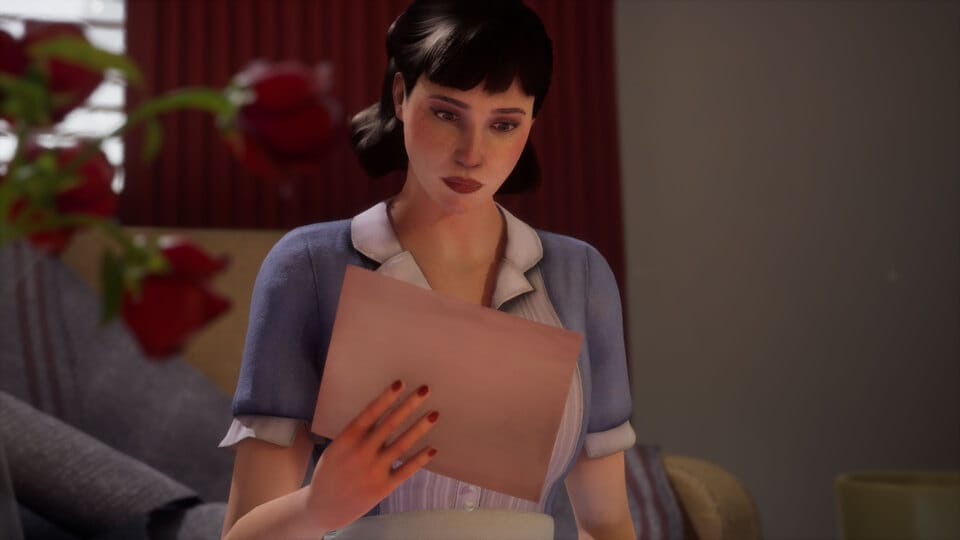
The production values are uneven in predictable places.
Character faces can appear stiff, particularly during more emotional exchanges, and lip syncing does not always match the quality of the performances. The visual limitations become more noticeable because This Bed We Made spends so much time in conversation.
The hotel itself fares much better.
Guest rooms feel distinct enough to suggest the personality of whoever occupies them, while offices and staff spaces sell the social hierarchy of the Clarington without requiring long explanations. The voice performances do much of the remaining work, particularly with Sophie, who comes across as curious, impulsive and increasingly aware that she has stepped into something much larger than a bit of harmless snooping.
She never becomes a hard-boiled investigator.
Thank goodness.
Pros
- Excellent environmental storytelling turns rooms and possessions into character studies
- Sophie’s snooping is cleverly integrated into her housekeeping role
- Choices can meaningfully affect relationships, evidence and eventual outcomes
- Beth and Andrew give the investigation strong interpersonal stakes
- The 1958 setting gives private discoveries genuine social consequences
- Strong voice performances carry the more limited character animation
Cons
- Puzzles are generally straightforward and often over-guided
- Exploration is far more restricted than the hotel setting initially suggests
- Facial animation and lip syncing can look stiff
- Short runtime leaves some characters and threads wanting more space
Final Verdict
Score: 4.25/5
This Bed We Made works because it understands that finding a secret is only the beginning.
The interesting question is what Sophie does once she has it.
Its puzzles are lighter than I wanted, the hotel restricts exploration more than its layout initially suggests, and some of the character animation struggles to keep pace with the quality of the writing. Yet none of those weaknesses damaged the thing Lowbirth Games does best.
It makes privacy mechanically interesting.
By the end, I was no longer opening drawers simply because the game allowed me to. I was thinking about the fingerprints Sophie had already left behind, whether something should be thrown away, whether Beth or Andrew needed to know, and whether one small discovery was about to ruin somebody’s life.
The Clarington gives Sophie plenty of beds to make.
She leaves almost everything else considerably messier.
This review of This Bed We Made is based on the PC Version, with the code provided by the Publisher/PR Agency.
About The Author