Avinash Rohra
The most interesting thing about Security 51 is how quickly checking someone’s paperwork stops being the strange part of the job. One minute I am comparing a face against an identification card and making sure an employee has permission to use an elevator. A few shifts later, the desk is surrounded by increasingly questionable equipment, the rules have become more specific, and the person waiting patiently in front of me may have considerably bigger problems than an expired pass.
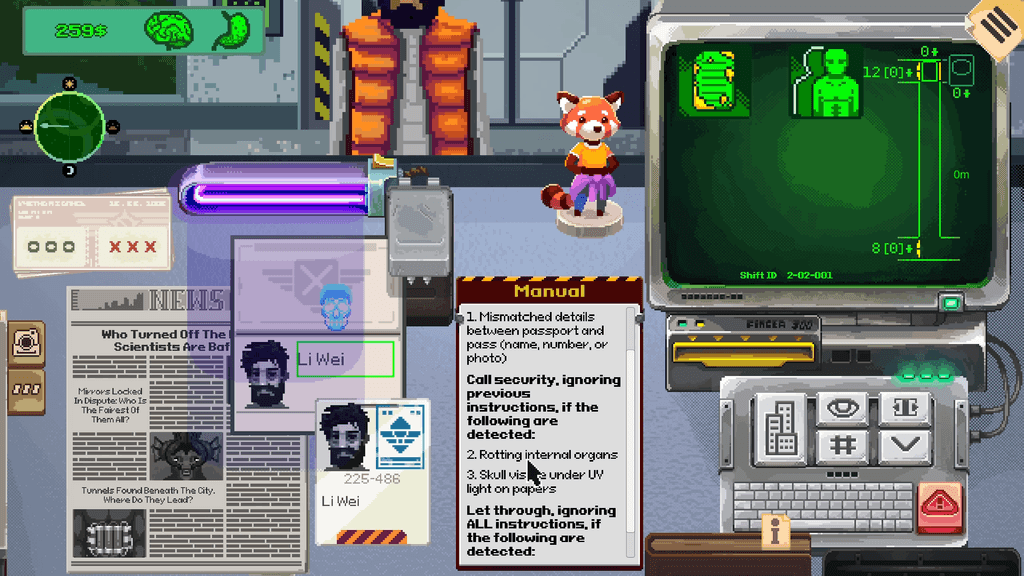
That escalation is where Alawar’s Security 51 works best. Released on PC on August 12, it borrows the inspection-game framework most closely associated with Papers, Please, but trades border control for the underground corridors of Area 51. Employees move through your checkpoint, daily orders determine what deserves attention, and the job gradually expands from checking documents into identifying medical irregularities, bodily anomalies and other things that would make an ordinary HR department resign collectively.
It is a good idea, often a very entertaining one. After several weeks of updates, it is also a noticeably better game than the one people played at launch.
Read the Manual, Then Read It Again
Security 51 structures each working day around a changing set of instructions. Someone can look suspicious and still be perfectly acceptable under the rules you were actually given, while another employee can appear normal until one tiny inconsistency changes the required response. Learning to prioritise today’s orders instead of exhaustively testing everyone becomes part of the routine.
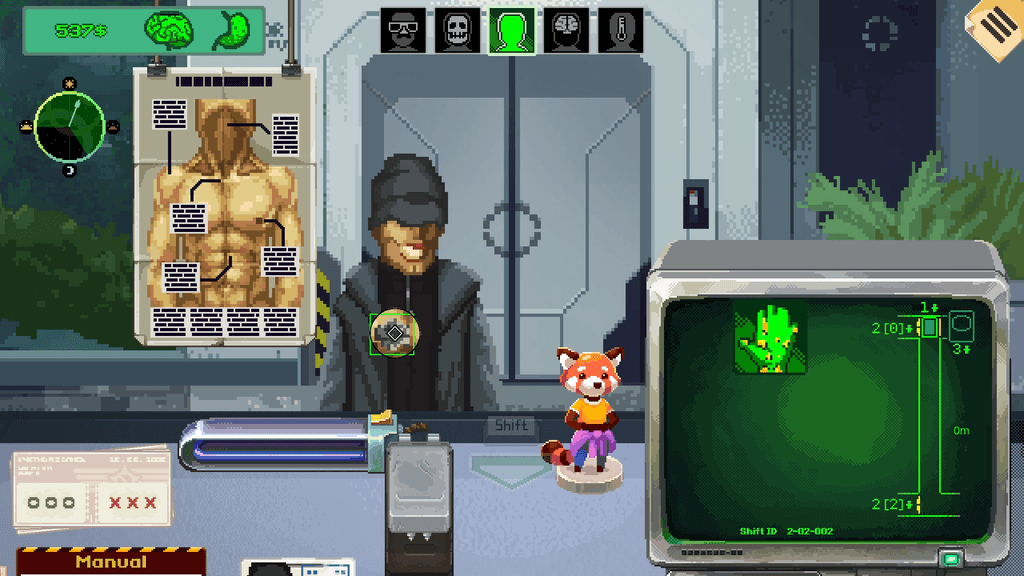
That routine grows steadily more elaborate. The full release added blood sampling and UV inspection, while the August 27 update later introduced fingerprint verification on the third floor. Rather than simply piling more paperwork onto the desk, these additions change the type of information you are looking for and keep the inspection process from feeling completely static.
I enjoyed that process more than the larger narrative surrounding it. There is a pleasant rhythm to pulling out the correct equipment, spotting what matters and making a decision without turning every employee into a full forensic investigation. The game is strongest when it makes me reconsider the wording of an instruction rather than search every pixel for a hidden trick.
Difficulty, however, remains one of the more persistent criticisms. Some Steam reviewers argue that even later assignments rarely combine enough inspection mechanics to put serious pressure on the player, while others simply find the checking process too easy once the initial novelty wears off. That lines up with where Security 51 started losing some of its tension for me. The systems themselves are enjoyable, but they are not always pushed hard enough to make each shift feel meaningfully more demanding than the last.
A Much Better Game Post Launch
Any review of Security 51 now needs to acknowledge how much Alawar has changed since release.
The August 13 patch added clearer explanations for the Isolation Ward and City Operations systems, improved manual readability, made certain anomaly text easier to see and allowed players to skip lengthy Extermination and Isolation animations. The August 20 update went further. Tutorials are disabled on subsequent playthroughs after reaching an ending, camera instructions explain anomaly interference more clearly, branch indicators were added to the shift map, Isolation Ward reports became more informative and Rapid Blood Test colours were adjusted for accessibility.
Those changes matter because several early criticisms were specifically about clarity and repetition. Replaying tutorials and struggling to understand how some of the larger systems worked were legitimate launch frustrations, but they are no longer accurate descriptions of the current build. At least one prominent Steam reviewer even revised an earlier negative assessment after the August 20 improvements, which says a lot about how directly Alawar has responded to feedback.
The August 27 update changed the longer-term structure more substantially. Easy difficulty removes the shift timer, Medium keeps the standard setup and Hard shortens available time while increasing the consequences of mistakes. Tool upgrades now persist through the player profile, and Endless Mode allows the inspection loop to continue until hunger or sanity runs out. The same patch added mushroom cultists, mysterious desk notes, fingerprint scanning and several balance changes.
Then came the September 3 update, which added two more story-related characters, clearer guidance for City Operations and the Isolation Ward, and randomised events when replaying days in Endless Mode.
That is a lot of work in a very short window, and it changes how Security 51 should be judged. Some of its rougher launch edges have already been sanded down. The remaining problems are deeper.
The People Behind the Paperwork
The visitors passing through the checkpoint still tend to feel more like puzzle pieces than people. Papers, Please made bureaucracy uncomfortable because a document could belong to someone you remembered. Security 51 is more interested in the absurdity of Area 51 procedure, strange anomalies and the satisfaction of correctly interpreting instructions.
Security 51 does not need to become Papers, Please. It does, however, need the larger systems around the checkpoint to feel more immediate. The patches have improved how City Operations and the Isolation Ward communicate information, particularly through clearer reports and added guidance, but some recent players still criticise the wider progression loop for offering too little feedback about whether their longer-term decisions are having meaningful effects.
That distinction is important. The problem is no longer that those systems are simply unexplained. It is that, even when you understand them, they do not always carry the same immediacy as the person standing in front of your desk.
The Weird Stuff Still Works
Where Security 51 remains consistently enjoyable is in its escalating absurdity.
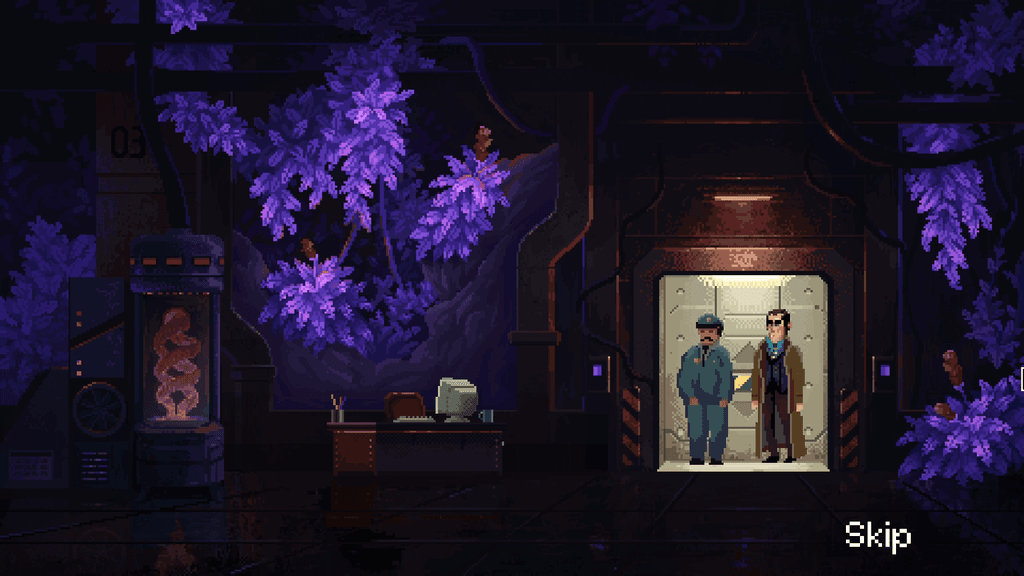
The pixel-art presentation fits the material beautifully. Characters are readable without being overly detailed, the inspection tools are immediately understandable, and strange visual abnormalities can be unsettling without becoming messy. There is also a dry sense of humour running underneath everything. The game knows that bureaucracy and alien conspiracy are a naturally funny pairing and rarely overplays the joke.
The inspection loop benefits from that tone. A normal employee entering the checkpoint can turn into an unexpectedly involved examination, and the game is at its best when a seemingly routine shift suddenly asks for one extra check that forces you to rethink what you were about to approve.
Endless Mode gives that part of Security 51 somewhere to live once the campaign structure starts feeling repetitive. It does not solve every issue, but it makes sense for a game whose strongest element is the simple act of processing the next visitor correctly.
Pros and Cons
Pros
- Strong Area 51 spin on the inspection-game formula
- Blood tests, UV checks and fingerprint scanning expand the central routine
- Excellent pixel-art presentation and dark humour
- Easy, Medium and Hard settings now accommodate different play styles
- Endless Mode gives the inspection mechanics more longevity
- Alawar has responded quickly and meaningfully to launch feedback
Cons
- Difficulty can flatten out once the inspection logic becomes familiar
- Visitors often feel more functional than memorable
- Replaying branches still exposes repetition
- Larger progression systems remain less engaging than the checkpoint itself
Final Verdict
Score: 3.25/5
Security 51 is considerably easier to recommend in September than it would have been on launch day. Alawar has spent its first few weeks improving tutorials, clarifying secondary systems, making upgrades persistent, adding difficulty options and expanding the game with Endless Mode and additional content.
What remains is a clever inspection game whose individual mechanics are stronger than the structure surrounding them. I enjoyed learning what each new tool expected from me and adapting to another day’s oddly specific rules. I was less invested in the people being processed, and even with clearer City Operations and Isolation Ward feedback, the wider campaign never quite generates the same tension as a single suspicious employee waiting across the desk.
For now, Area 51 has a good security simulator. It still needs the conspiracy around that desk to feel as developed as the job itself.
This review of Security 51 is based on the PC Version, with the code provided by the Publisher/PR Agency.
About The Author