Avinash Rohra
There is a particular kind of panic that comes from staring at a cocktail order while holding the correct bottle and still not being entirely sure what the game wants you to do with it. Under the Disco Lights – 80’s Bar Simulator gave me that feeling more than once. The strange thing is that, after enough shifts behind its neon-soaked counter, those awkward early encounters slowly gave way to something I genuinely enjoyed. Measuring a drink correctly, reaching for the right ingredient and handing over a finished cocktail has a satisfying physical rhythm to it.
That rhythm ends up carrying far more of the experience than I expected.
Efsus Games’ first-person bartending game places you behind the counter of an ’80s-styled disco, serving customers while conversations unfold around the drinks you prepare. It sounds like the setup for a much broader management simulation, but Under the Disco Lights is considerably more focused than that. Most of its strengths, and several of its weaknesses, can be traced back to the same counter.
Learning the Job the Hard Way
Making drinks is easily the most convincing part of the game.
Orders require actual interaction with bottles, glasses and bartending equipment rather than selecting ingredients from a menu and watching the result appear. Liquids need to be measured, containers handled and certain drinks shaken or prepared through their individual steps. Once I understood where everything was and how the game expected those actions to be performed, the process became pleasingly methodical.
There is enough manual involvement to make completing an order feel like I actually assembled it. I began recognising ingredients on sight, moving between equipment more quickly and spending less time staring at the counter wondering what I had missed.
The problem is getting there.
Instructions often feel inadequate for a game built around physical interactions that are not immediately obvious. Simple actions can take longer to decipher than they should, especially when learning how its different tools behave. There is an awkward gap between understanding what a cocktail requires and understanding precisely how the interface expects me to make it.
That friction does fade as familiarity takes over, but I never stopped thinking that the opening hours should teach bartending much more clearly.
The Counter Is the Whole World
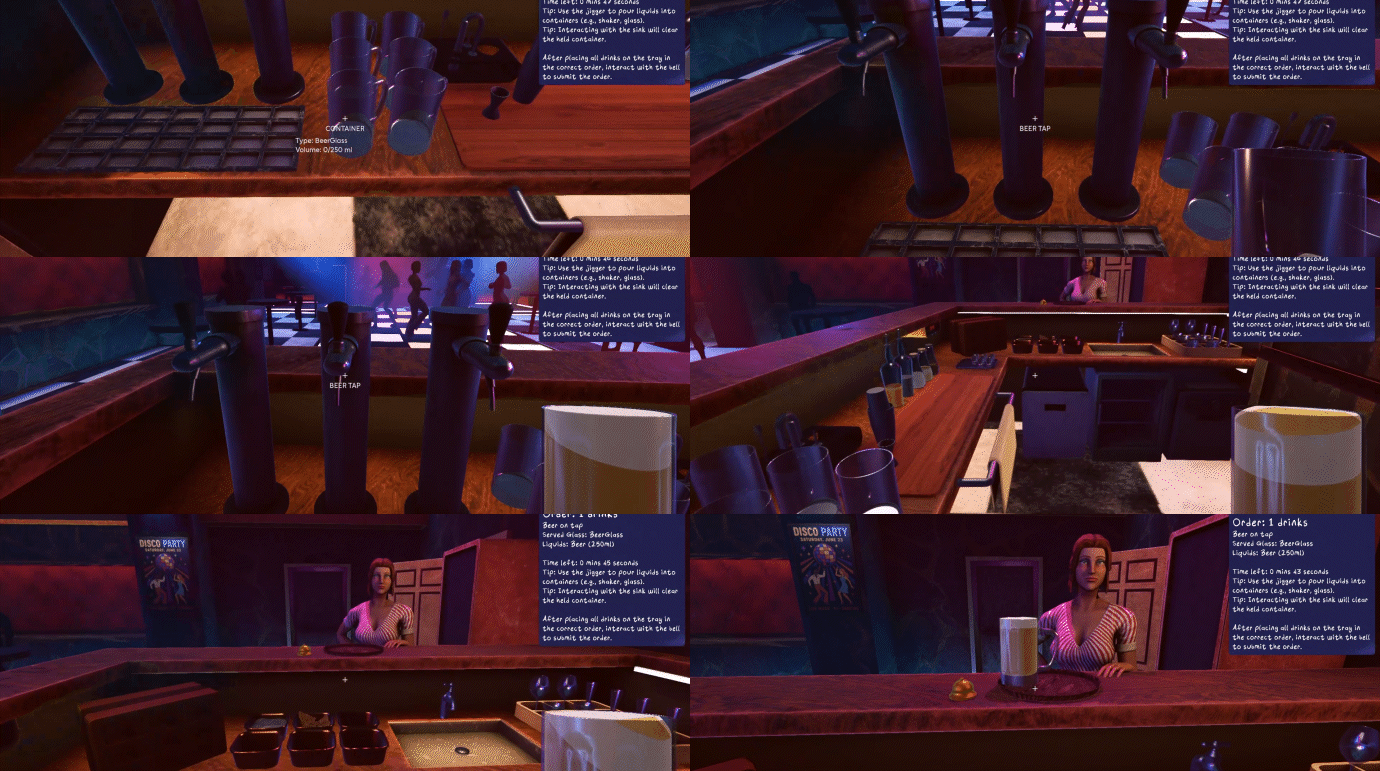
The bar itself initially suggests possibilities that the game never completely explores.
There are supplies to worry about, cleaning jobs between serving customers and money changing hands as another night progresses. Story-related orders sit alongside the more routine work. Yet the simulation rarely expands far beyond those responsibilities.
I kept expecting the management side to become more elaborate. Perhaps additional layers would force me to make meaningful decisions about how the bar operates, or later shifts would substantially change the way I approached the job. Instead, the core routine remains fairly narrow.
Mix drinks. Deal with the mess. Listen to conversations. Repeat.
That simplicity is not inherently a problem. In short sessions, it can actually make Under the Disco Lights pleasantly easy to settle into. The issue is that its strongest mechanic becomes repetitive because there is not enough surrounding it to keep transforming the experience.
Even the physical space reinforces that feeling. Your existence is centred heavily around the bar rather than giving you free rein over an entire nightclub. The dance-floor fantasy is often something happening in front of you rather than somewhere you meaningfully inhabit.
A Reason to Keep Pouring
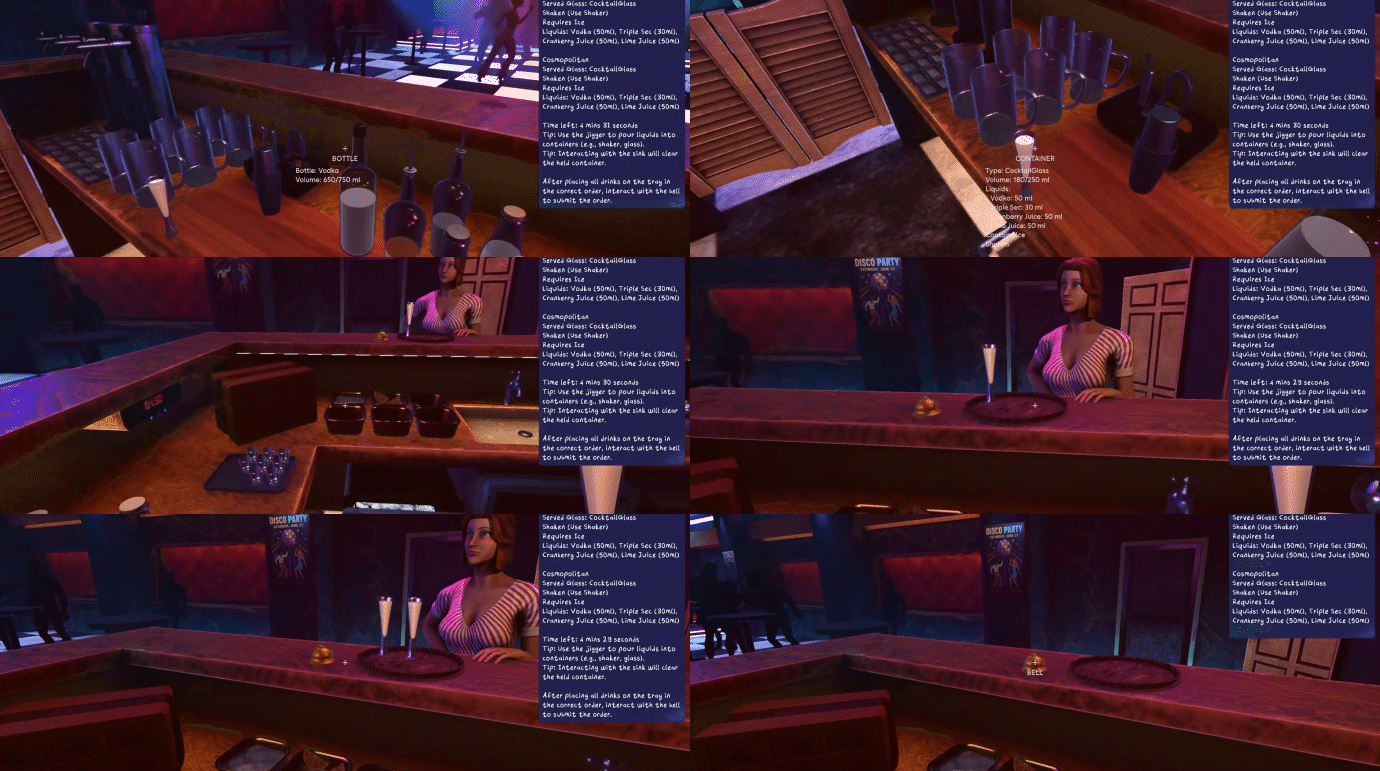
The customers prevent the routine from becoming completely mechanical.
Conversations happen around the work, letting individual patrons develop beyond their drink orders. There is an appealing cadence to listening to someone speak before returning my attention to whatever combination of bottles and glassware currently occupies the counter.
Those quieter exchanges suit the setting better than I expected. A bartender naturally sits at the intersection between service worker and unwilling confidant, and Under the Disco Lights understands enough of that relationship to make the people across the counter matter.
It is also where the game’s structure makes the most sense. Drink preparation gives my hands something to concentrate on while the characters provide context for why I am still working another shift.
I would have liked those two halves to influence each other more aggressively. The social side adds personality, but the underlying bartending rarely changes radically because of what is happening around it. Narrative and simulation coexist more comfortably than they truly intertwine.
Neon Looks Better From a Distance
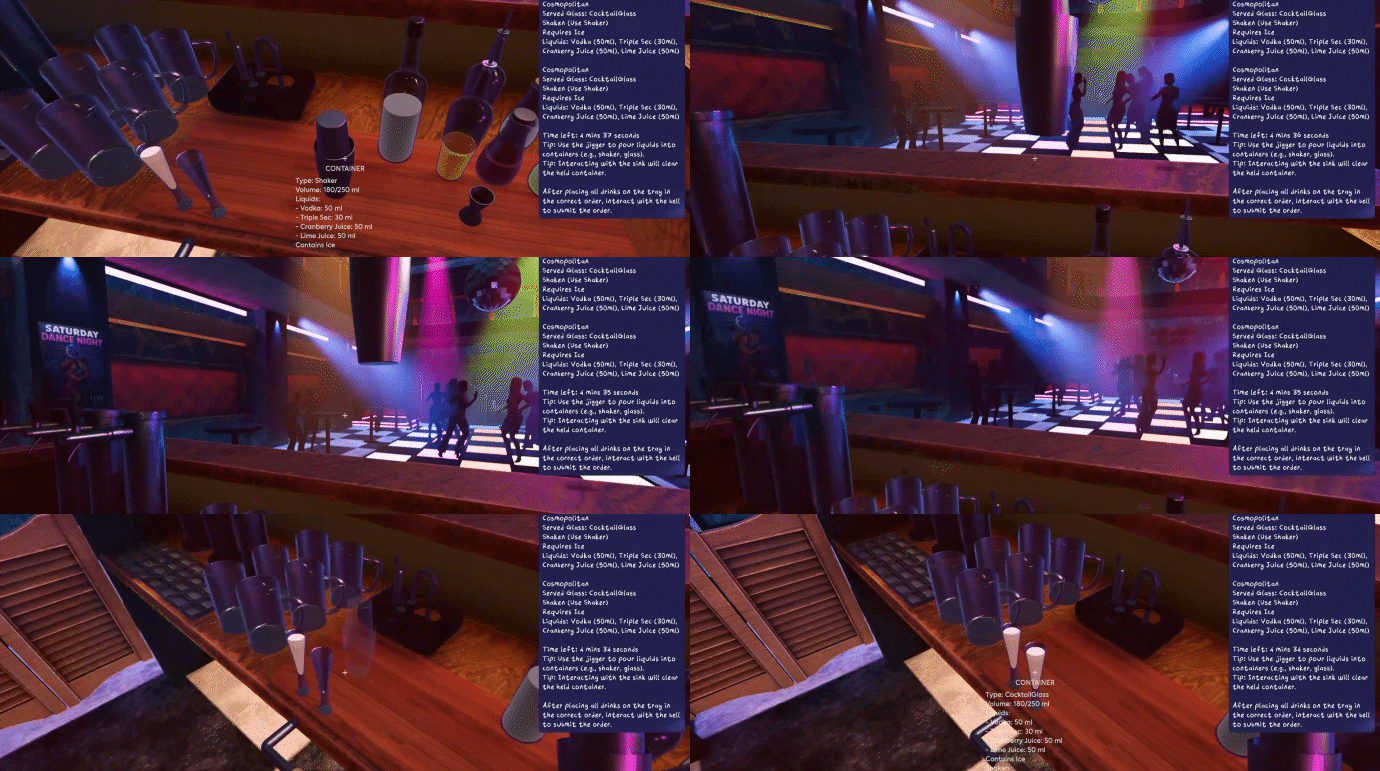
Visually, Under the Disco Lights is committed to its period fantasy. Dark rooms, coloured lighting, glowing surfaces and nightclub decor establish the intended decade quickly. It is deliberately exaggerated rather than an attempt at documentary authenticity, and that suits a game where spending hours behind the same counter means atmosphere has to do a lot of work.
The presentation is clean enough to make bottles and objects readable despite all that coloured light, which matters more than elaborate scenery in a game this interaction-heavy.
The soundtrack naturally occupies a lot of space as well. It gives the bar energy when the mechanical routine begins settling into repetition, although the overall aesthetic sometimes feels more like a collection of familiar ’80s signifiers than a place with a particularly distinct identity of its own.
Pros and Cons
Pros
- Hands-on drink preparation becomes satisfying once learned
- Conversations stop customers from feeling like anonymous order screens
- Strong neon nightclub atmosphere
- Bartending has enough physical interaction to make successful orders rewarding
Cons
- Weak instruction makes learning basic interactions unnecessarily frustrating
- Management systems remain fairly shallow
- The restricted bar environment limits the nightclub fantasy
- Repetition becomes noticeable once the drink-making routine settles in
- Narrative and bartending systems rarely interact as deeply as they could
Final Verdict
Score: 3.5/5
Under the Disco Lights works best when I stop imagining the larger nightclub simulator it initially resembles and concentrate on the much smaller bartending game it actually is.
There is genuine satisfaction in learning the counter. After fumbling through my first drinks, reaching the point where I could recognise what an order required and assemble it without wrestling with every interaction was rewarding. Conversations give the shifts personality, while the neon setting makes the repetitive routine easier to sink into.
The limitations are equally difficult to miss. Its management never develops enough depth, its opening guidance still leaves too much to trial and error, and the central loop eventually begins repeating itself without enough new pressure or complexity.
I still enjoyed my shifts. I just rarely felt that the bar was growing alongside me.
This review of Under The Disco Lights is based on the PC Version, with the code provided by the Publisher/PR Agency.
About The Author