Avinash Rohra
There is a particular pleasure in arranging something for no practical reason. Moving a chair until it sits exactly where your brain says it belongs. Putting a plant beside a window even though nobody will ever water it. Deciding that a tiny balcony needs a railing despite there being no person capable of falling from it. SUMMERHOUSE understands that impulse better than most building games I have played.
Friedemann’s tiny construction sandbox first appeared on PC in 2024 before finally reaching PS5 in May 2026, and “tiny” deserves emphasis here. There are no residents demanding plumbing, no budget waiting to punish an ambitious roof extension, no progression tree dangling another architectural style behind six hours of resource gathering. You pick a backdrop, open the building palette and start placing things.
That sounds dangerously close to software rather than a game. After spending time with SUMMERHOUSE on PS5, though, I think reducing it to that description misses why its simplicity works so well.
Somewhere Between Townscaper and a Box of LEGO
Townscaper remains the easiest comparison, although the similarities only go so far. Townscaper abstracts construction until clicking becomes almost magical, allowing its procedural architecture to interpret what you are trying to make. SUMMERHOUSE hands more of that responsibility back to you.
Individual pieces are deliberately specific. An air-conditioning unit looks like an air-conditioning unit. A washing line immediately suggests a household rather than an architectural shape. Plastic garden furniture, pipes, shutters and battered windows gradually stop looking like menu icons once they are layered together.
Depth placement allows pieces to sit slightly forward or behind one another, which becomes surprisingly useful once you stop thinking literally. A decorative element can disappear partially behind a wall and become something else. Pieces can overlap, and certain elements can be flipped to suit the shape you are chasing. Perspective can hide sections you do not want. Builders willing to experiment with that shallow visual plane will get substantially more out of the catalogue than someone simply snapping matching walls together.
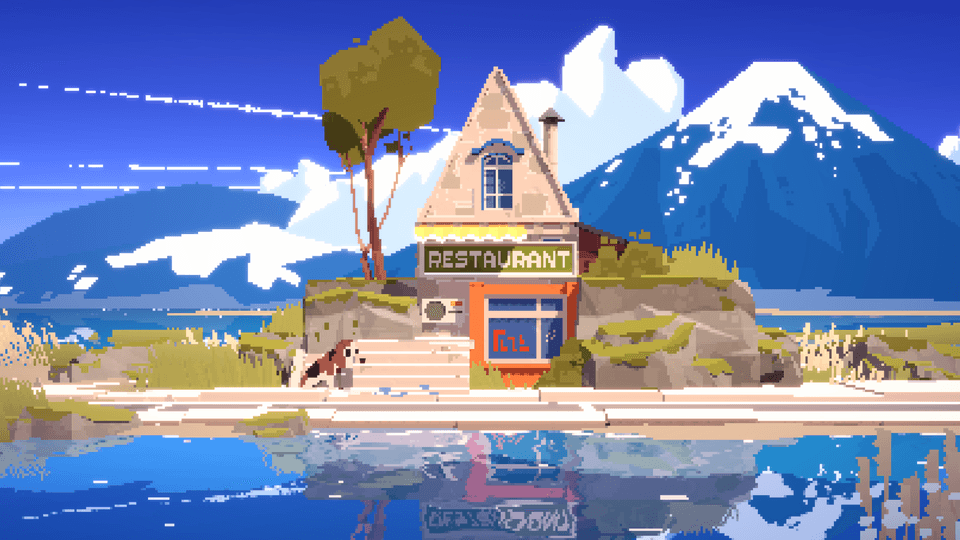
That distinction helps explain why players have such different relationships with SUMMERHOUSE. Some people are satisfied after a brief burst of building. Others keep returning for dozens of hours, making increasingly elaborate scenes out of the same relatively modest catalogue.
Both responses make sense because there is almost no authored structure keeping you here. SUMMERHOUSE lasts for exactly as long as arranging these objects continues to interest you.
The Houses Start Telling Stories
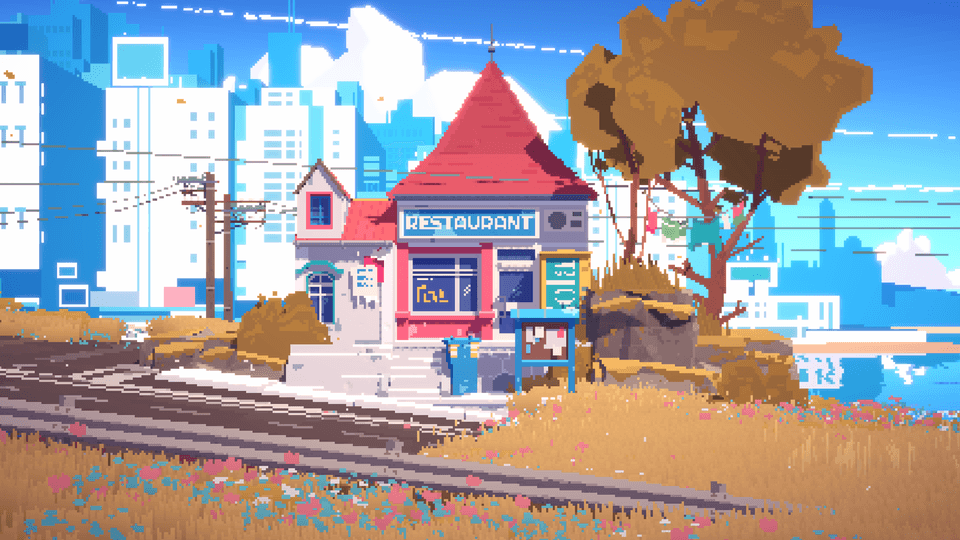
Where SUMMERHOUSE becomes more interesting is in the small discoveries hidden inside that construction system.
Certain combinations unlock additional blocks, including people and animals that can then inhabit your scenes. Dogs, cats, chickens and human characters are among the pieces you can uncover. The game never turns these into a traditional progression system. Instead, the unlocks provide a light push toward experimentation and reward players who start combining familiar pieces in unfamiliar ways.
A building that initially looked like an empty façade suddenly has somebody standing outside it. A dog sitting beside a doorway changes how you read the entire house. A little figure in a window can make an arrangement that previously looked decorative start feeling inhabited.
That is where SUMMERHOUSE quietly shifts from architecture into storytelling.
I began assigning purposes to buildings without consciously deciding to. A wide frontage looked more convincing as a shop than a home, so the pieces around it changed accordingly. Another structure became taller simply because its windows started suggesting cramped apartments stacked above one another. The game contains no simulation underneath these ideas. Nobody walks home from work or pays rent. Your imagination supplies everything the systems intentionally leave absent.
The best builds started with one intention and ended somewhere else entirely.
Restriction Can Inspire Until It Starts Getting in the Way
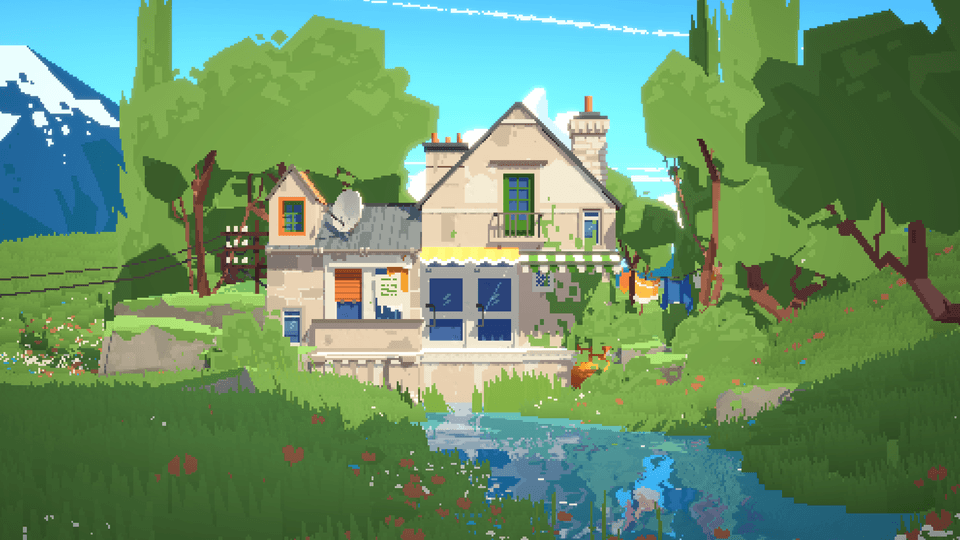
The small object catalogue is fundamental to this design, but it is also where SUMMERHOUSE begins pushing against the limits of its own philosophy.
There are enough blocks to establish different architectural styles, especially once you start overlapping objects or exploiting depth, yet repeated building makes familiar assets increasingly obvious. Colour options remain limited. Objects cannot be freely resized, and there is no broad decorative vocabulary comparable to something like The Sims.
That restraint initially makes experimentation easier because you are not staring at hundreds of menus before placing your first wall. Over time, though, the same restriction becomes more noticeable. Once you know the catalogue well, you start thinking less about what is available and more about what you wish was there.
Browsing becomes part of that problem. SUMMERHOUSE did receive post-launch quality-of-life improvements, including an update that allowed the Building Block Gallery to remember its scroll position, so it would be unfair to suggest the interface has gone untouched. Even so, recent players continue asking for features such as favourites or custom palettes because repeatedly returning to the same visual theme still means searching through the catalogue for matching pieces.
That frustration becomes more obvious on console.
The PS5 controls translate the basic building tools sensibly enough, and fixing a mistaken placement is quick. Fine adjustments are less graceful. Moving a cursor with analogue sticks works, but it cannot completely replicate the immediacy of a mouse when you are trying to nudge a small object into place. Depth positioning can require a little extra fiddling as well, especially when several pieces overlap.
None of this makes building unpleasant. It simply introduces a degree of friction into a game whose wider design is built around eliminating friction almost everywhere else.
Four Little Places to Disappear Into
SUMMERHOUSE contains four environments, and each changes the mood behind whatever you decide to construct.
Their limited number becomes more noticeable over time, although the spaces themselves offer enough horizontal room to accommodate substantial builds. The larger issue is familiarity. Eventually you know the backgrounds, understand the atmosphere each one is likely to create and start wishing for another setting simply to give familiar building pieces a different context.
Lighting does much of the heavy lifting. Rain can turn the same collection of houses into something immediately more enclosed and intimate. Night changes the way illuminated windows read against their surroundings. The pixelated presentation leaves enough detail unresolved that your brain fills in the texture the artwork only suggests.
SUMMERHOUSE is particularly beautiful once a scene has become busy enough to resemble somewhere rather than something.
The soundtrack and ambient audio understand when to stay out of the way. Birds, weather and environmental sounds sit behind the act of building rather than constantly insisting that this is A Relaxing Videogame and you should therefore feel relaxed immediately. The presentation gives the buildings room to breathe.
Still, four environments are four environments. Returning players are likely to start wishing for another backdrop, another architectural vocabulary or a broader selection of pieces to work with. Community requests for more maps, additional blocks, colour options and deeper customisation make sense precisely because SUMMERHOUSE already makes creation feel so inviting.
Wanting more of it is one of the game’s most understandable criticisms.
A Toy That Knows It Is a Toy
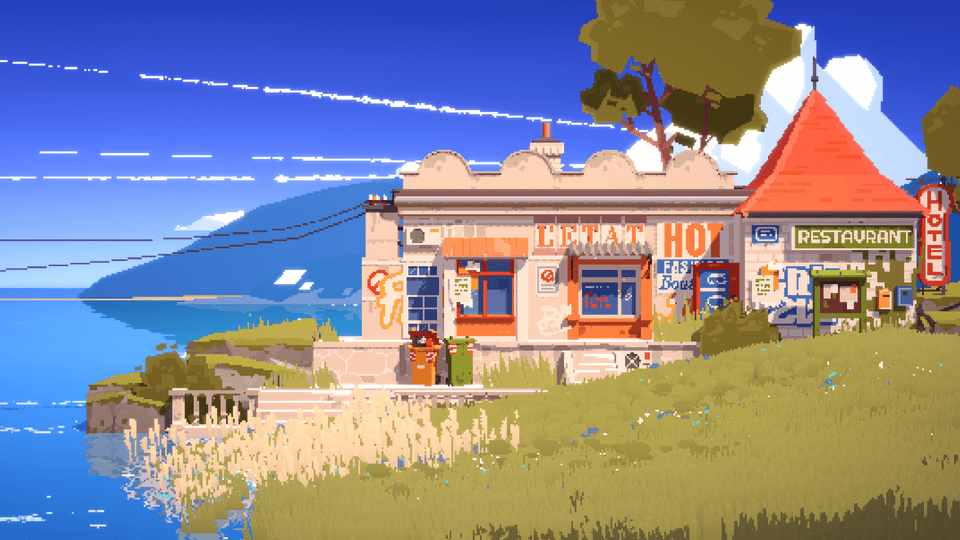
The important thing is understanding what you are buying.
Someone approaching SUMMERHOUSE expecting challenge, progression or a long sequence of authored objectives will run out of road quickly. The hidden-character system provides a small amount of discovery, but it is deliberately lightweight. Some players will encounter much of that meaningful unlock structure fairly quickly, while completionists and dedicated builders can spend considerably longer chasing every character, trophy or increasingly ambitious construction.
That difference matters.
SUMMERHOUSE is not really short or long in the usual sense. Its longevity depends on whether building for its own sake is enough to keep you interested. Current player feedback illustrates that divide particularly well. Some users spend dozens of hours experimenting with the same limited toolkit, while others feel they have seen most of what matters after only a small number of sessions.
Neither response invalidates the other.
I would not want Friedemann to solve that divide by filling SUMMERHOUSE with currencies, daily tasks or an upgrade tree. The absence of those systems is part of why sitting down with it feels different from opening another cosy game loaded with chores wearing pastel colours.
What I would welcome is refinement around the creative process itself. Better catalogue organisation would make longer builds less cumbersome. More blocks and colour variations would stretch the vocabulary without changing the basic philosophy. Additional environments would give returning players fresh contexts for ideas they already know how to express.
Those changes would make SUMMERHOUSE broader without making it busier.
Pros and Cons
Pros
- Freeform construction without money, timers or failure conditions
- Gorgeous pixel-art presentation and strong environmental atmosphere
- Layering and depth give the seemingly simple building pieces surprising flexibility
- Hidden character and animal blocks reward experimentation
- Buildings naturally encourage small bits of imagined storytelling
- Excellent for short creative sessions where you want absolutely no pressure
- Simple enough to understand immediately while still rewarding visual experimentation
Cons
- Only four environments, so the backdrops become familiar over time
- Building-piece variety becomes noticeably limited during longer sessions
- Object browsing would benefit greatly from favourites or custom palettes
- Colour and size customisation are restrictive
- Fine object placement on PS5 can feel fiddly with analogue controls
- Players who need structured goals may lose interest relatively quickly
Final Verdict
Score: 4.5/5
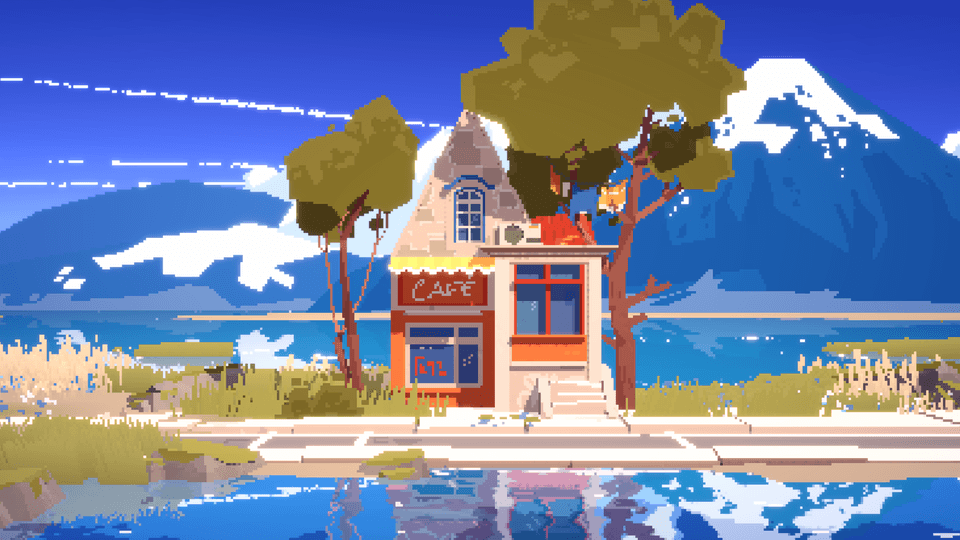
SUMMERHOUSE works because Friedemann resists the temptation to explain why creating something should matter. I built houses nobody needs, decorated façades nobody can enter and spent embarrassingly long periods adjusting objects that have no mechanical function whatsoever.
Then I hid the interface and looked at what was left.
A few walls. Some windows. Laundry hanging outside. A tiny figure suggesting that somebody, somewhere, belongs there.
For a game about building houses, SUMMERHOUSE is remarkably uninterested in architecture as a technical discipline. It cares more about the strange way a collection of ordinary objects can begin to resemble a place you remember despite never having visited it.
Its catalogue could be larger. The interface still has room to become friendlier for long sessions, even after earlier quality-of-life improvements. Fine positioning with a controller occasionally interrupts the otherwise effortless rhythm. The four environments eventually become familiar.
None of that stopped me wanting to start another house as soon as the previous one looked finished.
SUMMERHOUSE understands something a lot of much larger creative games forget: sometimes putting a window in exactly the right place is enough.
This review of SUMMERHOUSE is based on the PS5 Version, with the code provided by the Publisher/PR Agency.
About The Author