Avinash Rohra
Turn-based tactics usually give me one luxury that action games don’t: time. I can stare at a grid, reconsider a bad idea and move somebody else first while pretending that was always the plan. Wardrum gives me that same breathing room right until I commit to an attack. Then the drum starts.
That interruption is what makes Mopeful Games’ tactical roguelite interesting. Attacks and abilities carry their own beat patterns, so putting the correct warrior in the correct position is only half the job. Execution determines how effective the move becomes, and status effects such as bleeding, blindness and deafness can interfere with those rhythms. After years of tactics games teaching me that selecting the right command is the end of the decision, having to physically perform part of it gives Wardrum a personality of its own.
It also creates the tension that carried me through the repetitive stretches. I liked having my planning questioned at the final second. I was less enamoured with how often the surrounding roguelite structure asked me to repeat that test.
Five Warriors and a Drum
The setup is straightforward. Off-beat magic is corrupting the land, and the Rhythm Mother’s blessing allows your warband to return after death and try again. You travel across six biomes on randomised map paths, passing through battles, sanctuaries and events before confronting bosses. Runs can throw hazards, traps, ambushes and environmental conditions into encounters, while the enemy roster stretches beyond 35 types.
Combat is where Wardrum earns its keep.
The tactical grid has enough going on that rhythm never completely replaces strategy. Enemies can be shoved from cliffs, dragged into an archer’s kill zone or manoeuvred into traps. The available warriors cover different roles, and leveling them during a run opens branching ability choices. Each unit can carry two trinkets, while the forging system lets you create custom rhythm abilities.
That gives you plenty to consider before anyone hits anything.
The rhythm layer then adds a different sort of pressure. Performing attacks and abilities accurately improves their impact, and critical strikes reward getting the sequence right. There is an adjustable rhythm difficulty that compensates for timing and reduces the punishment for missed beats, which is a welcome inclusion considering how central execution is to almost everything Wardrum asks of you.
When all of those pieces line up, combat has a lovely cadence. Position someone, manipulate an enemy into trouble, commit to the ability, then nail the sequence. It makes a clean turn satisfying in a way that simply clicking an attack never could.
The Roguelite Starts Showing Its Seams
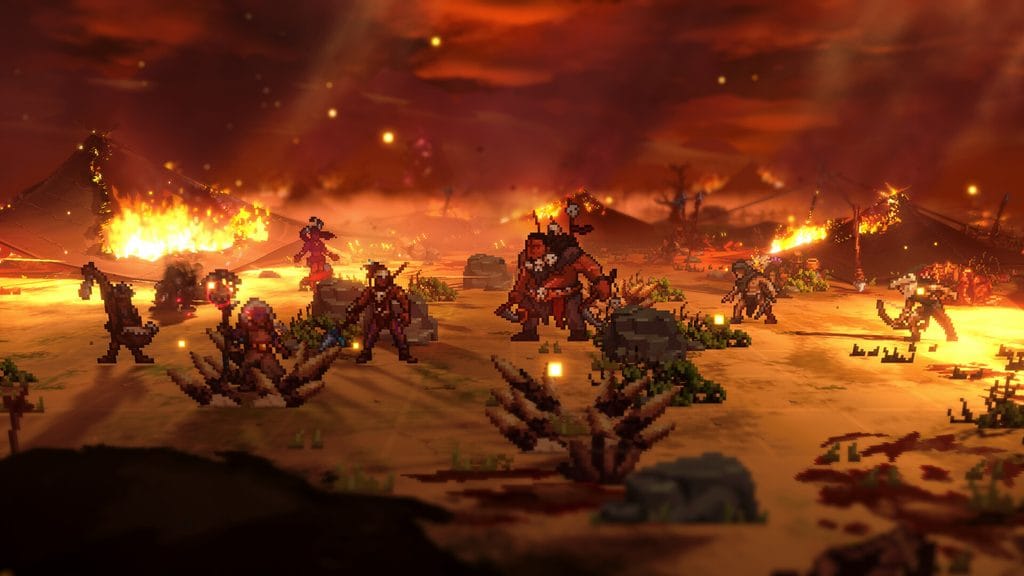
My problem with Wardrum appeared once familiarity replaced discovery.
Randomised paths do change how a run unfolds, and different biomes introduce their own enemies and environmental complications. Yet repetition eventually catches up with the structure. Familiar battlefields and enemy combinations return, and once I knew several rhythm patterns well enough, repeating them stopped carrying the same nervous energy they had during the opening hours.
This is where the roguelite side never quite matched the strength of the combat idea for me.
Character levelling, trinkets and forged abilities provide room for experimentation, but the two-slot equipment limit keeps builds relatively contained. Some combinations gave me something genuinely different to work around; others changed numbers without meaningfully changing how I approached the grid. Longer runs expose that unevenness because there is more time for a build to settle into a routine.
Failure feeds back into permanent progression through Essence and the Shrine of Growth, where you can unlock characters, abilities and broader improvements. That gives unsuccessful runs a purpose, although it also introduces a grindier edge when repeated attempts begin covering familiar ground. Wardrum remained enjoyable enough that restarting wasn’t the problem. Replaying encounters without discovering an equally interesting new tactical wrinkle was.
Rhythm Can Work Against You
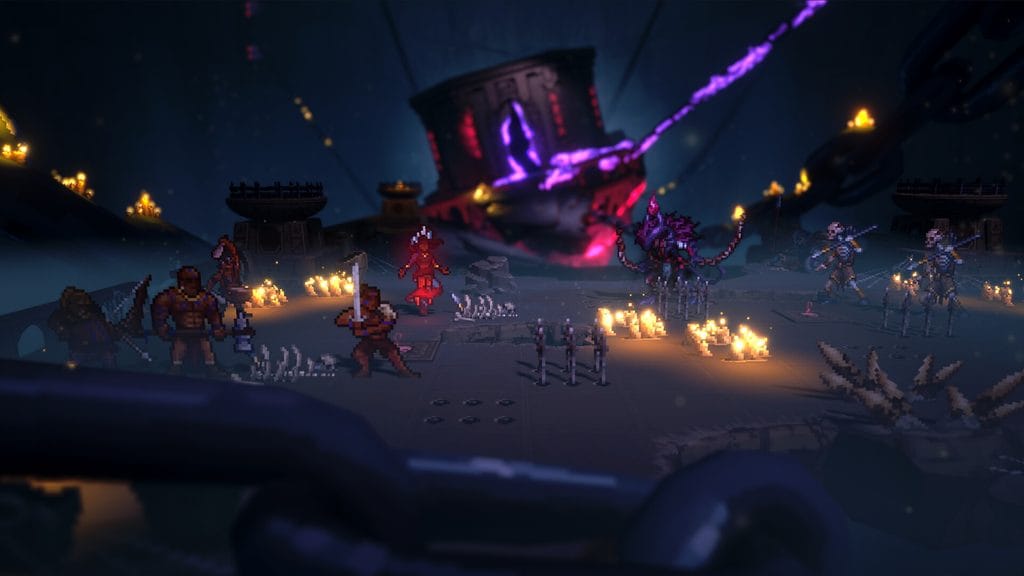
Status effects provide one of Wardrum’s smarter twists because they don’t exist solely as conventional penalties. Bleeding, blindness and deafness interfere with the rhythm component itself, attacking the player’s execution alongside the character’s effectiveness.
It is clever. It can also be irritating.
There’s a difference between losing an exchange because I positioned someone badly and watching an already demanding rhythm sequence become harder while managing everything else happening on the grid. That friction is clearly intentional, but there were encounters where the additional complication made combat feel laborious rather than more tactical.
The difficulty curve contributes to that feeling. Wardrum can become substantially harsher after its gentler opening stretch, and tougher encounters can become battles of attrition. The ability to alter rhythm difficulty helps, but it doesn’t address every source of challenge because enemy composition, positioning and progression remain separate problems.
Final Verdict
Score: 3.75/5
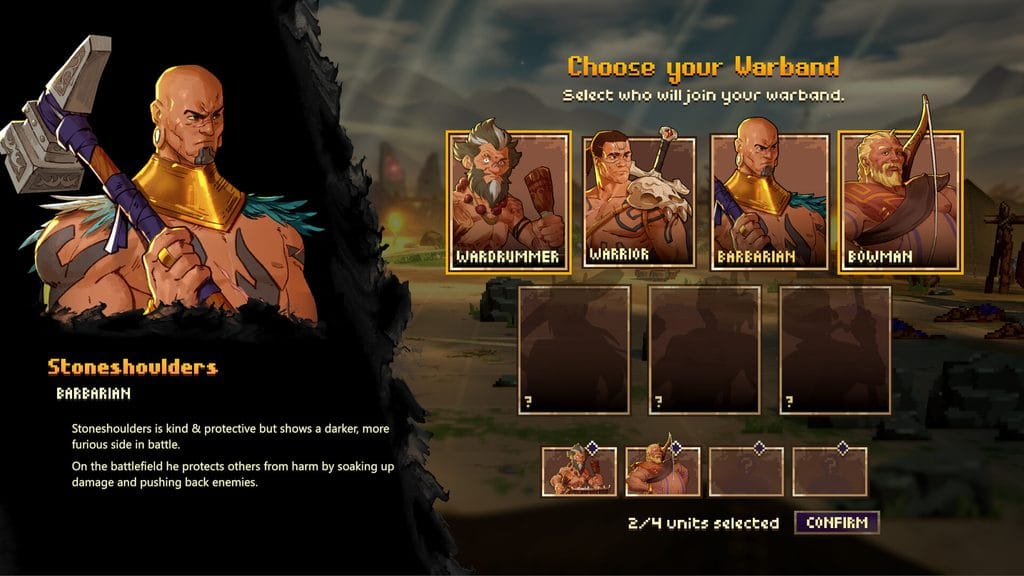
Wardrum’s presentation understands what the mechanics need from it. Its mixture of pixel-art characters and 3D battlefields gives the game an immediately recognisable look, while the percussion gives attacks the physicality required for the rhythm concept to work. Successful inputs have enough audiovisual punch that I knew when I had fallen into the groove without needing the game to congratulate me.
Four months after release, the idea has clearly found an audience. I can see exactly why.
I can also see why some players have pushed back against its repetition and lengthy runs. Those were the issues that stayed with me too. Wardrum has a terrific central idea and understands how to make tactical positioning interact with rhythmic execution instead of merely placing one system beside the other. The problem is that its roguelite structure doesn’t keep reinventing the situations surrounding that idea quickly enough.
I kept wanting another fight because hitting the beat after constructing the right turn remained satisfying. I just stopped being equally excited about everything required to reach that fight.
This review of Wardrum is based on the PC Version, with the code provided by the Publisher/PR Agency.
About The Author