Avinash Rohra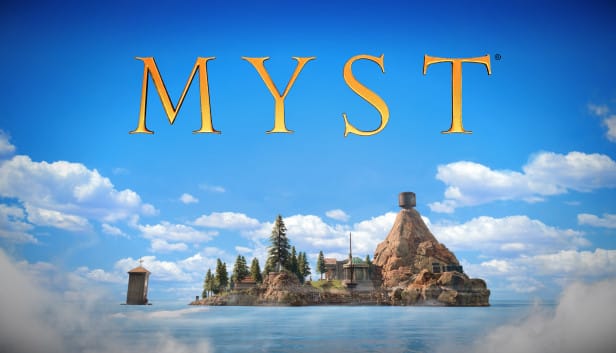
I have always had a strange relationship with Myst. I knew its reputation long before I properly knew the game itself. The island, the library, the rocket, those books with tiny moving worlds trapped inside them: all of it had already passed into PC gaming mythology by the time I was old enough to understand why anyone cared. Myst was discussed less like a game and more like a piece of software you were expected to have experienced if you wanted to understand how the medium got here.
That history made playing Cyan’s modern remake on PC more complicated than I expected. I wasn’t particularly interested in deciding whether Myst was important. That argument was settled decades ago. What I wanted to know was whether, without leaning on reverence or treating every archaic design decision as sacred, Myst could still make me curious enough to disappear into it in 2026.
It did, although not always gracefully.
An Island That Refuses to Help You
What surprised me most about Myst today isn’t how old some of its ideas feel. It is how little interest the game has in reassuring you.
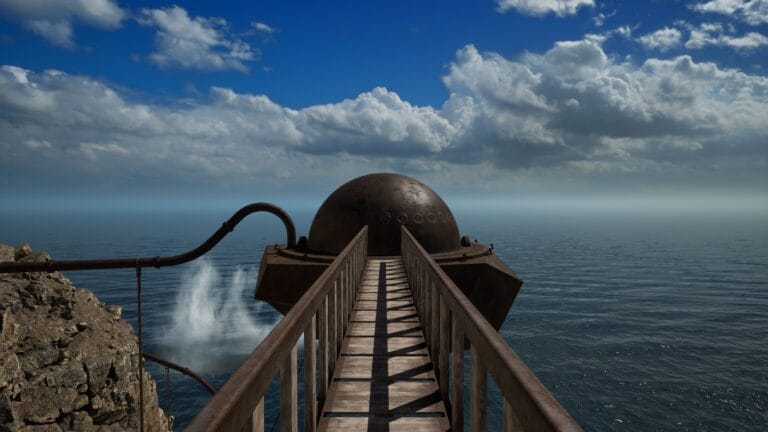
You arrive on Myst Island with almost nothing. There is no objective list waiting in the corner of the screen, no glowing route, no companion nudging you toward the next interaction and no conveniently labelled puzzle interface. There is a dock, architecture that clearly has purpose, switches whose significance is impossible to judge at first, machinery that looks important without explaining why and a library containing information that may become useful immediately or an hour from now.
My first stretch on the island was mostly wandering. Not productive wandering either. I opened things, stared at things, walked past things I would later realise mattered and occasionally convinced myself I had understood something when I absolutely hadn’t.
Then the connections started forming.
A number I had written down earlier suddenly belonged somewhere. A diagram that had looked ornamental stopped being decoration. A sound became information. Something I had walked past several times turned out to be the missing piece of a problem I hadn’t yet realised I was solving.
That is still where Myst is strongest. Many modern puzzle games make their boundaries obvious: enter a space, understand the problem, solve it and move on. Myst is often interested in something more slippery. Half the puzzle is recognising that there is a puzzle at all.
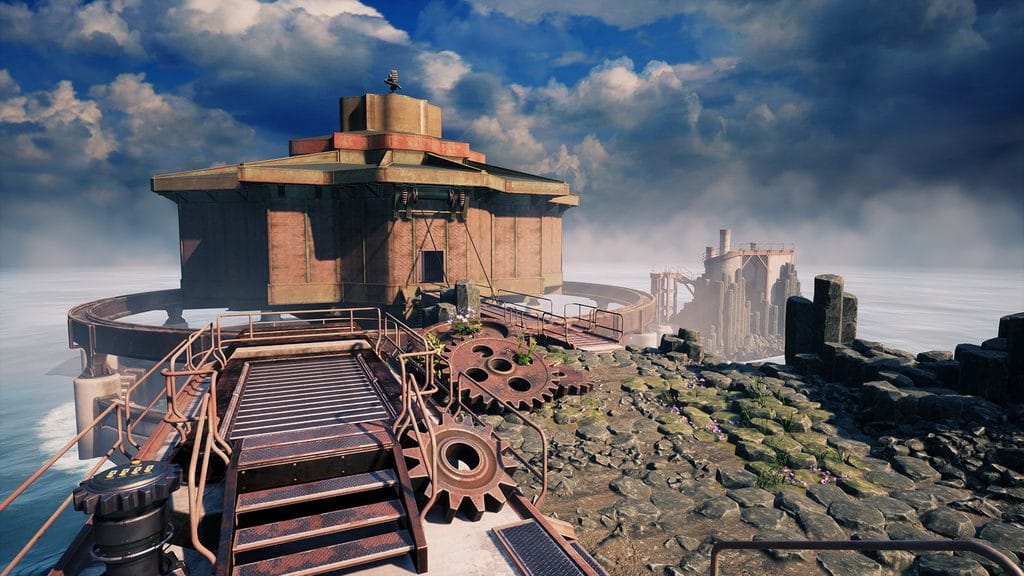
Cyan’s remake preserves that thinking while replacing the original game’s fixed pre-rendered screens with freely explorable real-time environments. It also supports conventional displays and VR, with optional randomisation for certain puzzle solutions.
Free movement changes Myst more than prettier lighting ever could. Walking around the island made its geography settle in my head far more naturally. The relationship between the library, tower, generator and surrounding landmarks became spatial rather than something I reconstructed between static images.
There is a trade-off, though. The original compositions controlled your gaze very deliberately. When every screen was effectively a framed image, Cyan could decide what occupied your attention. Full 3D gives the island greater physical presence, but it also makes it easier to stroll straight past something significant.
This Myst is easier to inhabit. Occasionally, it is also easier to overlook.
Being Old Isn’t the Same as Being Broken
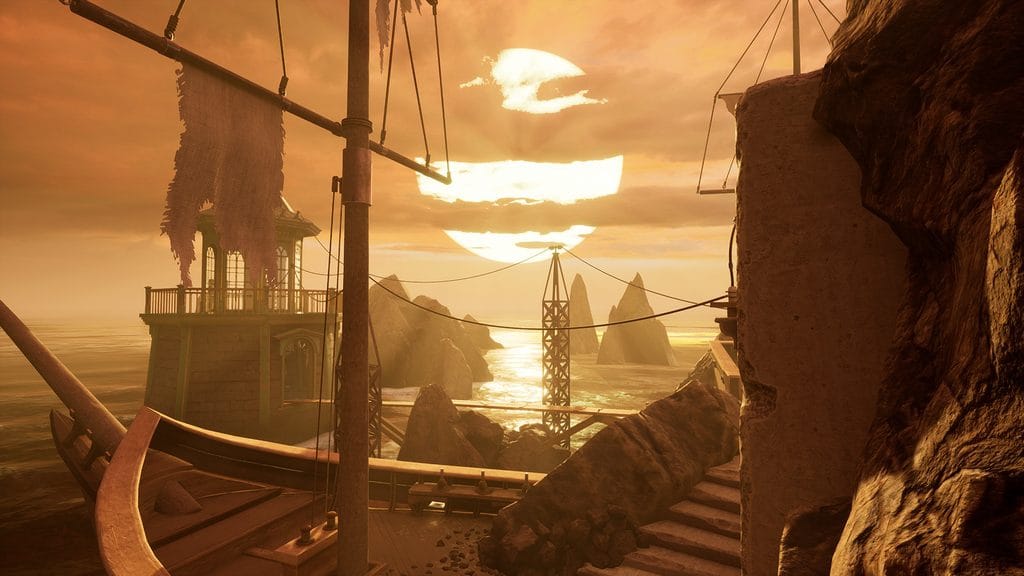
There is always a temptation with games of this age to explain away every awkwardness as part of their historical character. Myst doesn’t need that kind of protection.
Some of it remains awkward.
Selenitic was the point where my admiration was most regularly interrupted by irritation. Using sound as mechanical information is still a clever idea, but parts of navigating the Age shift from deduction into procedure. There were moments when I knew what Myst wanted me to do and found that understanding the solution didn’t make carrying it out any more enjoyable.
That difference is important. Being stuck because I haven’t understood a puzzle can be exhilarating. Being stuck in the physical process of completing something I already understand is considerably less so.
Myst contains both experiences.
What Cyan has done well over the years is introduce concessions without turning the game into something constantly terrified that the player might feel lost. Optional puzzle randomisation means returning players cannot always rely entirely on memorised solutions, while the remake’s broader presentation and accessibility improvements smooth over some of the friction without rewriting the fundamental structure.
The PC version has also evolved substantially through updates. Patch 2.0.0, for example, revised supersampling options, improved DualShock support and made DLSS the default supersampling choice on compatible Windows hardware.
That approach makes sense for Myst. Modernise the inconvenience where possible, but leave the thinking alone.
A Family Argument Hidden Inside a Puzzle Game
The story also caught me more than I expected.
By contemporary standards, Myst gives you very little directly. Atrus is absent. His sons, Sirrus and Achenar, are trapped within books, and both are understandably eager to persuade you that their account of events is the one worth believing.
A more conventional game would build that mystery through dialogue scenes and escalating exposition. Myst lets rooms do much of the talking.
Possessions matter. Journals matter. The way spaces are arranged matters. Places that first register as elaborate puzzle environments gradually begin to resemble evidence. Sirrus and Achenar become interesting not because Myst spends hours explaining their personalities but because it teaches you to look at what they surrounded themselves with and wonder what that says about them.
The restraint works because the game has already trained you to distrust appearances. By the time the story begins asking you to judge people, you have spent hours learning that almost nothing on Myst Island should be accepted at face value.
I still have a fondness for the strange humanity of the original live-action performances. They have a theatrical awkwardness that should date the experience more severely than it does, yet somehow that slightly unreal quality belongs to Myst. The remake’s reconstructed characters are cleaner, but cleaner isn’t always more memorable.
Classic Video Mode restores applicable original footage, although it isn’t a wholesale replacement for every modern character sequence.
It is one of those odd instances where lower fidelity can preserve more personality.
Rime Makes This Version More Complete
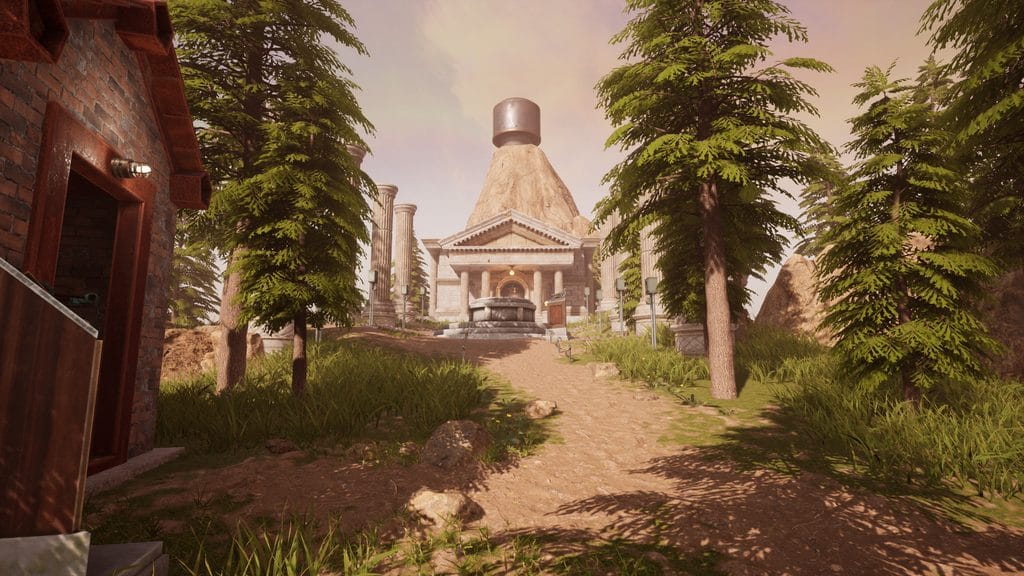
The Myst available today is also not quite the same remake Cyan released on PC in August 2021.
Rime is the most significant reason.
The Age wasn’t part of the original 1993 Myst and arrived later with realMyst, so its absence from the initial remake stood out to longtime players. Cyan eventually rebuilt Rime and added it through a free update in 2025, alongside additional narrative material and further presentation work.
Its inclusion fits the remake particularly well because Rime expands on the aspect of Myst I found myself most drawn toward: Ages feeling less like collections of themed puzzles and more like actual places being written, studied and understood.
The frozen setting gives the remake another distinct visual identity, but more importantly, its presence helps the current release feel less like an interpretation of one particular version of Myst and more like a genuinely comprehensive modern way of experiencing it.
For anyone coming to Myst because they want to play it rather than catalogue the differences between every historical edition, this is now a much easier version to point toward.
Modern Myst Is Still Myst
The PC release has matured considerably since 2021, although I would stop short of pretending every technical concern has disappeared.
Cyan has also acknowledged the possibility that a future Unreal Engine upgrade could bring further improvements to performance and microstuttering. The present build, then, isn’t something I would describe as technically immaculate.
That mattered less to me than I expected because Myst has never depended on spectacle in the first place.
The water is prettier now. Surfaces have greater depth. Lighting makes these spaces feel more tangible. Yet Channelwood, Mechanical, Stoneship and Selenitic remain memorable because their identities were already strong when hardware could only suggest what these places might look like in motion.
The remake hasn’t suddenly made Myst imaginative.
It has given that imagination more room to breathe.
The Weight of a Legacy
Myst has been influential enough that returning to it can create a strange problem: ideas that once seemed radical now feel familiar because generations of other games have inherited them.
Environmental storytelling, solitary exploration, spaces that reveal their histories indirectly and puzzles based on observation rather than combat or traditional inventory combinations no longer feel unusual. Playing Myst now inevitably means encountering things that have been refined, expanded or simply repeated elsewhere.
That is also why I don’t think historical importance is enough reason to praise it.
There were stretches where I felt its age very clearly. Sometimes the opacity was intriguing; sometimes it was simply opacity. There were moments where I completely understood why a player accustomed to contemporary puzzle design would reach for a guide and feel absolutely no shame about doing so.
But those weren’t the moments that stayed with me.
The moments I remember are the ones where I walked away from the PC because I was stuck, started making tea or doing something unrelated and suddenly understood why something I had seen forty minutes earlier mattered. I would return not because the game had added a marker or reminded me about an unfinished task, but because two ideas had quietly joined together somewhere in the back of my head.
That kind of delayed understanding is difficult to manufacture. It requires a game to trust that confusion isn’t automatically a failure of design and that players can sometimes enjoy carrying a problem around with them.
Myst still trusts that process.
Pros
- Puzzle design built around genuine observation and deduction
- Free exploration gives the Ages a stronger physical identity
- Environmental and audio design remain remarkably effective
- Optional randomisation gives returning players another reason to think rather than remember
- Modern conveniences generally avoid compromising the original puzzle philosophy
- Rime makes the current package substantially more complete
- Years of updates have left the PC release in a more mature state than the 2021 launch build
Cons
- Several puzzles remain extremely opaque
- Free movement occasionally weakens the deliberate visual guidance of the original compositions
- The modern character presentation loses some of the personality of the older FMV performances
- Performance and microstuttering still leave room for improvement
Final Verdict
4.25/5
I went into Myst expecting it to become one of those classics I respected more than I actually enjoyed playing.
Instead, I kept thinking about it whenever I wasn’t playing.
That may be the most useful compliment I can give a puzzle game. Myst made me write things down, reconsider objects I had dismissed as scenery and revisit rooms because something about them suddenly felt important. It also made me stare at machinery for uncomfortable lengths of time while wondering whether Cyan’s designers were brilliant or simply cruel.
Quite often, the answer felt like both.
The remake hasn’t attempted to drag Myst entirely into modern design conventions, and it is stronger for showing that restraint. It removes enough friction to make the island inviting again, restores Rime, gives these extraordinary spaces a convincing physical form and then mostly leaves you alone with them.
Thirty-three years later, Myst still refuses to tell me where to go.
I had far more fun getting lost because of it.
This review of Myst is based on the PC version, with the code provided by the Publisher/PR Agency.
About The Author