Avinash Rohra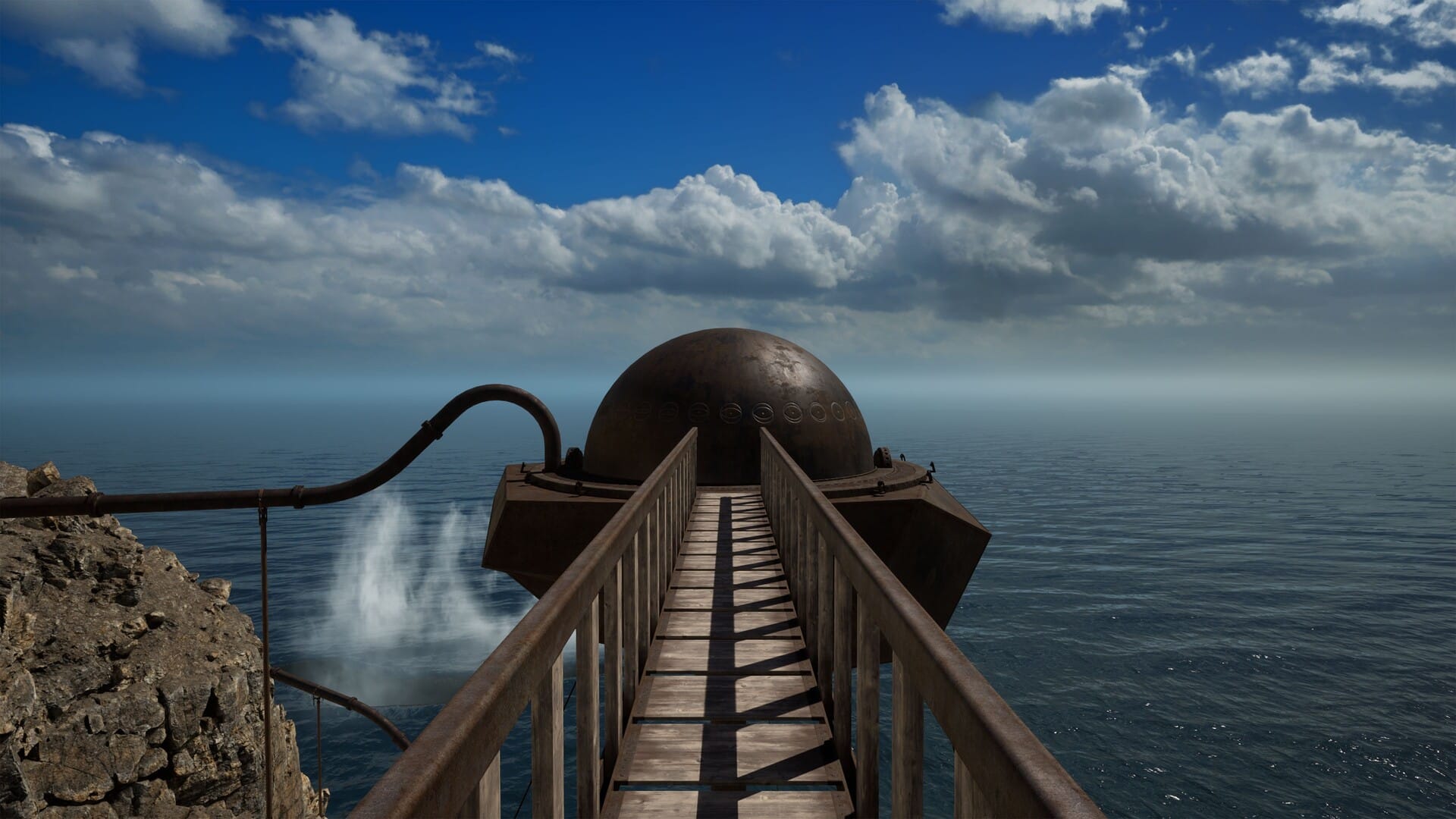
There is a particular anxiety that comes with returning to a game like Riven. It has less to do with protecting an old memory and more to do with wondering whether the thing you admired was inseparable from the limitations of its time. Nostalgia is an unreliable witness, but design is easier to interrogate. The 1997 original was built around fixed viewpoints, carefully chosen compositions and a very specific relationship between what the player could see and what Cyan wanted them to notice. Its restrictions were not merely technical compromises. They were part of how the game communicated.
That is why the idea of rebuilding Riven as a fully traversable 3D world initially worried me more than any graphical overhaul. The original game had total control over framing. It decided where you stood, what occupied the screen and how a space would reveal itself. Once that control disappeared, there was always a risk that Riven would become easier to admire but harder to read.
Instead, Cyan went much further than simply rebuilding the scenery. Puzzles were changed, familiar routes were reworked, progression was altered and major parts of the game were expanded. The remake does not reward you for remembering the original so much as challenge you to stop trusting that memory. That decision ends up being one of its greatest strengths.
Riven Still Feels Like a Place That Existed Before You Arrived
Myst often presents elaborate machines and asks you to work out how they function. Riven feels broader than that because the machinery, architecture and language all belong to a civilisation rather than a puzzle box.
Atrus sends you into the collapsing Age to rescue Catherine from his father, Gehn, but the world never rearranges itself around that objective. Gehn’s infrastructure was not built to inconvenience you, and the Moiety resistance did not hide its secrets simply because the player needed another obstacle. Schools, temples, industrial structures, prisons and transport systems all belong to a place with its own history, politics and internal logic.
That difference remains central to why Riven works. The game frequently gives you information before you understand what the information is for. A symbol appears somewhere, a sound repeats, or a machine can be operated without its purpose becoming immediately clear. Several hours later, something discovered on another island can suddenly give that earlier observation meaning.
I filled notes with details that I was not even certain were clues, and that uncertainty is still one of Riven’s most effective ideas. You are not looking for brightly signposted puzzle components. You are learning enough about the world to recognise when something matters.
The remake preserves that philosophy while changing enough of the details to stop familiarity from becoming an advantage.
Remembering the Original Is No Longer Enough
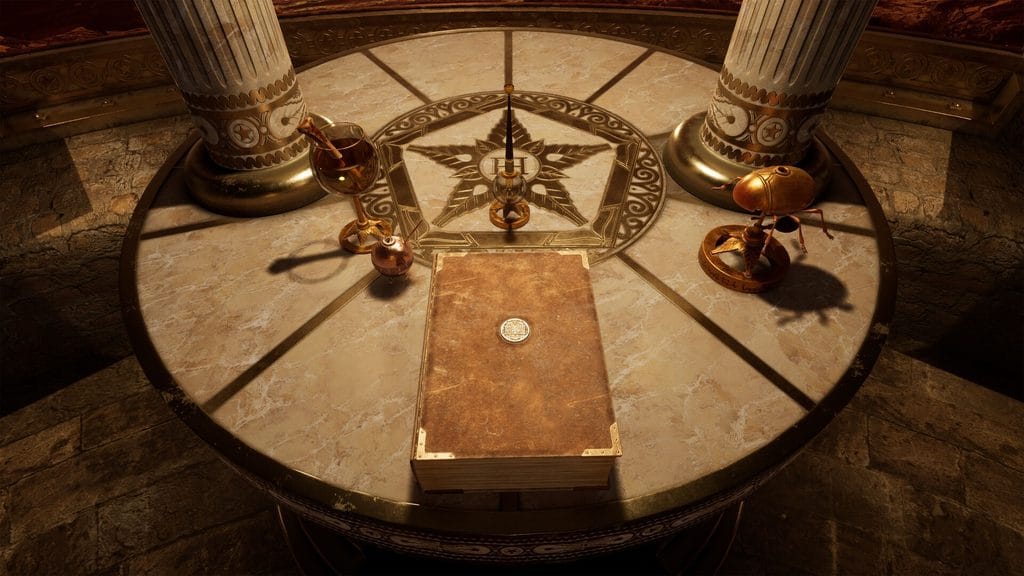
Cyan could have recreated the old puzzles exactly as they were, polished the environments and relied on nostalgia to carry the rest. Instead, it treats the original as a foundation rather than a blueprint.
The fire-marble sequence is probably the clearest example. In 1997, the puzzle demanded a daunting amount of spatial understanding, eventually asking the player to translate knowledge gathered across the islands into one of the game’s most intimidating mechanisms. The remake retains the broad principle but changes how that information is acquired and applied.
Its spatial component is easier to parse, and some of the information that once required more elaborate deduction is communicated more directly. That does not mean the entire sequence has simply been made easier. The remake shifts part of the complexity into strike-force values, D’ni numerals and island-specific deductions, which still require the player to understand several systems before the machinery makes sense.
I still prefer some of the original puzzle’s hostility. There was something almost unreasonable about the way so many unrelated observations eventually converged on a single machine, and solving it felt like passing an exam you had unknowingly been studying for since the moment you arrived. The remake loses some of that severity, but it also gains a sequence that feels designed specifically for this version of Riven rather than preserved out of obligation.
The animal and Moiety puzzle chain receives a similarly substantial overhaul. The remake expands the sequence to six animal associations and introduces a Rivenese numerical language alongside the familiar D’ni system. Those changes prevent returning players from relying on half-remembered solutions and force the same kind of careful observation that defined the original.
That was when the remake really began to work on me. I recognised the broad language of Riven, but recognition was no longer enough to solve it.
The Starry Expanse Feels Less Abstract
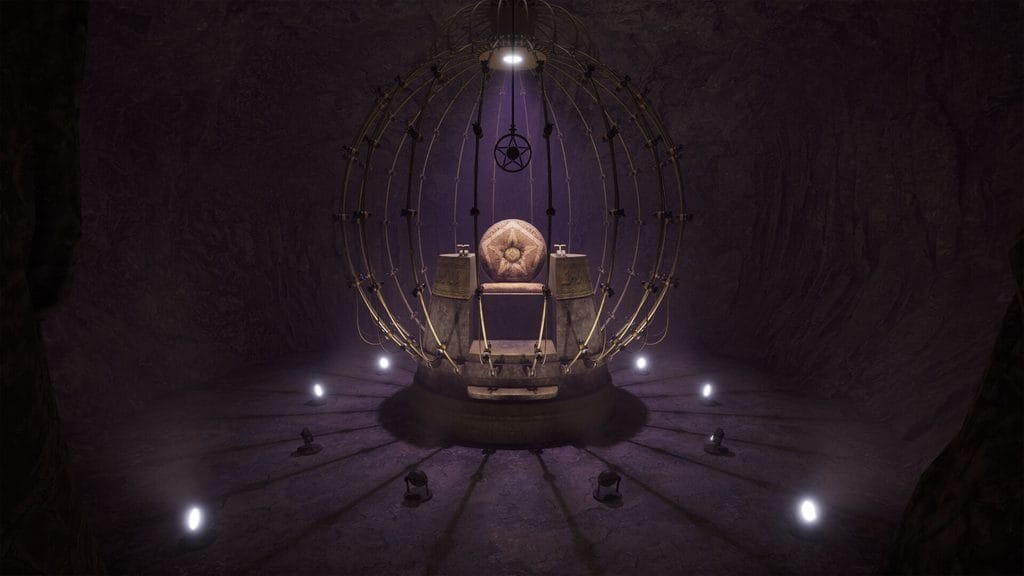
One of the remake’s most important expansions is the way it handles the Starry Expanse.
The Star Fissure and Riven’s instability were already fundamental to the original game, especially as its story approached the end, but the remake gives those ideas a physical presence that the 1997 version could only imply. Portions of the Starry Expanse can now be traversed as part of the redesigned dome network, making Gehn’s experiments feel less like background mythology and more like something the player can directly experience.
What makes the addition work is how naturally it fits Gehn’s character. His worldview is built around the conviction that systems can eventually be understood, categorised and controlled. His machines and experiments all carry the same arrogance. Given enough time and enough engineering, he seems convinced that even the structure of reality can be made obedient.
Walking through the results of that obsession communicates more about him than another journal entry ever could. Riven is collapsing around him, yet Gehn continues to build because he cannot imagine a problem that knowledge and control will not eventually solve.
Gehn Is Present Even When He Is Not on Screen
Riven’s story remains effective because its characters are written into the geography rather than confined to dialogue scenes.
Gehn’s influence is visible everywhere. His interpretation of D’ni culture shapes the symbols, institutions and machinery spread across the islands, while his authority affects how people move through the world and which spaces remain visible or hidden. By the time you spend meaningful time with him, you have already spent hours walking through the consequences of his beliefs.
The Moiety resistance works for similar reasons. Their hiding places, symbols and methods are not optional lore tucked into the margins. Understanding them becomes part of understanding how Riven itself functions. Catherine’s involvement with them also gives her a more important place in the conflict than simply being the person Atrus has sent you to rescue.
Games criticism has used the phrase “environmental storytelling” so often that it can sometimes mean little more than finding a diary beside a corpse. Riven does something more substantial. It asks you to understand who holds power by looking at what they built and who was forced to live around it.
Free Movement Changes More Than the Camera
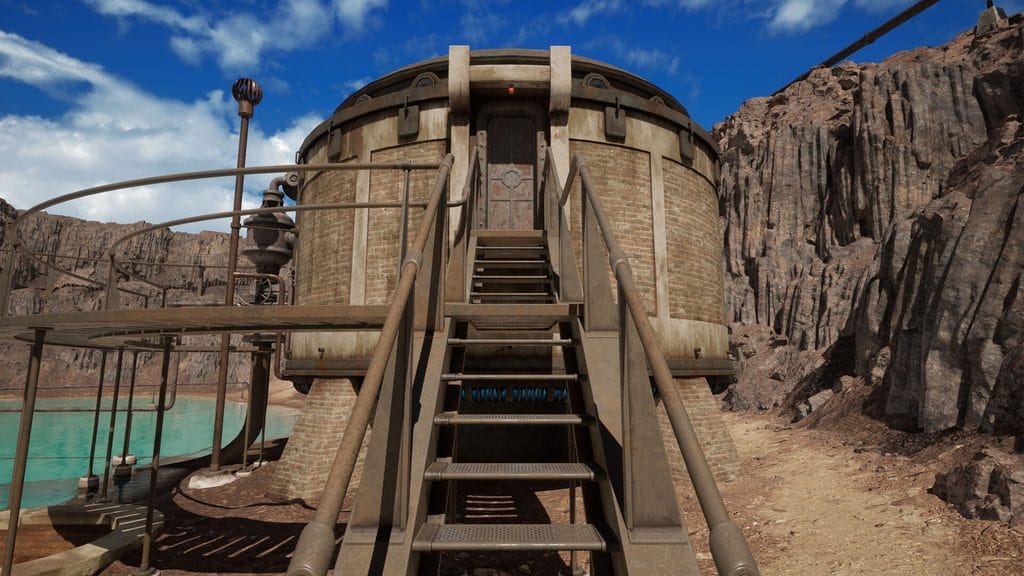
The transition to full 3D traversal should have been one of the easiest ways to weaken Riven, because the original depended so heavily on controlled composition. Cyan once knew exactly what appeared on every screen because every screen was chosen in advance.
The remake gives that control away. You can approach machinery from the wrong direction, enter a room facing away from the important object or simply fail to notice something because nothing forces your attention toward it. Somehow, the world still retains its coherence.
More importantly, it gains a physical presence the original could only suggest. Industrial areas feel larger and more oppressive, jungle paths become actual spaces rather than transitions between viewpoints, and transport systems make more sense because you can see how different areas connect rather than mentally assembling them from static images.
There is a trade-off. I missed several details because I approached an area from the wrong angle or simply happened to be looking elsewhere. The original could put an important clue directly in the centre of the frame. The remake has to trust the player to eventually notice it.
The move to fully navigable environments also exposes limits that were easier to hide in 1997. Some ledges look climbable, certain gaps appear manageable and a few routes seem physically possible even though Riven offers no general jumping or climbing system. Those boundaries are not especially disruptive, but they are more visible now because the rest of the world feels so tangible.
I still prefer that compromise to preserving Riven as a sequence of beautifully framed images forever.
The Notebook Fits the Way Riven Is Actually Played
The remake’s notebook is one of its least flashy additions and one of its most useful.
Riven has always rewarded players who take notes, and Cyan finally builds that behaviour into the game itself. Screenshots can be stored alongside typed observations, allowing you to create a personal archive without turning the process into a conventional objective list.
I used it constantly, although I still kept a physical notebook beside me because apparently no amount of technological progress can stop me from scribbling numbers and symbols badly on paper.
Most of those notes looked meaningless in isolation. A shape, a number, an animal, a location and a question mark were often all I had. Eventually, many of them found a purpose, and that sense of delayed understanding remains one of Riven’s greatest pleasures.
The game is comfortable allowing you to misunderstand something for hours. It does not immediately explain what a symbol means or reassure you that the strange mechanism you just found will matter later. There is no traditional hint system waiting to intervene, and interactive objects are not aggressively highlighted.
That design can absolutely become frustrating, especially when one missed observation stalls progress for a long time. I experienced that more than once. I would still rather have Riven risk frustrating me than constantly interrupt its own mysteries to make sure I never feel lost.
Not Every Redesign Is Better
The remake becomes more interesting when its changes invite disagreement.
Several puzzles communicate their intentions more clearly than before, and some deductions that once stretched across larger parts of the world have been compressed or redirected. Most of the time, that makes the experience easier to follow without damaging what made Riven distinctive.
Occasionally, though, I missed the cruelty of the original.
Old Riven had a particular talent for making several hours of seemingly disconnected observations suddenly collapse into one enormous answer. The remake still produces those moments, but some have lost a little of their severity.
The redesigned fire-marble sequence is where I felt that difference most strongly. This version is easier to read and arguably better integrated into the remake’s broader systems, while the old version was more intimidating and demanded a harsher form of spatial reasoning.
I am not convinced the new version is automatically better just because it is cleaner.
At the same time, I would much rather disagree with Cyan over a meaningful redesign than play through a museum piece where every solution remained exactly where I remembered it. A veteran player should not enter Riven feeling secure because they already know the answers. The remake makes sure that security disappears quickly.
The Characters Have Not Benefited as Much as the World
The one area I never completely adjusted to is the new character presentation.
The original live-action performances had a strange physical presence because real actors occupied environments that otherwise looked impossible. The integration was imperfect, but that imperfection gave characters like Gehn a slightly unsettling reality.
The remake uses real-time 3D characters instead, and there are obvious practical reasons for that decision. The world is now freely traversable, fully rendered and designed to function in VR as well as conventional first-person play.
I understand why Cyan made the change, but I still prefer the old result.
The new models communicate everything required of them, yet there were moments when the environments felt more believable than the people standing inside them. Considering how extraordinary Riven now looks, that contrast can occasionally be distracting.
Pros
- One of gaming’s most convincing fictional worlds
- Puzzle design remains rooted in observation and deduction
- Returning players cannot simply rely on remembered solutions
- The Starry Expanse expansion feels natural rather than bolted on
- Gehn, the Moiety and Rivenese culture are woven directly into exploration
- Excellent screenshot-and-note system
- Free movement dramatically improves the sense of place
- Exceptional environmental art and sound design
Cons
- Some redesigned puzzles lose part of the original game’s intimidating complexity
- Missing one small clue can stall progress for a long time
- Free movement makes traversal restrictions easier to notice
- Real-time character models lack some of the presence of the original FMV performances
Final Verdict
Score – 4.5/5
Myst taught me to inspect puzzles. Riven taught me to distrust decoration, because almost nothing in its world exists without purpose.
By the time I was deep into this remake, I had stopped dismissing even the smallest details. A symbol might become useful several hours later, an animal’s behaviour could connect to something on another island, and the location of a machine could reveal as much as the mechanism itself. That mindset is why Riven has endured for so long.
Cyan could have preserved the original like an artefact behind glass, but this remake is stronger because it refuses to do that. Puzzles have been changed, progression has been reconsidered and the Starry Expanse has been expanded in ways that give the game a different rhythm without losing its identity. I do not prefer every decision, and a few of the original puzzles still feel more elegant in their brutality.
What matters is that I had to think about Riven again rather than simply remember it.
The best moments brought back the feeling that made the original so intimidating in the first place: standing somewhere unfamiliar, holding several pieces of information that barely seemed connected and knowing there was an answer somewhere in front of me if I could only learn how to see it.
Riven does not recreate the experience of 1997 by pretending nothing has changed.
It understands what made that experience worth preserving.
This review of Riven is based on the PC version, with the code provided by the Publisher/PR Agency.
About The Author