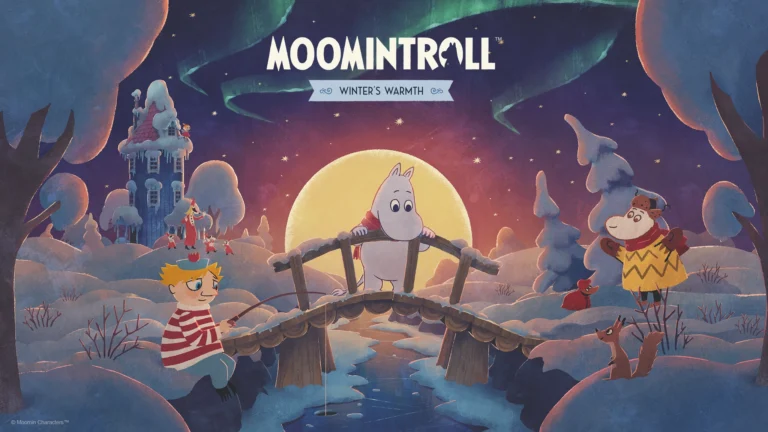
Moomintroll: Winter’s Warmth Review – When a Winter Adventure Feels Like Coming Home
 Avinash Rohra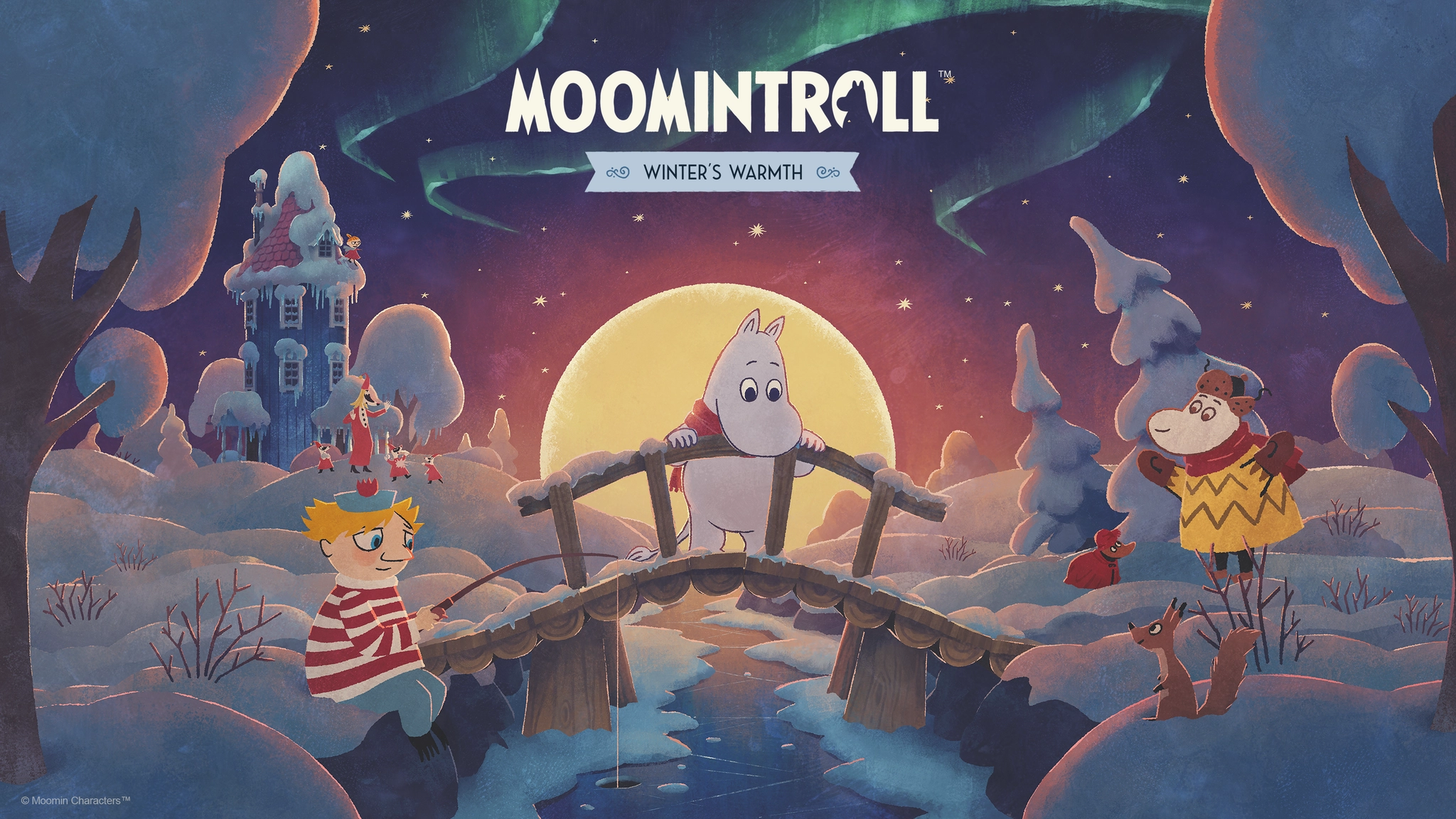
There is something wonderfully strange about sitting down with Moomintroll: Winter’s Warmth expecting a gentle little Moomin adventure and gradually realizing that the game is asking a slightly more complicated question: what do you do when the world you know suddenly becomes unfamiliar?
I played Winter’s Warmth across PlayStation 5 and Nintendo Switch 2, switching between the two depending on whether I wanted to settle in front of the television or carry Moomintroll’s snowy little adventure around with me. I went in with some hesitation because “cozy” has become such an overloaded word in games. It can mean thoughtful and comforting, but it can also mean mechanically thin, visually pleasant and over far too quickly. Winter’s Warmth certainly looks like the sort of game that could fall into that second category.
Thankfully, it doesn’t.
Hyper Games has made a small adventure with modest mechanics, but there is considerably more thought behind it than its soft colours and adorable characters initially suggest. It is a game about loneliness, fear, friendship and learning to care for others, wrapped in an adaptation of Tove Jansson’s Moominland Midwinter. It is also a game that occasionally asks you to perform one fetch quest too many, and the tension between those two sides is what makes Winter’s Warmth worth talking about.
I Expected Cute. I Didn’t Expect Lonely.
Moomintroll wakes from hibernation earlier than he should, finding Moominvalley buried beneath winter while everyone he knows is still asleep. The familiar landscape has become strange, the Lady of the Cold has arrived, and Moomintroll is suddenly confronted with a season he has never experienced before. The game’s premise is considerably more melancholy than its cheerful presentation initially lets on.
That is where Winter’s Warmth first won me over.
Moomins have never really been about cuteness alone. Tove Jansson’s stories have always had room for loneliness, anxiety, danger and the uncomfortable realization that the world does not always behave the way you want it to. Winter’s Warmth understands that, particularly in its early sections, where Moomintroll’s uncertainty gives the adventure a vulnerability that is easy to underestimate. He isn’t trying to save the world. He is trying to understand it.
That distinction gives the story its emotional centre. Moomintroll initially wants someone to take care of him and wants winter to disappear. As he encounters characters who need help themselves, his role gradually changes. The adventure becomes less about finding someone to make everything safe again and more about discovering that he can be useful to somebody else.
It is a simple idea, but Hyper Games gives it enough room to breathe.
A Faithful Moomin Adventure With Its Own Identity
Winter’s Warmth is a spiritual successor to Snufkin: Melody of Moominvalley, not a direct sequel, and it can be played entirely on its own. That distinction is important because the two games are doing different things with the Moomin universe.
Where Snufkin encouraged you to wander and discover Moominvalley through exploration and music, Winter’s Warmth is more contained and deliberately structured. Its inspiration from Moominland Midwinter gives the game a more focused journey, with Moomintroll moving from one situation to another as he learns how this strange winter works.
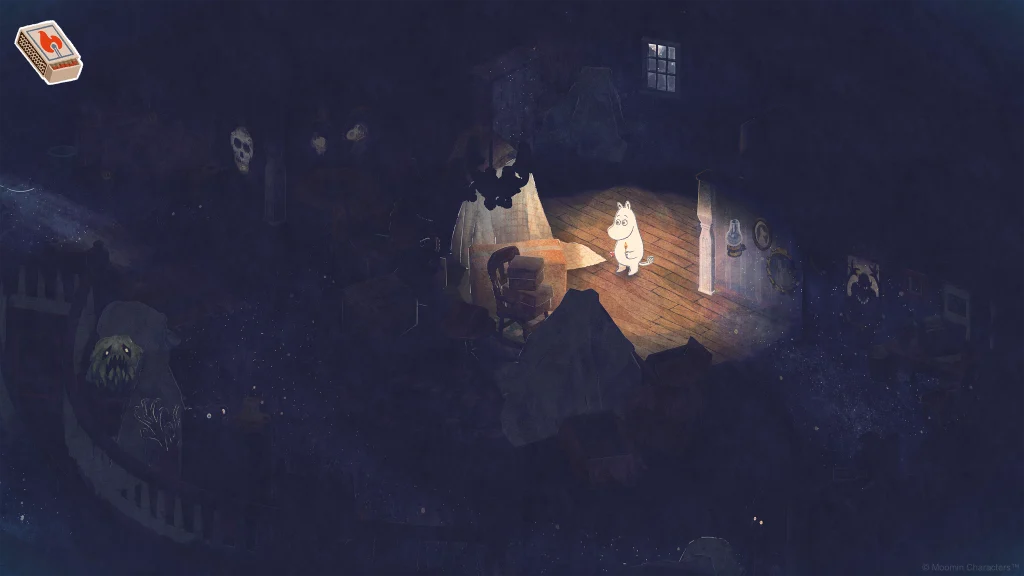
The world itself is wonderfully tactile. Snow changes how familiar places feel, Moomintroll leaves tracks behind him, and the environment is not merely something pretty to walk through. Your tools gradually give you more ways to interact with it, including stronger snowballs, improved snow clearing, longer-lasting matches and the ability to break through thicker ice. None of these systems are complicated, and they aren’t supposed to be.
That is both the game’s strength and its most obvious limitation.
When Helping Starts to Feel Like Running Errands
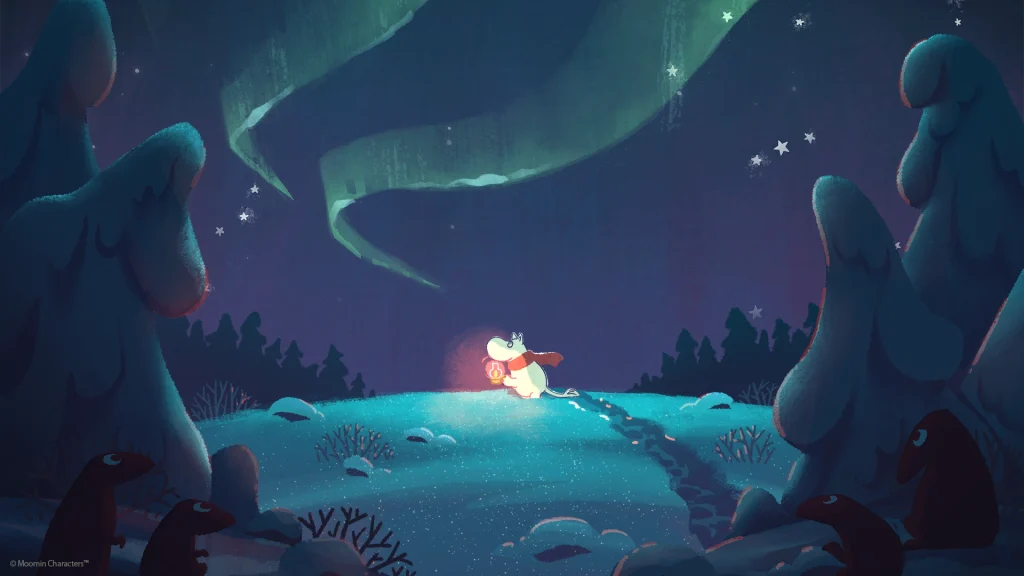
The problem with deliberately simple mechanics is that eventually you notice just how simple they are. Much of Winter’s Warmth revolves around helping characters, finding objects, clearing obstacles and travelling back through areas you have already visited. There are environmental puzzles and moments that make satisfying use of your tools, but the game never develops into anything resembling a demanding puzzle adventure. The emphasis is firmly on accessibility and story rather than mechanical challenge.
For the most part, I was perfectly happy with that. Then came the backtracking.
The journey between objectives can occasionally feel longer than the objective itself, particularly when you are asked to revisit an area for another relatively straightforward task. Some players who adored the game’s presentation and characters still found the repetitive quest structure difficult to overlook.
I wouldn’t call it a deal-breaker, because that would ignore what these quests are actually doing. They are primarily an excuse to spend time with Moominvalley’s inhabitants, and some of the game’s best character moments emerge from these apparently mundane errands.
Still, there were moments when I found myself thinking that Moomintroll had somehow become the valley’s only available delivery service.
That is where Winter’s Warmth occasionally loses its rhythm.
The Darker Moomin Story It Doesn’t Quite Follow Through On
The most interesting criticism of Winter’s Warmth isn’t really about its fetch quests. It is about what happens when the game adapts Moominland Midwinter while deliberately making it more comforting.
Jansson’s story has an unsettling quality. Winter represents isolation and uncertainty, and Moomintroll is forced to confront a world that cannot simply be made comfortable again. The game preserves those foundations, but it is much more interested in turning them toward friendship, cooperation and reassurance. Critics have specifically noted that the game softens some of the book’s more ambiguous and uncomfortable ideas.
That isn’t necessarily a failure.
In fact, I think it is part of why the game works so well for its intended audience. Hyper Games isn’t trying to reproduce every uncomfortable edge of Jansson’s book. It is translating the emotional idea of discovering winter into something interactive, approachable and ultimately hopeful.
The interesting thing is that the game occasionally gets close to something much darker before retreating back into warmth. Its treatment of death and the Lady of the Cold gives the opening a surprising emotional weight, but the story ultimately chooses kindness and community over sustained exploration of those darker ideas. Some players found that contrast moving; others felt the game introduced themes it wasn’t prepared to fully develop.
I landed somewhere in between.
I would have liked the game to trust its source material a little more, but I also understand why it doesn’t.
Moominvalley Is the Real Star
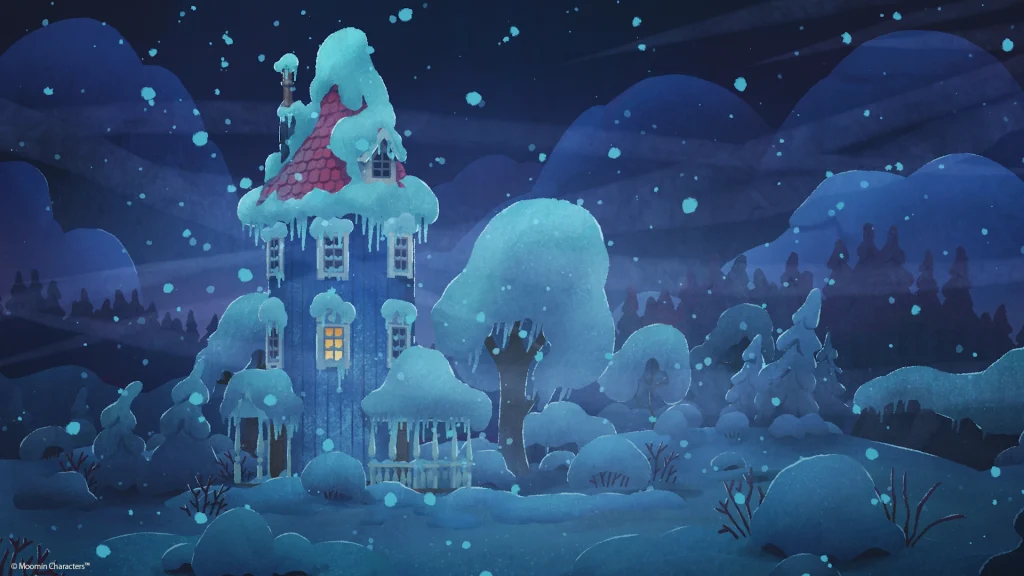
If the mechanics occasionally feel underdeveloped, the presentation almost never does.
Winter’s Warmth looks gorgeous without trying too hard to look gorgeous. Snow-covered forests, warm little interiors and Moomintroll’s expressive animations give the game the quality of a storybook that has somehow become interactive. The contrast between warmth and cold is particularly effective because it isn’t just aesthetic. It reinforces what Moomintroll is feeling.
The soundtrack understands the same restraint. There is a gentleness to the music and sound design that suits the world without drowning it in sentimentality. The Switch 2 version is also a particularly good fit for this kind of game. Nintendo’s dedicated edition offers higher rendering resolution, a higher frame rate, higher-resolution textures, improved cutscene video and higher-bitrate audio. The PS5 version supports DualSense vibration and is PS5 Pro Enhanced.
Neither version changes what Winter’s Warmth fundamentally is, but both let its strongest quality come through clearly: this is an exceptionally pleasant world to inhabit.
A Small Game That Knows What It Wants to Be
I think Winter’s Warmth works precisely because it doesn’t try to turn Moomintroll into something he isn’t. There is no combat system waiting around the corner, no elaborate progression tree and no sudden transformation into a conventional action-adventure. Your tools exist to help you move through the world and help other characters, not to make you increasingly powerful. Even the snowball encounters are playful rather than a gateway into combat.
That restraint can be frustrating if you approach the game expecting substantial gameplay depth, and the player reviews make it clear that some people do. Others, including parents playing with young children, have found that simplicity to be one of the game’s greatest strengths.
That split actually tells me more about Winter’s Warmth than its overwhelmingly positive Steam reception does. This is a game that knows exactly who it wants to welcome in.
It wants you to slow down. It wants you to notice the characters. It wants you to understand why helping somebody matters even when the task itself is hardly heroic. And it wants the winter to feel cold enough that the warmth means something when you finally find it.
I can forgive a lot of backtracking for that.
Not all of it, admittedly.
Final Verdict – The Warmth Is Earned
Score: 4.6/5
Winter’s Warmth isn’t a perfect game, and I don’t think pretending otherwise does it any favours. Its mechanics are basic, its puzzles rarely challenge you, and its quest structure occasionally stretches a simple idea further than it needs to go. Some players will find that relaxing; others will find it repetitive.
But the game has something far more difficult to manufacture than mechanical complexity: sincerity.
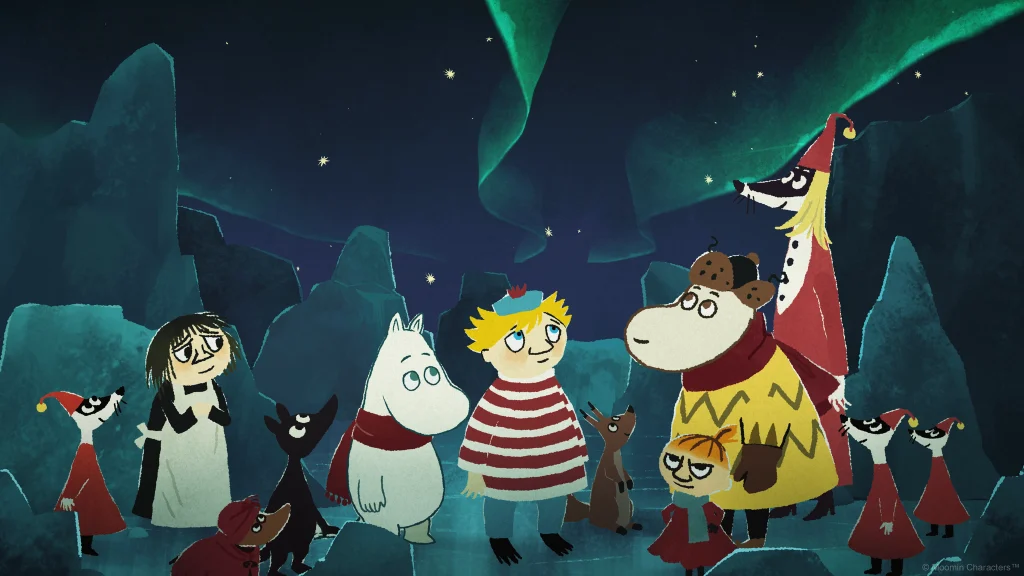
Hyper Games understands that the appeal of Moomins isn’t simply that they are cute characters living in a pretty world. It is that their stories can make frightening things feel manageable without pretending those things don’t exist. Winter’s Warmth takes that idea and turns it into an adventure about a character who begins by wanting somebody to look after him and gradually learns how much it matters to look after somebody else.
That stayed with me more than any individual puzzle.
I went into Moomintroll: Winter’s Warmth expecting something soft and uncomplicated, and I came away appreciating how much thought has gone into making its gentleness feel earned. It isn’t the deepest adventure of the year, nor is it the most mechanically ambitious, but it understands that sometimes the most valuable thing a game can offer is a place where you can slow down for a while.
And when the world outside feels cold, there is something genuinely lovely about finding a little warmth here.
This review of Moomintroll: Winter’s Warmth is based on the PS5 & Nintendo Switch 2 version, with code provided by the publisher.
About The Author