Helix: Descent N Ascent Review – A Puzzle Box That Refuses to Explain Itself
 Avinash Rohra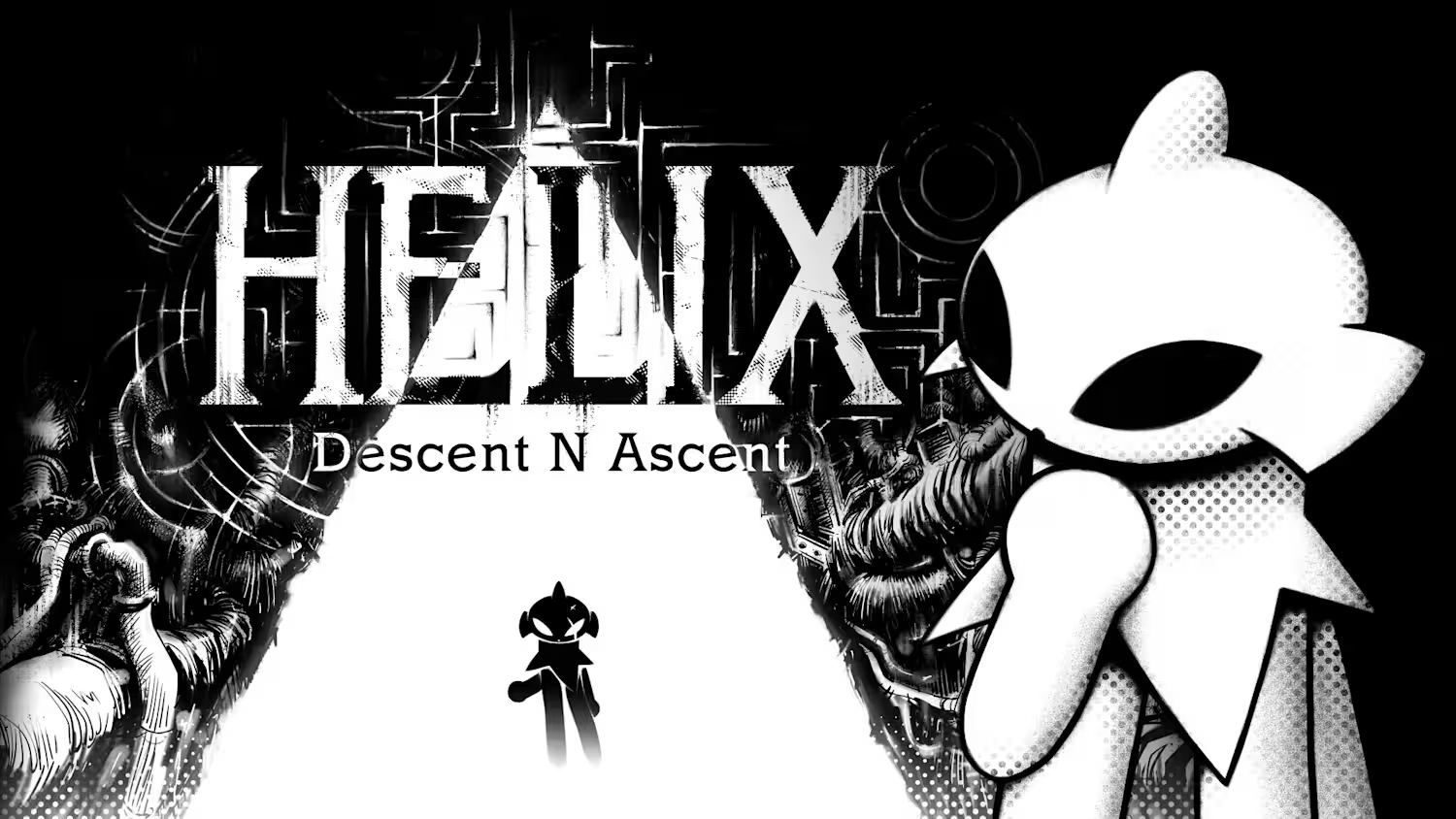
Helix: Descent N Ascent lost me before it impressed me. Literally. I spent an embarrassing amount of time circling through one of its stark monochrome spaces, unsure whether I had overlooked a path, misunderstood a visual cue, or simply walked past something that had blended into the scenery. Then, not long after, I hit a puzzle that forced me to reconsider an ability I had already decided I understood.
That became the rhythm of the game.
Playing the Nintendo Switch version on Switch 2, I kept moving between admiration and irritation. Helix can be wonderfully inventive when it asks you to rethink the relationship between its abilities, but it can also make relatively simple experimentation more cumbersome than it needs to be. I lost patience with it more than once. I also kept coming back.
That says quite a lot.
Five Abilities, Twenty-Five Configurations
Helix introduces five core abilities one by one: Block, Drone, Hook, Cage and Sandglass.
Each begins with an understandable purpose. Block manipulates physical space. Drone lets you interact with things remotely. Hook changes traversal and how you reach distant objects. Cage lets you capture creatures for use in environmental puzzles. Sandglass alters states in more context-sensitive ways, depending on what you are targeting and which other ability it is paired with.
The important part is what happens after those introductions.
Helix builds its puzzle language through 25 configurations: five single-ability states, ten two-ability combinations and ten three-ability combinations. The latter become relevant after the first credits sequence, when the game starts asking more of the player and more of its own systems.
This structure is the reason Helix works as well as it does. A mechanic you mentally classify during the opening hours can become something very different once paired with another. The game is at its best when it gives you just enough information to make an incorrect assumption, then quietly dismantles that assumption through a later interaction.
I had several moments where I stared at a room convinced there was no logical way through it, tried an ability combination mostly out of frustration, and suddenly understood what the game had been teaching me several rooms earlier.
Those moments carry Helix.
A World That Wants You to Look Closely
The broader structure is less straightforward than the opening suggests. Helix moves through connected areas full of puzzle rooms, alternate paths and optional discoveries, with maps helping you make sense of which ability combinations belong where without solving anything on your behalf.
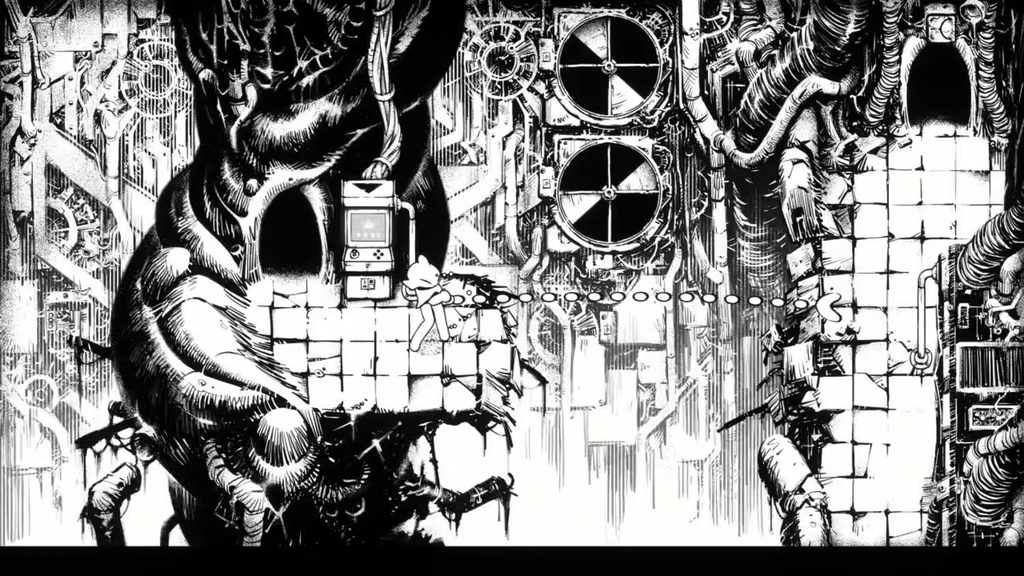
The world also contains arcade machines, and they give the pacing a useful change of texture. These sections lean more toward direct platforming, with hazards and movement challenges that contrast with the slower process of studying a room and working out how its mechanics interact. Different difficulty settings and unlockable cheats add some extra experimentation to these diversions.
They work because Helix knows when its core puzzle loop needs a break.
There are also codes and optional secrets scattered across the game, along with extra challenges for players who want to push further than the main route. Completion runs can become demanding, particularly because Helix is far more interested in hiding things than in making every leftover objective obvious.
That approach fits the game, but it does create friction.
When Obscurity Stops Being Clever
The most persistent irritation comes from changing your approach.
Switching to another ability combination can mean retracing already-cleared ground before you can test a new idea. Early on, this is barely worth mentioning. Later, when puzzle spaces become more complex and you are trying several possible solutions, it starts eating into the flow.
The animation work contributes to that problem. A lot of actions look great the first time you see them, but repetition makes some of those sequences feel slower than they need to be. When you are resetting a puzzle or rebuilding the same setup after a failed attempt, those seconds begin to matter.
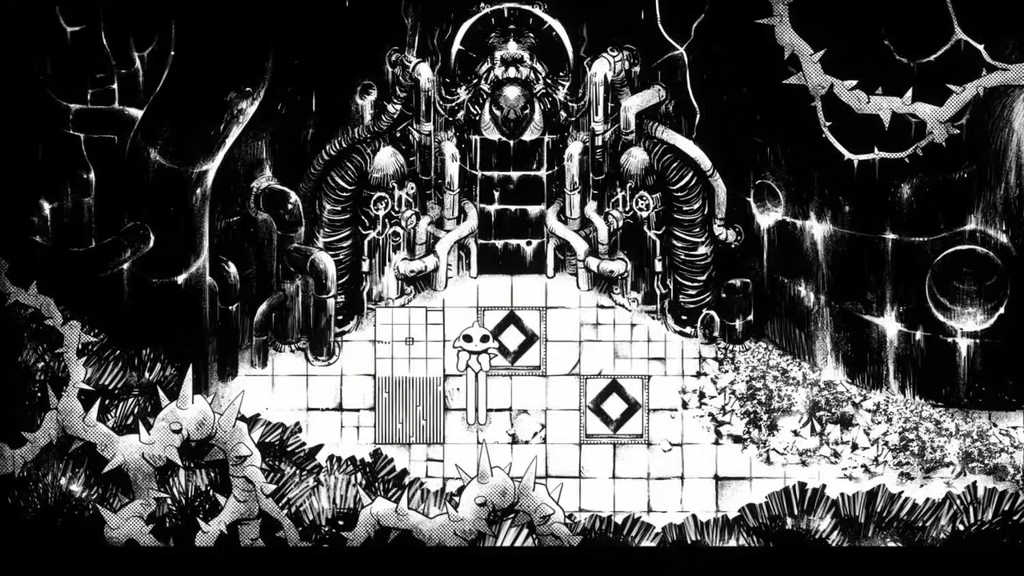
Visual readability occasionally gets in the way too. Helix’s black-and-white presentation is one of its strongest artistic choices, but it can make environmental landmarks and interactable elements blend into surrounding detail. Sometimes I was thinking about the puzzle. Other times I was simply trying to establish what in the room was actually relevant.
That distinction becomes more important deeper into the game.
Most puzzles communicate their rules well enough that failure feels like your mistake. A smaller number rely on interactions that are less clearly taught, and those are the moments where experimentation starts to feel less satisfying. There is a big difference between testing a theory and randomly cycling through possibilities because you no longer trust your understanding of the rules.
Helix usually knows that difference.
Usually.
Black Ink, White Space
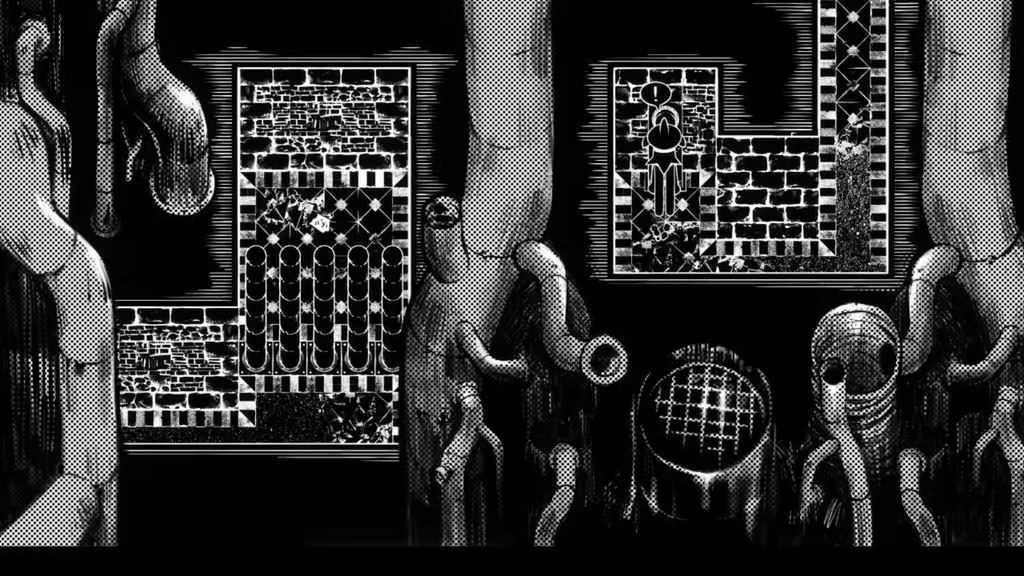
What gives the game so much personality is how committed it is to its visual identity.
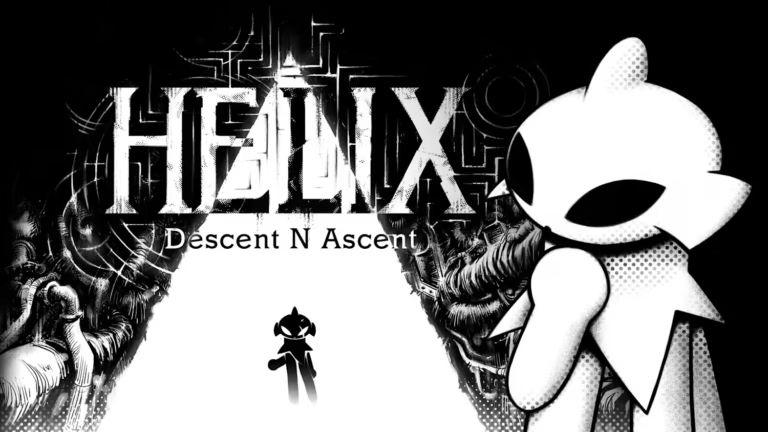
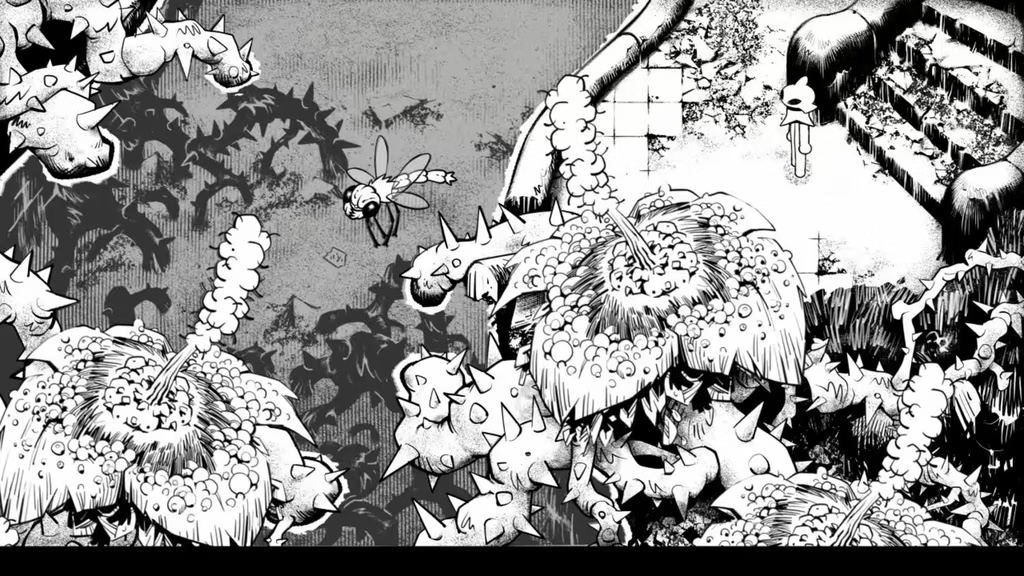
Badass Mongoose has cited influences ranging from black-and-white independent comics to manga and Franco-Belgian comic art, and that lineage is easy to see in the dense line work, heavy contrast and aggressive use of negative space. At its best, Helix looks like an illustrated page that has somehow learned how to move.
The trade-off is that the same visual density responsible for that atmosphere can occasionally interfere with clarity, especially when exploration asks you to pick out a subtle route or object against similarly detailed backgrounds.
Jim Guthrie’s score suits this restraint well. The music rarely tries to dominate a scene, and the game is comfortable with quieter stretches where the environment carries much of the mood.
That restraint extends to the narrative.
Helix keeps dialogue to a minimum and instead leans on recurring imagery, the relationship between opposing figures and the strange spaces connecting them. Themes around identity, isolation and connection are there, but the game resists giving them a clean explanation.
I liked that.
A game built around interpretation would lose something if it suddenly decided to explain itself in plain language.
After the Credits
The first credits sequence is not really the end.
Helix continues into a more demanding stretch built around three-ability combinations, and this is where my opinion becomes more divided. Some of the mechanical ideas here are among the game’s most ambitious because you are now combining systems that already behaved differently in pairs.
The trade-off is that the rougher edges become more visible.
Longer setup sequences, tighter execution and a few less clearly communicated interactions can make this material feel less elegant than the strongest early and mid-game puzzles. At the same time, players who enjoy pushing systems until they break open will probably find some of the game’s most interesting challenges here.
I landed somewhere between those responses.
The post-credits section did not ruin what came before, but it made me more aware of how much Helix relies on trust. When that trust holds, the game feels brilliant. When it slips, frustration arrives very quickly.
Final Verdict
Score: 4.25/5
Helix: Descent N Ascent is a puzzle game I respected more the longer I spent with it.
Its five abilities are simple enough to understand individually, but the 25 configurations built from them give the game far more range than its quiet opening suggests. The best puzzles make you reconsider assumptions you formed hours earlier, and the transition from single abilities to pairs and eventually three-way combinations gives the progression a genuine sense of escalation.
It is not frictionless. Backtracking can become tedious. Some animations overstay their welcome. The monochrome art occasionally hurts readability, and a handful of later interactions are less clearly communicated than they should be.
None of those problems stopped me from wanting to see what the next combination would do.
I spent a lot of Helix wondering whether the game had explained enough.
Then I solved another room and realised I had been looking at it the wrong way.
This review of Helix: Descent n Ascent is based on the Nintendo Switch Version, with the code provided by the Publisher/PR Agency.
About The Author