Origament: A Paper Adventure Review (PC) – Folding Simplicity Into Something Surprisingly Complete
 Avinash Rohra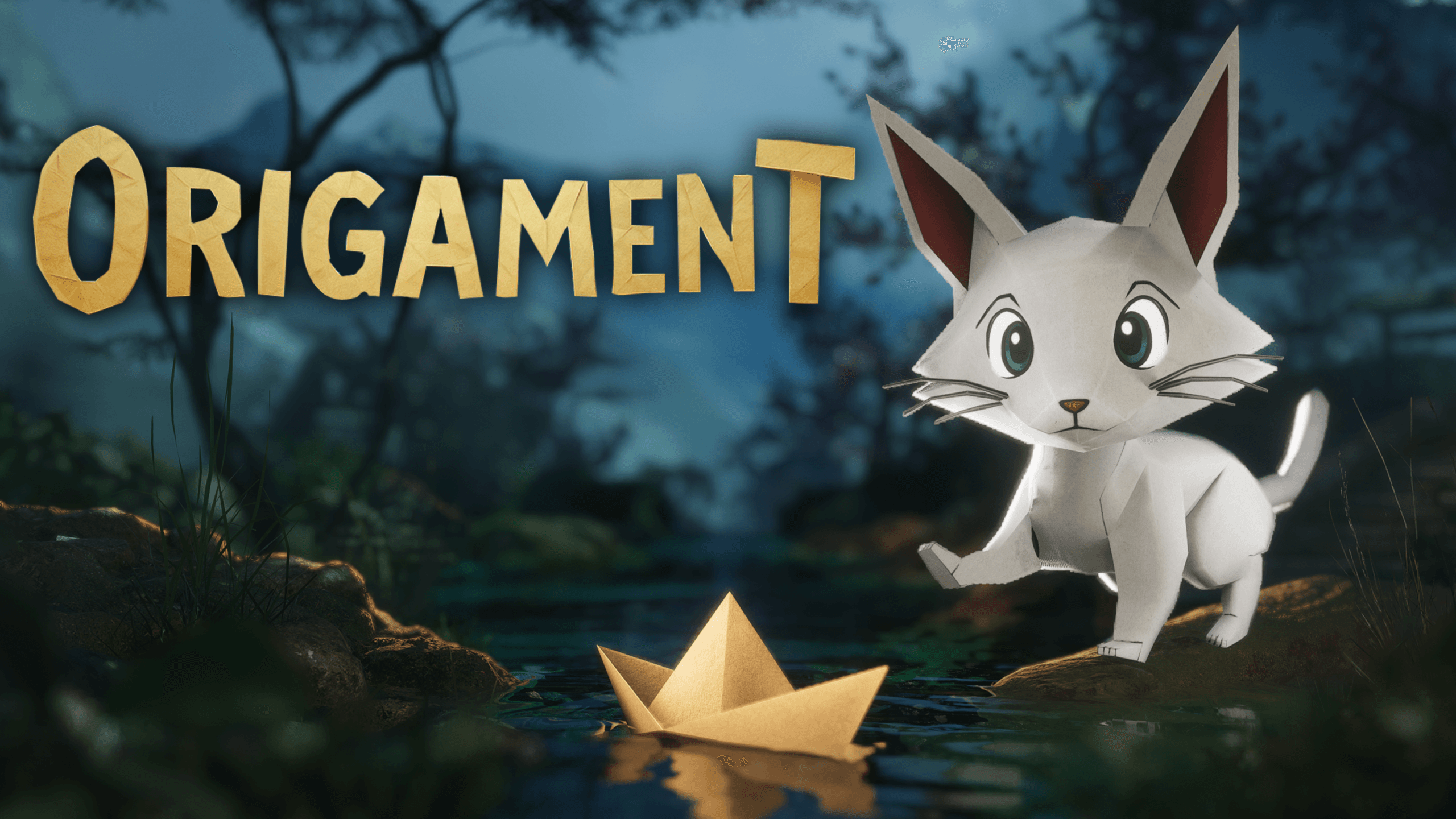
There’s a certain kind of confidence in building a game around one idea and refusing to dilute it. Origament: A Paper Adventure is exactly that kind of game.
I went in expecting a lightweight indie platformer, something pleasant but forgettable. A short-lived curiosity built around a visual gimmick. What I found instead was a tightly focused experience that understands its limitations and leans into them with surprising clarity.
Across roughly three to five hours, depending on how much you engage with optional challenges, Origament never tries to overwhelm you. It never escalates into something bigger than it is. Instead, it commits to a steady rhythm of movement, transformation, and environmental navigation, trusting that its core loop is enough to carry the experience.
For the most part, it is.
What is Origament? – A Letter in Motion
Developed by Space Sauce Studio, Origament: A Paper Adventure is a 3D puzzle-platformer where you play as a sentient letter traveling across time and continents in search of its recipient.
Each level represents a distinct environment, from canals to deserts to stylized cultural landscapes, with the game structured around progressing through a series of contained worlds.
The defining mechanic is transformation. As a piece of paper, you can shift between four primary forms:
- A ball for grounded movement and control
- A plane for gliding across gaps
- A boat for navigating water
- A shuriken-like form used to interact with obstacles and traversal elements
These forms are not optional tools. They are the entire language of the game, and progress depends on using them in combination.
There is no combat system in the traditional sense. The challenge comes from navigating the environment, avoiding hazards, and understanding how each form interacts with the world.
Light Framing, Clear Intent
The narrative setup is simple and consistent across all official material. A letter awakens in an archive of forgotten messages and begins a journey to reach someone who is still waiting.
Beyond that, the game keeps storytelling minimal. There are no heavy dialogue sequences or complex narrative arcs driving the experience forward. Instead, the journey itself provides context, with each new world reinforcing the idea of movement across time and place.
There are small touches that give the game personality, including a recurring cat-like guide that appears throughout levels and transitions, offering light direction without overt explanation.
The result is a story that functions more as atmosphere than structure. It is present, but never intrusive.
A System That Builds Through Variation, Not Expansion
The core gameplay loop is built around switching between the four paper forms to overcome environmental challenges. Each form behaves differently and serves a distinct purpose:
- The ball provides the most control for movement on land
- The plane allows you to glide and use air currents
- The boat simplifies traversal across water sections
- The shuriken enables interaction with switches, obstacles, and certain traversal mechanics
The key is not using these forms individually, but chaining them together. A typical sequence might involve rolling into position, launching into a glide, then switching again mid-movement to interact with an object or maintain momentum.
This is where Origament finds its identity.
Level Design That Prioritises Flow
Levels are structured as contained spaces, often built around corridors, open courtyards, or guided traversal paths that make your objective clear.
Within these spaces, the game introduces variations in how you use your abilities. You might find yourself riding wind currents, navigating water routes, or reacting to environmental hazards like spiked terrain that forces careful movement and timing.
There are also light puzzle elements, including switches and environmental interactions, though these remain a smaller part of the overall experience.
Importantly, the game does not rely on introducing entirely new mechanics as it progresses. Instead, it builds complexity through context. The same four forms are used throughout, but the situations in which you apply them change.
Exploration, Collectibles, and Optional Challenge
Each level includes collectibles such as coins and hidden items, encouraging light exploration beyond the main path.
These collectibles tie into optional systems, including unlockables and bonus challenges that offer a noticeable step up in difficulty compared to the main campaign.
The main story remains accessible, with generous checkpoints and minimal punishment for failure. The optional challenges are where the game demands precision, requiring sustained execution rather than short bursts of accuracy.
Where It Holds Back
The trade-off for this consistency is a lack of dramatic evolution. Because the core mechanics remain unchanged, repetition can set in, particularly if you are expecting new systems to be introduced later.
Movement itself can also feel inconsistent at times. Gliding, in particular, can be affected by camera perspective and depth perception, occasionally making landings feel less precise than they appear.
These are not game-breaking issues, but they are noticeable.
Defined by Design Choices
✅ Pros
- Strong, clearly defined core mechanic built around transformation
- Varied environments across multiple themed worlds
- Relaxed, low-pressure gameplay with optional challenge layers
- Clean, readable level design that prioritises flow
- Accessible progression with minimal frustration
❌ Cons
- Limited mechanical evolution across the full experience
- Repetition becomes more noticeable over time
- Occasional camera and depth perception issues during glidingThis review of Tiny Bookshop is based on the PS5 version, with a code provided by the game’s publishers.
Final Verdict – A Focused Experience That Knows Its Limits
Score: 4 / 5
Origament: A Paper Adventure succeeds because it understands exactly what it wants to be.
It is not trying to compete with mechanically dense platformers or narrative-heavy adventures. Instead, it delivers a compact, cohesive experience built around transformation and movement, supported by strong visual variety and a consistent tone.
Its biggest strength is its clarity of design. Its biggest weakness is its reluctance to push beyond that foundation.
But within those boundaries, it works.
This is a game that does not overstay its welcome, does not overcomplicate its systems, and does not pretend to be something it isn’t.
And sometimes, that restraint is exactly what makes it worth playing.
This review of Origament: A Paper Adventure is based on the PC version, with a code provided by the game’s publishers.
About The Author