Avinash Rohra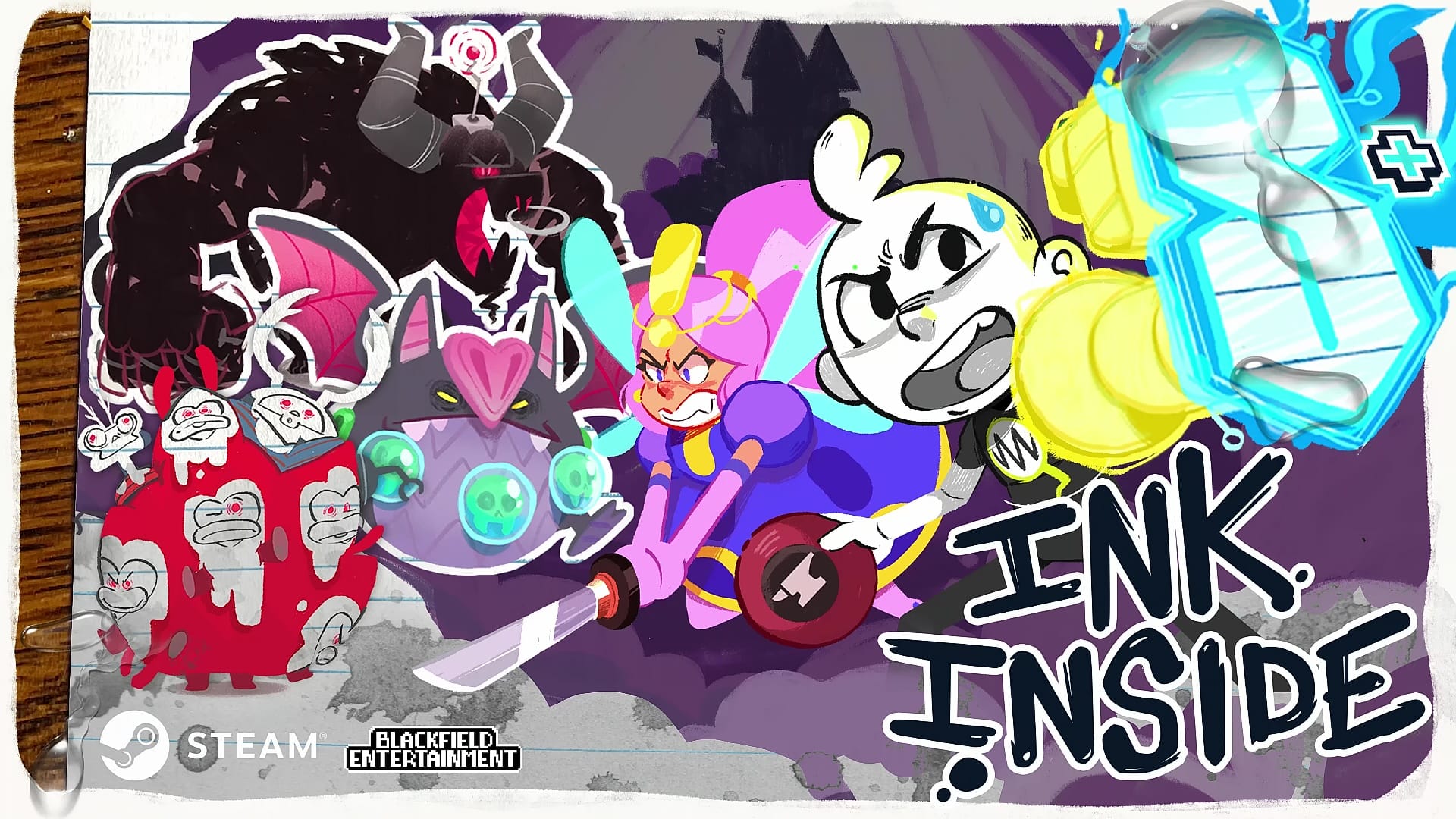
There’s a very specific kind of confidence required to build an entire game around dodgeball combat, hand-drawn sketchbook visuals, and a protagonist who looks like he escaped from the margins of a high-school notebook. Most games attempting that combination would collapse under the weight of their own quirks. Ink Inside somehow holds everything together through sheer personality.
I played the PC version expecting a charming but shallow indie platformer – something visually creative that would probably run out of ideas halfway through. Instead, Ink Inside kept surprising me. Not because it constantly reinvented itself, but because every few hours it introduced another strange mechanic, clever boss fight, or beautifully chaotic environment that reminded me how much care had gone into the world itself.
Developed by Blackfield Entertainment and published by Entalto Publishing, Ink Inside throws players into a hand-drawn universe slowly being consumed by spreading ink corruption. You play as Stick, a sketchbook character navigating collapsing environments, strange enemies, and increasingly unstable pages filled with hidden paths, upgrades, and bizarre cartoon logic.
What immediately stands out is how alive the world feels. Every area looks hand-illustrated, but more importantly, it moves like an actual cartoon. Characters stretch exaggeratedly during attacks, enemy animations bounce with elastic energy, and environmental transitions often feel like somebody rapidly flipping through animated storyboard panels. The game constantly gives the impression that it was drawn first and programmed afterward, which ends up becoming one of its biggest strengths.
Welcome to the World’s Most Chaotic Sketchbook
The story itself is fairly straightforward on paper. Ink corruption is spreading across the sketchbook world, twisting locations and creatures into hostile versions of themselves, and Stick gradually uncovers what is happening while helping the strange inhabitants trapped inside the pages.
What makes the narrative work is not complexity, but tone.
Ink Inside constantly balances slapstick humor with moments of sincerity without feeling emotionally manipulative. One scene might involve absurd visual comedy and exaggerated reactions straight out of a Saturday morning cartoon, while another quietly slows things down long enough to let the world breathe. The writing never becomes overly dramatic, which helps the emotional moments land more naturally than expected.
Stick also works surprisingly well as a protagonist because the game avoids turning him into an endless stream of forced “quirky” dialogue. He reacts to the world with enough personality to stay engaging, but the game understands when to let animation and atmosphere carry scenes instead of constantly filling silence with jokes.
That restraint matters because the visual design is already doing so much heavy lifting emotionally. Entire environments begin distorting as corruption spreads, turning once colorful sketchbook locations into warped messes of leaking ink and broken geometry. The game communicates most of its atmosphere visually rather than through endless exposition dumps, and it is far stronger because of that choice.
Dodge, Throw, Repeat – Combat With Saturday Morning Energy
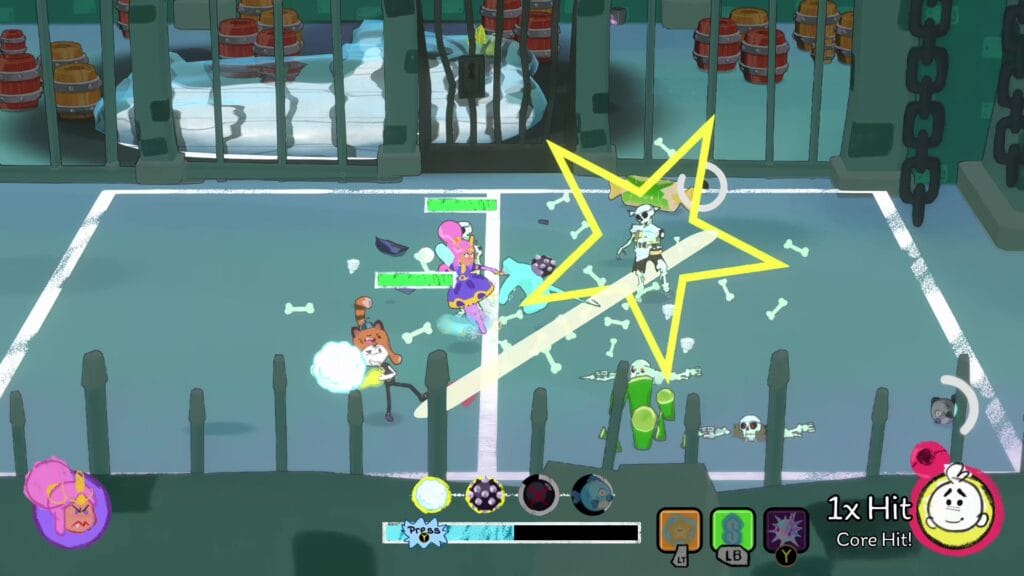
The real surprise, though, is the combat.
Ink Inside revolves around dodgeball-inspired projectile combat instead of traditional melee systems, and I honestly expected the gimmick to wear thin quickly. It never really did.
Combat has a fast, arcade-like rhythm once everything clicks into place. Encounters revolve around timing throws, weaving through attacks, bouncing projectiles back at enemies, and constantly repositioning yourself around chaotic arenas. Early fights are relatively simple, but the game steadily layers in new enemy behaviors, environmental hazards, unlockable abilities, and larger boss encounters that keep the mechanics evolving throughout the adventure.
Several boss fights ended up becoming highlights of the entire experience because they feel designed around spectacle rather than raw difficulty. One encounter transforms the arena into complete projectile chaos, forcing you to focus entirely on movement and timing, while another feels almost puzzle-like in how it uses environmental interactions. The game clearly understands that if combat is going to carry the experience mechanically, enemy variety and encounter design need to stay unpredictable.
Exploration helps break up the pacing nicely as well. Hidden upgrades, collectibles, side paths, and optional areas reward players who wander away from the critical path, and the levels are dense enough to encourage curiosity without becoming overwhelming.
That said, Ink Inside is not completely polished mechanically. Some later combat sections begin throwing too many enemy waves at the player, causing encounters to drag longer than necessary. Navigation can occasionally become messy too, especially in visually crowded areas where foreground elements make progression paths harder to read than they should be.
Still, even when the pacing stumbles, the core gameplay loop remains consistently enjoyable because movement and combat simply feel good moment-to-moment.
Every Frame Looks Scribbled Into Motion
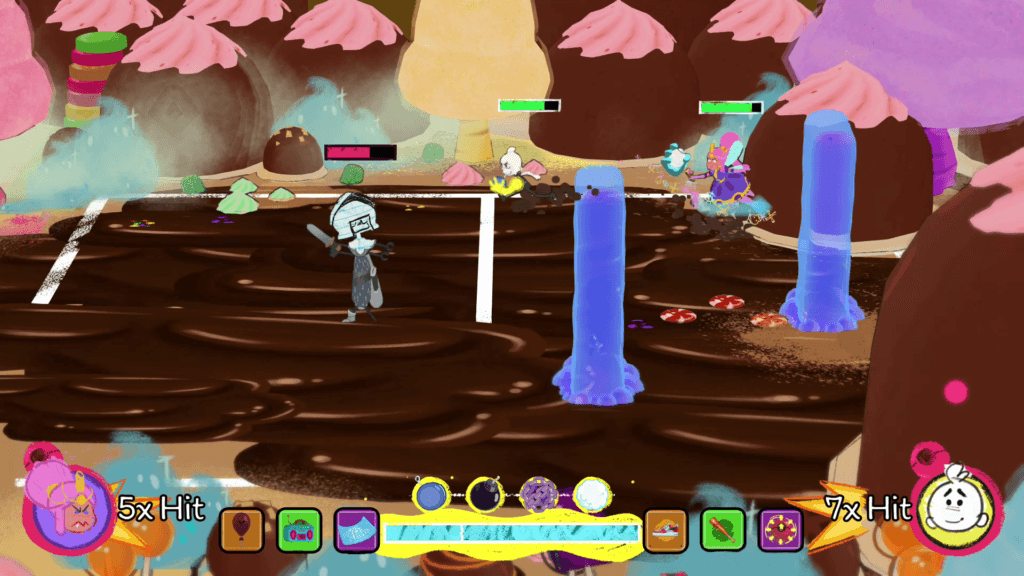
Visually, Ink Inside is one of the most memorable indie games I’ve played this year.
The hand-drawn aesthetic never feels like a gimmick layered over generic design. The sketchbook presentation actively shapes the entire experience, from environmental storytelling to combat effects and animation timing. Thick outlines, rough textures, and exaggerated motion give the world an intentionally imperfect look that fits the tone perfectly.
The soundtrack complements that energy well, shifting between playful cartoon-style tracks during exploration and heavier, more atmospheric music during corruption-heavy sequences and boss encounters. Sound effects also deserve credit for making combat feel satisfying. Every projectile hit, dodge, and environmental interaction has enough impact behind it to prevent battles from feeling floaty or weightless.
More importantly, the game understands pacing. It knows when to overwhelm players with visual chaos and when to pull back just enough to let the atmosphere settle in.
That balance keeps Ink Inside from becoming exhausting despite how energetic it often is.
Style With Actual Substance
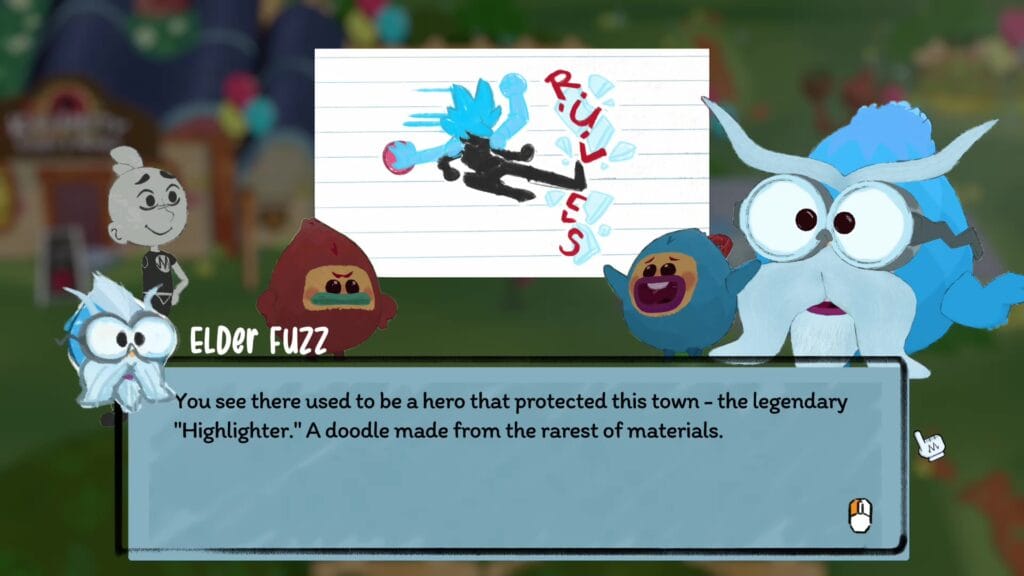
What impressed me most about Ink Inside is that beneath all the visual chaos sits a genuinely fun action-adventure game. It would have been easy for the developers to rely entirely on aesthetics and internet-friendly weirdness, but the game consistently backs up its presentation with smart combat design, memorable boss encounters, and a world that feels genuinely handcrafted.
No, it is not flawless. Some sections drag, combat repetition occasionally creeps in late-game, and certain mechanics could have used another layer of refinement. But the game’s creativity consistently outweighs its rough edges.
More importantly, Ink Inside never feels manufactured. In a year full of indie releases desperately trying to imitate successful trends, this game actually has its own voice.
And honestly, that alone makes it stand out.
Pros & Cons
Pros
- Fantastic hand-drawn art direction and animation
- Creative dodgeball-inspired combat system
- Memorable boss fights with strong visual variety
- Fun exploration and rewarding side content
- Great balance between cartoon humor and sincerity
- Strong sense of identity throughout
Cons
- Some late-game combat encounters drag too long
- Navigation occasionally becomes visually cluttered
- A few pacing issues during longer sections
Final Verdict – Beautifully Unhinged
Score: 4.6/5
Ink Inside succeeds because it fully commits to its own weirdness. It is energetic, creative, occasionally messy, and packed with the kind of visual personality that instantly separates it from dozens of interchangeable indie action games.
By the end of my PC playthrough, I stopped thinking about the game as “that cool sketchbook indie” and started appreciating how confidently it handled combat, pacing, exploration, and world design underneath all the visual flair.
That distinction is important.
A lot of indie games look creative. Far fewer actually feel creative once you start playing them.
Ink Inside absolutely does.
This review of Ink Inside is based on the PC version, with a code provided by the game’s publishers.
About The Author