Swordcery Early Access Review – The Swords Are Already Sharp, Everything Around Them Needs Work
 Avinash Rohra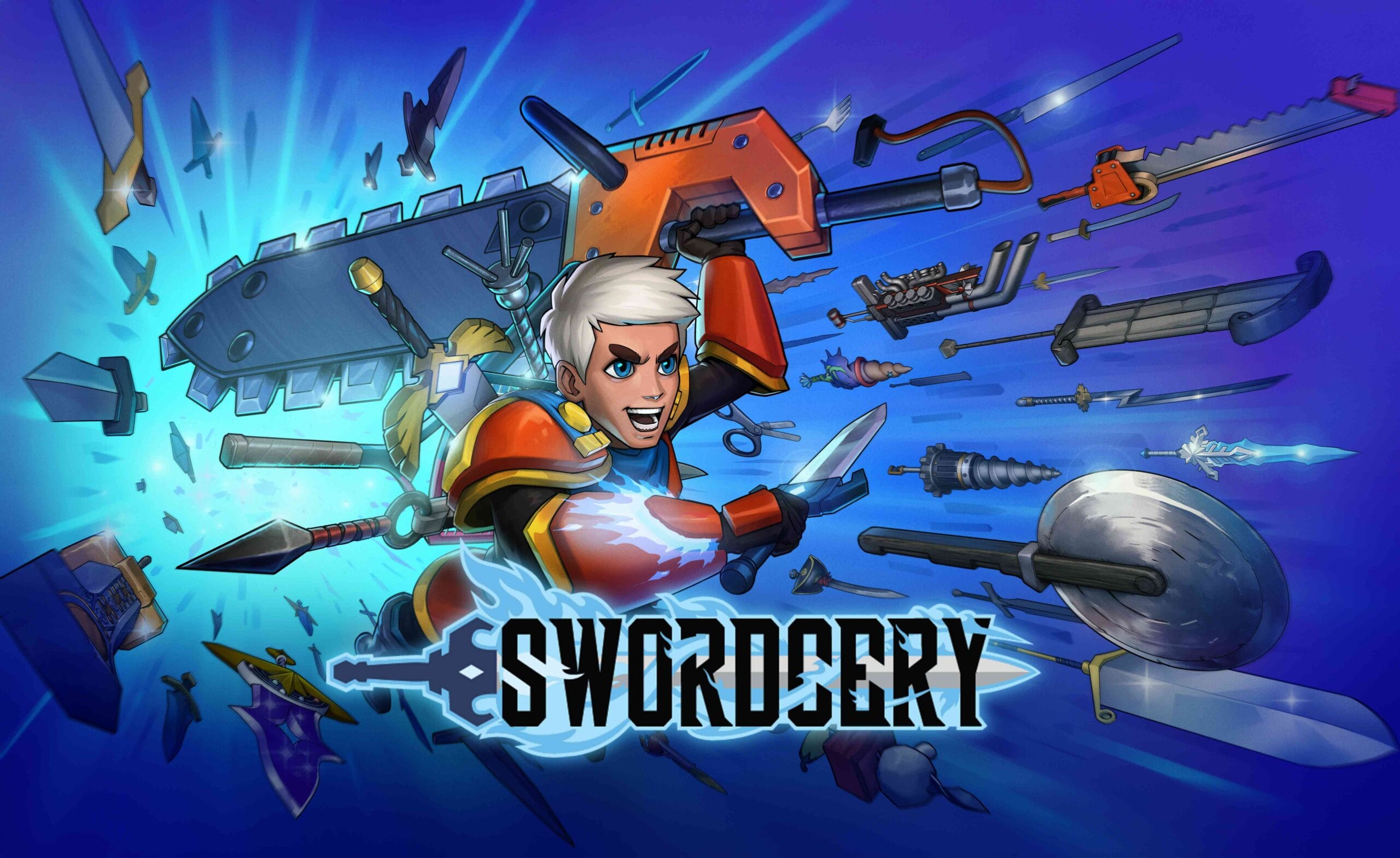
There is a shark in Swordcery that counts as a sword. Not a shark-shaped blade, either. The joke is exactly as stupid as you’re imagining, and after several runs on PC I started to understand why Temple Door Games has spent years building an entire roguelite around this idea. Swordcery is at its best when it stops worrying about whether a weapon makes sense and asks a much better question: would it be fun to hit monsters with it?
Usually, the answer is yes.
That makes Swordcery an unusually easy Early Access game to root for and a slightly harder one to recommend without qualifications. The central idea is already strong. Its arsenal has personality, combat encourages you to learn what different blades can do, and discovering another ridiculous weapon remains the game’s best reward. The systems surrounding those swords aren’t nearly as convincing yet.
The Pointy End Is Already Working
A colossal sword has crashed into Armorial, bringing a rain of enchanted blades with it and draining the world around it. Colt somehow gains the ability to wield these fallen weapons and heads out against the Celestial threat responsible. It is enough story to get proceedings moving, although narrative currently stays well behind the action.
Around 40 swords are available in Early Access, spread across six Sword Classes. Each class has its own light combo and heavy attack, while every individual sword carries a magical Swordcery ability. That second layer is where the idea clicks.
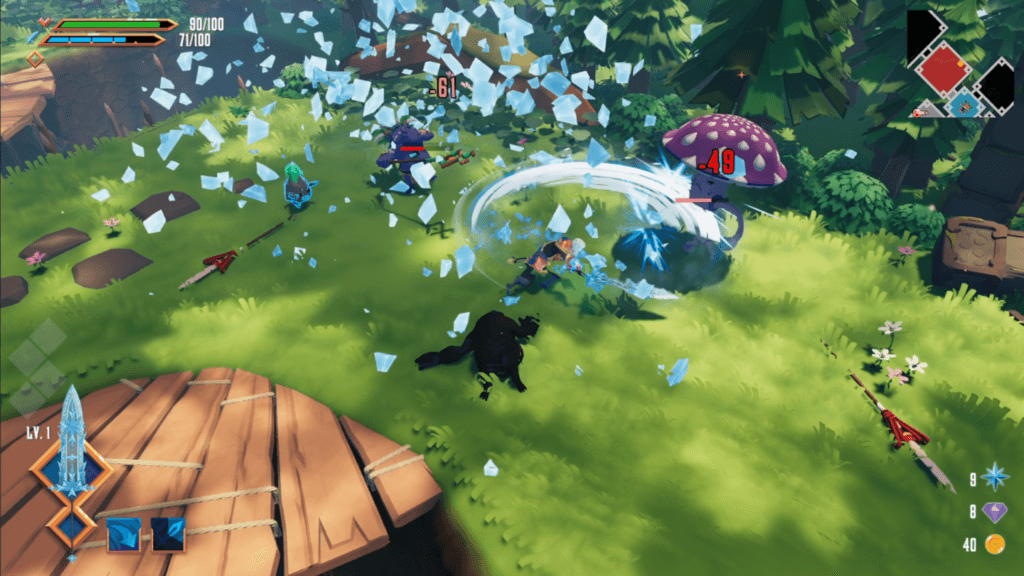
Changing weapons means more than replacing one damage statistic with another. Swordcery attacks can behave very differently, and learning what fits a particular run gives the loot some actual meaning. The weapons are also where Temple Door Games’ sense of humour comes through most clearly. Conventional fantasy blades sit alongside deliberately ridiculous creations, and the game rarely acts embarrassed about any of it.
I like that confidence. Roguelites live on repetition, so anything that makes me curious about the next pickup matters.
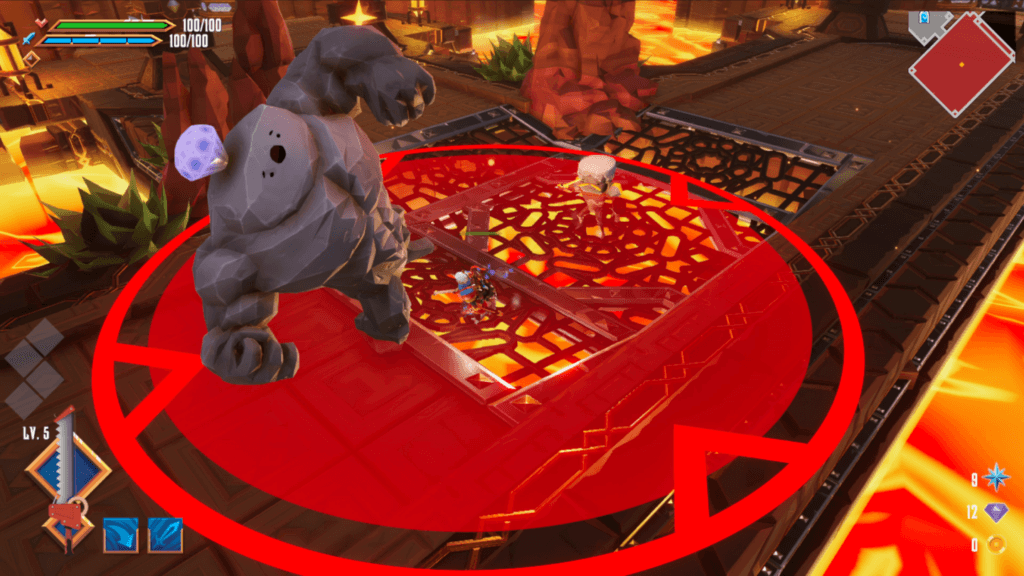
Combat itself is built around melee attacks, blocking, dodging and those weapon-specific abilities. Enemies telegraph attacks, and busier rooms force you to pay attention to threats outside whichever creature you’re currently hitting. There is enough happening that positioning matters without turning every encounter into visual soup.
A Roguelite Economy Fighting Its Own Best Idea
Swordcery becomes less convincing once the run ends.
There is already a substantial amount of progression here. The current build contains over 100 passive relics, 12 Ethereal Steel upgrades that modify Sword Class light and heavy attacks, and more than 40 permanent upgrade options through the Divine Obelisk.
The problem is that progression rarely feels as interesting as discovering swords.
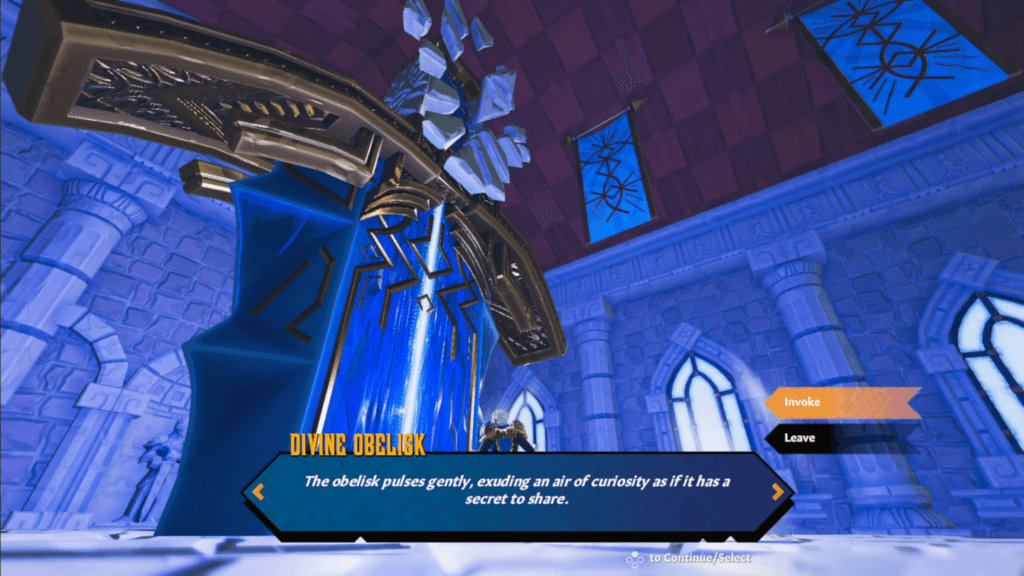
Many permanent improvements are incremental, while resources arrive slowly enough that the downtime between meaningful upgrades can drag. Swordcery wants me to experiment constantly, yet its economy regularly makes experimentation feel expensive. Investing heavily into something that is working naturally makes me less inclined to abandon it when another amusing blade turns up.
That tension cuts directly against what makes the game appealing.
Balance is still shifting as well. Temple Door Games has already adjusted relic values, individual Swordcery attacks and Challenge Room rewards, while the developers have openly acknowledged feedback around currency availability. This is exactly the sort of system that Early Access should be ironing out, but in the version available now, progression remains one of Swordcery’s weakest areas.
Still Missing Its Final Stretch
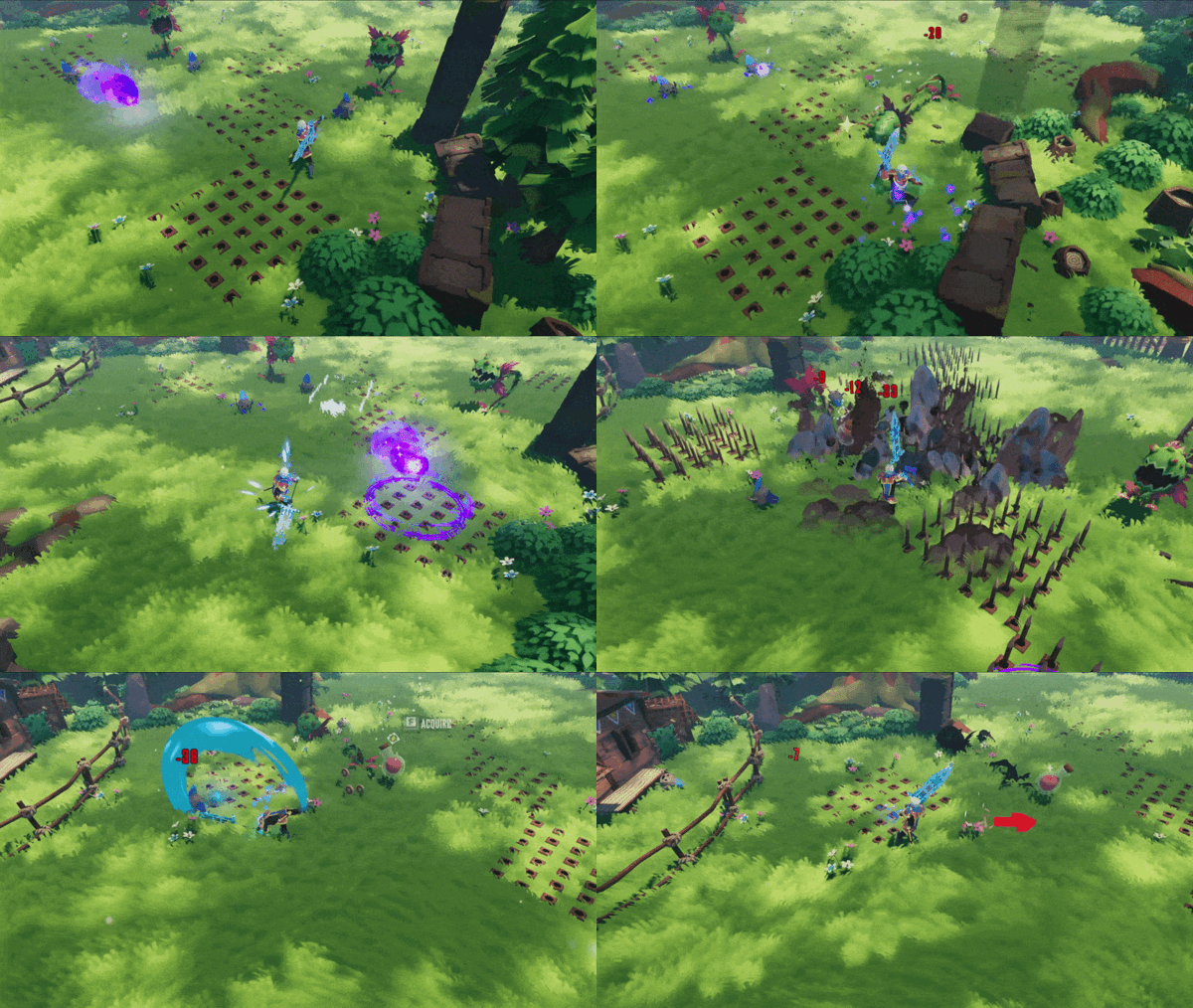
The current build contains three of the four planned main areas. The fourth level and final boss are intended for the eventual 1.0 release, alongside further additions and balance work.
Boss encounters are useful stress tests for Swordcery’s current progression systems. When a build is working, these fights ask you to recognise attacks, manage space and make proper use of your weapon abilities. When your damage scaling falls behind, however, the same encounter can begin to overstay its welcome. The second boss in particular has drawn criticism from players for how long the fight can become with an underpowered build.
That distinction matters. Swordcery doesn’t have a universal problem where every boss is buried underneath an absurd health bar. In fact, Temple Door Games has already adjusted boss balance in both directions during Early Access. The issue is that the relationship between upgrades, damage output and encounter length still feels unsettled.
The encouraging part is how quickly the developers have been reacting. Camera positioning has been changed to improve visibility. Enemy attacks have received timing adjustments. Menu navigation and relic management have been cleaned up. Challenge Room rewards have been increased, while a poorly received challenge was removed altogether. Performance during part of the second boss encounter has also received attention.
Swordcery feels unfinished, but it doesn’t feel abandoned in that unfinished state.
Early Access Verdict – Still Being Forged
Score: 3.5/5
The presentation helps enormously. Swordcery has a colourful, exaggerated look that fits its weapon designs, and its willingness to be silly keeps Armorial from becoming another interchangeable fantasy setting. I only wish the narrative had enough presence to make the world itself as memorable as the arsenal. NPC conversations and bits of lore exist, but the current build is much more interested in getting Colt back into another run.
After playing it on PC, that is where I land on Swordcery as a whole. Its best ideas are already good enough that I want Temple Door Games to keep pushing them. Finding swords is fun. Trying their abilities is fun. Watching a seemingly idiotic weapon become useful is exactly the sort of discovery this genre thrives on.
But Early Access is doing some heavy lifting here. Progression remains uneven, the economy can feel restrictive, balance is still moving around, and the final main area has yet to arrive.
Swordcery doesn’t need a new identity before 1.0. It already has one. It needs the roguelite wrapped around those swords to become worthy of them.
This review of Swordcery is based on the Early Access PC Version, with the code provided by the Publisher/PR Agency.
About The Author