Avinash Rohra
There is a particular reverence attached to Worms Armageddon. For many players, it is not simply another entry in a long-running series but the definitive Worms experience, the game that distilled the franchise’s anarchic humour, destructible landscapes, and deceptively tactical turn-based combat into its most enduring form. Playing it now on the Nintendo Switch, decades after its original release, is less about discovery and more about revisiting a cultural artefact. Like many artefacts from gaming’s past, the experience is equal parts comforting and frustrating.
I played Worms Armageddon primarily in handheld mode, dipping in for short sessions rather than extended multiplayer marathons. That in itself is revealing. This is still a game fundamentally designed around local play, hot-seat sessions, and shared screens, the kind of communal chaos that flourished when friends crowded around a single monitor. On a modern portable console built around flexibility and connectivity, Worms Armageddon often feels slightly out of step, even as its core design remains intact.
A Classic Structure That Still Works
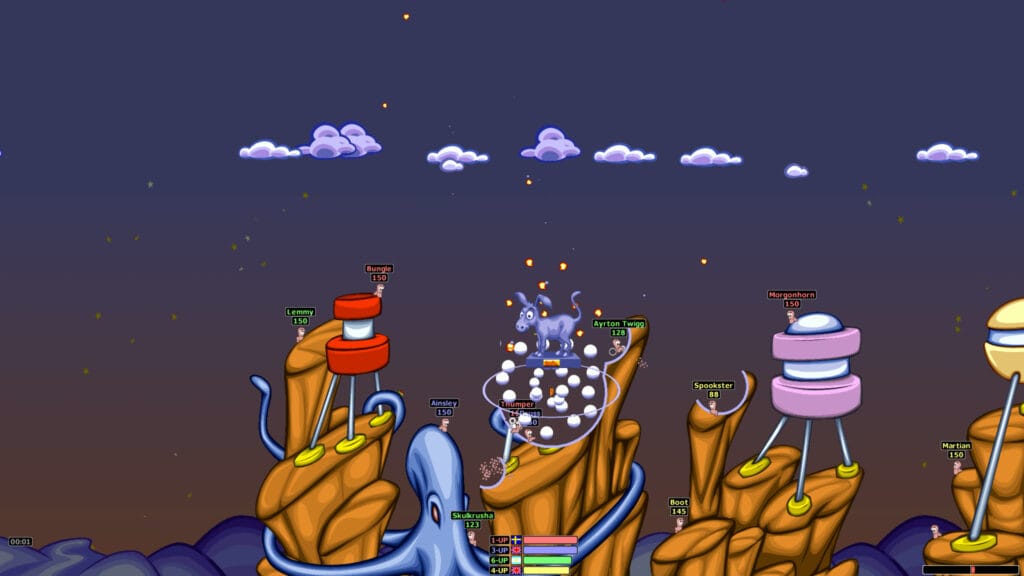
At its core, Worms Armageddon is unchanged. Teams of cartoon worms take turns navigating 2D battlefields, lining up shots with bazookas, grenades, and an arsenal of increasingly exaggerated weapons. Terrain is fully destructible, wind direction directly affects projectile trajectories, and a single misjudged jump can still send a worm tumbling into the water. These systems behave consistently and predictably, and they remain the foundation of the game’s tactical depth.
The fundamentals are clear and readable. Success is shaped by positioning, patience, and an understanding of physics rather than speed or reflexes. Campaign missions and challenge stages reinforce these ideas, presenting scenarios that demand careful use of movement tools and limited resources. Solving a challenge with a precisely timed ninja rope swing or a well-angled grenade still highlights how deliberate the underlying design is. Beneath the slapstick presentation sits a carefully tuned strategy game.
Humour That Remains Intact, If Familiar
Personality has always been central to the Worms series, and Armageddon preserves that identity in full. Exaggerated death animations, cartoon sound effects, and distinctly British humour define the tone. Worm voices taunt opponents, celebrate unlikely kills, and mourn their own deaths with theatrical exaggeration. The presentation is broad and intentionally silly, and it remains consistent throughout play.
What has changed is context rather than content. For returning players, much of the humour lands through familiarity rather than surprise. Iconic weapons such as the Holy Hand Grenade or the Concrete Donkey still behave exactly as expected, but their impact now comes from recognition rather than novelty. This is not a flaw of the port, but it does underline how firmly Worms Armageddon belongs to its original era.
Where Age Becomes Visible
The most noticeable limitations of Worms Armageddon on Switch stem from adaptation rather than core design. This is a faithful port, and that faithfulness cuts both ways. Menus retain their original structure, text can appear small in handheld mode, and navigating layered options with a controller lacks the immediacy of mouse and keyboard input.
Onboarding is minimal. Tutorials are brief, and the interface assumes a level of familiarity with Worms systems. There are no modern quality-of-life additions to ease new players in. For newcomers, this can make the early experience feel less approachable than contemporary strategy games. For returning players, it reinforces the sense that this is a preserved classic rather than a reworked one.
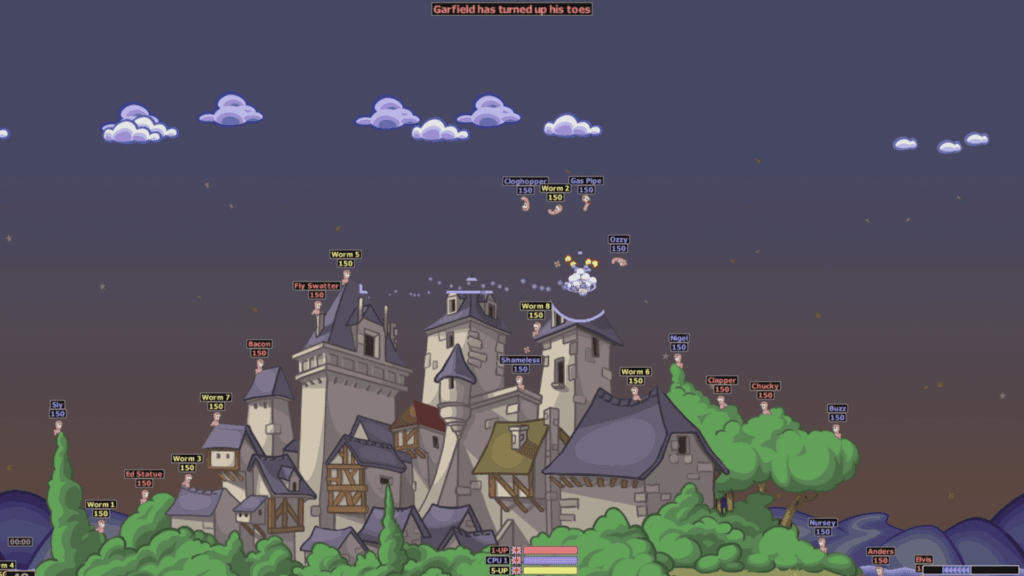
From a technical standpoint, performance during matches is stable. Explosions, terrain deformation, and multi-worm turns play out without disruption. Load times between menus and matches are present but brief, and I encountered no crashes or progression-blocking issues during play.
Multiplayer Strengths, Constrained Execution
Worms Armageddon remains at its best in multiplayer. Human opponents introduce unpredictability that no AI match can replicate. Local multiplayer on Switch functions as intended, supporting shared-console play and capturing the turn-based tension the series is known for.
Online multiplayer is included but limited in scope. Match creation and joining are straightforward, yet the system lacks features that have become standard in modern multiplayer games. There is no ranked play, no streamlined matchmaking, and no cross-platform support. Multiplayer works, but it relies on players organising sessions rather than being actively guided into them.
Presentation Preserved, Not Enhanced
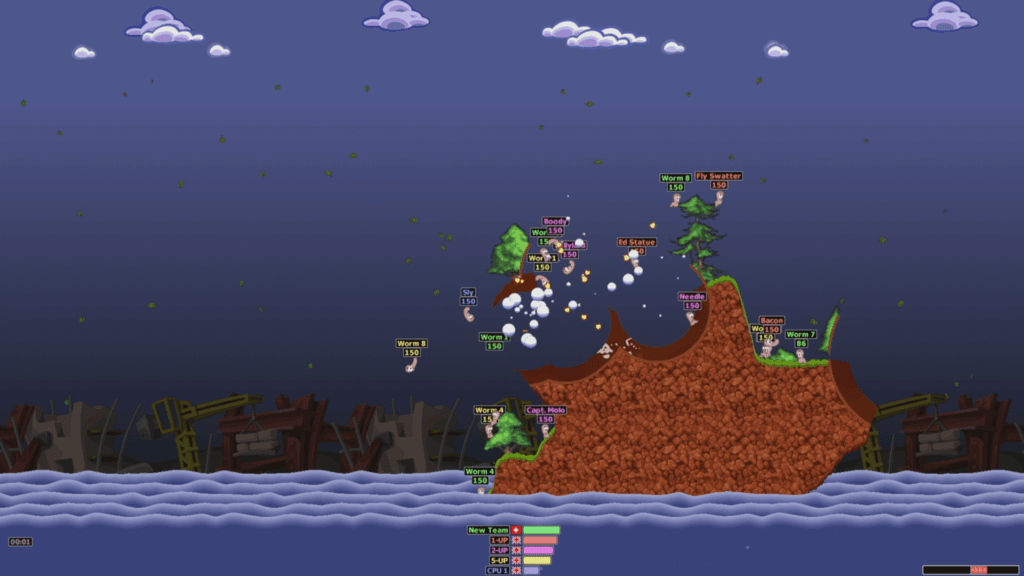
Visually, Worms Armageddon looks exactly as it always has. The 2D sprites, hand-drawn environments, and weapon effects are unchanged. On the Switch screen, the game is cleanly presented and readable, but it does not take advantage of the hardware in any meaningful way. There are no visual upgrades, no remastered assets, and no display options beyond basic scaling.
Audio follows the same philosophy. Sound effects, voice clips, and music tracks are all intact and function reliably. They reinforce the game’s identity without drawing attention to themselves. Like the visuals, they are preserved rather than expanded upon.
Context and Legacy
Any assessment of Worms Armageddon must acknowledge its place in the franchise’s history. Developed by Team17, it represents a high point for the series and a formative experience for many strategy fans. That legacy is evident in how confidently its systems still function.
However, legacy alone does not ensure relevance. On the Switch, surrounded by newer strategy titles and more feature-rich Worms entries, Armageddon struggles to justify itself beyond preservation and nostalgia. It is neither the most accessible nor the most expansive Worms game available today. It is, instead, the most authentic expression of what Worms once was.
Final Verdict
Final Score: 3 / 5
Worms Armageddon on Nintendo Switch is a respectful, restrained port of a landmark game. Its mechanics, content, and personality remain fully intact, and it runs reliably on modern hardware. Yet the absence of interface updates, modern multiplayer infrastructure, or meaningful enhancements prevents it from feeling essential in a contemporary context.
For long-time fans, it offers a familiar return to well-worn battlefields. For newcomers, it functions more as a historical reference point than a definitive entry into the series. It ultimately settles into the middle ground: an important game, a well-preserved one, but not a great modern release.
This review is based on the Nintendo Switch version, with the code provided by the game’s publishers.
About The Author