Fine Work: Act I Review – Like Reading Someone Else’s Dreams at 2 A.M.
 Avinash Rohra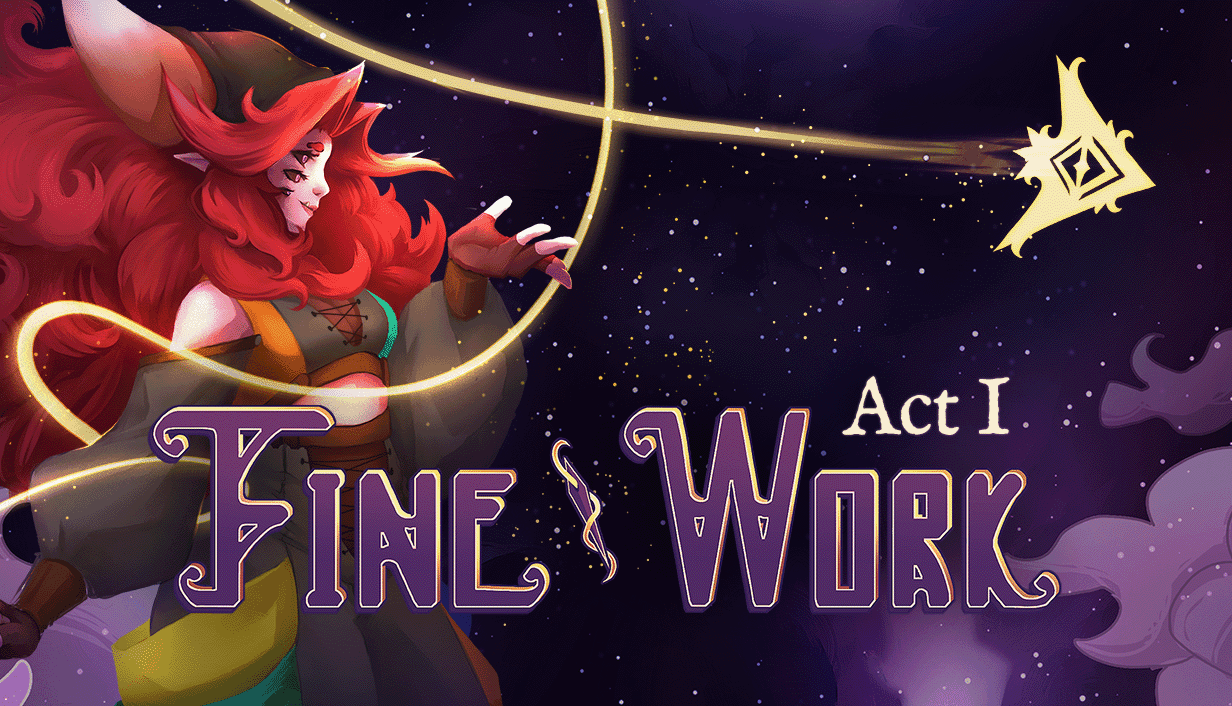
There’s a moment early in Fine Work: Act I where the game finally clicks into focus. Not through a dramatic twist or explosive set piece, but through conversation – the kind of rambling, emotionally vulnerable exchange that feels less like traditional game dialogue and more like eavesdropping on real people trying to understand themselves.
Up to that point, I wasn’t entirely sold.
Tethys Games’ debut project arrives with an intimidating cocktail of descriptors: rhythm game, visual novel, romantic mystery, branching narrative, science-fantasy worldbuilding, dating sim. That combination sounds dangerously close to “too many ideas in one pot,” especially in the indie space where ambitious narrative hybrids often collapse under their own weight.
But Fine Work: Act I survives because of one thing modern games rarely allow themselves to be: earnest.
And while it doesn’t fully avoid pacing problems or structural awkwardness, this first chapter carves out a distinctive identity somewhere between VA-11 Hall-A, Coffee Talk, and the emotional abstraction of rhythm games like Sayonara Wild Hearts.
A Workshop Built on Memory and Music
At its core, Fine Work: Act I is a visual novel fused with rhythm gameplay. You play a newly arrived artisan in the sprawling fantasy city of Gleamhold, opening a workshop dedicated to creating “sendshape” – artifacts woven from people’s memories and emotions.
That premise gives the game enormous thematic flexibility. One client might bring romantic uncertainty. Another carries existential grief. Others arrive wrapped in bizarre cosmic mythology involving gods, living cities, underground concerts, and surreal dream logic. The game’s official descriptions openly embrace that strangeness, advertising “scheming gods,” “sentient cities,” and “wild concerts” as part of its identity.
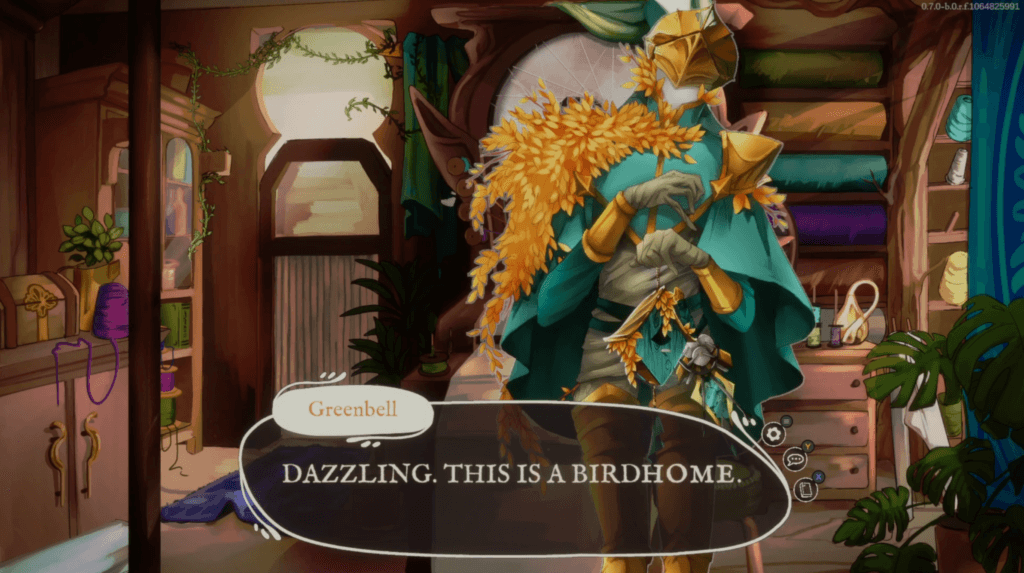
Importantly, Fine Work never treats its worldbuilding as disposable flavor text. Gleamhold feels dense with culture, slang, mythology, and interpersonal history. There’s even an integrated glossary system for keeping track of terminology – something several Steam users specifically praised because the game throws players into its universe with little handholding.
That density can occasionally become exhausting. The script sometimes indulges itself, wandering into long conversational tangents before emotional payoff arrives. But unlike many lore-heavy indies, the writing here usually feels character-driven rather than wiki-driven.
Rhythm as Emotional Expression
The rhythm gameplay is where Fine Work separates itself from the growing crowd of dialogue-heavy cozy indies.
Rather than existing as detached minigames, rhythm sequences represent the act of sendshaping itself – translating memories and emotions into crafted artifacts. It’s a smart thematic connection that gives the musical sections narrative purpose beyond simple gameplay variation.
Mechanically, the system lands in an interesting middle ground. It isn’t brutally technical like DJMAX or Osu!, but it demands enough concentration to stay engaging. Steam reviews repeatedly describe the rhythm gameplay as approachable while still retaining challenge after the initial learning curve.
That accessibility matters because Fine Work clearly wants visual novel fans – not just rhythm veterans – to feel welcome.
The soundtrack does much of the heavy lifting here. Official material references everything from “foley-driven electronica” to “sword-fight breakcore” and “baroque chamber tunes.” In practice, that eclecticism gives the game a constantly shifting emotional texture. Some tracks pulse with nervous energy; others drift into melancholy ambience.
There’s an improvisational quality to the audio direction that makes Gleamhold feel alive in ways the visuals alone couldn’t accomplish.
Not Quite Cozy, Not Quite Cosmic Horror
What surprised me most was how emotionally grounded the writing becomes despite its surreal presentation.
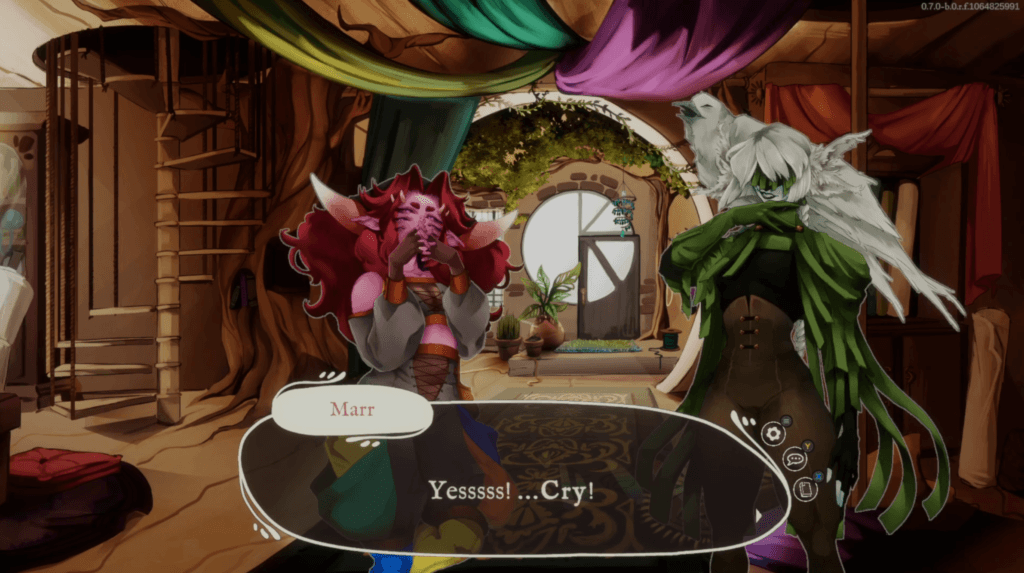
The game advertises romance elements and branching paths, but thankfully avoids turning relationships into simplistic approval meters. Characters feel awkward, contradictory, flirtatious, lonely, and occasionally frustrating in believable ways.
That humanity anchors the game’s larger fantasy concepts.
One moment you’re discussing artistic insecurity with a client; the next you’re unpacking strange metaphysical implications about memory itself. The tonal balancing act shouldn’t work as well as it does, yet Fine Work mostly pulls it off because its emotional stakes remain intimate even when the lore becomes cosmic.
In some ways, it reminded me of Disco Elysium stripped of political aggression and rebuilt around empathy, romance, and creative vulnerability instead.
That said, Fine Work doesn’t consistently maintain momentum. The slower pacing will absolutely alienize players expecting a stronger gameplay loop or faster narrative escalation. Some conversations overstay their welcome, especially in the opening hours when the game is still teaching players how its universe functions.
This is a game that demands patience.
Handmade Weirdness
Visually, Fine Work: Act I embraces a deliberately handcrafted aesthetic. Character portraits are expressive without becoming overly anime-exaggerated, while environments carry a painterly softness that complements the game’s dreamlike atmosphere.
It’s not technically flashy, but it has personality – something increasingly rare in indie games chasing identical pixel-art nostalgia or hyper-polished Unreal aesthetics.
The UI occasionally stumbles, though. Community patch notes reference fixes for audio balancing, controller usability, synchronization, and interface problems following launch. None of the issues I encountered on PC were catastrophic, but there are moments where menus and rhythm timing feel slightly rough around the edges.
Still, for a relatively small project, the overall presentation remains impressively cohesive.
Pros & Cons
Pros
- Rich and imaginative worldbuilding
- Excellent soundtrack with huge stylistic variety
- Clever fusion of visual novel storytelling and rhythm gameplay
- Strong emotional writing and memorable characters
- Gorgeous handcrafted art direction
Cons
- Slow pacing won’t work for everyone
- Dense terminology can initially overwhelm players
- Minor UI and rhythm synchronization roughness on PC
Final Verdict – A Beautifully Imperfect First Act
Score: 3.8/5
Fine Work: Act I feels like the beginning of something rather than a fully complete statement – which makes sense given the title itself. But even as an opening chapter, there’s already a fascinating creative voice emerging here.
Tethys Games clearly understands that emotional sincerity can carry players further than spectacle ever will.
This isn’t a game built for everyone. Players looking for constant action, streamlined pacing, or mechanically dense rhythm systems may bounce off quickly. But for people willing to immerse themselves in its strange fantasy world, awkward tenderness, and musical experimentation, Fine Work offers something increasingly uncommon in modern indie gaming: genuine artistic vulnerability.
Messy? Absolutely.
Memorable? Without question.
This review is based on the PC version, with a code provided by the game’s publishers.
About The Author