Avinash Rohra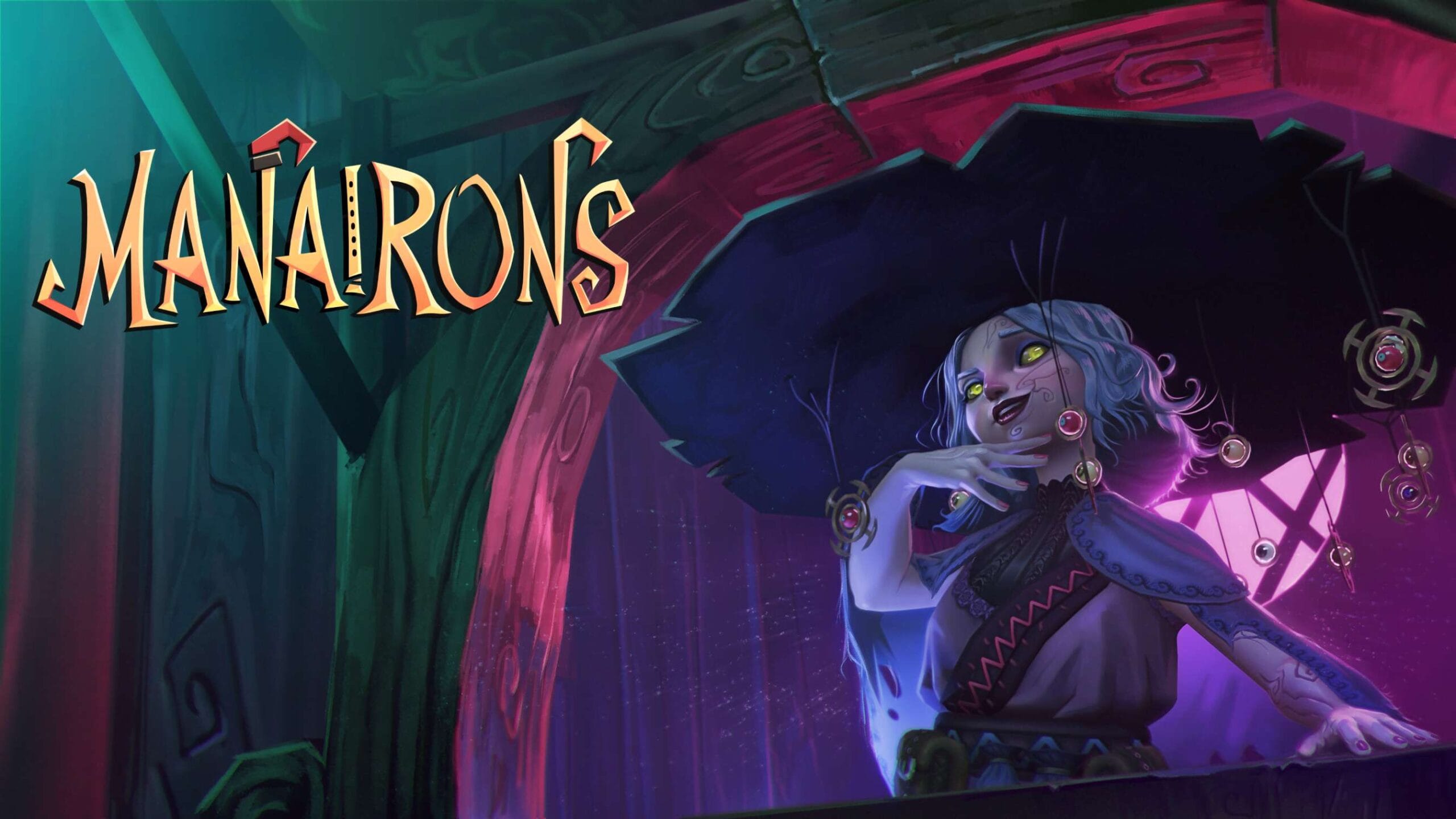
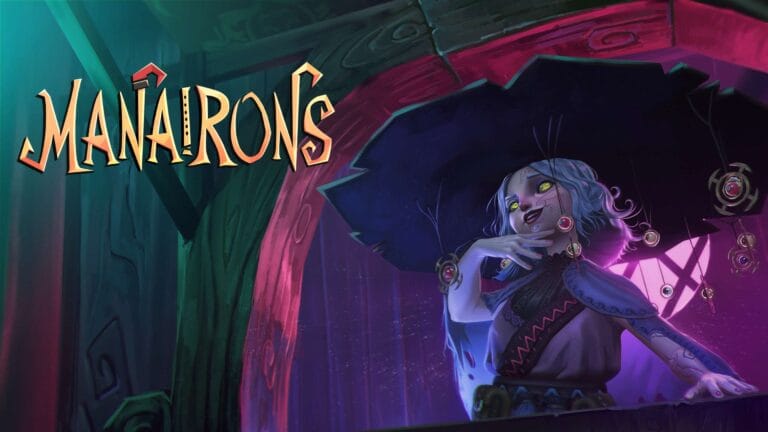
There is a bakery in Manairons where ovens become platforming hazards. Elsewhere, workshops and other businesses are blown up to enormous proportions because Nai, the creature at the centre of it all, is tiny enough for everyday spaces to become obstacle courses. It is a simple idea, but it gets at what makes Manairons interesting. This is a platformer built around scale, place and a piece of folklore that games have barely touched. Its Catalan roots aren’t decorative material pasted over familiar genre conventions. They give Vilamont its creatures, terminology and much of the personality holding the experience together.
The problem is that Manairons doesn’t play with the same confidence with which it presents itself. Combat struggles with precision, the camera occasionally makes jumps harder to read than they should be, and some of the game’s early ingenuity settles into repetition. None of those problems erase what works. They simply make the distance between Manairons’ ideas and their execution unusually easy to see.
A Canut Full of Trouble
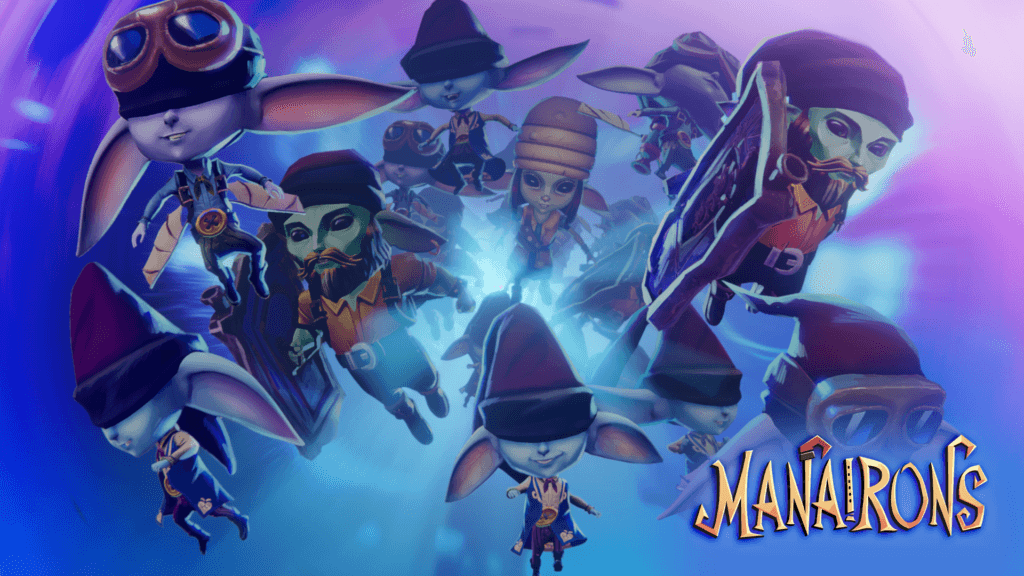
Manairons draws from legends surrounding the tiny creatures of the Pyrenees. Nai has spent centuries trapped inside a canut before being released by a witch into a Vilamont transformed by Llorenç, a wealthy landowner who has put the manairons to work as part of his attempt to industrialise the village. Businesses have closed, villagers have retreated into their homes and machinery has spread across the settlement.
It is fertile material for a platformer, particularly because the folklore doesn’t disappear once the premise has been established. Vilamont acts as a hub connecting themed businesses that become individual stages, with locations such as bakeries turning ordinary workplaces into oversized playgrounds.
Changing Nai’s scale does a surprising amount of work. Objects that would barely register in another game become pieces of the environment here, while machinery and workplace equipment become obstacles. There is an appealing old-school sensibility to this approach, recalling platformers that could turn otherwise mundane surroundings into playgrounds simply by changing the player’s relationship with them.
That gives Manairons a recognisable visual identity before its mechanics even enter the conversation.
Five Notes Are Enough to Cause Trouble
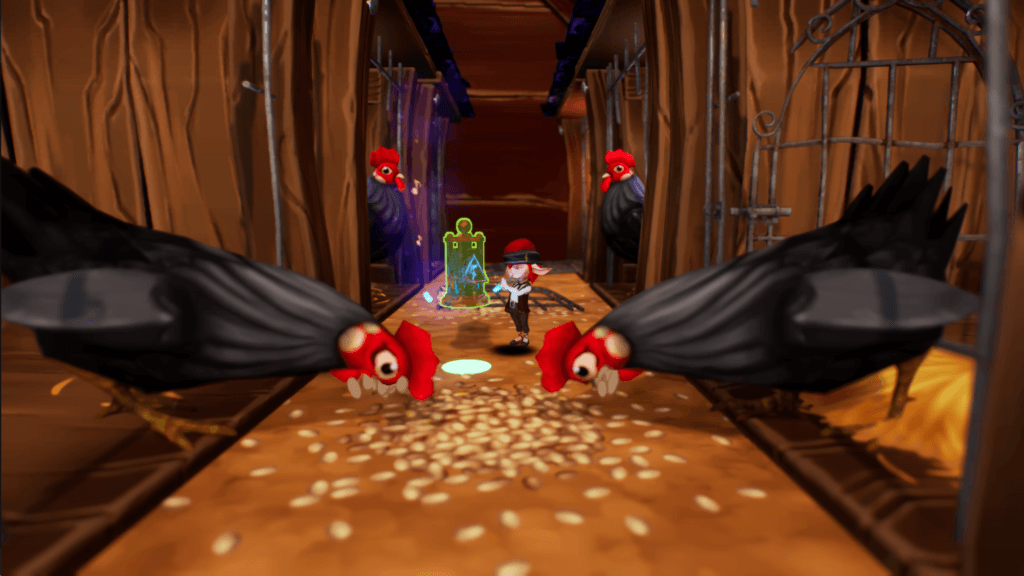
Nai’s flute is the game’s defining mechanic. Over the course of the story he learns five melodies, with those tunes becoming tools for manipulating objects and solving environmental puzzles. Different songs have specific applications, and the game gradually asks you to recognise where each belongs rather than constantly replacing one mechanic with another.
This is where the central idea works best. The puzzles themselves aren’t particularly demanding, but tying them to Nai’s melodies gives Manairons a mechanical language that belongs to its protagonist and setting. Later solutions become easier to anticipate as the same vocabulary is reused, and the puzzles eventually lose some of their initial novelty, yet they remain a better showcase for the flute than combat.
Nai’s flute is also central to fighting hostile manairons, alongside a small set of offensive actions. Lock-on helps establish a target, but attacks can lack the precision expected from encounters this straightforward. The limited offensive options leave little space for combat to develop across the game, making repeated encounters increasingly familiar.
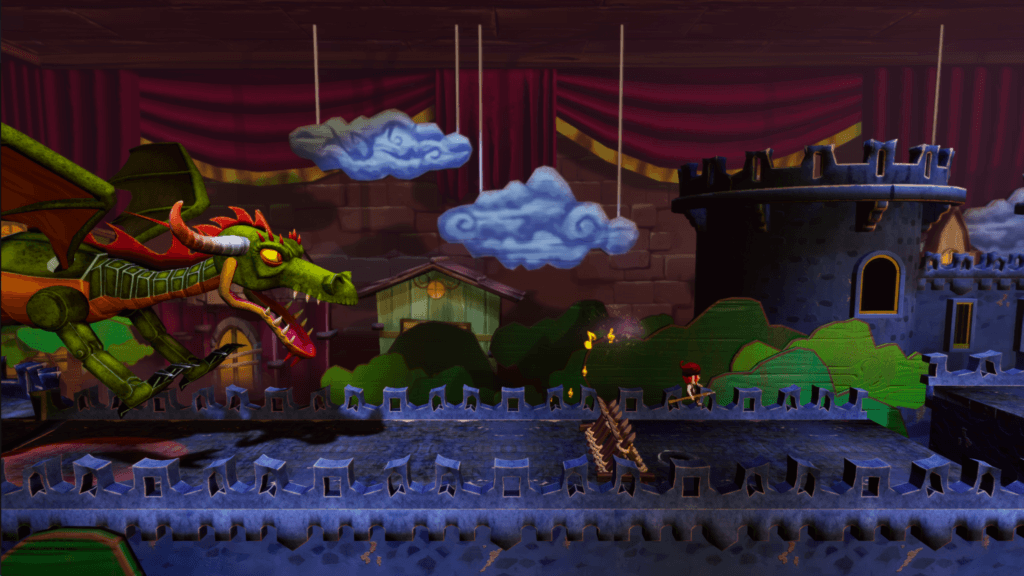
Boss battles provide larger set pieces between areas and give individual enemies more presence, although they don’t fundamentally change that underlying combat. Manairons is much more convincing when Nai’s musical abilities are interacting with the environment than when another group of enemies blocks the route forward.
Watch Your Step
Platforming sits somewhere between those extremes. Manairons is officially described as a 3D action platformer, although its environments sometimes shift towards a more side-on presentation. Combined with Nai’s diminutive size, these changes give individual spaces some welcome visual variety.
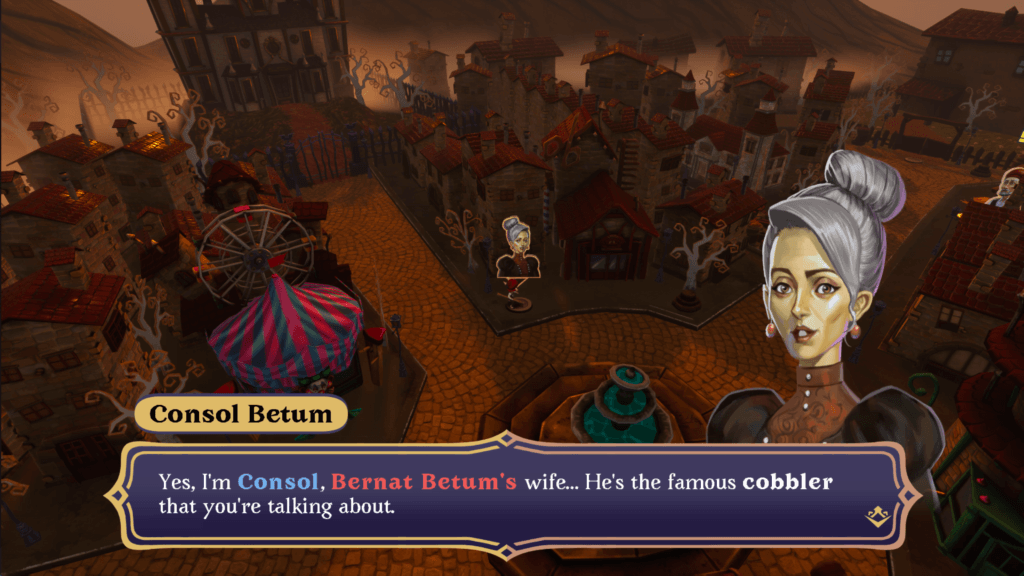
The environments themselves frequently have good ideas behind them. Oversized workplaces naturally lend themselves to climbing, jumping and searching for alternative routes, while secrets and collectibles encourage poking around beyond the obvious path. There is an enjoyable rhythm when a stage moves cleanly between traversal and a compact environmental puzzle.
The camera doesn’t always keep pace. Depth can become difficult to read, making some jumps harder to judge than they should be, while the double jump and collision detection can occasionally behave inconsistently. These aren’t constant problems, and other stretches of platforming work without incident, but a genre built around judging distance and committing to movement has little room for uncertainty in either.
It is an important distinction because Manairons doesn’t suffer from a lack of platforming ideas. The frustration comes from seeing environments that invite playful traversal without always having movement precise enough to make the most of them.
Vilamont Is Worth Saving
Presentation does plenty to keep the game personable. Manairons has a stylised visual language that complements its folkloric origins without making the setting feel like an educational exercise. Oversized surroundings reinforce Nai’s stature, machinery gives the industrialised Vilamont a distinct texture, and the character designs lean into the unusual creatures on which the story is based.
The soundtrack similarly draws upon the game’s folk identity, while the inclusion of full Catalan voice acting feels especially appropriate for a project so closely connected to Catalan culture. English and Spanish voice options are available as well.
There are collectibles and secrets tucked throughout the businesses for anyone inclined to explore beyond the obvious route. They don’t radically alter the experience, but they give the oversized environments another reason to be examined rather than treated purely as corridors between objectives.
More importantly, Manairons rarely feels culturally anonymous. Its terminology, creatures and setting aren’t drawn from the same familiar fantasy pool, and that specificity becomes valuable whenever the mechanical side begins to repeat itself. There are technically accomplished platformers that struggle to establish this much personality.
Pros
- Catalan and Pyrenean folklore gives the game a distinctive identity
- Oversized environments make effective use of Nai’s tiny scale
- Five flute melodies give environmental puzzles their own character
- Varied businesses provide strong environmental theming
- Secrets and collectibles reward exploring beyond the main route
Cons
- Combat lacks precision and meaningful variety
- Camera can make some jumps difficult to judge
- Double jumping and collision detection can feel inconsistent
- Puzzle solutions become increasingly predictable
Final Verdict
Score: 3.5/5
Manairons has a stronger identity than its mechanical execution can consistently support. Vilamont is an appealing setting, Nai’s tiny stature is put to good use across its oversized businesses, and the five magical melodies give the environmental puzzles a hook that belongs specifically to this world. Its use of Catalan and Pyrenean folklore also gives the game a perspective rarely encountered in the genre.
Combat is where the weaknesses become most obvious. A limited moveset and inconsistent precision prevent encounters from developing much depth, while camera behaviour, collision quirks and occasional difficulty judging jumps introduce friction into otherwise enjoyable platforming. The puzzles eventually become predictable too, although their relationship with the flute remains one of the game’s better ideas.
That leaves Manairons caught between a platformer that is mechanically familiar and a setting that is anything but. It doesn’t fully reconcile those two sides, and its rough edges are too frequent to ignore. Yet Vilamont, Nai and the folklore behind them give the game something that polish alone cannot manufacture: an identity of its own.
This review of Manairons is based on the PS5 Version, with the code provided by the Publisher/PR Agency.
About The Author