Avinash Rohra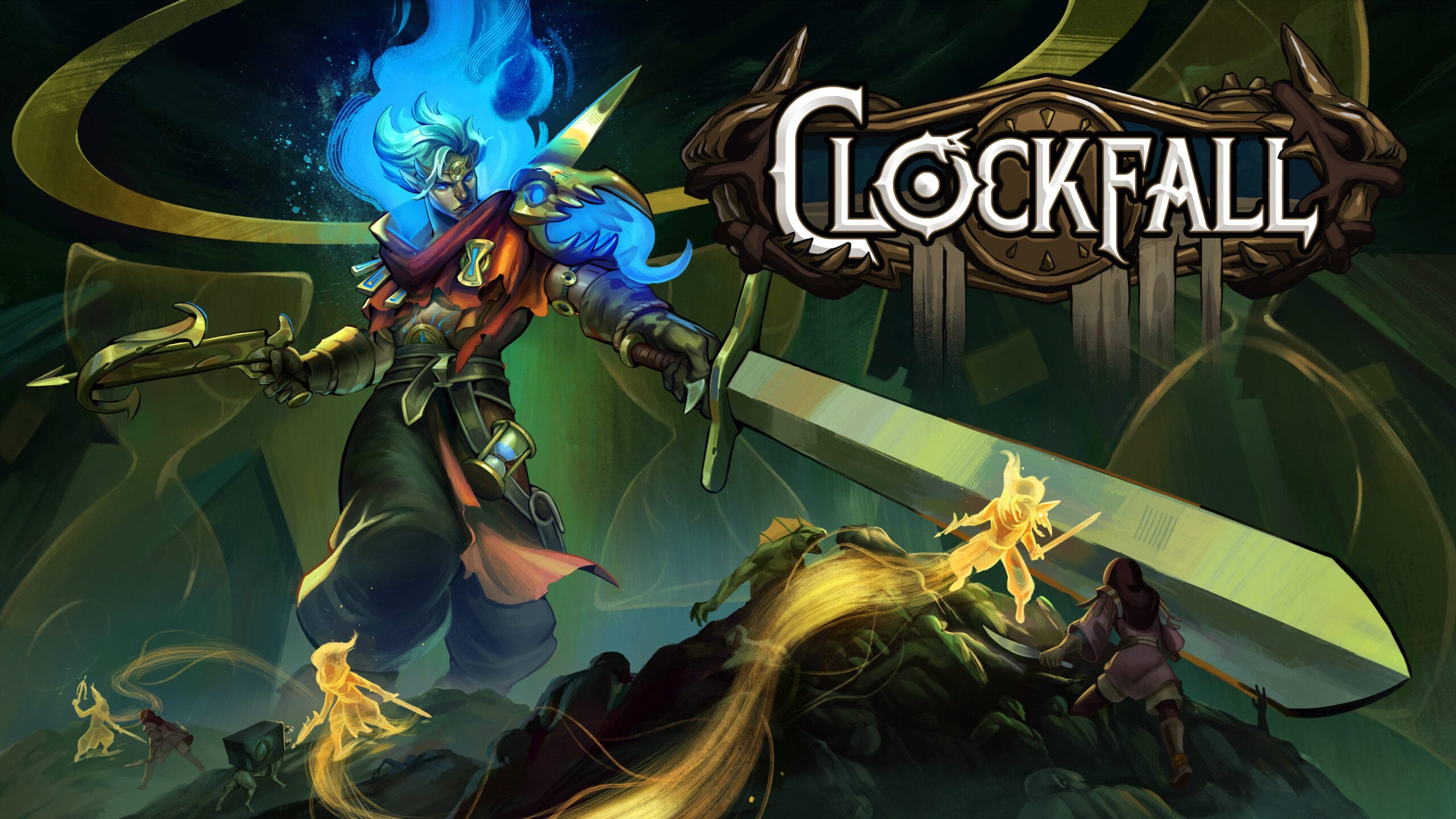
Countdown timers and exploration have never been natural friends. Put a clock in the corner of the screen and even the most inviting path starts looking like wasted time. Clockfall builds almost its entire action RPG around that tension, then spends its Early Access campaign finding increasingly clever ways to make time feel less like a restriction and more like something I am actively spending.
That distinction took a while to click.
Developed by Rever Games, Clockfall places Wilbur inside a repeating nightmare surrounding the destruction of his village. A mysterious clock lets him return to events connected to the massacre, sending him into dangerous areas for resources and upgrades before the cycle eventually brings him back toward the village and its defenses.
The broad structure pulls ideas from action RPGs and roguelites, but Clockfall’s identity comes from how aggressively it ties those systems to time. Every detour has a cost. Every fight eats seconds. Even death can eventually become another transaction involving the clock.
After playing it on PC, that was the part I kept returning to.
Every Second Has a Price
Dungeon runs revolve around a visible countdown, and Clockfall becomes more interesting once you stop treating that number purely as a deadline.
Its environments use fixed layouts rather than constantly rebuilding themselves through procedural generation. That means familiarity matters. Routes that feel uncertain during early attempts gradually become readable. You begin recognising useful paths, remembering where particular areas connect and judging which stretches deserve the time required to explore them.
That knowledge becomes its own form of progression.
A traditional roguelite often measures improvement through bigger numbers and stronger unlocks. Clockfall still has permanent progression, but route knowledge carries almost as much weight. Spending fewer seconds moving between objectives can matter just as much as improving damage.
The current Early Access build pushes that concept further with Nightfall. When the dungeon timer reaches zero, the run no longer simply ends. Nightfall begins instead. Enemies become considerably more dangerous, their health and armour are combined into a larger Night Pool, Wilbur begins losing health over time and loot becomes more lucrative.Suddenly zero is not a wall. It is a warning.
That makes the final stretch of a dungeon particularly effective because continuing after the clock expires changes the risk rather than closing the door. The reward is better, but the conditions deteriorate quickly enough that staying alive becomes the new problem.
It turns a familiar countdown into something much more interesting.
Death Is Just Another Expense
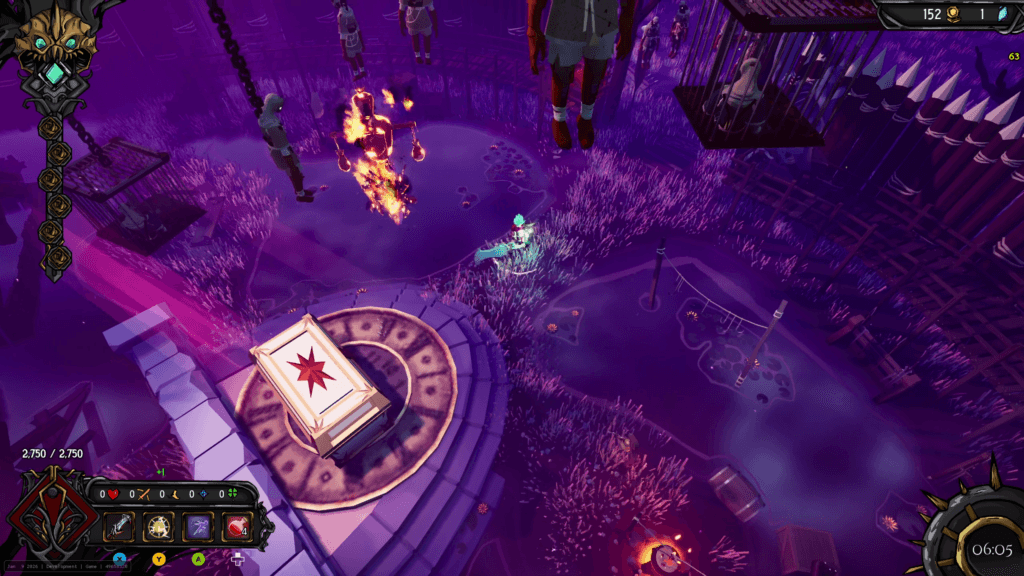
One of Clockfall’s smartest systems is Death Defiance, which becomes available from the second run onward.
Once per run, a fatal mistake can be avoided by sacrificing 45 seconds from the remaining timer. It sounds generous until those seconds are exactly what you were planning to use elsewhere.That mechanic captures Clockfall’s design philosophy better than almost anything else. Survival itself has a price.
The interesting part is not simply that Wilbur can cheat death. It is deciding whether continuing with substantially less time actually improves the situation. Spending those seconds might save an otherwise productive attempt, but it can also leave the rest of the run compressed into a frantic scramble.
Clockfall repeatedly turns seconds into decisions like this. That gives its central gimmick enough flexibility to avoid feeling like a timer pasted onto an otherwise conventional dungeon crawler.
Combat Still Needs Sharpening
The fighting is built around melee attacks, spells, dodging and temporary upgrades collected during a run. Echoes contribute additional build variety, and the current version contains a much more carefully structured selection than Clockfall had at the beginning of Early Access.
The Nightfall update added 18 Echoes while removing weaker options from the pool. Upgrades that depend on another Echo are also kept out of rotation until their prerequisite has been acquired, which makes progression through a build easier to understand.
Combat works well enough to support the larger loop, but it is also where the Early Access state remains easiest to notice.
Some melee actions require meaningful commitment once an attack has started. That gives encounters a deliberate rhythm, although it can sit awkwardly beside a game built around constant pressure and efficient movement. Earlier versions attracted criticism from players for animation lock and a slightly floaty quality to combat, and although subsequent updates have already reworked weapon behaviour and enemy armour, the current fighting still does not feel as polished as Clockfall’s time-management systems.
Spells and Echo combinations help broaden the possibilities, and enemy armour adds another consideration beyond simply repeating basic attacks. Still, Clockfall’s strongest ideas currently live around combat rather than inside every individual strike.
When the Village Fights Back
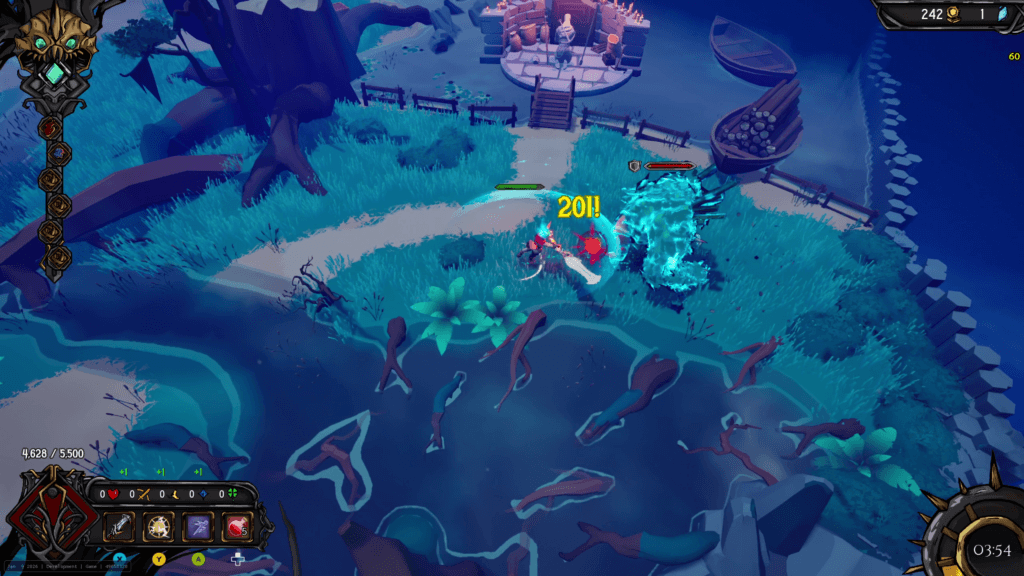
Dungeon crawling forms only part of Clockfall’s loop. The Invasion portion shifts attention back toward the village, where the current build uses a wave-based structure instead of the earlier timer system. Clearing waves provides access to choices drawn from a pool of 38 upgrades, curses and pacts, while a dedicated preparation phase lets defenses be placed before another attack begins.
Elemental totems can modify nearby defenses, and placement now has clearer information such as turret ranges and grid-based construction. Enemy behaviour around barricades has also been revised so completely blocking a route does not simply break the encounter.
It makes Invasion feel meaningfully different from dungeon crawling.
Out in the dungeons, I am thinking about movement and how much time a choice will consume. During Invasion, the focus shifts toward preparation, positioning and whether the defenses I have committed to will hold when another wave arrives. That change of rhythm is important because fixed dungeon layouts inevitably develop a degree of repetition.
Learning those layouts is part of what makes Clockfall work, but there is a thin line between mastery and routine. Once an area becomes familiar enough, retracing it can lose the tension that made the first few visits interesting. The stronger Invasion structure gives the game another pace to fall back on when another run through familiar territory starts feeling mechanical.
Giving the Loop Something Worth Saving
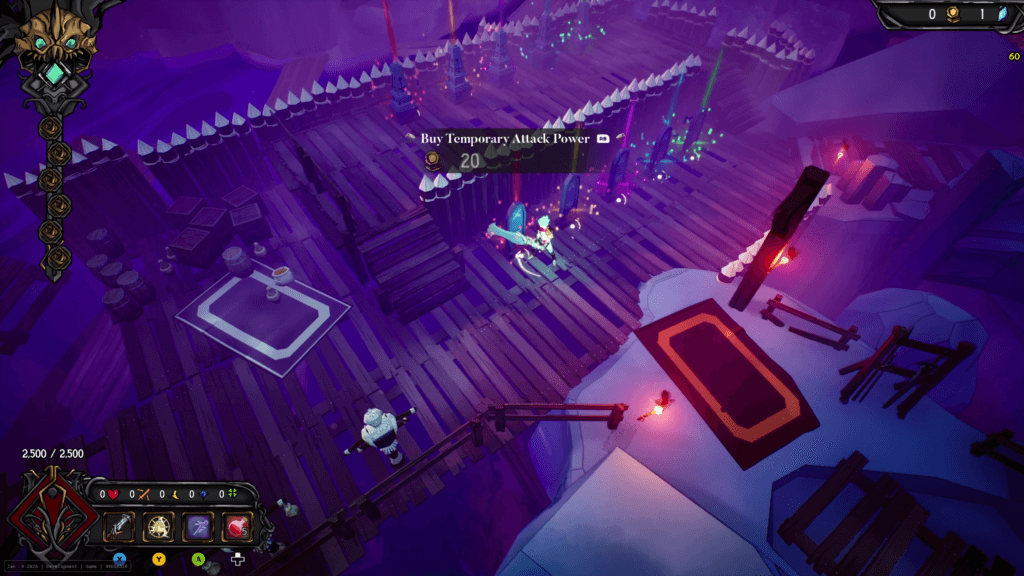
Clockfall’s narrative remains restrained compared with its systems, although recent Early Access updates have made the world surrounding Wilbur considerably more substantial.
The game now begins with a full prologue showing the village before the massacre. A revised dialogue system, expanded scenes involving Thul’Noss, changes to the Void and villagers following routines help make the settlement feel less like a menu wrapped in scenery.
That matters in a game built around repetition.
If Clockfall wants the destruction of this place to carry weight, the village needs to feel worth returning to. Giving its inhabitants movement and context helps the central time-loop premise land more effectively without turning the game into a dialogue-heavy RPG.
Presentation has improved alongside those narrative additions. Different regions now use more individual lighting treatments, while the interface has been redesigned to make health, equipment, abilities, resources and the timer easier to read at a glance. New audio work and interface-volume controls add polish without distracting from the information Clockfall needs to communicate quickly.
The game is still visibly being adjusted. Balance changes have continued following the Nightfall update, including reductions to critical-hit strength and fixes for several Echo interactions and crashes. That instability is part of buying into Early Access, although the pace of revision also shows how much Clockfall has already changed since launch.
Pros & Cons
Pros
- The timer affects routing, combat decisions and progression instead of existing as a superficial gimmick.
- Fixed dungeon layouts reward memory and increasingly efficient navigation.
- Nightfall turns reaching zero into a new phase of risk rather than an automatic end.
- Death Defiance cleverly makes survival another use for the game’s central resource.
- Echoes create meaningful build variation, with recent revisions making their progression cleaner.
- The rebuilt Invasion mode provides a welcome change of pace from dungeon runs.
- Recent updates have improved the village, narrative presentation and overall readability.
Cons
- Melee combat still lacks some of the refinement found in the surrounding systems.
- Fixed routes can become overly familiar after repeated runs.
- Balance continues to shift noticeably during Early Access.
Final Verdict
Score: 4.25/5
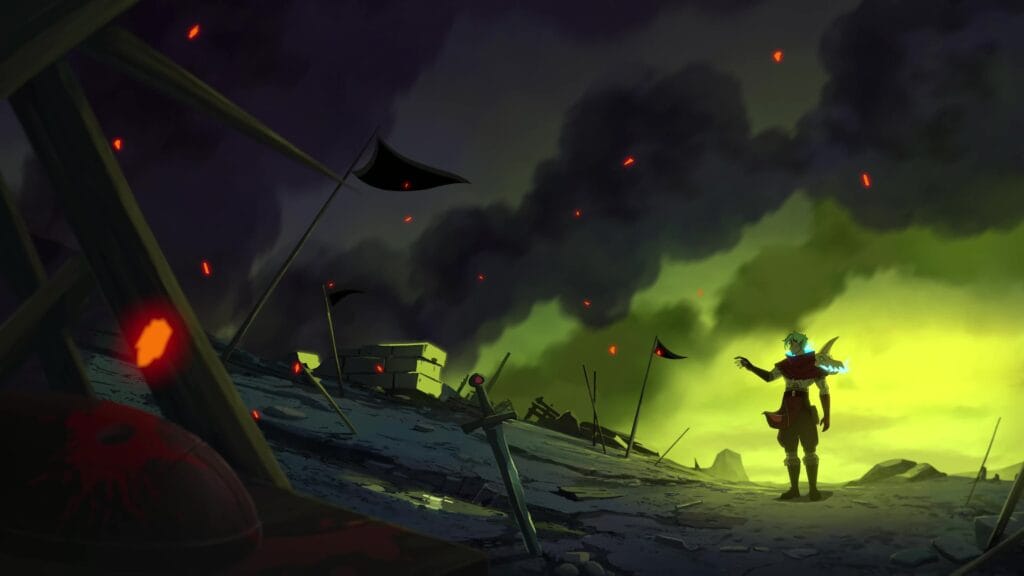
Clockfall works because its timer eventually stops feeling like something imposed on the player.
The seconds become currency. You spend them exploring, lose them through mistakes and sometimes hand over nearly a minute simply to remain alive. When the timer finally disappears into Nightfall, the game finds another way to make time matter by replacing urgency with escalating danger.
There are rough areas here. Combat still needs refinement, repetition can creep into familiar routes, and the current build is plainly part of a game still being balanced. What matters is that Clockfall already possesses an idea strong enough to survive those unfinished edges.
Plenty of roguelites ask me to make the next run stronger.
Clockfall kept making me wonder how I could make the next minute better.
This review of Clockfall is based on the PC Version, with the code provided by the Publisher/PR Agency.
About The Author