Avinash Rohra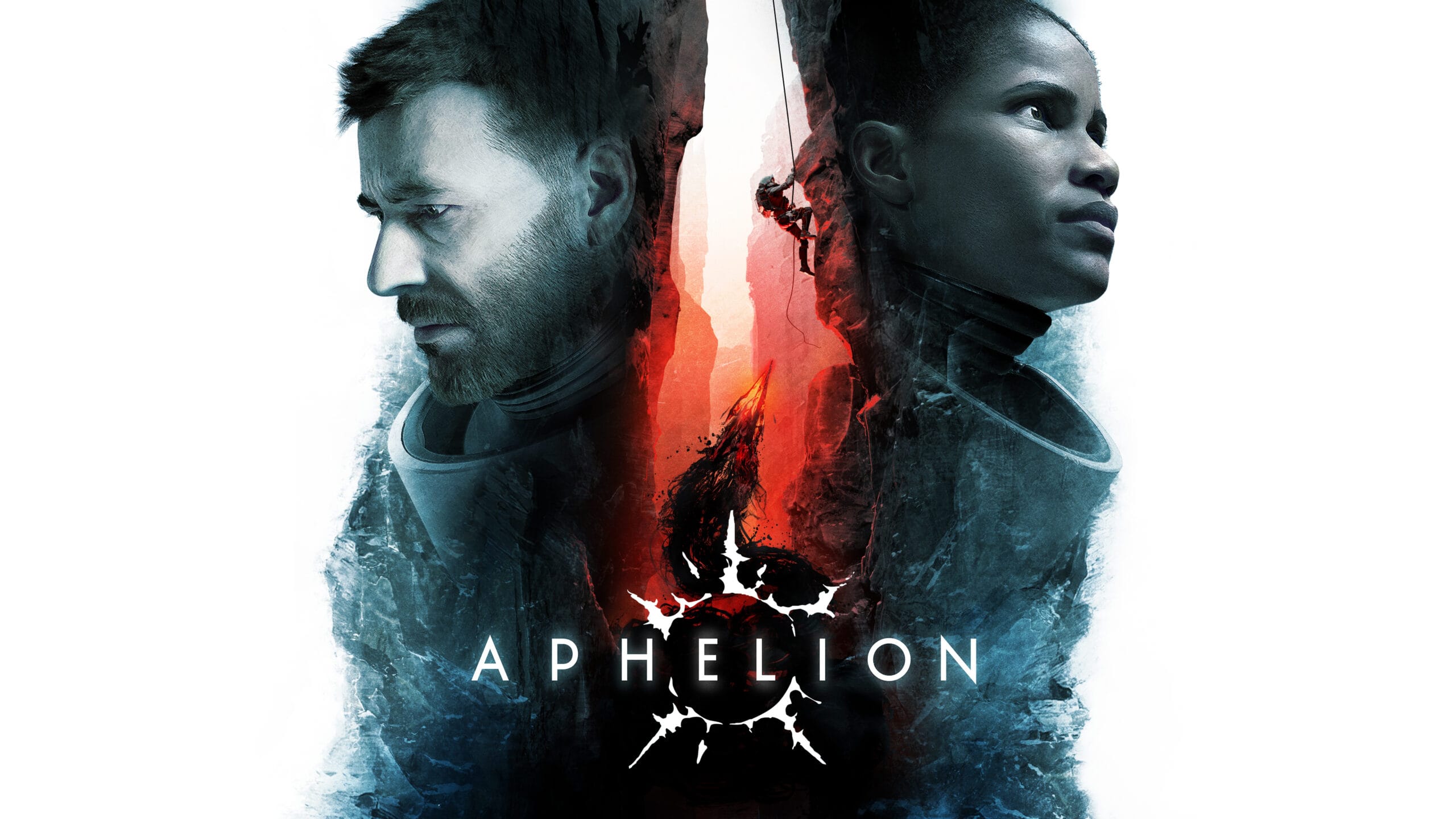
There’s a very specific kind of disappointment reserved for games that are almost great. Not the spectacular collapse of a bad game, but the quieter frustration of watching something genuinely compelling constantly undermine itself.
That’s Aphelion in a nutshell.
The latest sci-fi adventure from Don’t Nod arrives with all the ingredients of something unforgettable: a dying Earth, an isolated frozen planet at the edge of the solar system, two astronauts trapped after a catastrophic crash, and a mystery slowly buried beneath layers of ice and loneliness. For long stretches, Aphelion feels like the kind of cinematic science-fiction game we rarely get anymore. Atmospheric, emotionally driven, and willing to sit in silence long enough to let its world breathe.
But the further it goes, the more its cracks begin to show.
Aphelion is filled with brilliant ideas, beautiful imagery, and emotional sincerity. It’s also weighed down by clunky traversal, undercooked mechanics, and a story that builds toward something far bigger than it can ultimately deliver.
Interstellar by Way of Don’t Nod
Set in the 2060s, Aphelion imagines a future where climate collapse has pushed Earth to the brink of becoming uninhabitable. Humanity’s final hope lies on Persephone, a newly discovered frozen planet orbiting at the edge of the solar system. The European Space Agency sends the Hope-01 mission to investigate its viability, led by astronaut Dr. Ariane Montclair and Officer Thomas Cross. Naturally, things go catastrophically wrong almost immediately.
After their ship crashes on Persephone’s surface, the two become separated across an alien wilderness filled with collapsing ice fields, abandoned research sites, and increasingly unsettling discoveries beneath the snow. What follows is part survival story, part relationship drama, and part slow-burn sci-fi mystery.
To Aphelion’s credit, this is where the game is strongest.
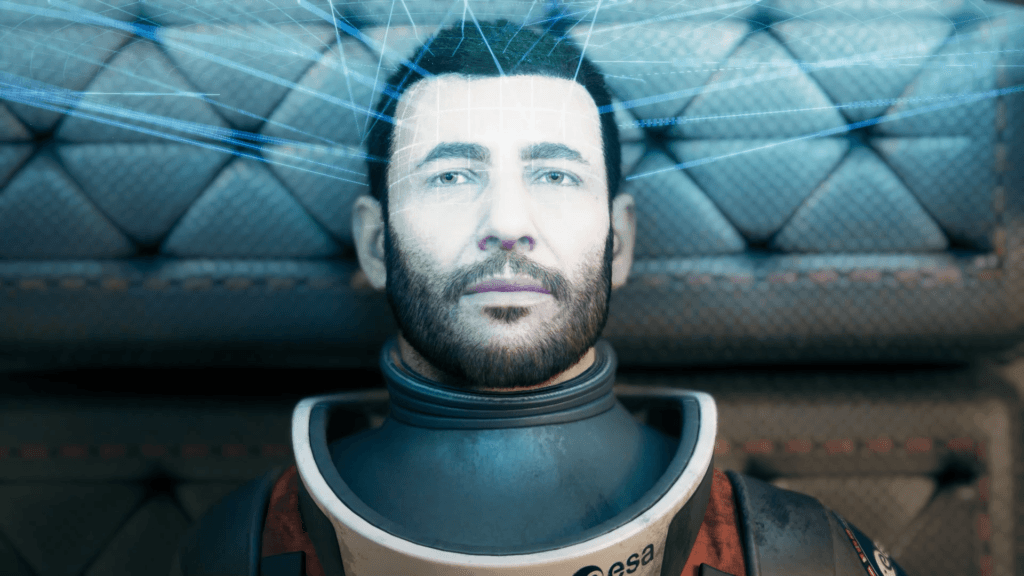
The relationship between Ariane and Thomas carries genuine warmth, helped enormously by strong performances from Vanessa Dolmen and Eric Geynes. Even when the dialogue occasionally slips into overly direct exposition, both characters still feel human enough to ground the story emotionally. Ariane, especially, emerges as the more compelling lead: determined, emotionally guarded, and quietly terrified beneath her professionalism.
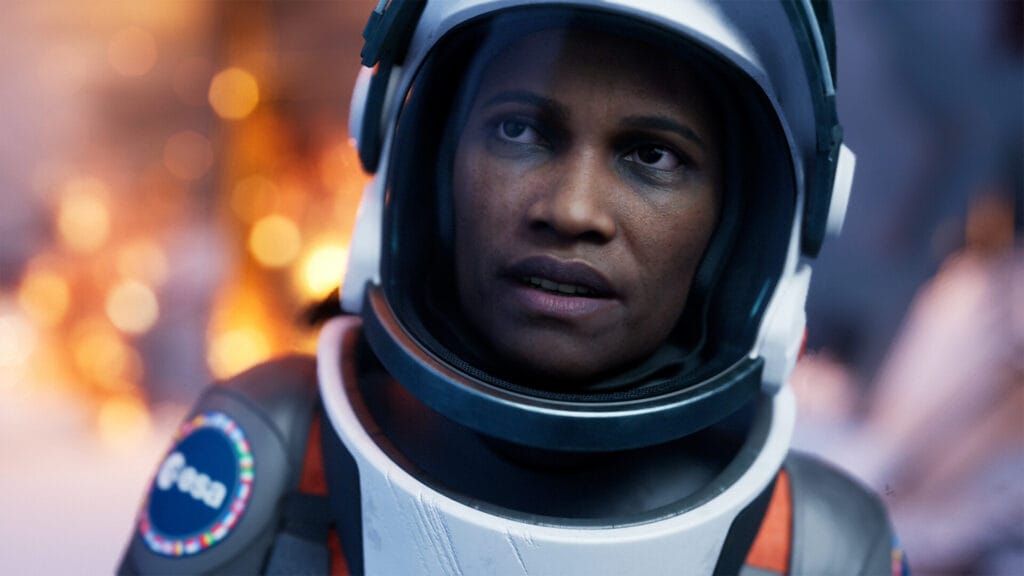
Persephone itself also becomes increasingly fascinating the deeper you explore it. Through scattered logs, abandoned facilities, environmental storytelling, and scientific research notes, Aphelion slowly builds intrigue around what exactly happened here before the Hope-01 crew arrived. The collaboration with the European Space Agency gives portions of the world-building a grounded hard-science texture that helps separate the game from more traditional space opera storytelling.
The problem is that Aphelion never fully pays off its own momentum.
For a game so invested in mystery and emotional escalation, the ending arrives with surprising abruptness. Major questions remain frustratingly unresolved, and several narrative threads feel less intentionally ambiguous than simply unfinished. The result is a finale that feels emotionally incomplete rather than hauntingly open-ended.
The Martian, Except Everything Feels Slightly Off
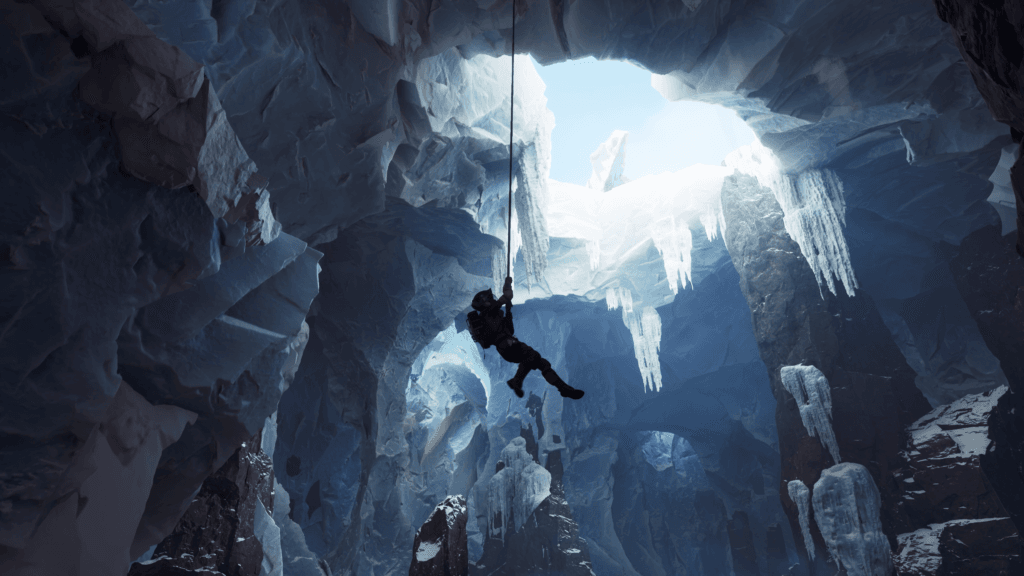
Where Aphelion truly struggles is in the moment-to-moment gameplay.
The game splits control between Ariane and Thomas, each handling different styles of traversal and puzzle-solving. Ariane’s sections lean heavily into cinematic climbing and environmental navigation, while Thomas focuses more on slower puzzle mechanics involving oxygen tethers and route planning. On paper, the contrast works. In practice, neither side ever feels fully refined.
Ariane’s traversal is particularly rough around the edges. Ledge detection can feel inconsistent, movement lacks fluidity, and the game frequently bumps into invisible walls that shatter the illusion of exploration. Too often, Aphelion feels like it wants the cinematic flow of something like Uncharted without understanding the invisible design work required to make that kind of traversal feel natural.
The stealth sequences fare slightly better, introducing the Nemesis, a floating alien predator that hunts using sound. These sections initially create real tension, especially within Persephone’s darker underground areas. Unfortunately, the mechanics never evolve much beyond slowly crouching between cover points and tossing distractions. The creature is visually memorable, but mechanically underwhelming.
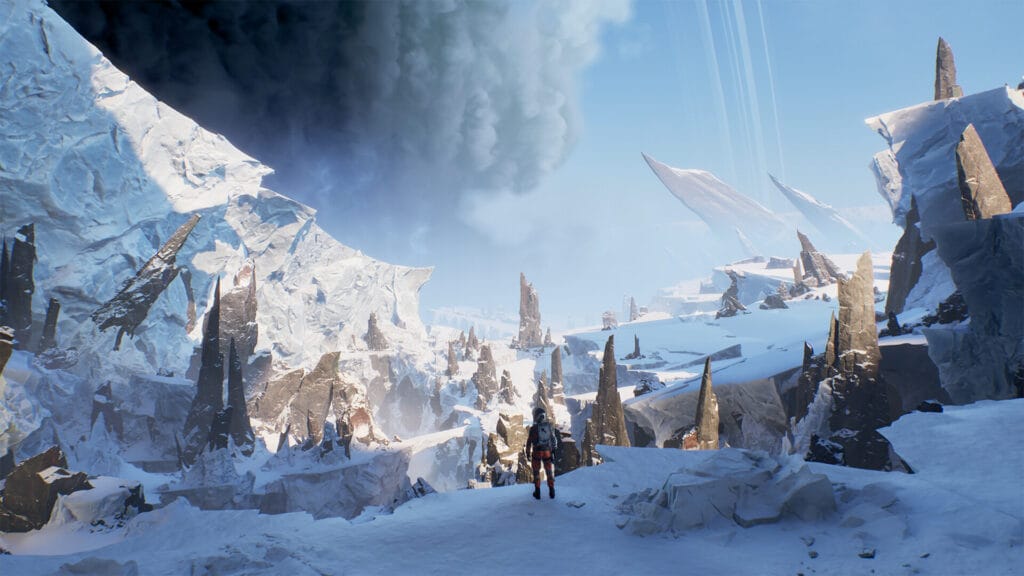
What ultimately saves Aphelion from collapsing under its own mechanical shortcomings is presentation.
Persephone is stunning. Vast frozen plains, fractured glaciers, collapsing ice caverns, and bioluminescent underground passages create some of the strongest environmental art Don’t Nod has produced in years. Combined with Amine Bouhafa’s quietly phenomenal score, the atmosphere often succeeds even when the gameplay stumbles.
There are moments where Aphelion feels genuinely transportive. You just wish the systems surrounding those moments were equally polished.
Beauty in the Breakdown
Pros
- Gorgeous environmental design and atmospheric world-building
- Strong performances from the lead cast
- Interesting hard-science inspired premise
- Excellent soundtrack by Amine Bouhafa
- Emotional character-focused storytelling works more often than not
Cons
- Clunky traversal and inconsistent platforming
- Stealth mechanics become repetitive quickly
- Exploration often feels more restricted than it initially appears
- Gameplay systems lack the polish needed to support the ambition
Final Verdict – A Beautiful World Deserving of a Better Game
Aphelion is frustrating precisely because so much of it works.
The atmosphere is excellent. The central relationship feels believable. Persephone is one of the most visually striking sci-fi settings in recent memory. And for large stretches, the game captures the lonely melancholy that great science fiction thrives on.
But every time Aphelion starts building real momentum, its mechanical shortcomings drag it back down. Traversal feels stiff. Stealth feels dated. The narrative ends just as it feels ready to say something meaningful.
What’s left is a game full of incredible pieces that never quite lock together into something truly great. Still, even in its unevenness, there’s enough heart, ambition, and visual craft here to make the journey worthwhile.
Score – 3.5/5
This review of Aphelion is based on the PC version, with code provided by the game’s publishers/developers/ PR Agency.
About The Author