Avinash Rohra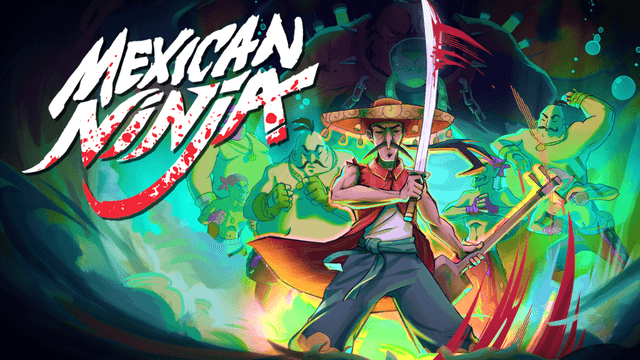
Mexican Ninja has the kind of premise that could easily have collapsed into a single joke. A Mexican-Japanese city called Nuevo Tokyo. Narcos and Yakuza fused into the Narkuzas. A masked fighter tearing through their ranks with aerial combos and abilities called Mexican Jutsus. On paper, it sounds like the sort of idea designed to survive exactly one trailer.
The surprise is how quickly the joke gives way to a genuinely capable action game.
Madbricks has built Mexican Ninja around a simple but sensible proposition: take the immediacy of an arcade beat ’em up, graft it onto a roguelike structure, and make repeated runs feel like opportunities to sharpen both your character and your own execution. It is not endlessly varied, and its visual excess occasionally gets in the way of readability, but the combat has enough snap and flexibility to keep Nuevo Tokyo entertaining long after the novelty of the premise should have worn off.
Welcome to Nuevo Tokyo
Mexican Ninja takes place in a city created by a collision of Mexican and Japanese cultures, now controlled by the Narkuzas, a criminal organisation formed from narcos and Yakuzas. Rebels are attempting to dismantle that rule, while the Mexican Ninja fights through the organisation and its five leaders.
The setup is intentionally exaggerated, and the game clearly understands that restraint would be the wrong approach. Everything from the terminology to the character designs leans into the collision of influences rather than treating it as background decoration.
That commitment gives Mexican Ninja an identity that many roguelikes spend hours trying to establish. Even when the structure underneath becomes familiar, Nuevo Tokyo rarely feels anonymous.
The story also makes sensible use of repetition. NPCs can provide side quests, while dialogue from allies and bosses can change across subsequent runs. It is not enough to transform Mexican Ninja into a narrative-heavy roguelike, but it prevents repeated attempts from feeling completely disconnected from the world around them.
Combos Before Caution
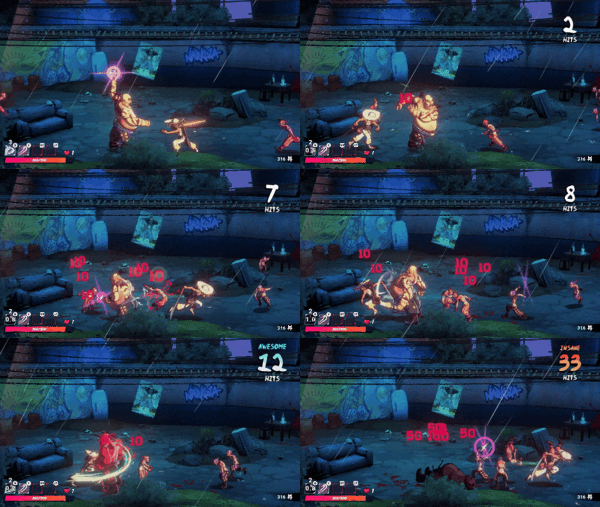
Combat is where Mexican Ninja makes its strongest argument.
The fundamentals are immediately recognisable. Light and heavy attacks form the base of your offence, while jumps, aerial attacks, dodges and parries expand what you can do once enemies begin arriving in larger groups. Jutsus operate on cooldowns and add another layer of utility, while enemies can be launched and carried into aerial combinations.
The most satisfying moments come from keeping those systems connected.
The combo counter survives between encounters until you take damage, which quietly changes how you approach each room. Instead of treating every skirmish as an isolated exchange, Mexican Ninja encourages you to protect momentum across an entire sequence. A clean fight matters because it can feed directly into the next one.
That gives the game a welcome arcade mentality. You are not simply trying to survive. You are trying to survive well.
Dodging becomes especially important once encounters grow busier, while parries and counters demand greater confidence. In larger crowds, the speed of combat can make those more precise defensive tools harder to use safely, but the underlying system remains strong enough that experimentation rarely feels pointless.
A Roguelike That Understands the Beat ’Em Up

The roguelike structure fits surprisingly naturally around the combat.
During runs, players collect temporary perks, stat increases and Jutsu choices that disappear when the attempt ends. Outside those runs, the coins you earn carry over and can be invested into permanent improvements covering areas such as health, damage, combos and additional moves.
That balance works because progression does not replace skill. Permanent upgrades make later attempts easier, but they do not remove the need to understand spacing, dodges or combo timing.
Stage progression adds some unpredictability without pretending the entire game is procedurally generated. Areas are preset, but runs can offer randomised choices between different sections or routes. That keeps attempts from being identical while still allowing encounters to feel deliberately constructed.
Outfits also matter beyond appearance. Unlockable skins can provide mechanical bonuses, while certain quest rewards can alter statistics or abilities. It gives cosmetic progression a useful function without turning equipment management into a separate game.
The danger is repetition.
Enemy variety is limited enough that repeated attempts can eventually expose the seams of the structure. Stage variation helps, but it cannot completely disguise the fact that you will be fighting familiar opponents through familiar spaces.
When Style Gets in the Way
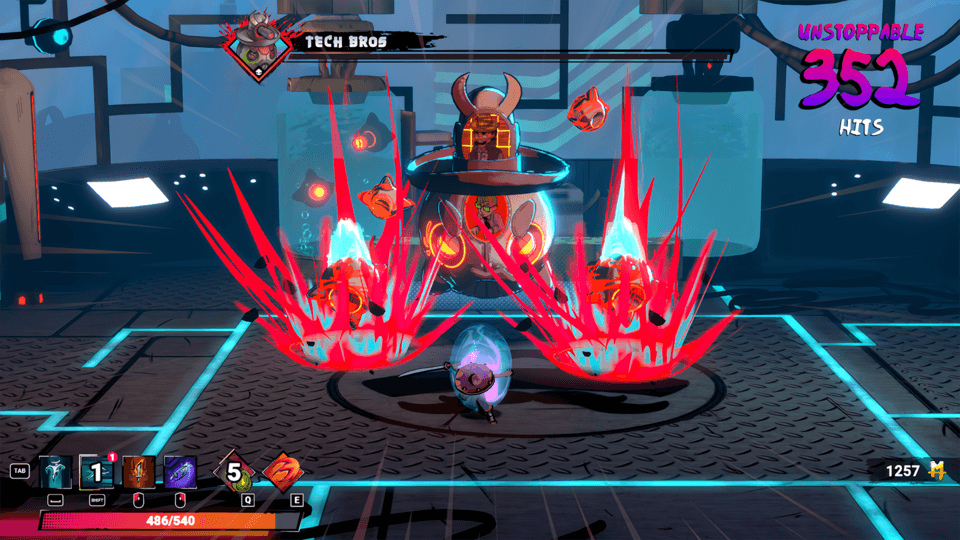
Mexican Ninja’s visual identity is one of its biggest strengths, but it occasionally works against combat.
Crowded encounters can become difficult to read when effects, scenery and multiple enemies occupy the same space. The 2.5D perspective can also complicate positioning, particularly when attacks depend on judging depth precisely.
Boss fights are where this becomes most noticeable. Bright effects and busy arenas can make incoming attacks harder to interpret than they should be, and recovering into another attack can sometimes feel harsher than the rest of the combat system deserves.
These problems do not ruin the game, but they matter in an action title built around maintaining combos and reacting quickly. When Mexican Ninja is readable, mistakes feel like your own. When the screen becomes overloaded, that relationship is less convincing.
There is also no co-op. Mexican Ninja is designed as a single-player game, which works perfectly well within its roguelike progression, but anyone approaching it primarily as a traditional arcade brawler should know that Nuevo Tokyo is a solo trip.
Pros and Cons
Pros
- Responsive combat with satisfying juggling and combo potential
- Roguelike progression complements the beat ’em up structure well
- Distinctive Mexican-Japanese setting gives the game a strong identity
- Temporary builds and permanent upgrades keep runs meaningful
- Side quests and changing dialogue give repeat attempts extra context
Cons
- Limited enemy variety makes repetition increasingly noticeable
- Busy effects can hurt visual readability
- 2.5D positioning occasionally makes attacks difficult to judge
- Parries and counters can feel risky during crowded fights
Final Verdict
Score: 4/5
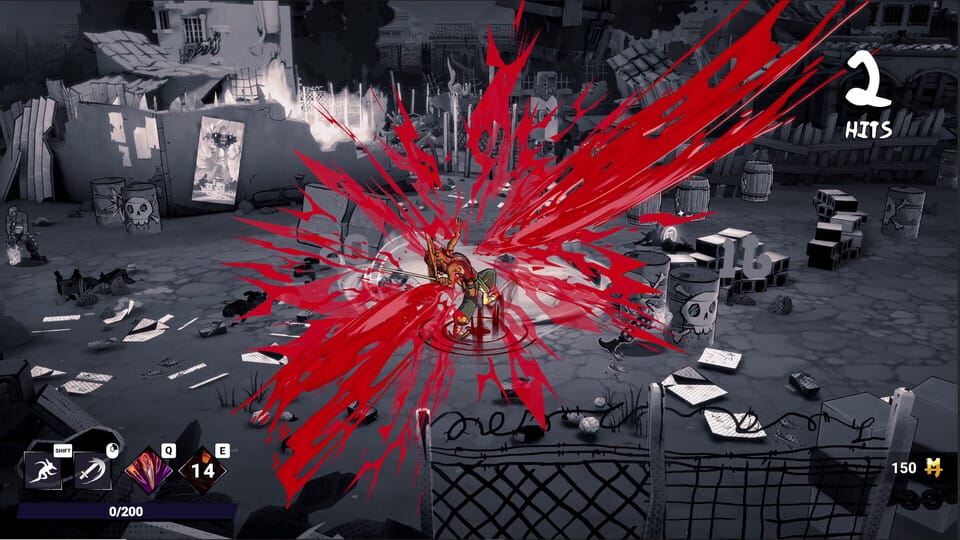
Mexican Ninja works because the game underneath the premise is stronger than the premise itself.
Nuevo Tokyo gets your attention, but the combat is what keeps it. Launching enemies into the air, extending a combo across multiple encounters and gradually unlocking more options gives the game a rhythm that suits repeated runs surprisingly well.
It does eventually run into the familiar roguelike problem of repetition, and its fondness for visual spectacle sometimes interferes with the precision its combat demands. Those weaknesses stop it short of being exceptional.
But they do not erase what Madbricks gets right.
Mexican Ninja is a confident single-player brawler with enough mechanical depth to justify its repetition and enough personality to survive it. Beneath the cultural mash-up and deliberately ridiculous terminology is a combat system that understands exactly why hitting one more enemy can always feel like a good idea.
This review of Mexican Ninja is based on the PC Version, with the code provided by the Publisher/PR Agency.
About The Author