Digimon Story: Time Stranger Review (NS2) – Every Evolution Tells a Story
 Avinash Rohra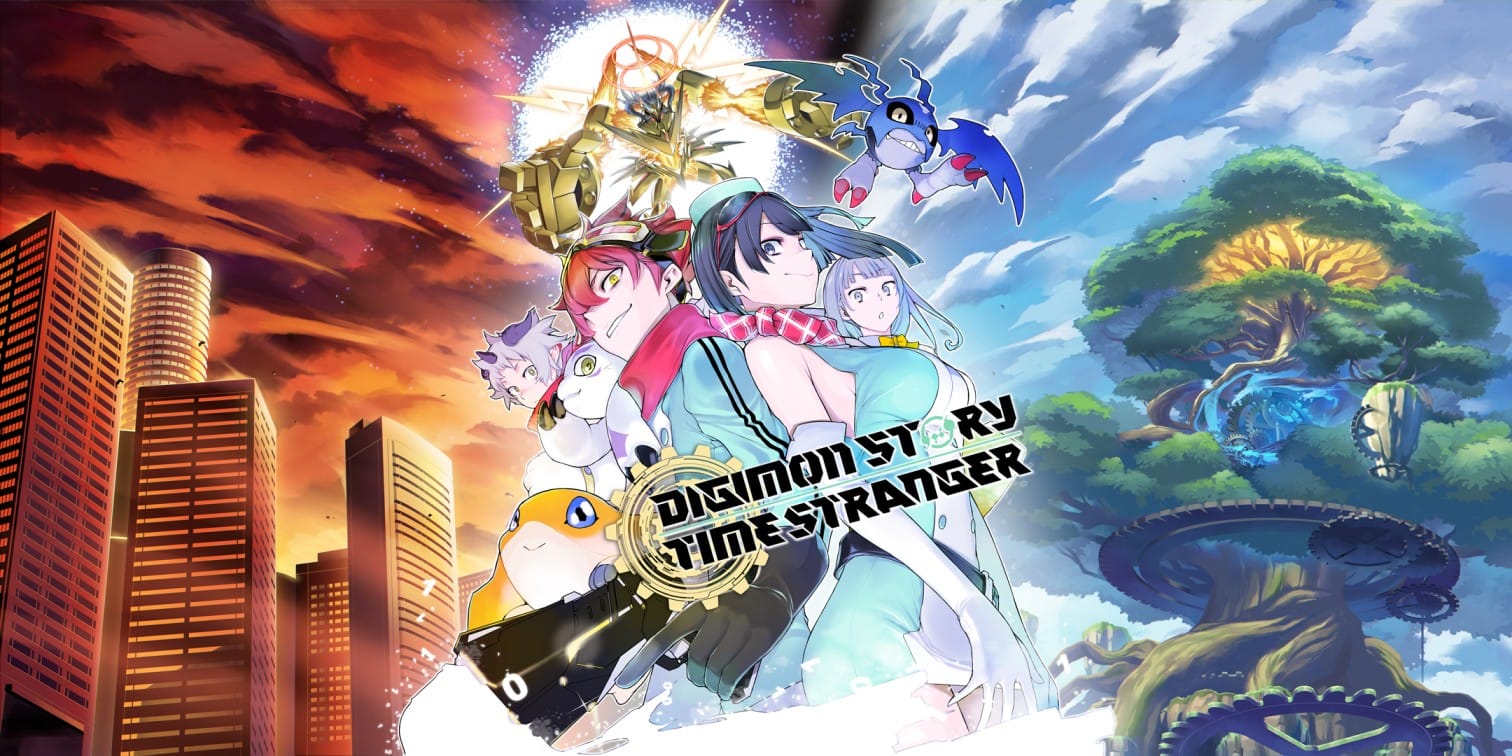
There comes a point in every monster-raising RPG where your attachment to a creature stops being about numbers. It isn’t the attack stat you’ve spent hours increasing or the rare skill you’ve finally unlocked. It’s the journey you’ve taken together. You remember the battles it barely survived, the difficult choices that led it down one evolutionary path instead of another, and the satisfaction of watching something that once looked insignificant become the cornerstone of your team.
Digimon Story: Time Stranger understands that feeling better than almost any game in the genre.
I’ve always believed the Digimon Story games succeed because they ask players to invest in growth rather than collection. They aren’t about filling a checklist or chasing the rarest creature. They’re about experimentation, long-term planning and watching your decisions shape the Digimon that fight beside you. Time Stranger embraces that philosophy wholeheartedly, building an RPG that constantly rewards curiosity without losing sight of the emotional connections that make these adventures memorable.
That doesn’t mean it’s perfect. The opening chapters move at a measured pace, some dungeons outstay their welcome, and late-game progression occasionally asks for more repetition than I’d like. Yet every time I considered stepping away, another Digivolution, another story revelation or another strategic battle convinced me to keep playing.
By the time the credits rolled, I wasn’t thinking about the moments where the pacing stumbled.
I was thinking about the team I’d spent dozens of hours building.
A Mystery That Bridges Two Worlds

Rather than revisiting familiar anime storylines, Digimon Story: Time Stranger tells an original story centred on ADAMAS, an organisation investigating strange incidents that threaten both the human world and the Digital World. What begins as a straightforward investigation gradually grows into a larger conflict involving fractured timelines, powerful forces operating behind the scenes and the consequences of trying to alter events that perhaps shouldn’t be changed.
It’s an ambitious premise, but one that rarely feels overwhelming.
The narrative deliberately introduces its world at a steady pace. New characters, gameplay systems and story threads arrive gradually, giving players time to understand how everything fits together before the larger mysteries begin unfolding. It does mean the opening hours are slower than some players might expect, but the measured pacing allows later developments to carry greater emotional weight.
What impressed me most wasn’t the complexity of the plot itself but its focus on relationships. At its core, Time Stranger remains a story about trust, responsibility and the bond between humans and Digimon. Those quieter character moments often leave a stronger impression than the game’s biggest revelations, grounding the science-fiction concepts in something emotionally relatable.
Better still, newcomers don’t need extensive knowledge of previous Digimon games to enjoy the story. Familiar faces and references exist for longtime fans, but this is very much a standalone adventure that explains its world naturally as the narrative progresses.
The Joy of Raising Digimon, Not Just Collecting Them
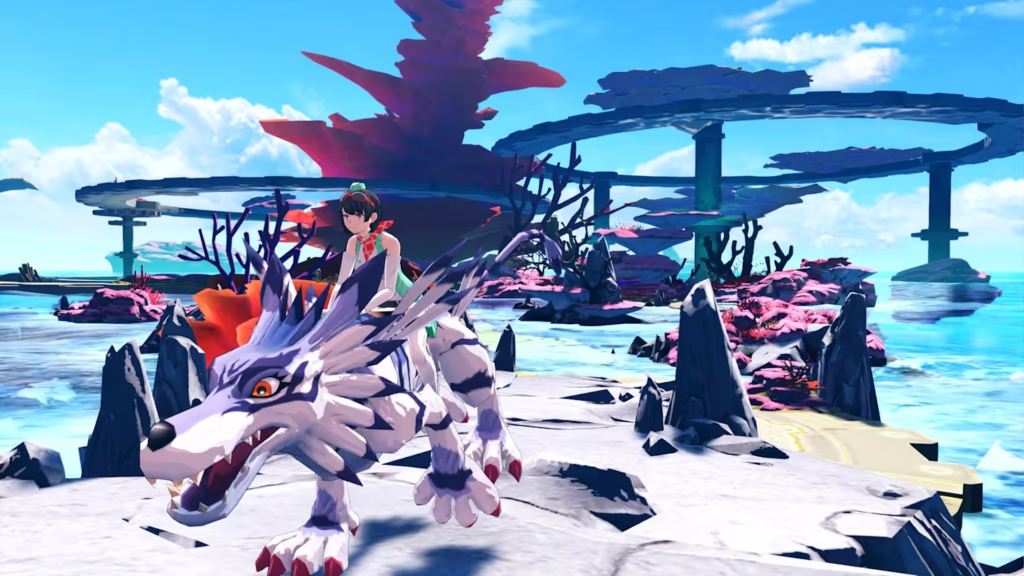
The real strength of Time Stranger lies in how it approaches progression.
Unlike monster-collecting games that revolve around capturing creatures in the wild, Digimon are obtained through the series’ familiar Scan and Convert system. Encountering Digimon in battle gradually fills their scan percentage, and once enough data has been gathered, they’re converted into new partners back at the DigiLab. It’s a system that encourages players to engage with battles rather than simply throwing items at every new creature they encounter, and it creates a satisfying sense of progression as your available roster steadily expands.
From there, the real obsession begins.
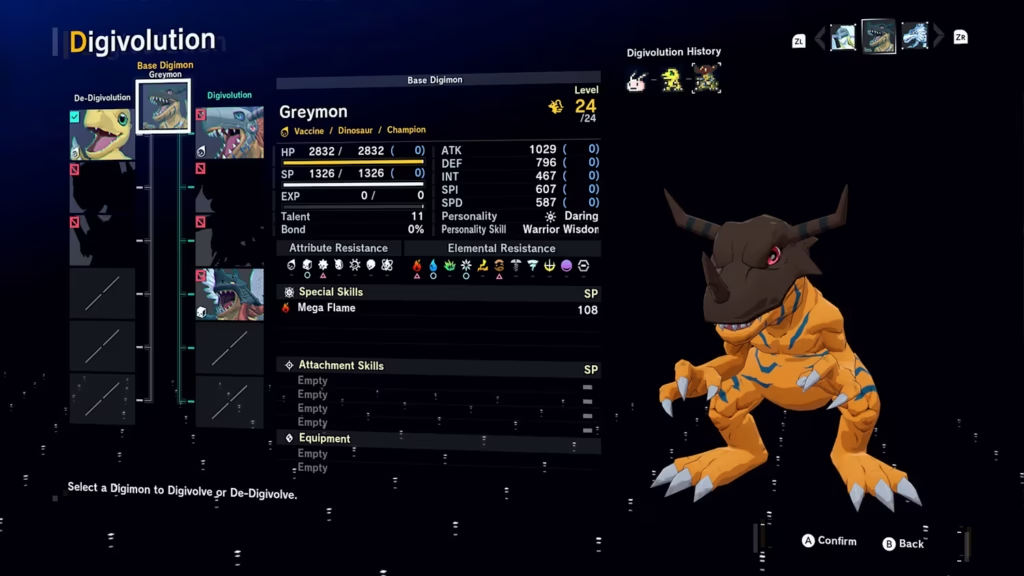
Every Digimon can branch into multiple evolutionary paths depending on its level, attributes, ABI, statistics and other requirements. Evolution isn’t simply a straight line towards becoming stronger. Sometimes the best way forward is to de-digivolve into an earlier form before pursuing an entirely different branch, unlocking abilities and stat growth that wouldn’t otherwise be possible.
It’s an idea that sounds complicated on paper.
In practice, it becomes remarkably addictive.
Planning future Digivolutions quickly turns into a game within the game. I’d regularly finish a story mission only to spend the next twenty minutes studying evolution trees, comparing inherited skills and deciding whether it was worth resetting one of my strongest Digimon in pursuit of an even better form later. Few RPGs make menu management this satisfying because every decision carries long-term consequences for your party.
The DigiFarm complements this beautifully. Digimon not currently in your active party continue training, researching and developing in the background, ensuring your wider roster continues growing even while you’re focused on the main adventure. It’s a thoughtful quality-of-life feature that reduces unnecessary grinding and encourages experimentation with a much larger selection of Digimon than you might otherwise use.
That said, the system isn’t entirely free from repetition. Some higher-level Digivolutions require enough investment that you’ll spend additional time revisiting battles to meet specific requirements. Fortunately, because progression remains meaningful and new evolutionary options continue opening throughout the campaign, those stretches rarely feel like wasted time.
Strategy Before Strength
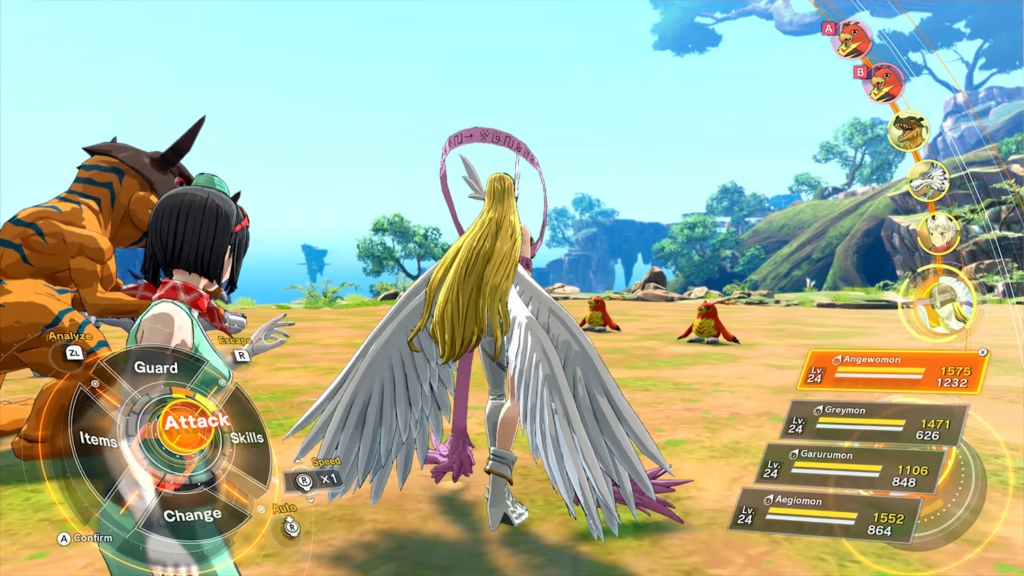
Combat follows a traditional turn-based structure, but there’s considerably more depth beneath its approachable surface.
Elemental affinities, attack types, support abilities, buffs, debuffs and party composition all play important roles in determining the outcome of battles. Simply fielding your strongest Digimon isn’t always enough. Building a balanced team capable of responding to different situations becomes increasingly important as tougher enemies and bosses begin testing your understanding of the game’s systems.
Visible enemy encounters also make exploration feel more deliberate than relying entirely on random battles. You can choose when to engage, avoid unnecessary fights if you’re rushing towards the next objective or seek out specific Digimon to complete scan data and expand your collection. It’s a small change, but one that makes moving through the Digital World feel smoother and gives players greater control over the pace of progression.
Boss encounters provide the clearest demonstration of the combat system’s strengths. Rather than relying solely on inflated health bars, they encourage thoughtful preparation and party management. Choosing the right Digimon, exploiting elemental weaknesses and making intelligent use of support skills often proves more effective than simply grinding for additional levels.
It’s a combat system that grows alongside the player.
New mechanics continue appearing throughout the adventure, ensuring battles remain engaging long after the initial novelty has faded. Combined with the constantly expanding Digivolution system, combat rarely feels disconnected from progression. Every battle contributes towards strengthening your roster, unlocking new possibilities and refining your long-term strategy.
That constant sense of forward momentum is what kept pulling me back for one more mission.
Building a Team Worth Fighting For
For all of its strengths, Digimon Story: Time Stranger isn’t immune to one of the oldest problems in the JRPG playbook: making every dungeon as interesting to explore as the systems that surround it.
That’s unfortunate because the Digital World itself is wonderfully imagined.
Each region embraces the franchise’s signature blend of futuristic technology and surreal fantasy. Towering data structures rise above fractured landscapes, glowing circuitry snakes across forgotten ruins, and entire environments feel like they’re suspended somewhere between reality and a computer simulation. The art team deserves enormous credit for giving each location a distinct visual identity, and there’s a genuine sense of curiosity when stepping into a new area for the first time.
Unfortunately, that excitement doesn’t always last.
Most dungeons follow a familiar structure of branching pathways, simple environmental puzzles, switches to activate, and optional routes leading to treasure chests or collectible items. Early in the adventure this works well because every new location introduces fresh enemies, new mechanics and another opportunity to expand your roster. As the campaign progresses, however, the layouts become increasingly predictable. Corridors begin to feel longer than necessary, puzzle design rarely evolves beyond its initial ideas, and exploration gradually shifts from discovery to simply reaching the next story objective.
It’s never frustrating enough to derail the experience, but it is the one area where Time Stranger feels noticeably more conventional than the systems built around it.
Ironically, the progression loop does an excellent job masking those shortcomings. Even while navigating another familiar-looking dungeon, I was constantly checking scan percentages, planning future Digivolutions or deciding which Digimon needed more battle time before meeting their next evolution requirements. The game always gives you another reason to keep moving forward, and that momentum prevents repetitive level design from becoming a major obstacle.
More Than the Main Story
One aspect I particularly appreciated was how much optional content exists outside the critical path.
Side cases provide additional battles, character interactions and rewards that naturally encourage players to spend more time with their growing roster rather than rushing through the main story. They aren’t all equally memorable, but they offer useful opportunities to earn experience, discover new Digimon and strengthen your team without feeling disconnected from the rest of the adventure.
The return of the DigiFarm also ensures that progression never feels limited to your active party. Watching reserve Digimon continue developing while you’re out exploring makes experimentation far less intimidating, especially once your collection begins expanding into the hundreds.
Then there’s the collectible card game, which returns as an optional diversion from the main adventure. It never overshadows the RPG itself, but it’s a welcome distraction that adds another layer of world-building and gives completionists yet another system to master. Like many of the game’s optional activities, it feels thoughtfully integrated rather than included simply to pad out the runtime.
The result is a JRPG that constantly offers something meaningful to do. Whether you’re advancing the story, completing optional investigations, improving your DigiFarm or hunting scan data for a Digimon you’ve yet to convert, progression rarely comes to a complete stop.
Switch 2 Delivers a Comfortable Home
Nintendo Switch 2 feels like an ideal platform for Time Stranger.
The game offers both Quality Mode and Performance Mode, and after spending considerable time with each, Performance Mode became my preferred way to play. The smoother frame rate makes battles feel more responsive, menus quicker to navigate and exploration noticeably more fluid. Considering how much time you’ll spend organising parties, evolving Digimon and moving between encounters, that extra responsiveness has a bigger impact than a sharper image.
Quality Mode certainly looks cleaner when playing docked, offering a higher-resolution presentation, but I found myself consistently choosing smoother gameplay over visual fidelity.
Handheld play is equally enjoyable. This is exactly the sort of RPG that suits shorter sessions just as comfortably as marathon weekends. Completing a side case during a commute or spending half an hour reorganising your DigiFarm before bed feels perfectly natural, and the flexibility of switching between handheld and docked play complements the game’s structure remarkably well.
From a technical perspective, the experience remained consistently enjoyable throughout my playthrough. While frame rate isn’t perfectly locked in every situation, I never encountered issues significant enough to interrupt combat, exploration or story progression. Load times are short, menus remain responsive and the overall presentation feels polished across the lengthy campaign.
It’s an excellent showcase for what Switch 2 can offer RPG fans.
Presentation That Celebrates Digimon
Visual fidelity has never been the defining strength of the Digimon Story series, but Time Stranger succeeds through style rather than spectacle.
The Digimon themselves are recreated with tremendous care, staying faithful to decades of character designs while benefiting from expressive animations during battle. Watching familiar favourites unleash signature attacks never loses its charm, particularly once your carefully planned evolution paths begin paying off.
Character models, environmental effects and battle animations all contribute towards creating a world that feels unmistakably Digimon. Rather than chasing photorealism, the game embraces colourful digital landscapes and clean visual design that remain appealing throughout the lengthy campaign.
The soundtrack deserves equal praise.
Energetic battle themes provide momentum during combat without becoming repetitive, while quieter pieces allow emotional scenes room to breathe. It’s a score that understands when to step into the spotlight and when to quietly support the narrative instead.
English and Japanese voice options both deliver solid performances, giving the cast enough personality to make story sequences engaging without overwhelming the experience.
Pros
- Deep and rewarding Digivolution system with meaningful player choice.
- Strategic turn-based combat that continues introducing new tactical possibilities.
- Original standalone story that welcomes newcomers while rewarding longtime fans.
- Scan and Convert system remains a satisfying alternative to traditional monster recruitment.
- Strong Nintendo Switch 2 version with excellent handheld play.
- Large roster of Digimon encourages constant experimentation.
- Plenty of optional content, including side cases, DigiFarm progression and card battles.
Cons
- Slow opening hours delay the story’s strongest moments.
- Dungeon layouts become repetitive over longer play sessions.
- Some late-game Digivolutions require additional grinding.
- Optional activities vary in quality.
Digimon Story: Time Stranger is made for players who enjoy investing in long-term progression.
If your favourite part of an RPG is carefully building a party, experimenting with different strategies and watching dozens of small decisions gradually shape your adventure, you’ll find plenty to enjoy here. The game rewards patience, curiosity and a willingness to engage with its systems rather than rushing through the main story.
Longtime Digimon fans will naturally appreciate the enormous roster and countless familiar faces, but newcomers shouldn’t be discouraged. This is one of the easiest Story games to jump into because it introduces its world and mechanics with confidence, never assuming you’ve played previous entries.
Players looking for fast-paced action or constantly evolving dungeon design may find parts of the adventure slower than expected, but anyone willing to embrace its methodical approach will discover one of the most satisfying progression systems in modern JRPGs.
Final Verdict
Score: 4.7/5

What impressed me most about Digimon Story: Time Stranger wasn’t its ambition.
It was its confidence.
The game knows exactly what it wants to be. Instead of chasing trends or reinventing itself at every opportunity, it focuses on refining the elements that have always defined the Digimon Story series. The result is an RPG built around meaningful progression, strategic combat and the simple joy of raising a team that gradually becomes your own.
Not every part of the journey reaches the same standard. The opening takes time to find its rhythm, dungeon design occasionally becomes repetitive and some late-game evolution requirements ask for more patience than they probably should.
Yet none of those issues overshadow what Time Stranger consistently gets right.
Every battle contributes towards a larger goal. Every Digivolution feels earned. Every newly converted Digimon opens another possibility for experimentation. Hours disappear not because the game overwhelms you with endless objectives, but because it continually rewards your curiosity with another interesting decision to make.
By the time I reached the credits, I wasn’t thinking about the repetitive corridors I’d walked through.
I was remembering the Digimon that had travelled alongside me, the evolution paths I’d carefully planned and the countless strategic decisions that shaped my final team.
That’s the mark of an RPG that understands why players become attached to these worlds in the first place.
Digimon Story: Time Stranger doesn’t simply celebrate Digimon’s past. It confidently demonstrates why the series still deserves a place among today’s best turn-based JRPGs.
This review of Digimon Story: Time Stranger is based on the Nintendo Switch 2 Version, with the code provided by the Publisher/PR Agency.
About The Author