Monster Crown: Sin Eater Review – Genetics, Monsters and a World That Refuses to Hold Your Hand
 Avinash Rohra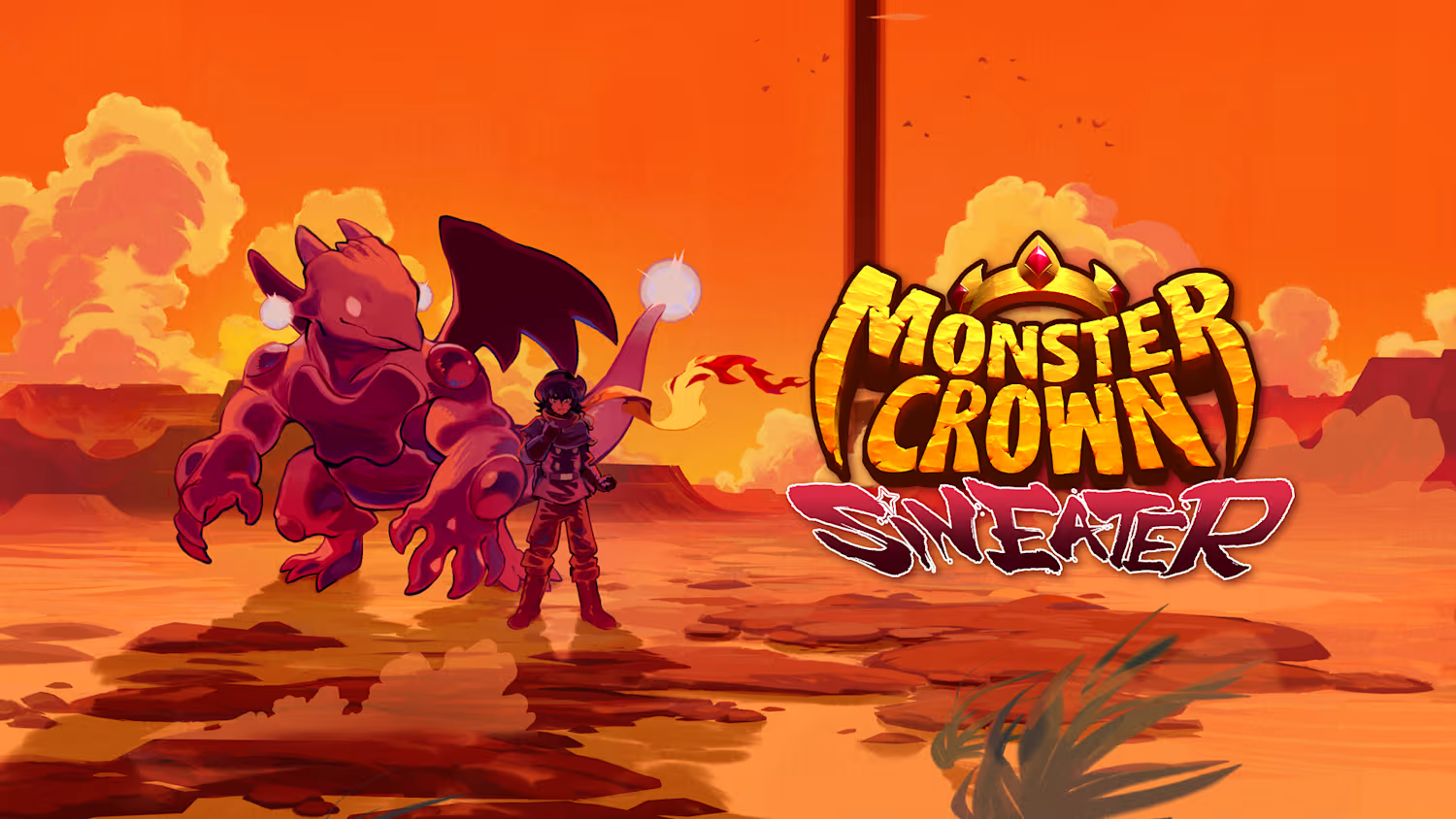
There is a point where calling every creature-collecting RPG a Pokémon alternative stops being useful. Monster Crown: Sin Eater certainly understands the language of those old games. Walk through tall grass and wilderness, build a team of strange creatures, learn weaknesses, challenge powerful opponents. The Game Boy Color influence is sitting right there on the screen. Yet Studio Aurum seems far more interested in asking what happens when that familiar framework grows teeth.
I played Monster Crown: Sin Eater on Nintendo Switch, and what surprised me most was how quickly those comparisons became background noise. This is a considerably more assured sequel, one that takes the breeding ideas of Monster Crown and builds an RPG around experimentation, freedom and a world considerably nastier than its colourful monsters initially suggest.
Crown Nation Doesn’t Particularly Care About You
The story follows Asur, a farm boy who wants to become a Monster Tamer like his accomplished older brother Dyeus. Trouble involving Dyeus and Crown Nation’s ruler, Lord Taishakuten, drags Asur into a much uglier conflict than the bright monsters and chunky pixel art initially suggest. The Holy Order governs through intimidation and violence, and the story is comfortable allowing its characters to make unpleasant choices.
There is a deliberate harshness to the writing. Sometimes it works beautifully because the colourful presentation makes the cruelty of Crown Nation feel even stranger. At other points the script pushes the darkness so hard that subtlety gets trampled underneath it. I never stopped paying attention, though, particularly once dialogue choices began affecting how conversations and situations developed.
Sin Eater is also remarkably willing to loosen its grip on the player. After the more controlled opening stretch, most of the map becomes available and the order in which you approach major opponents is largely yours to decide.
Freedom has a cost. There were stretches where I wanted a slightly clearer direction about what the game expected from me next. Sin Eater prefers letting you wander, poke around and occasionally discover that you have walked somewhere earlier than intended. Players who enjoy old RPGs precisely because they don’t constantly paint arrows over the world will probably consider that a compliment.
Every Monster Is Raw Material
Wild creatures appear directly in the environment. Some chase Asur, some flee, and others behave more cautiously, while bait can be used to distract creatures or draw out monsters that would otherwise avoid you. Battles therefore begin before the combat menu appears because choosing whether and how to approach a creature is already part of the process.
Once a fight starts, the rules are easy to grasp. Monsters carry resistances and weaknesses across five move types, individual attacks consume move points, and party members can be swapped when a matchup turns against you. The Synergy meter gives those familiar turn-based exchanges their own rhythm. Actions fill a shared resource that can be spent to Crown moves, improving their effects and sometimes altering what they do.
The temptation is to spend it immediately. I frequently did. Longer battles punish that impatience.
Sin Eater becomes much harder to put down once breeding and fusion enter the picture. Crossbreeding lets you work toward offspring with particular statistics, traits and attacks, while fusion provides another route for creating increasingly specialised monsters. The Genome Editor exposes much of that process rather than hiding everything behind invisible inheritance rules.
The current version makes this far easier to manage than it was at launch. The breeding and fusion screen now allows monsters to be moved between boxes and parent slots more efficiently, and the revised interface shows how parental statistics will affect the resulting creature before you commit.
That matters because tinkering is the real game within the game. I would catch something because I liked its design, then discover a useful trait, then realise another monster could pass across a move I wanted. Suddenly fifteen minutes had disappeared into menus.
Sin Eater advertises more than a thousand handcrafted monster sprites rather than a thousand completely separate base species, with crossbreeding, colours and transformations contributing to that enormous visual pool. The distinction actually makes the achievement more interesting. Creatures begin to feel less like fixed entries in a catalogue and more like templates the player can reshape.
When Freedom Starts Fighting Back
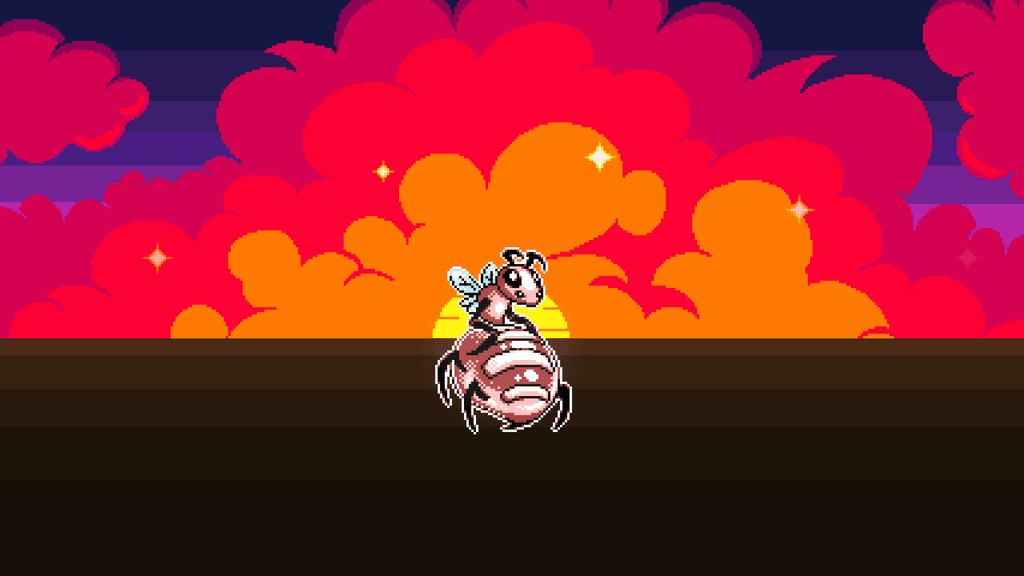
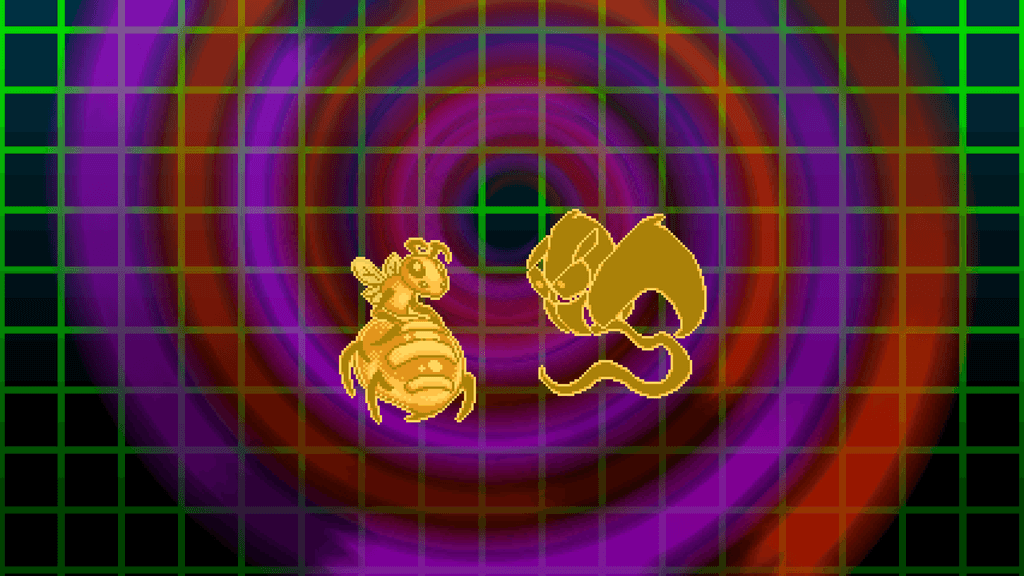
All of this customisation has one obvious side effect: Sin Eater sometimes struggles to challenge the monsters it allows you to create.
The situation is better than it was at release. Version 1.0.4 added scaling to the later Heavenly Kings and Inquisitors. After the second Heavenly King falls, remaining major opponents gain levels, with another increase after the third. A group of unusually powerful monsters also had their stat lines adjusted.
Yet balance remains the part of Sin Eater I wrestled with most. Breeding and fusion give you tremendous control, and once you understand how those systems interact, ordinary encounters rarely demand the same level of thought you put into building the team itself. Current player feedback still points to uneven difficulty and extremely powerful custom monsters as recurring complaints.
There is an odd irony there. I spent ages designing monsters because the process was fascinating, then occasionally wished the game gave those creations tougher opposition.
The patched version at least wastes less of your time doing it. Battle animations can now run at double speed, party-wide experience sharing is available on two difficulty settings, and Meru Spire is easier to traverse thanks to additional teleportation and fast-travel support. These sound like modest changes on paper, but across a monster RPG full of repeated battles and menu management, they add up quickly.
Pixel Art With a Mean Streak
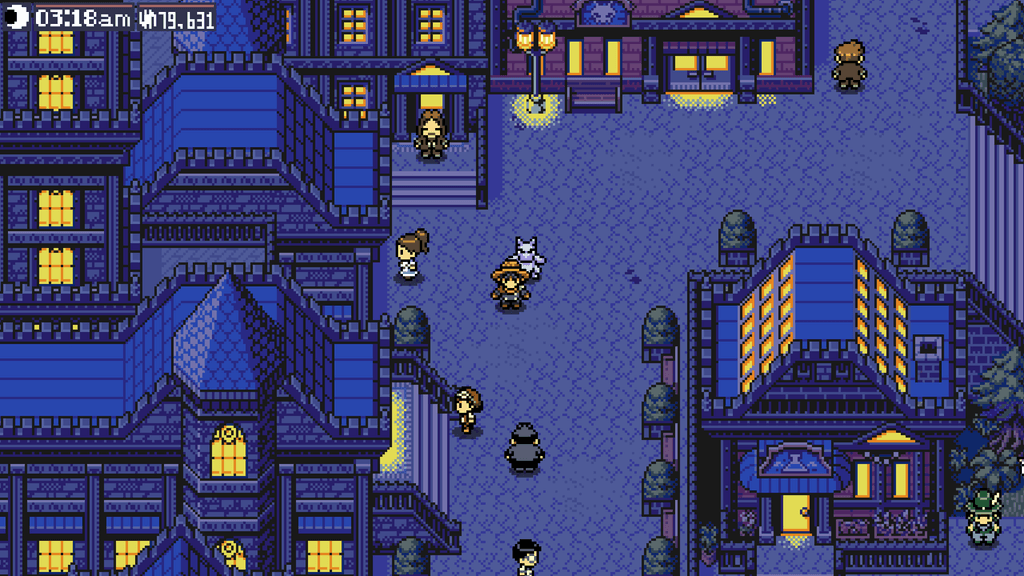
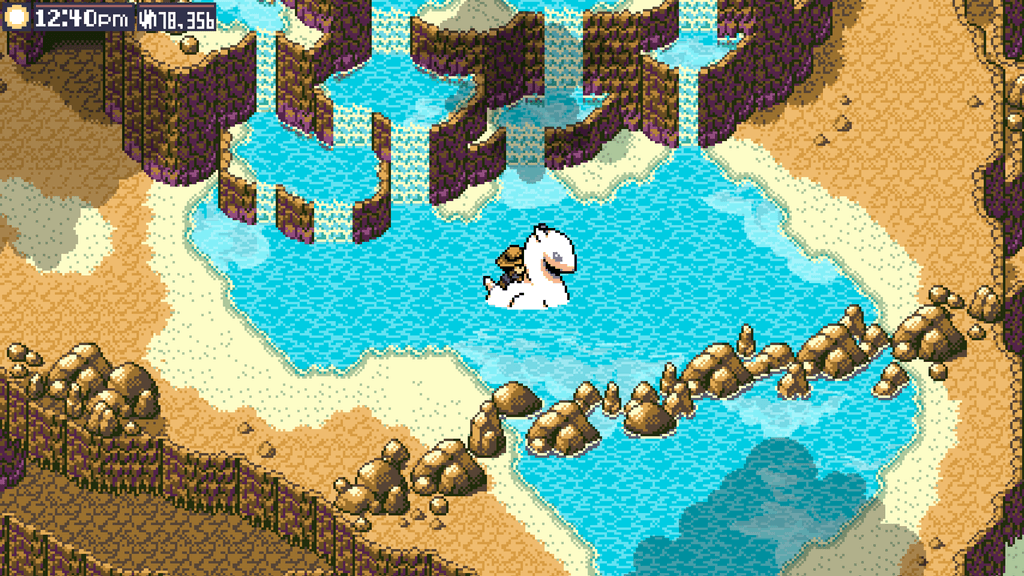
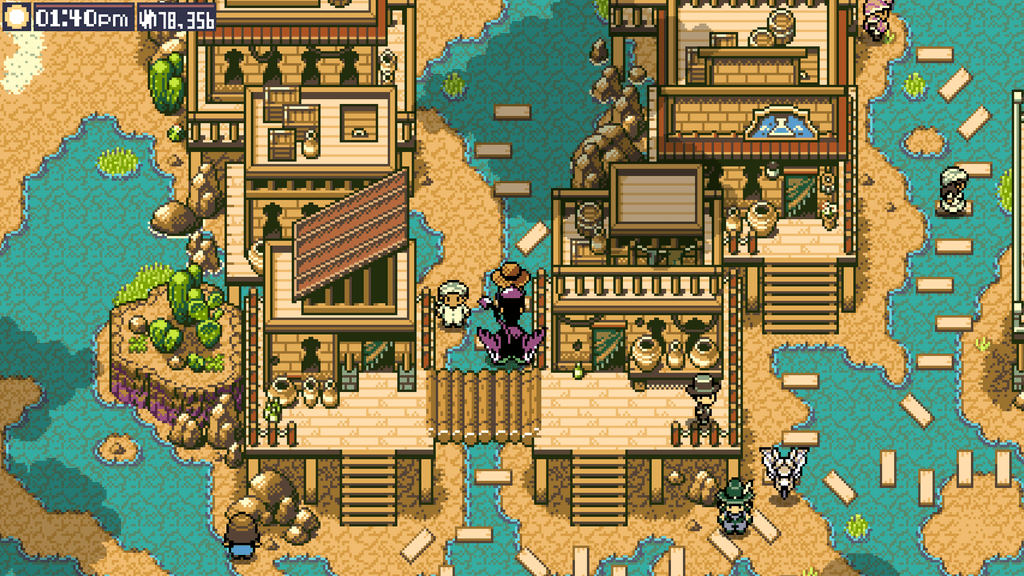
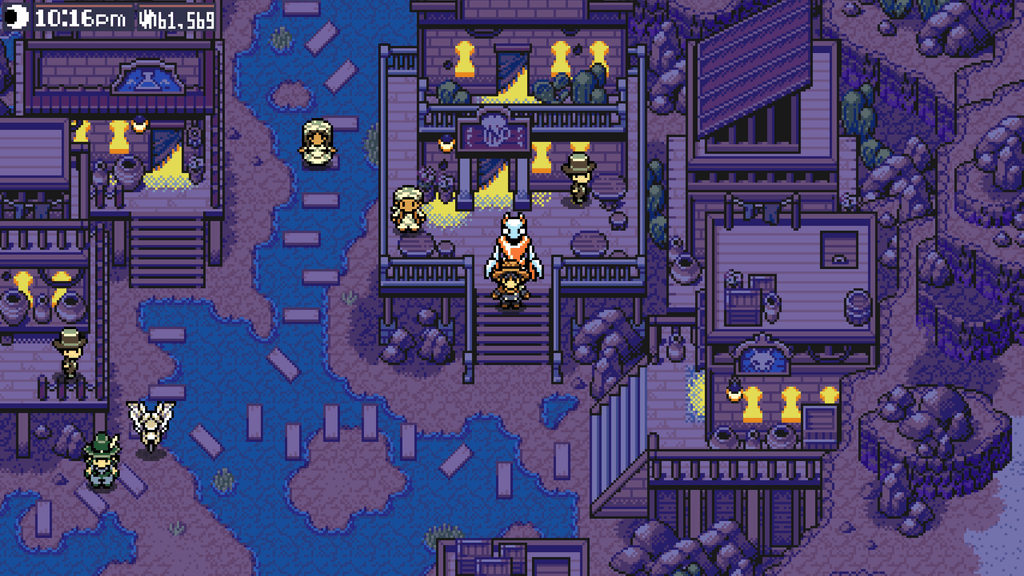
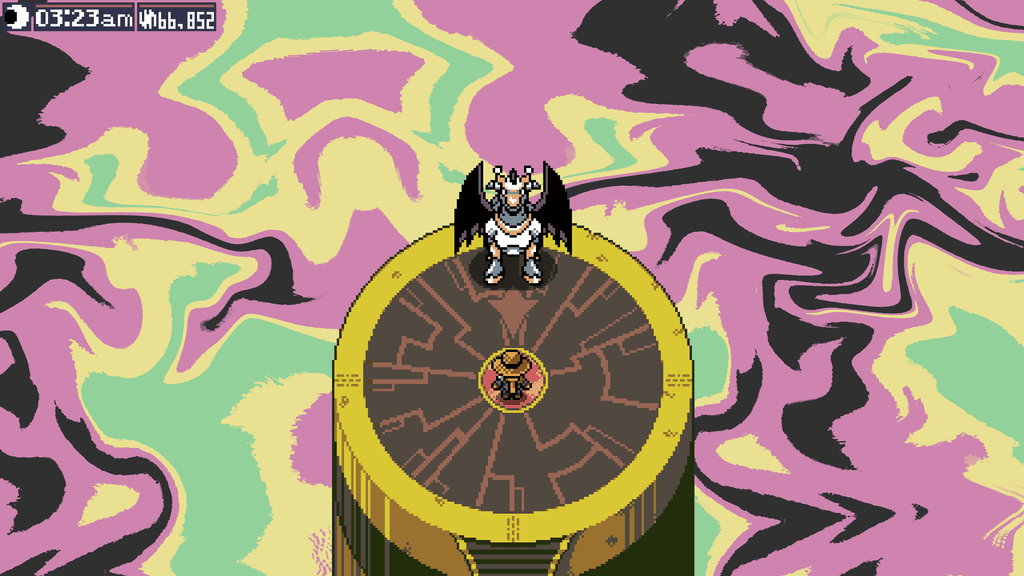
Sin Eater’s presentation may resemble a lost Game Boy Color cartridge from a distance, but the battle screens are far more expressive than that description suggests. Overworld sprites stay deliberately chunky while combat gives the creatures more detailed artwork and much more elaborate attack animations.
It suits Switch particularly well. This is the kind of RPG I kept dipping back into for another encounter or another breeding experiment, especially in handheld mode, where the compact pixel work feels completely at home.
The soundtrack deserves equal credit. Chiptune compositions bounce between playful battle music and moodier town and exploration pieces without losing the deliberately retro identity.
More importantly, the audiovisual style has personality. Sin Eater never looks embarrassed about its limited colour blocks or oversized pixels. It commits to them.
Final Verdict
Score: 4.25/5
Monster Crown: Sin Eater is at its strongest when it hands me a monster and immediately makes me wonder what else that monster could become.
The open structure occasionally needs clearer signposting, the tone can lean harder into darkness than the writing can comfortably support, and balance still struggles to keep up with players who fully exploit breeding and fusion. Those are meaningful problems.
They are also problems I kept encountering because I was still playing.
There is a wonderfully dangerous quality to the Genome Editor. One useful trait leads to another experiment, another fusion, another creature pulled out of storage because maybe this combination will finally produce exactly what you imagined.
Then you look at the clock.
This review of Monster Crown: Sin Eater is based on the Nintendo Switch Version, with the code provided by the Publisher/PR Agency.
About The Author