1666 Amsterdam Early Access (P)Review – There Is Real Magic Here, Buried Under a Lot of Rough Edges
 Avinash Rohra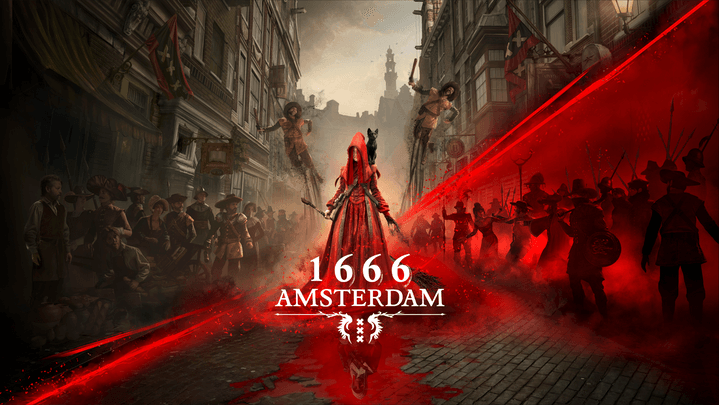
There is a far more interesting game inside 1666: Amsterdam than its combat initially suggests.
That became my recurring thought while playing Panache Digital Games’ Early Access release on PC. The first few hours throw an intimidating amount of terminology at you, move between different periods, introduce a man trapped inside the body of a black cat, hand you a broom as a weapon and eventually expect you to investigate seemingly ordinary citizens who may have spent centuries hiding something considerably less ordinary underneath. It is messy, sometimes confusing and occasionally feels as though several pieces of the game reached Early Access at very different stages of development.
Yet whenever I was ready to reduce 1666: Amsterdam to another ambitious historical action game released too early, I would find myself standing inside someone’s home looking for the detail that connected an identity to an Original, switching to Aaron because a window or upper floor was inaccessible to Noa, or staring at one of Amsterdam’s gablestones trying to work out what information actually mattered. Those moments kept bringing me back.
I came away more interested in 1666 than I was when I started. I also came away convinced it needs substantial work before its mechanics can match its premise.
Hunting an Original Is the Heart of 1666
Patrice Désilets’ involvement inevitably makes Assassin’s Creed the first comparison, but it becomes less useful the longer 1666 goes on. There are familiar ingredients here, particularly the historical city, restricted areas and emphasis on finding ways through architecture, but Panache has built its main loop around investigation rather than assassination.
Noa is the Collector, a witch who hunts beings known as Originals. They are not conveniently standing around Amsterdam with enormous supernatural health bars above their heads. During the day they exist behind human identities, and finding where one lives or works is only part of the problem.
The game asks you to pierce that identity.
Panache’s investigation system uses tools such as Analyze and Track alongside environmental landmarks, including Amsterdam’s gablestones, to follow information through the city. You may learn where somebody works, discover another location connected to them and eventually begin putting together what the person actually is. The crucial pieces are the seal representing the pact behind the Original’s power and the true name with which that pact was signed.
That name has practical importance. Nominem, one of Noa’s spells, uses it to force an Original to reveal what is hiding behind the human facade.
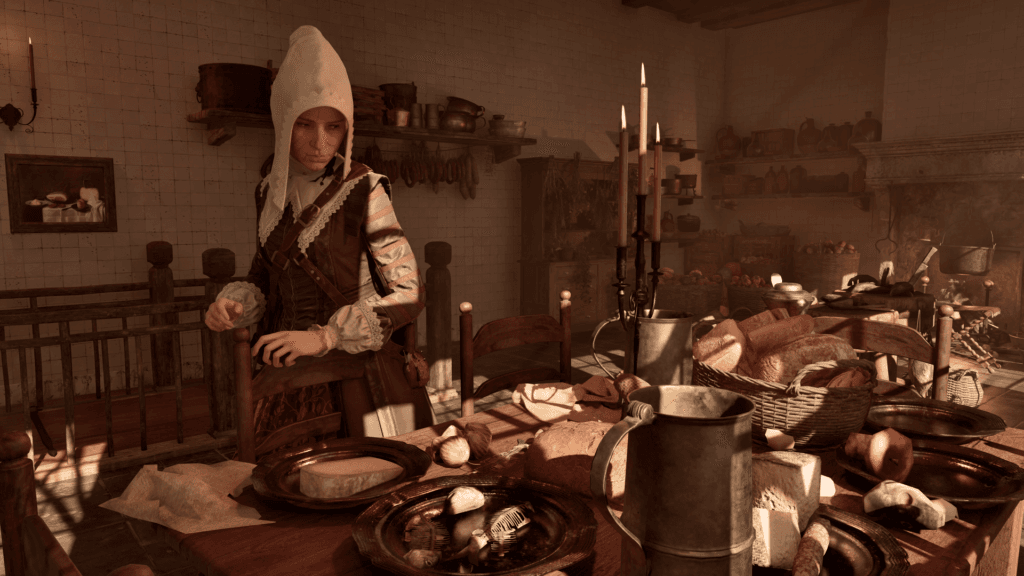
It is a considerably better structure than simply walking toward a boss marker.
One of the investigation chains in the current build illustrates why. Reaching the House of Balance is not the endpoint. Getting properly inside becomes part of the problem. Aaron can enter through spaces unavailable to Noa, frighten vulnerable NPCs and possess people. A possessed person can then manipulate the environment or create an opportunity for Noa to enter without immediately turning the situation into a fight. From there, searching the building and pushing towards its upper floors eventually leads to evidence containing the Original’s real name.
That sequence gets much closer to what I want 1666 to be.
The city becomes something to decipher rather than cross. Buildings matter because of their entrances, occupants and information. A mundane document can become more valuable than another weapon pickup. Even the architecture starts participating in the investigation.
The frustration is that the game sometimes mistakes obscurity for deduction.
There is a fine difference between withholding a quest marker so the player has to observe the world and withholding enough information that the player does not know whether they have overlooked a clue, misunderstood an instruction or simply failed to trigger an interaction. Several investigations currently drift across that line. The House of Balance in particular has already sent players into lengthy searches for the correct entrance or bookshelf because the logic exists, but the communication around it is not always strong enough.
I want 1666 to resist waypoint tourism. I do not want it to become a game where the hardest mystery is working out which piece of scenery contains the interaction prompt.
Aaron Gives the Investigation Its Best Trick
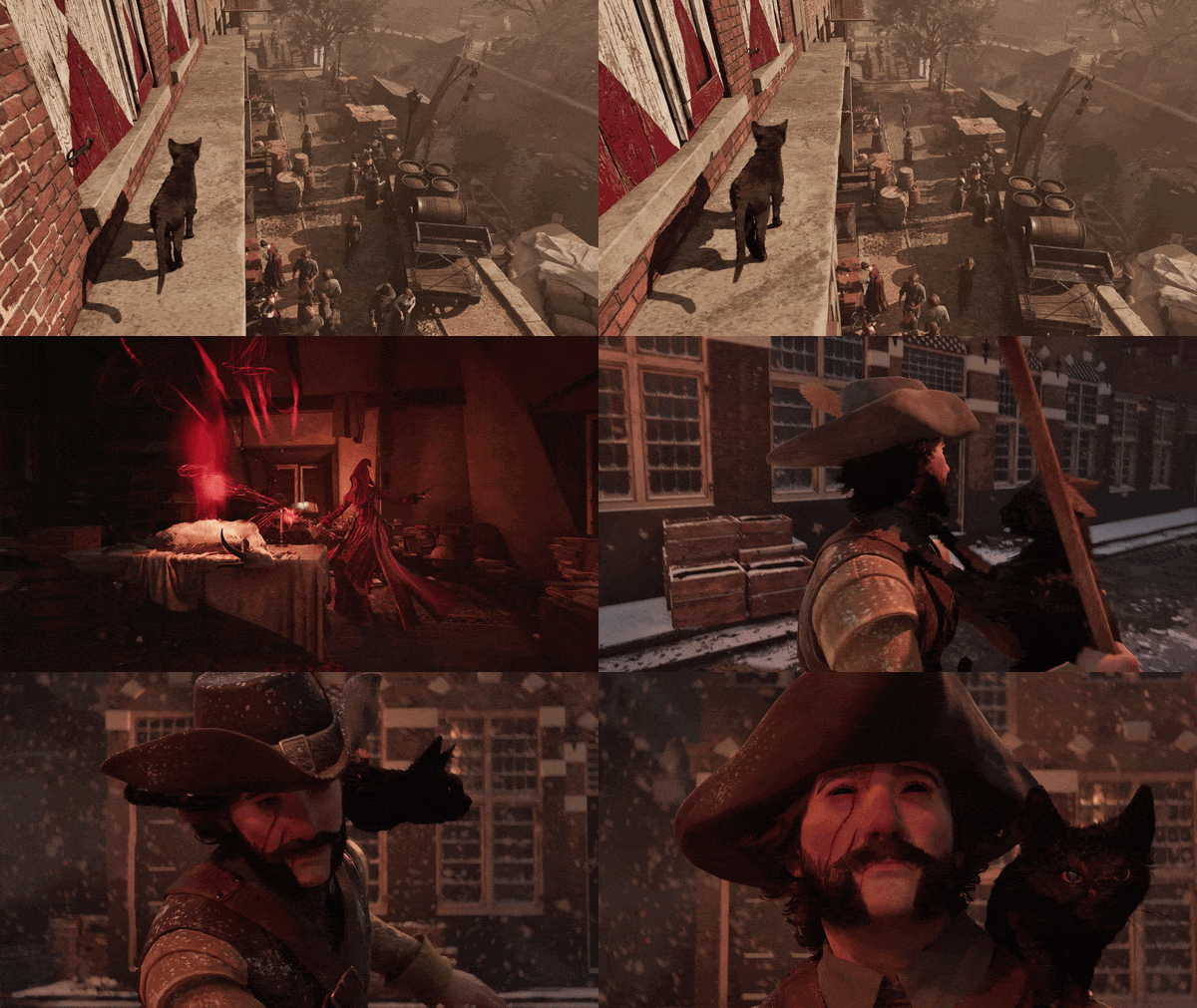
Aaron initially sounds like the punchline to an especially elaborate narrative pitch. He is a man from the late twentieth century whose consciousness has somehow ended up inside a black cat in Noa’s world.
What surprised me is how quickly that stops feeling like a gimmick.
Switching between Noa and Aaron is fundamental to exploration. Noa walks into a problem with all the limitations of a conspicuous human being. Aaron sees a different version of the same building. Small openings become entrances. Heights that do nothing for Noa become possible paths. NPCs react differently to him, and possession gives him a way to turn certain people into tools for navigating restricted areas.
It creates a satisfying rhythm when everything behaves properly. I would reach somewhere with Noa, realise the obvious entrance was unavailable, switch to Aaron and start reading the architecture from scratch. Suddenly the route through the building was not really a route at all. It was a sequence of opportunities split between two characters who operate under different rules. That is much more interesting than simply having a cat crawl through vents to press switches.
Possession is particularly clever because it extends Aaron’s usefulness beyond his physical size. Someone frightened by the cat can become vulnerable to him. Once possessed, that person can enter places Aaron alone cannot meaningfully manipulate and may provide Noa with access she would otherwise be denied.
The current controls do not always keep pace with the idea. Aaron’s movement is contextual, and selecting the ledge or destination you actually want can require irritating camera adjustments. Sometimes I understood the solution immediately and still spent longer than necessary getting the game to acknowledge it.
That sort of friction matters in a game built around experimentation. When I fail because I misunderstood a space, I learn something. When I fail because the contextual movement refuses to select the obvious jump, I learn nothing.
Panache has already been adjusting cat navigation in patches, which is encouraging because Aaron is too important to remain awkward. He is not an optional side mechanic. Some of 1666’s smartest design depends on him.
Lux, Nux and the Difference Between Looking Like a Witch and Playing One
The supernatural systems are stranger than the broom-heavy opening initially suggests.
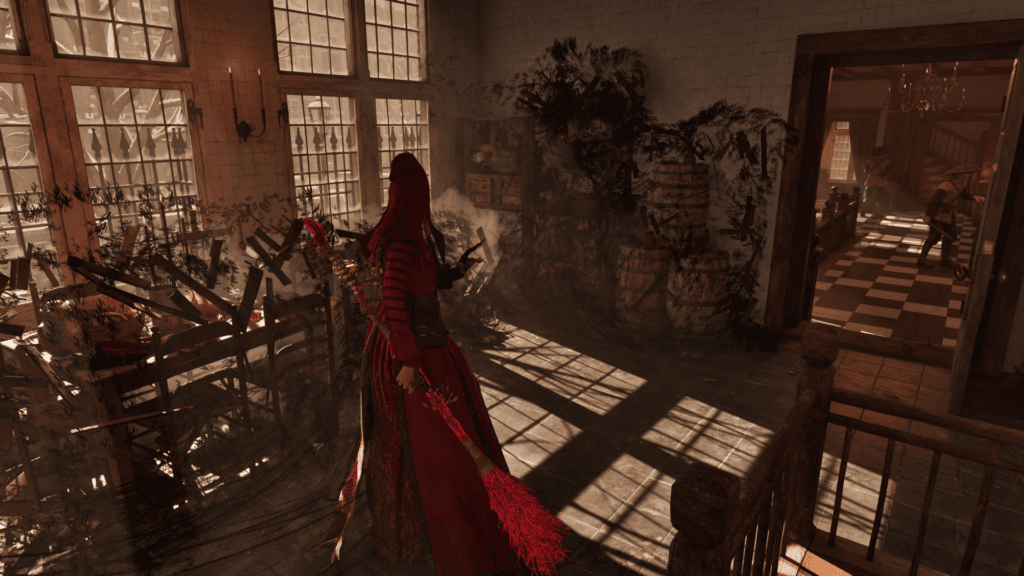
Spellcasting revolves around Lux and Nux, two resources that feed different sides of Noa’s abilities. Lux is associated heavily with manipulating or enchanting the environment, while Nux feeds more aggressive witchcraft. Aaron can help transmute these resources, and potions add another layer to managing what Noa can actually perform.
There is a good idea in there. Magic is treated as something you manage and manipulate rather than an endlessly regenerating collection of cooldown icons.
Noa also has to think about when she exposes herself.
Amsterdam does not simply accept somebody openly throwing witchcraft around. The difference between remaining hidden and revealing what Noa really is adds a social consideration to using her abilities. The supernatural toolset is powerful precisely because it does not belong openly in this world, and witch hunters provide a reason to care about drawing attention.
That relationship between fiction and mechanics is one of 1666’s better decisions.
Unfortunately, spellcasting currently asks too much of the player interface during combat. Using Focus to target environmental elements or enemies narrows your attention at exactly the time several hostile characters may be trying to surround you. Moving, dodging, acquiring Lux or Nux and attempting to execute the ability you actually want can feel far more cumbersome than supernatural combat should.
User feedback since launch repeatedly returns to this problem, and I understand why.
The game has constructed an interesting magical economy, then placed it on top of melee combat that is considerably less interesting.
The Broom Needs Help
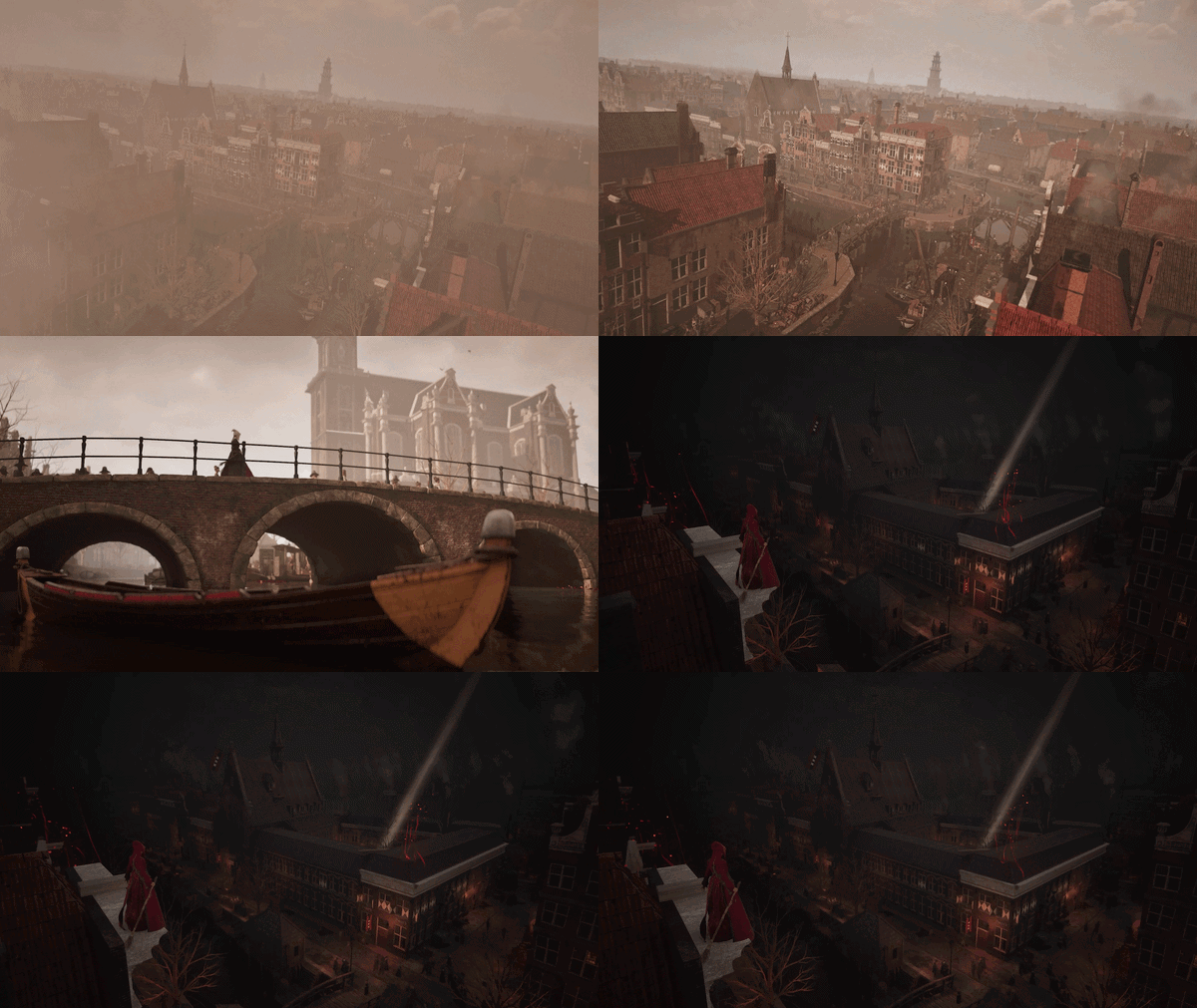
Noa’s basic fighting is built around melee strikes and dodging rather than a traditional blocking or parry system. There is a certain rhythm to recognising an incoming attack, getting clear and returning with a combination of your own, but it currently lacks the responsiveness and impact needed to carry repeated encounters.
The broom is memorable visually. Using it is less memorable.
The absence of a conventional defensive option makes the dodge especially important, and when movement or camera behaviour becomes unreliable the entire exchange suffers. Locking onto enemies can make positioning awkward. Fighting without lock-on introduces its own camera problems. Once magic is mixed into the equation, the amount of attention needed to focus on a target can leave Noa vulnerable while I am still trying to set up the interesting part of her toolkit.
There are environmental opportunities and supernatural abilities that prevent every encounter from becoming identical, but the foundation still feels underdeveloped.
That weakness becomes more obvious because the investigation creates such strong anticipation for confronting an Original. You have spent time learning who this creature is pretending to be. You have searched for its seal. You have hunted down the true name tied to its pact. Nominem finally strips away the disguise. The battle after that reveal should be the release.
Instead, the Esbat confrontations currently expose some of the game’s least polished systems.
I would be cautious about calling them universally easy or difficult because player experiences vary considerably, and the roguelite progression can influence what tools you bring into them. What does feel clear is that encounter balance needs another pass. Attack patterns, Noa’s defensive options and the awkwardness of casting under pressure do not consistently produce battles worthy of the investigation leading into them.
I often enjoyed discovering what I was fighting more than fighting it.
Coffers Make Noa Unpredictable
Coffers complicate the picture in an interesting way.
Rather than building Noa exclusively through a completely fixed skill tree, Coffers can present a selection of three abilities. The ability chosen becomes part of the current build, even appearing physically on Noa as jewellery, which is a lovely visual touch.
The system introduces a roguelite flavour because a failed run can cost temporary abilities, changing what Noa carries into subsequent attempts. That means two trips through an Esbat do not necessarily give you precisely the same version of the character.
I like the intent much more than I currently like every consequence.
Randomised abilities are exciting when almost every option creates an interesting new strategy. When the underlying combat is already uneven, getting a selection that does not complement the situation ahead can instead make the system feel like another obstacle between the investigation and its payoff.
Still, the Coffers point towards the sort of game 1666 wants to become. Noa is not simply collecting increasingly large damage numbers. Her available supernatural tricks change, and the player has to adapt around them.
The system needs refinement, but I would rather Panache improve it than retreat toward safer progression.
Amsterdam Is Beautifully Specific and Mechanically Uneven
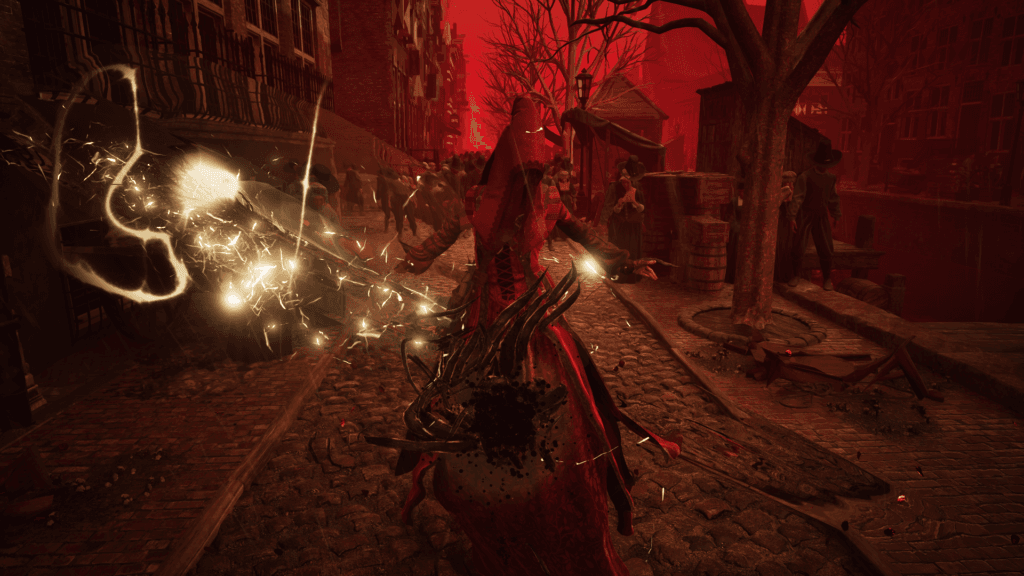
The city is perhaps 1666’s biggest advantage.
Panache has not approached Amsterdam as one enormous contiguous playground filled with identical activities. The game is organised across districts, and the denser structure suits an experience built around interiors and local investigation. Streets feel narrow because they should. Canals divide routes. Houses push upward rather than spreading into oversized videogame rooms.
That physical density makes Aaron even more valuable because the difference between pavement, window and rooftop has mechanical meaning.
The problem is that NPC behaviour and restricted areas do not always obey rules clearly enough for a game so interested in social stealth. Sometimes Noa can move surprisingly freely through a space. Elsewhere, guards react immediately to behaviour that did not cause comparable trouble somewhere else. The city looks capable of responding to you more intelligently than it currently does.
There are also fewer meaningful interactions with ordinary citizens than the density initially suggests. The important people matter, but much of the surrounding population still behaves like population.
This is one of those Early Access weaknesses that affects more than immersion. An investigation game depends on the player trusting its world. If people, guards and restricted spaces behave inconsistently, I stop reasoning about the situation and start reasoning about videogame triggers.
That is a much less interesting mystery.
Performance Makes the Early Access Label Impossible to Forget
My PC experience also made it difficult to forget that this is an unfinished release.
Performance becomes less reliable once the game reaches Amsterdam’s busier environments, something that has appeared repeatedly in post-launch player reports across a broad range of hardware. Particular interiors have drawn complaints as well. Frame-rate instability, image-quality fluctuations and general optimisation problems can turn an already mechanically uneven sequence into a much rougher one.
The technical issues are not limited to performance. Interaction prompts, traversal, combat behaviour, controller presentation, camera movement and crashes have all required attention since launch.
Panache is responding quickly. Update 0.2.1 addressed frame rate and memory optimisation alongside navigation, crashes, audio, UI problems, camera behaviour and specific cat traversal issues. It also added Quick Start after reaching the first Esbat, allowing subsequent games to skip the opening material.
That patch activity is exactly what I want to see from an Early Access project, but it should not be mistaken for evidence that the game is already polished.
It isn’t.
The current release contains roughly the first portion of a campaign Panache estimates at around 15 hours, with the studio expecting Early Access development to continue for approximately a year and larger updates to add more content. What you are buying now is therefore substantial enough to judge, but explicitly unfinished enough that many of these systems may look different by the time 1.0 arrives.
The Good News Is That 1666 Knows What It Wants to Be
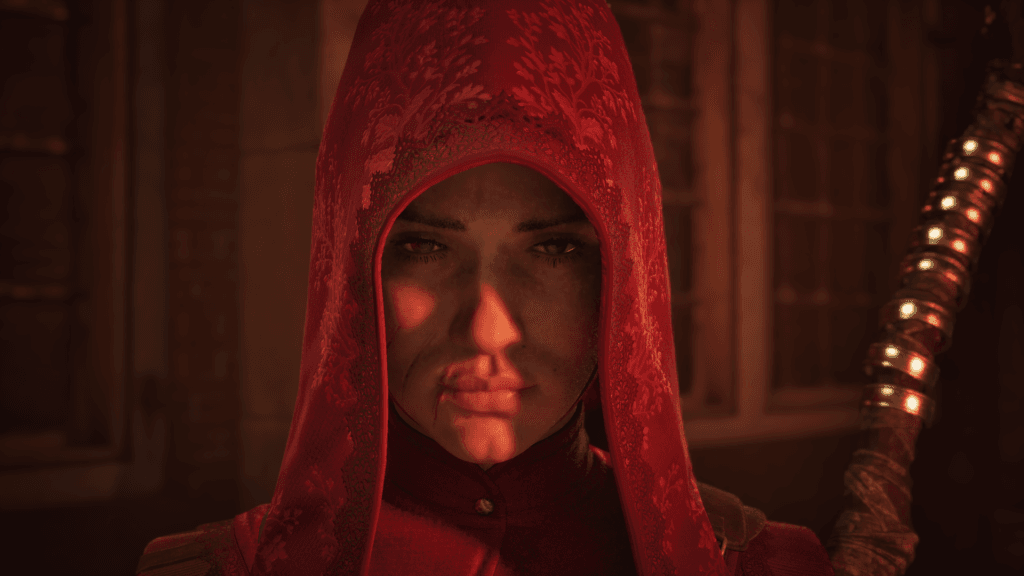
After several hours, my biggest concern is no longer whether 1666: Amsterdam has an identity.
It absolutely does.
A woman walks through seventeenth-century Amsterdam hiding what she is. Somewhere nearby, something far older is doing exactly the same thing. Finding it means studying people and places rather than chasing an icon. A cat who once lived centuries later crawls through a gap, terrifies the right person and borrows their body. A forgotten name eventually appears in a document where someone hoped it would stay buried. When the moon is right, Noa speaks that name and the respectable human identity finally falls apart.
I want to play more of that game.
I am considerably less enthusiastic about repeating its current melee combat, wrestling with Aaron’s contextual jumps or watching performance buckle while the city becomes busier. Some of those problems are straightforward Early Access roughness. Others involve systems Panache will need to rethink rather than simply polish.
That leaves 1666: Amsterdam in an intriguing middle ground. There is already more personality here than in many considerably more finished action games. Its investigation loop has genuine potential, Aaron is more mechanically important than his premise initially suggests, and the Lux/Nux system gives witchcraft a texture beyond selecting another spell from a radial menu.
But potential is still doing some heavy lifting.
If Panache can make combat as interesting as preparing for it, smooth out traversal without removing the need to observe the environment, and make Amsterdam react consistently enough that its social systems can be trusted, 1666 could turn into something genuinely unusual.
Right now, its magic works best before the fighting starts.
This preview of 1666: Amsterdam is based on an Early Access PC Build code provided by the Publishers/PR Agency.
About The Author