Avinash Rohra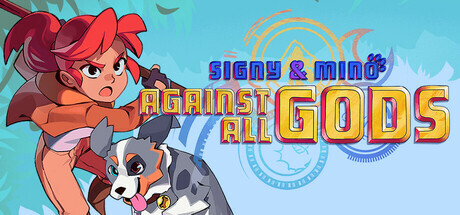
There is something wonderfully silly about watching a girl and her dog juggle an enemy across the screen like they have spent the weekend studying fighting-game combo videos. That was the point where Signy & Mino: Against All Gods clicked for me. AN Productions’ RPG initially looks like another charming indie riff on the active turn-based combat popularised by games such as Paper Mario and Mario & Luigi. Then Mino launches something into the air, Signy follows it with another attack, you swap back to the dog before the enemy hits the ground, and suddenly you are thinking less like a traditional RPG player and more like someone trying to keep a combo counter alive.
That combat system carries an enormous amount of the game. Sometimes, perhaps, more than it should have to.
Released by AN Productions and published by Armor Games Studios, Signy & Mino: Against All Gods follows Signy and her loyal dog Mino after a volcanic disaster becomes tangled up with the return of Auger, a rather irritable god of rock and magma. From there, the pair find themselves caught between gods, machines and the consequences of events that began years earlier. The storytelling is deliberately light and cartoonish, with a straightforward plot that rarely hides where it is going. What keeps it moving is the relationship at its centre. Signy and Mino are an easy pair to like, particularly because their partnership exists mechanically instead of being restricted to dialogue and cutscenes.
Two Characters, One Combo
Combat revolves around chaining attacks between Signy and Mino. Different abilities interact with enemy position in distinct ways, which means choosing an attack is only half the decision. You also need to think about where the target will end up afterwards.
Signy’s Big Swing, for instance, can carry its force through enemies positioned behind the initial target. Mino has his own set of actions such as Nose Launch, Dig, Fetch and Fling, giving the dog an active role in constructing combos instead of reducing him to a passive companion or occasional support skill. Enemies can be knocked into the air, kept there through follow-up attacks and eventually driven back into the ground.
The result is one of the game’s biggest strengths. Battles have a genuine sense of choreography.
There is also a smart risk-and-reward element in Signy’s ability to spend HP to continue a combo onto another enemy once the first target has been defeated. That pushes you to think beyond simply finishing whatever is standing directly in front of you. A good sequence can carry momentum across several opponents, and the game rewards understanding how each move changes the state of the battlefield.
Progression feeds directly into that system. Leveling grants skill points that can be invested into Signy’s moves, Mino’s abilities and defensive options. Combo Extend increases the number of skills that can be linked during a sequence, which naturally broadens what you can do as the game goes on. Additional techniques can also be learned along the way.
There is very little wasted complexity here. Most upgrades exist to give you another option during a fight.
The Problem Is That the Gods Are Too Polite
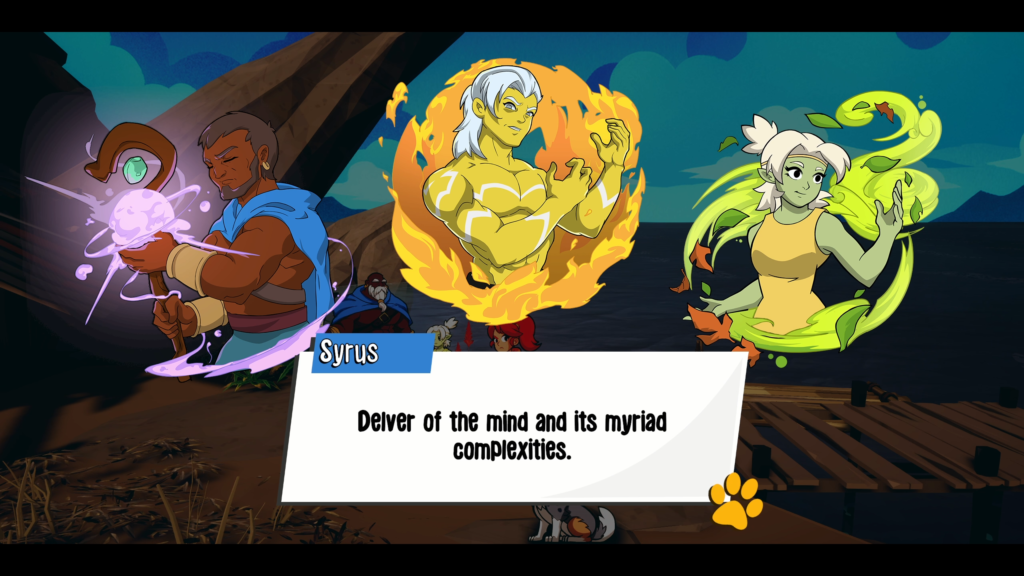
The frustrating part is that Signy & Mino rarely demands everything its combat system can offer.
Enemy attacks can be avoided or parried, but the timing is forgiving enough that defensive play rarely carries the same tension as offensive combo-building. The game gives you this surprisingly expressive combat framework, then often asks relatively little of it.
The act of fighting is inventive. The actual resistance offered by many encounters is much less interesting.
That leniency also affects progression. There are reports from completed playthroughs of players exhausting much of the available character growth before the final stretch, and the game does not always introduce enough mechanical pressure to compensate. Once you understand how launches, follow-ups and defensive timing work together, regular encounters can begin to settle into familiar patterns.
Later battles can also become drawn out, particularly when tougher enemies require longer strings before they finally fall. That does not suddenly make the combat bad, but it exposes how much the system relies on experimentation for its energy. When a fight stops asking you to improvise, repeating another lengthy sequence loses some of the spark that made the early hours so immediately appealing.
Animation Does Half the Selling
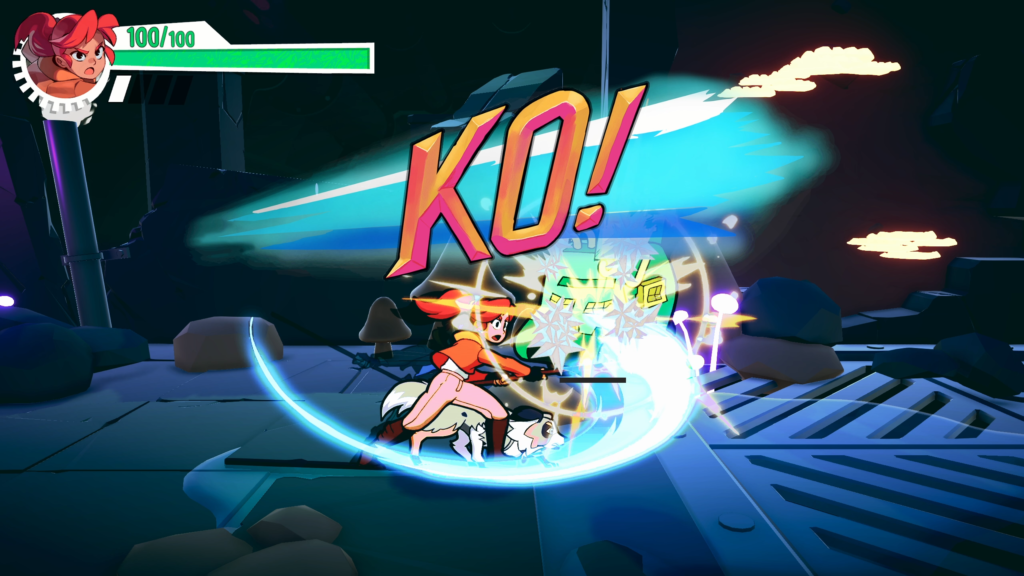
Thankfully, the game understands that a combo system like this needs to look satisfying.
The character animation carries a great deal of personality. Attacks have exaggerated movement without becoming difficult to read, and the contrast between the expressive characters and the simpler environments keeps attention where it belongs. Watching Signy and Mino bounce an opponent between them sells the idea of a coordinated duo far better than dialogue ever could.
The soundtrack complements that energy well. It rarely tries to overpower the action, but it keeps battles moving and fits the cheerful, slightly chaotic personality of the game.
There is also a charming confidence to the presentation. Signy & Mino knows it is built around an unusual pair and a slightly absurd premise, and it never tries to sand those edges away in pursuit of something grander.
A Familiar Foundation With Its Own Identity
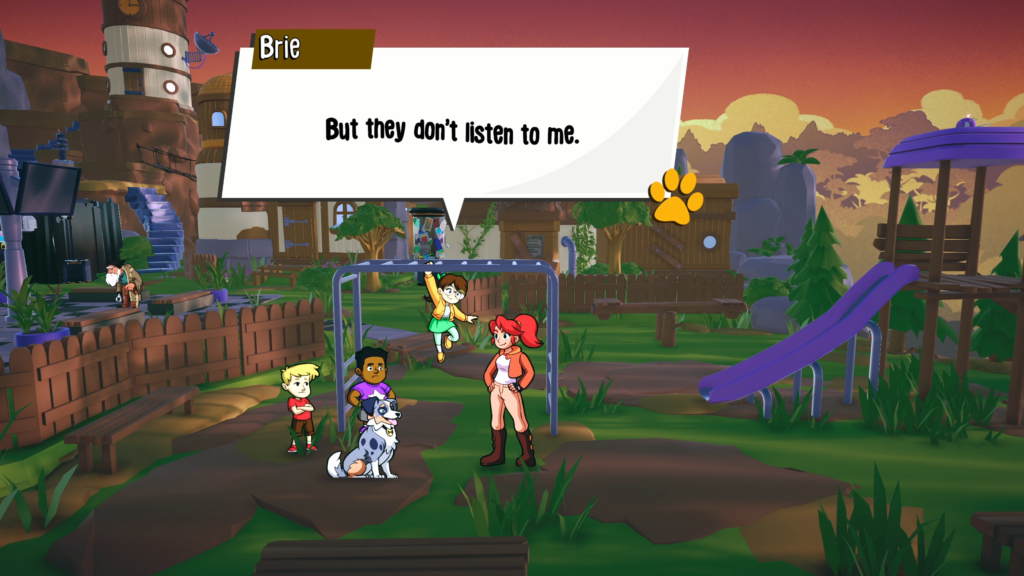
The Paper Mario influence is easy to spot, particularly in the emphasis on player input during turn-based combat, but Signy & Mino does enough mechanically to avoid feeling like an imitation.
The biggest difference is the importance of enemy placement. Launching targets, extending aerial sequences and planning how one move creates an opening for the next gives combat a rhythm closer to a combo-focused action game than a conventional menu RPG.
That is the part I kept returning to.
There are countless indie RPGs borrowing ideas from Nintendo’s classics. Far fewer take that foundation and build a combat system where a dog can launch an enemy into the air so its owner can continue beating them around the screen.
Signy & Mino has an identity. It simply needed more encounters capable of challenging it.
Pros
- Inventive tag-team combat built around launches, positioning and chained attacks
- Signy and Mino feel mechanically connected rather than merely paired by the story
- Strong variety within the combo system
- Expressive battle animation gives every attack personality
- Progression meaningfully expands available combat options
- Distinct visual style and consistently charming presentation
Cons
- Defensive timing is overly forgiving
- Difficulty rarely forces full mastery of the combat system
- Progression can lose momentum before the final stretch
- Some later encounters become repetitive
Final Verdict
Score: 4.25/5
Signy & Mino: Against All Gods has the kind of combat idea that immediately makes me want to see what its developer does next. AN Productions has taken active turn-based RPG conventions and twisted them into something that feels unusually physical. Launching an enemy, extending the juggle with Mino and finding the next attack before the sequence collapses has an immediacy that few games in this space manage.
The disappointment comes from how rarely the game pushes back hard enough. Its defensive mechanics are forgiving, progression eventually loses some of its momentum, and encounters do not always demand the creativity that the combo system encourages.
That keeps Signy & Mino from reaching the ceiling its mechanics suggest.
It does not stop those mechanics from being excellent.
This is a compact RPG built around one genuinely strong idea, and when Signy and Mino are bouncing an enemy between them like they have accidentally wandered into a fighting-game tournament, that idea is more than enough to carry the fight.
This review of Signy & Mino: Against All Gods is based on the PC Version, with the code provided by the Publisher/PR Agency.
About The Author